

Direct answer: Moringa plant protein (Moringa oleifera leaf powder) provides complete protein with all nine essential amino acids. At 25 to 30 grams per 100 grams dry weight. Making it the highest-protein leafy plant food available from a traditional Indian culinary source. Its benefits extend across every major domain of human health. It reduces inflammation through NF-κB-IKKβ inhibition, supports blood sugar management through LKB1-AMPK pathway activation. It protects bone density through calcium-Vitamin K-osteocalcin mineralisation, supports male hormonal health through HPG axis protection and prostate zinc provision, supports female health through phytosterol oestrogen receptor modulation and iron for anaemia, promotes brain neuroplasticity through BDNF-SIRT1 signalling, protects skin through Vitamin C-prolyl hydroxylase collagen synthesis, and prevents constipation through flaxseed mucilage and gut microbiome SCFA support. Furthermore, it is the foundation of India’s traditional Doodh Badam and Doodh Haldi nutrition system.
I am Chef Ashutosh Awasthi, founder of Sheer MADness, professional chef, marathon runner, and author of Great Health Comes from Exercise & Nutrition. This is the most important page on this site. The hub of every moringa topic covered in over 40 detailed posts. Furthermore, it is the page I am most personally invested in. My journey from overweight to marathon runner in my 40s was built on Indian food culture. On the same ingredients on this page. This guide covers every moringa plant protein benefit with enough depth to inform a decision, and links to a dedicated deep-dive post for every topic requiring the complete molecular science.
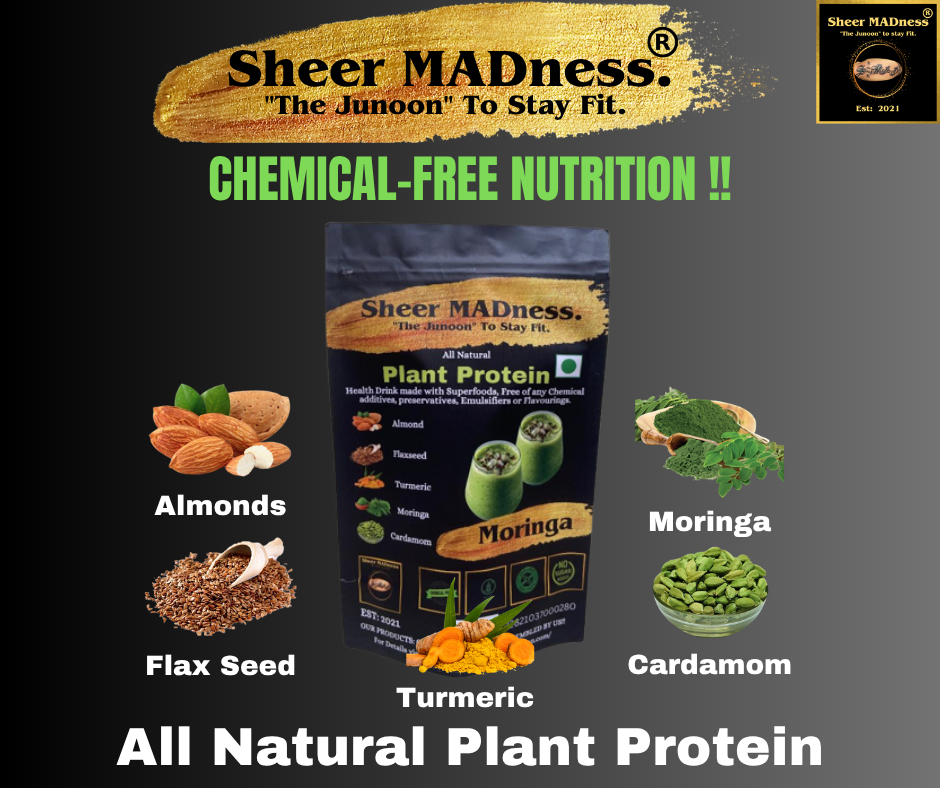
Moringa oleifera — known as drumstick tree (sahjan) in Hindi, murungai in Tamil, and drumstick leaf in English — is native to the Indian subcontinent and has been cultivated across South Asia, Africa, and Southeast Asia for millennia. Every part of the tree is used medicinally or nutritionally. However, the leaves are the most nutritionally dense part of the plant. Specifically, dried moringa leaf powder provides 25 to 30 grams of protein per 100 grams — alongside iron at 28 milligrams, calcium at approximately 2,000 milligrams, Vitamin C at approximately 17 times the concentration of oranges gram for gram, beta-carotene at 6.78 milligrams, folate at 172 micrograms, and quercetin at 50 to 60 milligrams per 100 grams.
Moringa is not merely a protein supplement. It is a complete nutritional system — providing the specific micronutrients that work alongside its protein to deliver benefits that isolated protein powders cannot. This is the most important distinction between moringa and conventional protein supplements: the protein arrives with iron, calcium, Vitamin K, Vitamin C, folate, and a full spectrum of antioxidant bioactives that amplify every nutritional effect moringa produces.
Furthermore, moringa is a complete protein — providing all nine essential amino acids that the human body cannot synthesise. Specifically, its DIAAS (Digestible Indispensable Amino Acid Score) ranges from 0.84 to 1.16 depending on the reference population — classifying it as a good to excellent quality protein source by FAO standards. This makes moringa one of the very few plant foods that qualifies as complete protein without requiring complementary combining.
| Nutrient | Moringa Value | Comparison |
|---|---|---|
| Protein | 25-30g | Higher than lentils (24g), comparable to soya (36g) |
| Iron | 28mg | 25x more than spinach per gram |
| Calcium | ~2,000mg | Highest plant-food calcium density |
| Vitamin C | ~220mg | ~17x orange gram for gram |
| Beta-carotene (pro-Vit A) | 6.78mg | Higher than carrots |
| Folate | 172mcg | Supports neural tube + MPS methylation |
| Quercetin | 50-60mg | Primary antioxidant-anti-inflammatory compound |
| Magnesium | ~147mg | Supports ATP, Vit D activation, sleep |
| Vitamin K | Present (phylloquinone) | Osteocalcin carboxylation for bone |
| Potassium | ~337mg | Cardiovascular, nerve, and muscle function |
| Zinc | Present | Testosterone, spermatogenesis, immunity |
| DIAAS | 0.84 to 1.16 | Good to excellent protein quality (FAO) |
Moringa’s 25 to 30 grams of protein per 100 grams dry weight is not merely high in quantity — it is high in quality. The DIAAS of 0.84 to 1.16 places moringa in the “good to excellent” FAO protein quality category — significantly above most plant proteins. Specifically, leucine at 6.5 to 7.5 grams per 100 grams of protein provides the mTOR activation trigger required for muscle protein synthesis. All nine essential amino acids are present — including lysine, which is the limiting amino acid in India’s grain-dominant diets. Consequently, moringa specifically fills the amino acid gap that rice and wheat-based Indian diets create.
For muscle building specifically, moringa’s leucine activates the mTOR-S6K1-4EBP1 cascade that initiates myofibrillar protein assembly. To athletes, moringa provides pre-workout AMPK activation for fat oxidation and post-workout amino acid supply for muscle recovery. For vegetarian Indians meeting elevated protein targets — 1.6 to 2.2 grams per kilogram for regular resistance training — moringa provides the most nutritionally complete plant protein available from a traditional Indian source.
How Much Protein Does Moringa Have? The Full Answer — DIAAS, grams per serving, comparison with Indian foods.
Moringa Plant Protein for Building Muscles — The Complete Science — mTOR, satellite cells, MPS vs MPB, India vegetarian bodybuilder gap.
Moringa Protein: A Natural Source of Essential Amino Acids — complete amino acid profile.
Can I Take Moringa Powder Before Going to the Gym? — pre-workout AMPK and fat oxidation.
Moringa Protein Powder as a Post-Workout Supplement — recovery amino acid timing.
How Moringa Protein Can Support Athletic Endurance — endurance athletes.
Is Moringa Good for Weight Training? — resistance training context.
Chronic inflammation is the molecular foundation of India’s most prevalent health burdens — cardiovascular disease, Type 2 diabetes, metabolic syndrome, and cancer. Moringa addresses it at its molecular root.
Moringa’s isothiocyanates inhibit IKKβ — the kinase that activates NF-κB, the master transcription factor of the inflammatory response. When IKKβ is inhibited, NF-κB remains sequestered by IκBα in the cytoplasm — unable to enter the nucleus and activate inflammatory gene expression (COX-2, 5-LOX, TNF-α, IL-6, IL-1β). Simultaneously, moringa’s quercetin and curcumin inhibit the arachidonic acid-COX-2 and 5-LOX pathways that produce prostaglandins and leukotrienes — reducing both the inflammatory signalling cascade and its downstream eicosanoid mediators. Furthermore, moringa’s Nrf2 activation upregulates glutathione peroxidase, superoxide dismutase, and catalase — the endogenous antioxidant enzymes that neutralise the reactive oxygen species driving inflammasome activation.
For Indian urban adults facing chronic low-grade inflammation from gut dysbiosis (LPS-TLR4-NF-κB pathway), refined carbohydrate hyperinsulinaemia, and environmental pollutant burden, moringa’s multi-pathway inflammation resolution is directly relevant.
Read the complete science: Can Moringa Protein Powder Reduce Inflammation? The Science Explained and How Moringa Protein Helps in Reducing Oxidative Stress.
Moringa supports weight management through mechanisms that go beyond “high fibre keeps you full.” It specifically addresses the cellular fat-storage environment that makes Indian urban obesity so resistant to dietary intervention.
At the cellular level, moringa inhibits adipogenesis — the formation of new fat cells — by blocking PPARγ and C/EBPα, the transcription factors that programme preadipocytes to differentiate into mature adipocytes. Its quercetin reduces SOCS3, restoring hypothalamic leptin sensitivity that obesity impairs. Its UCP1 activation in brown adipose tissue increases thermogenic energy expenditure — producing a genuine metabolic rate increase. Furthermore, its chlorogenic acid and quercetin raise adiponectin and reduce resistin — rebalancing the adipokine hormonal environment toward fat burning.
At the dietary behaviour level, moringa’s protein and fibre activate GLP-1, PYY, and CCK satiety hormones — reducing appetite and prolonging meal satiety. Its consumption before meals reduces the ghrelin-driven hunger signals that cause snacking between meals.
Read the complete science: Does Moringa Help in Weight Loss? Yes — Here’s Why, How to Consume Moringa Protein for Weight Loss — A Guide, Will Moringa Protein Make You Fat? The Honest Answer, and Does Moringa Increase Metabolism?.
India has the world’s highest absolute cardiovascular disease burden, and over 100 million diabetic patients — with the two conditions sharing the same metabolic root causes of insulin resistance, dyslipidaemia, and endothelial dysfunction. Moringa addresses all three.
For cardiovascular health, moringa’s quercetin activates AMPK in endothelial cells — phosphorylating eNOS at Ser1177 to increase nitric oxide production. Simultaneously, its NF-κB inhibition prevents inflammatory eNOS uncoupling that converts the enzyme from NO-producing to superoxide-producing. The result is preserved endothelial NO-cGMP signalling — reducing blood pressure and vascular resistance through smooth muscle relaxation. Additionally, moringa’s plant sterols reduce intestinal cholesterol absorption through NPC1L1 competitive displacement — reducing LDL at the absorptive level rather than through hepatic statin mechanisms.
For blood sugar management, moringa’s chlorogenic acid activates LKB1-AMPKα in the liver — reducing PEPCK and G6Pase hepatic glucose output (the primary source of fasting hyperglycaemia). Its quercetin activates SIRT1-LKB1-AMPK in skeletal muscle — increasing GLUT4 translocation and peripheral glucose uptake. Its Nrf2 activation protects pancreatic beta cells from the oxidative stress that drives beta cell apoptosis and progressive insulin secretion decline.
Read the complete science: Is Moringa Good for Cardiovascular Health?, Is Moringa Protein Good for Managing Cholesterol?, Can Moringa Plant Protein Powder Help Control Diabetes?, and Does Moringa Alkalize the Body?.
Bone mineral density requires not just calcium but the complete nutritional system for hydroxyapatite mineralisation — and moringa provides every component simultaneously. Moringa’s calcium at 2,000 milligrams per 100 grams is the highest plant-food calcium density available from any conventional food. Its Vitamin K activates osteocalcin — the protein that carboxylates glutamic acid residues to Gla and anchors calcium into the hydroxyapatite crystal lattice. Vitamin C activates prolyl hydroxylase for collagen triple helix formation — the organic scaffold on which mineral crystallises. Its quercetin reduces sclerostin expression — restoring Wnt/β-catenin osteoblast differentiation that inflammation suppresses.
Furthermore, moringa’s plant protein is alkaline-forming (negative PRAL) — specifically preventing the urinary calcium loss that acid-forming dietary patterns impose. Consequently, moringa provides calcium and simultaneously prevents calcium from leaving the body through the acid-buffering mechanism.
For perimenopausal and post-menopausal women, moringa’s phytosterol weak oestrogenic activity partially compensates for the oestrogen withdrawal that drives RANK/RANKL osteoclast activation and accelerated bone mineral density loss.
Read the complete science: Can Moringa Plant Protein Increase Bone Density?.
Moringa provides some of its most clinically significant benefits specifically for male physiology — through three mechanisms that are entirely separate from each other.
For testosterone, moringa protects the HPG axis by inhibiting TNF-α and IL-6 inflammatory suppression of GnRH-LH pulsatility — preserving the signal that drives Leydig cell testosterone synthesis. Its zinc supports adenylyl cyclase-cAMP-PKA-StAR testosterone production. Its quercetin inhibits CYP19A1 aromatase — reducing testosterone-to-oestradiol conversion in visceral adipose tissue and breaking the visceral fat-aromatase-testosterone cycle that is the primary hormonal driver of male metabolic syndrome.
For sperm health, moringa’s Nrf2 antioxidants protect developing spermatocytes and spermatids from the oxidative apoptosis that is the most prevalent cause of reduced sperm count in Indian urban men. Its Vitamin C scavenges the hydroxyl radicals that fragment sperm DNA. Its folate supports the MTHFR-methionine-SAM methylation pathway for proper sperm DNA imprinting. Flaxseed ALA provides DHA for sperm flagellar membrane fluidity and progressive motility.
For prostate health, moringa’s quercetin inhibits 5α-reductase type II — reducing the DHT production in prostate stromal cells that drives benign prostatic hyperplasia. Its zinc maintains the high prostate zinc concentration required for normal citrate-accumulating epithelial function.
Read the complete science: Does Moringa Plant Protein Increase Testosterone?, Does Moringa Plant Protein Increase Sperm?, and Moringa Plant Protein Benefits for Men’s Health and Hormones.
Women’s nutritional requirements differ fundamentally from men’s across every life phase — and moringa’s profile specifically addresses female-specific nutritional needs across the entire lifecycle.
For menstruating women, moringa’s iron at 28 milligrams per 100 grams — alongside its Vitamin C for DMT-1 absorption enhancement — directly addresses India’s 57 percent female anaemia prevalence (NFHS-5). Additionally, its NF-κB-COX-2 inhibition reduces the prostaglandin production causing menstrual cramping.
Women with PCOS — affecting an estimated 20 to 25 percent of Indian women of reproductive age — moringa’s chlorogenic acid-AMPK activation inhibits theca cell CYP17A1 androgen overproduction, specifically addressing the insulin resistance at the root of PCOS pathophysiology.
For perimenopausal women, moringa’s phytosterols (beta-sitosterol, campesterol, stigmasterol) act as weak selective oestrogen receptor modulators — providing mild ER activation that partially compensates for declining oestrogen, reducing vasomotor symptoms and supporting oestrogen-dependent bone protection.
For lactating mothers, moringa’s phytosterols specifically stimulate mammary gland duct activity — increasing breast milk production while providing the iron, calcium, beta-carotene, and amino acids that enrich breast milk nutrition. This is the traditional galactagogue mechanism understood in Senegal, India, and Southeast Asia for centuries.
Read the complete science: Moringa Plant Protein Benefits for Women’s Health, Is Moringa Good for Lactating Mothers?, Is Moringa Protein Powder Good for Anaemia?, and Does Moringa Protein Increase Oestrogen?.
The most overlooked dimension of moringa’s benefits is its specific support for neurological function and cognitive health. Moringa addresses the brain through three parallel mechanisms.
First, moringa’s quercetin inhibits the NF-κB-driven hippocampal neuroinflammation that specifically impairs LTP (long-term potentiation) — the synaptic strengthening mechanism underlying memory formation. Research confirms that quercetin reduces IL-1β-IL-1R1 signalling in hippocampal microglia — specifically restoring the NMDA-AMPA-CaMKII activation cascade of LTP.
Second, moringa’s quercetin activates SIRT1 — which deacetylates PGC-1α and specifically deacetylates CREB, the transcription factor driving BDNF gene expression. BDNF is the primary neuroplasticity protein supporting synaptic strength, neuronal survival, and hippocampal neurogenesis. Low BDNF is the most consistent neurological finding in depression and age-related cognitive decline.
Third, flaxseed ALA provides the DHA substrate for neuronal membrane phospholipid composition — specifically maintaining the membrane fluidity that BDNF-TrkB receptor binding and NMDA-AMPA calcium flux require for efficient synaptic signalling.
For the 100 million Indian adults with Type 2 diabetes, moringa’s blood sugar management specifically protects against AGE-RAGE hippocampal damage — the glycation-driven cognitive impairment pathway that makes T2D a major dementia risk factor.
Read the complete science: Does Moringa Plant Protein Improve Memory? The Science Explained.
Moringa’s benefits for skin and hair are not cosmetic claims — they are specific biochemical mechanisms with documented evidence.
For skin, moringa’s Vitamin C at approximately 220 milligrams per 100 grams activates prolyl hydroxylase — the enzyme converting proline to hydroxyproline in collagen chains, stabilising the triple helix that provides skin’s structural support. Moringa’s quercetin inhibits tyrosinase — the enzyme catalysing melanin synthesis that causes hyperpigmentation, the most prevalent Indian skin concern. Moringa’s beta-carotene provides Vitamin A for keratinocyte differentiation and skin renewal. Flaxseed omega-3 reduces TEWL (trans-epidermal water loss) by incorporating into stratum corneum lamellar lipid bilayers — specifically reducing the dry skin burden prevalent in Indian urban adults.
For hair, moringa’s iron maintains ferritin at the 30 to 40 mcg/L serum threshold below which telogen effluvium (diffuse hair shedding from nutritional deficiency) occurs. Its Vitamin C and quercetin protect dermal papilla cells from the oxidative damage that impairs hair follicle cycling and reduces the anagen (active growth) phase duration.
Read the complete science: Does Moringa Plant Protein Give Glowing Skin? The Science Explained, Does Moringa Plant Protein Stop Hair Loss? The Science Explained, and Does Moringa Increase Collagen?.
Moringa does not cause constipation — it prevents it. This is the critical distinction from conventional protein powders, which cause constipation through three mechanisms: zero fibre, proteolytic dysbiosis, and increased urea-cycle water demand. Moringa avoids all three.
Moringa’s soluble prebiotic fibre feeds Akkermansia muciniphila and Bifidobacterium — the gut bacteria producing SCFAs (short-chain fatty acids) that fuel colonocyte energy and drive colonic motility through FFAR2/3 receptor signalling. Its insoluble fibre provides the mechanical wall stretch that triggers ENS (Enteric Nervous System) peristaltic reflexes. Flaxseed arabinoxylan mucilage forms a gel at five times its dry volume — lubricating the intestinal wall and retaining stool water for effortless passage. Almond magnesium relaxes intestinal smooth muscle and draws water osmotically into the colon.
Furthermore, moringa contains zero sucralose — the synthetic sweetener in most conventional protein supplements that specifically reduces Lactobacillus and Bifidobacterium populations through chlorine-group bacterial toxicity.
For gluten-sensitive individuals and those with coeliac disease, moringa is entirely gluten-free — produced from leaves with no cross-contamination from wheat-growing environments when certified appropriately. Specifically, Sheer MADness Plant Protein Moringa contains no wheat, barley, or rye ingredients in any form.
Read the complete science: Does Moringa Plant Protein Make You Constipated?, Can Moringa Protein Cause Loose Motion?, and Is Moringa Protein Powder Gluten-Free? The Answer.
Moringa’s antioxidant and anti-inflammatory profile provides documented support for multiple organ systems beyond the major health domains above.
For liver health, moringa’s Nrf2 activation upregulates glutathione and antioxidant enzymes in hepatocytes — specifically reducing NASH (non-alcoholic steatohepatitis) progression driven by oxidative hepatocyte damage from India’s prevalent alcohol use and fatty liver disease burden. Its AMPK activation inhibits hepatic lipogenesis — reducing fat accumulation in hepatocytes.
For lung health, moringa’s quercetin inhibits bronchial epithelial NF-κB activation — reducing the inflammatory cytokines driving chronic obstructive airway disease. Its Vitamin C supports the alveolar type II epithelial cell antioxidant defence critical for lung surfactant production. For Indian urban adults facing chronic particulate matter air pollution exposure, moringa’s lung antioxidant support is specifically relevant.
For eye health, moringa’s beta-carotene provides Vitamin A for rhodopsin regeneration in rod photoreceptors — specifically supporting low-light vision. Its lutein and zeaxanthin accumulate in the macula — reducing the oxidative blue-light damage that causes age-related macular degeneration.
For uric acid and kidney health, moringa’s alkaline-forming profile (negative PRAL) reduces the acid load that promotes uric acid crystal formation. Specifically, moringa does not have an adverse effect on kidney function at dietary doses in individuals with normal kidney function — though concentrated supplemental doses require caution in those with existing renal insufficiency.
Read the complete science: Role of Moringa Protein in Supporting Liver Health, How Moringa Protein Supports Lung Health, Is Moringa Protein Good for Eye Health?, Is Moringa Protein Powder Good for Uric Acid?, and Is Moringa Powder Safe for Kidneys?.
Moringa’s immune support operates through specific, documented pathways rather than the vague “immune-boosting” language common in supplement marketing. Vitamin C at 220 milligrams per 100 grams supports neutrophil chemotaxis and antimicrobial oxidative burst activity — the innate immune response to bacterial and viral pathogens. Quercetin specifically inhibits viral RNA polymerase and host-cell viral entry — a mechanism that has attracted significant research attention. Moringa’s beta-carotene maintains mucosal epithelial barrier integrity in the respiratory and gastrointestinal tract — the first physical barrier preventing pathogen invasion. Furthermore, zinc supports T-lymphocyte development and NK (natural killer) cell cytotoxic activity against virus-infected cells.
Read the complete science: How Does Moringa Protein Impact Immunity?.
Moringa leaf at culinary and supplementary doses is safe for the general population with a centuries-long traditional use record. However, several specific considerations apply.
For seniors, moringa provides the 1.0 to 1.2 grams per kilogram protein that PROT-AGE consensus recommends for adults over 65 to prevent sarcopenia — alongside the higher leucine threshold required to overcome anabolic resistance in ageing muscle. It does not interact adversely with the most common medications taken by elderly Indian adults, though individuals on warfarin should discuss Vitamin K intake with their physician.
For children, moringa has been used as a childhood nutrition intervention across India and Africa precisely because its protein and iron density address the two most prevalent childhood nutritional deficiencies from a small daily volume.
For pregnant women, moringa leaf is safe in dietary quantities with its traditional use history in South Asian maternal nutrition. Pregnant and breastfeeding women should discuss any supplement with their obstetrician.
For athletic populations, moringa is completely safe and specifically beneficial — providing no prohibited substances under WADA guidelines while delivering documented performance support through antioxidant, iron, and complete protein mechanisms.
Read the complete science: Is Moringa Protein Powder Safe? The Honest Answer, Can Seniors Consume Moringa Protein? Yes — Here’s Why, and Comparing Moringa Protein with Pea Protein Powder.
Sheer MADness Plant Protein Moringa combines moringa leaf, almond, flaxseed, turmeric, and cardamom. Each ingredient is present for a specific nutritional reason — not for flavour or filler purposes.
Moringa leaf provides the complete protein, iron, calcium, Vitamin K, Vitamin C, quercetin, isothiocyanates, beta-carotene, and folate that constitute the nutritional core of every benefit described above. Almonds contribute magnesium (270mg/100g) for Vitamin D3 activation and testosterone-AR gene expression, Vitamin E for cell membrane protection, monounsaturated fats for fat-soluble micronutrient absorption, arginine for muscle protein synthesis and NO production, and zinc for spermatogenesis and prostate health. Flaxseed provides ALA omega-3 at 22g/100g for DHA synthesis (brain, sperm, skin membrane), arabinoxylan mucilage for constipation prevention, lignans for hormone balance, and additional prebiotic fibre for gut microbiome SCFA support. Turmeric provides curcumin for NF-κB-additional inhibition and the Doodh Haldi traditional preparation’s bioavailability mechanism in warm milk. Cardamom provides carminative digestive support.
Furthermore, this formulation is specifically designed to be consumed in warm milk — recreating Doodh Badam, Doodh Haldi, and now Doodh Moringa simultaneously in a single preparation. Milk fat provides the lipid carrier for moringa’s fat-soluble micronutrients (beta-carotene, Vitamin K, Vitamin E) to form intestinal micelles and absorb efficiently. Milk protein (casein and whey) complements moringa’s plant protein through amino acid combining — providing the methionine that moringa is relatively lower in.
Can Moringa Plant Protein Powder Be Taken With Milk?.
Zero synthetic chemical additive. No BHA, BHT, sucralose, maltodextrin, INS codes, or artificial colours or flavours. Since 2021, every ingredient appears on the front of every pack — India’s only protein brand with full front-label ingredient transparency from the day of launch.
Moringa is not a foreign supplement imported into Indian health culture. It is India’s own nutritional heritage — murungai keerai in Tamil Nadu, sahjan ki patti in Hindi, drumstick leaves in every South Indian kitchen. It has been prescribed in Ayurvedic medicine for reproductive health, anaemia, lactation, and musculoskeletal strength for over 2,000 years. Modern nutritional science has not discovered moringa’s benefits — it has explained the molecular mechanisms behind what Indian food tradition already knew.
Furthermore, moringa’s nutritional profile specifically addresses India’s most prevalent dietary gaps. Iron at 28mg/100g addresses the 57 percent female anaemia burden. Lysine addresses the limiting amino acid in rice and wheat-dominant diets. Quercetin addresses the NF-κB-driven chronic inflammation from urban gut dysbiosis and environmental pollution. Calcium addresses the dairy-limited calcium intake of urban Indian adults moving away from traditional milk-based diets. Folate addresses periconceptional and pregnancy nutritional requirements in a country with 1.4 billion people and corresponding maternal nutrition demands.
Sheer MADness was founded to bring Indian food culture back — in the most concentrated, clean, and scientifically validated form available. Every serving of Sheer MADness Plant Protein Moringa is that mission in practice.
Sheer MADness holds a registered trademark under the Government of India. The Natural Plant Protein formula is patent published under Patent No. 202331036733, searchable on Intellectual Property India. The brand holds a valid FSSAI licence and GSTIN registration. Chef Ashutosh Awasthi is a professional chef, marathon runner, and published author whose Great Health Comes from Exercise & Nutrition provides the nutritional philosophy underlying every Sheer MADness product.

The following posts cover each moringa topic in complete molecular and scientific detail. Every post links back to this pillar guide.
Protein, Muscle, and Athletic Performance:
How Much Protein Does Moringa Have? The Full Answer | Moringa Plant Protein for Building Muscles | Moringa Protein: A Natural Source of Essential Amino Acids | Can I Take Moringa Powder Before the Gym? | Moringa as a Post-Workout Supplement | Moringa for Athletic Endurance | Is Moringa Good for Weight Training?
Inflammation, Oxidative Stress, and Immunity:
Can Moringa Protein Powder Reduce Inflammation? | How Moringa Protein Helps in Reducing Oxidative Stress | How Does Moringa Protein Impact Immunity?
Weight Management and Metabolism:
Does Moringa Help in Weight Loss? Yes — Here’s Why | How to Consume Moringa Protein for Weight Loss | Will Moringa Protein Make You Fat? | Does Moringa Increase Metabolism?
Cardiovascular and Metabolic Health:
Is Moringa Good for Cardiovascular Health? | Is Moringa Protein Good for Managing Cholesterol? | Can Moringa Help With Diabetes? The Science Explained | Does Moringa Alkalize the Body?
Can Moringa Plant Protein Increase Bone Density? Role of Moringa Protein in Supporting Liver Health How Moringa Protein Supports Lung Health | Is Moringa Protein Good for Eye Health? Is Moringa Protein Powder Good for Uric Acid? | Is Moringa Powder Safe for Kidneys?
Men’s Health:
Does Moringa Plant Protein Increase Testosterone? | Does Moringa Plant Protein Increase Sperm? | Moringa Plant Protein Benefits for Men’s Health and Hormones
Women’s Health:
Moringa Plant Protein Benefits for Women’s Health | Is Moringa Good for Lactating Mothers? Complete Guide | Is Moringa Protein Powder Good for Anaemia? | Does Moringa Protein Increase Oestrogen?
Brain and Cognitive Health:
Does Moringa Plant Protein Improve Memory? The Science Explained
Skin, Hair, and Collagen:
Does Moringa Plant Protein Give Glowing Skin? | Does Moringa Plant Protein Stop Hair Loss? | Does Moringa Increase Collagen?
Gut Health, Digestion, and Safety:
Does Moringa Plant Protein Make You Constipated? Can Moringa Protein Cause Loose Motion? Is Moringa Protein Powder Gluten-Free? Is Moringa Protein Powder Safe? The Honest Answer
Special Populations and Practical Guidance:
Can Seniors Consume Moringa Protein? Yes — Here’s Why | Can Moringa Plant Protein Powder Be Taken With Milk? | Comparing Moringa Protein with Pea Protein Powder | Harnessing the Power of Moringa for Building Muscles
What are the main benefits of moringa plant protein?
Moringa plant protein provides complete protein with all nine essential amino acids at 25 to 30 grams per 100 grams dry weight. Its primary benefits span twelve domains: exceptional protein quality for muscle building; anti-inflammation through NF-κB-IKKβ inhibition; weight management through adipogenesis inhibition and leptin resistance correction; cardiovascular health through eNOS NO production and plant sterol cholesterol reduction; blood sugar management through LKB1-AMPK hepatic glucose output reduction; bone density through calcium-Vitamin K-osteocalcin mineralisation; male hormonal health through HPG axis protection, aromatase inhibition, and prostate zinc provision; women’s lifecycle health through iron, phytosterol oestrogen modulation, and folate; brain neuroplasticity through BDNF-SIRT1 support; skin and hair through Vitamin C collagen and iron ferritin; gut health through prebiotic SCFA support and flaxseed mucilage; and organ protection for liver, lung, eye, and kidney.
Moringa and whey serve different purposes. Whey provides a higher protein density per gram and faster absorption — making it superior for rapid post-training amino acid delivery. Moringa provides lower protein density but alongside iron, calcium, Vitamin K, Vitamin C, quercetin, beta-carotene, and folate — compounds that deliver documented health benefits extending far beyond protein alone. Furthermore, moringa is non-constipating (whey commonly causes constipation), entirely plant-based and suitable for vegetarians and vegans, free from BHA and BHT preservatives, and aligned with India’s traditional food culture in a way that whey — a Western dairy industry by-product — is not. The better question is not which is superior but which is appropriate for whom. For Indian vegetarians seeking complete protein with comprehensive nutritional support rather than maximum protein density, moringa is the better choice.
The Sheer MADness Plant Protein Moringa serving is two tablespoons (approximately 25 grams) providing 7.5 grams of combined plant protein. Consumed twice daily — morning and evening in warm milk — this provides 15 grams of complementary-combined complete protein daily, alongside approximately 400 milligrams of calcium, meaningful iron, Vitamin K, Vitamin C, and quercetin from each preparation. Total daily protein from all dietary sources should target 0.8 to 1.2 grams per kilogram for general health per ICMR-NIN 2024, or 1.6 to 2.2 grams per kilogram for regular resistance training per ISSN guidelines.
Does moringa have side effects?
Moringa leaf at dietary doses is safe for the general population with an extensive traditional use record. Starting too rapidly with high doses may cause temporary digestive adaptation (mild bloating) as the gut microbiome adjusts to new prebiotic substrates — resolved by beginning with one teaspoon and increasing gradually over one to two weeks. Individuals on warfarin should discuss Vitamin K intake with their physician. Pregnant and breastfeeding women should discuss any supplement with their obstetrician. Moringa root and seeds contain different compounds (benzyl isothiocyanate with uterotonic potential) and are not equivalent to moringa leaf — the leaf form used in Sheer MADness Plant Protein Moringa.
Moringa specifically benefits: Indian vegetarian adults facing protein quantity gaps and lysine deficiency from grain-dominant diets; menstruating women with iron deficiency anaemia from the 57 percent female anaemia burden; men with metabolic syndrome seeking visceral fat-aromatase-testosterone cycle support; adults over 50 concerned about bone density, cardiovascular health, and muscle mass preservation; athletes seeking complete plant protein without synthetic additives; individuals with PCOS, insulin resistance, or blood sugar management needs; and anyone consuming conventional protein supplements that cause constipation, digestive discomfort, or gut microbiome disruption.
What is the Doodh Moringa preparation?
Sheer MADness Plant Protein Moringa is specifically formulated for consumption in warm milk — recreating India’s traditional Doodh Badam and Doodh Haldi preparations simultaneously. Milk fat provides the dietary lipid required for moringa’s fat-soluble micronutrients (beta-carotene, Vitamin K, Vitamin E) to form intestinal micelles and absorb efficiently — increasing beta-carotene absorption three to five times compared to water. Casein and whey from milk complement moringa’s plant protein through amino acid combining. Turmeric curcumin in the formulation absorbs with the milk fat carrier — completing the Doodh Haldi benefit. Two tablespoons in warm milk daily is the optimal Doodh Moringa preparation.
The moringa tree does not have one benefit — it has twelve simultaneous benefit domains, each operating through specific, documented molecular mechanisms. This is what distinguishes genuine superfood status from marketing claims: not that moringa is “good for everything” in a vague sense, but that its specific bioactive compounds (quercetin, isothiocyanates, chlorogenic acid, Vitamin C, Vitamin K, iron, calcium, folate, and complete amino acids) each have documented mechanisms that together address the nutritional gaps and health challenges most prevalent in Indian adults today.
Furthermore, moringa is not foreign to Indian health culture — it is Indian health culture, distilled from centuries of Ayurvedic application into the most concentrated, scientifically validated, and chemically clean form now available as Sheer MADness Plant Protein Moringa.
Forty deep-dive posts on this site explain each benefit in complete molecular detail. Every one links back here. This page explains why moringa is worth understanding deeply — those posts explain exactly how.
a) Everyone is an individual, so what suits me may not suit the next person.
b) If a person has a medical condition, a doctor’s advice and prescribed medication will only help.
c) While buying any protein powder from the market, read the labels carefully. Watch out for INS codes, Anti-caking agent, INS 551 (Silicon dioxide), BHA (Butylated hydroxyanisole), BHT (Butylated hydroxytoluene), and sucralose. Sheer MADness contains none of these. No chemicals means no chemicals.
If you are interested in buying chemical-free Natural Plant Protein Moringa, Health Drinks for Kids, or our delicious chemical-free Energy Bars, Protein Bars, and Millet Bars, shop at Sheer MADness.
You can also find us on Flipkart, Jio Mart, or ONDC in India.
d) Exercise is the key to fitness. Exercise and nutrition are two sides of the same coin and always go hand in hand.
e) Excess of anything is wrong, even the best whole-food superfood. Consume only recommended quantities.
f) Rome was not built in a day. Discipline and consistency are the only keys to lasting health.
g) It is not only exercise and protein that builds health. A healthy gut, macro and micronutrients, body type, rest, and lifestyle all matter. Of all these, exercise and nutrition are within our control. Focus on these two primary aspects first.
h) The most important part of fitness is that nothing is better than exercise and a balanced meal.
Disclaimer: Our products are a source of HEALTHY NUTRIENTS and are COMPLETELY FREE OF ANY ADDED CHEMICALS. We do not claim to cure any medical condition. The content provided is informational. We do not claim to diagnose or treat a person with any specific medical condition.