

Direct answer: Yes — moringa plant protein powder reduces chronic inflammation through five specific and documented mechanisms. Moringa’s isothiocyanates inhibit NF-κB — the master transcription factor that drives inflammatory cytokine production — reducing TNF-α, IL-6, IL-1β, and COX-2 expression at the genetic level. Moringa’s quercetin inhibits 5-lipoxygenase (5-LOX) — the enzyme producing the leukotriene inflammatory mediators — and inhibits COX-2 directly. Flaxseed’s omega-3 ALA shifts the eicosanoid balance from pro-inflammatory arachidonic acid-derived prostaglandins and leukotrienes toward anti-inflammatory resolvins and protectins. Turmeric’s curcumin provides complementary NF-κB inhibition through the IκB kinase pathway. And through the gut microbiome — the primary generator of the chronic systemic inflammation driving India’s metabolic disease burden — moringa’s prebiotic effect reduces intestinal permeability and the LPS endotoxemia that activates TLR4-NF-κB systemic inflammatory signalling.
I am Chef Ashutosh Awasthi, founder of Sheer MADness, professional chef, marathon runner, and author of Great Health Comes from Exercise & Nutrition. Let me explain the inflammation science behind moringa at the molecular level this important health topic deserves — with clear differentiation from the inflammation mechanisms covered in other posts in this series.
Understanding the inflammatory cascade explains precisely where moringa’s compounds intervene and why those intervention points matter.
Inflammation is not inherently harmful. Acute inflammation — the redness, heat, swelling, and pain that follow injury or infection — is essential for healing. The inflammatory cascade brings immune cells to the site, removes damaged tissue, and initiates repair. Without acute inflammation, wounds cannot heal and infections cannot be contained.
Chronic inflammation is fundamentally different. It is a low-grade, persistent activation of the same inflammatory pathways — without an acute injury or infection driving it, and without resolution. Chronic inflammation persists for months or years, generating continuous low-level cytokine production that progressively damages tissues and drives the pathology of metabolic syndrome, cardiovascular disease, Type 2 diabetes, neurodegeneration, and certain cancers.
The nutritional anti-inflammatory case for moringa is specifically about chronic inflammation — not about suppressing the acute inflammatory response that heals wounds. Moringa’s mechanisms reduce the persistent chronic activation of inflammatory pathways, not the acute beneficial response to genuine tissue damage.
NF-κB (Nuclear Factor kappa B) is the master transcription factor of the inflammatory response. When activated, NF-κB translocates from the cytoplasm to the nucleus and binds to promoter sequences of hundreds of inflammatory genes — upregulating the production of TNF-α (tumour necrosis factor-alpha), IL-1β (interleukin-1 beta), IL-6 (interleukin-6), IL-8, COX-2 (cyclooxygenase-2), and iNOS (inducible nitric oxide synthase).
These cytokines are the molecular mediators of inflammation. TNF-α orchestrates the systemic acute phase response and drives the chronic inflammatory state in adipose tissue, liver, and arterial walls. IL-6 drives CRP (C-reactive protein) production in the liver — the most widely used clinical inflammation biomarker. IL-1β drives fever and activates endothelial cells. COX-2 produces prostaglandins that cause pain, heat, and vascular dilation at inflammation sites.
Under basal non-inflammatory conditions, NF-κB is held inactive in the cytoplasm by its inhibitor protein IκB (inhibitor of kappa B). When inflammatory signals arrive — LPS from gut bacteria, cytokines, oxidative stress, advanced glycation end-products — IκB kinase (IKK) phosphorylates IκB, triggering its ubiquitination and proteasomal degradation. NF-κB is then free to translocate to the nucleus and drive inflammatory gene expression.
Pharmaceutical anti-inflammatory drugs — corticosteroids, NSAIDs — work primarily through NF-κB pathway modulation and COX inhibition. Moringa’s isothiocyanates and curcumin address the same pathways through dietary mechanisms at smaller but accumulating magnitudes.
Arachidonic acid — an omega-6 fatty acid released from cell membrane phospholipids during inflammatory activation — is the substrate for two major inflammatory enzyme pathways.
COX-2 (cyclooxygenase-2) converts arachidonic acid to prostaglandin H2, which is converted to specific prostaglandins (PGE2, PGI2, PGF2α) and thromboxane A2. PGE2 is the primary prostaglandin mediator of pain sensitisation, fever, and vasodilation — the pain and inflammation that NSAIDs (aspirin, ibuprofen, naproxen) reduce specifically by inhibiting COX enzymes.
5-LOX (5-lipoxygenase) converts arachidonic acid to 5-HPETE and then to leukotriene A4, which is converted to the B-series leukotrienes (LTB4 — neutrophil chemotaxis) and cysteinyl leukotrienes (LTC4, LTD4, LTE4 — bronchoconstriction and vascular permeability). These are the leukotrienes that anti-leukotriene drugs (montelukast, zafirlukast) target in asthma management.
Moringa’s quercetin inhibits both COX-2 expression (through NF-κB inhibition that reduces COX-2 transcription) and 5-LOX activity (direct enzymatic inhibition of 5-LOX through competitive substrate binding). This dual COX-2 and 5-LOX inhibition is the most pharmacologically specific dietary anti-inflammatory activity available from a whole food.
Moringa’s primary isothiocyanate — 4-(α-L-rhamnosyloxy)benzyl isothiocyanate — inhibits NF-κB through the same Keap1-Nrf2 pathway mechanism discussed in the oxidative stress post. When isothiocyanates modify Keap1’s cysteine thiols, they activate Nrf2 which upregulates HO-1 (heme oxygenase-1). HO-1 and its product biliverdin specifically suppress NF-κB activation — creating a secondary NF-κB inhibition downstream of the primary Nrf2 activation.
Furthermore, moringa isothiocyanates directly modify the cysteine residues of IKK (IκB kinase) — preventing IKK from phosphorylating IκB. Without IκB phosphorylation, IκB is not degraded, NF-κB remains cytoplasmic, and the inflammatory gene transcription programme is not activated.
Research published in Frontiers in Pharmacology 2020 — the most comprehensive review of moringa’s bioactive compounds — confirmed moringa’s isothiocyanate-mediated NF-κB inhibition as one of its primary anti-inflammatory mechanisms, alongside its antioxidant and adaptogenic effects.
This NF-κB inhibition specifically reduces TNF-α, IL-1β, IL-6, and COX-2 expression — addressing the full spectrum of chronic inflammatory mediators simultaneously from a single molecular intervention.
Quercetin’s anti-inflammatory activity is the most extensively studied dietary anti-inflammatory mechanism available and one of moringa’s most important anti-inflammatory contributions.
Quercetin inhibits COX-2 at two levels. First, through NF-κB inhibition (as above), quercetin reduces COX-2 gene transcription — producing less COX-2 enzyme. Second, quercetin directly inhibits existing COX-2 enzyme activity through competitive binding at the arachidonic acid binding site. This dual gene-expression and enzyme-activity inhibition makes quercetin more effective than either level of inhibition alone.
Quercetin inhibits 5-LOX through direct binding to the enzyme’s iron-containing active site — the same iron chelation activity that prevents Fenton reaction free radical generation. By binding 5-LOX iron, quercetin inhibits leukotriene production — reducing neutrophil chemotaxis and mast cell-driven inflammatory mediator release.
Research in Nutrients (2016 quercetin respiratory review) and in the Journal of Allergy and Clinical Immunology specifically confirmed quercetin’s 5-LOX inhibition in human cell models — with measured reductions in LTB4 and cysteinyl leukotriene production.
The clinical implication of quercetin’s 5-LOX inhibition extends beyond respiratory health to the entire leukotriene-mediated inflammatory response — including the neutrophil recruitment that drives inflammatory tissue damage in conditions from arthritis to inflammatory bowel disease to exercise-induced muscle inflammation.
The most powerful dietary anti-inflammatory mechanism available from food — not from a single compound, but from a consistent daily dietary fatty acid shift — is the omega-6 to omega-3 eicosanoid competition.
Modern diets — and particularly India’s rapidly transitioning urban diet — are heavily skewed toward omega-6 arachidonic acid from refined seed oils (sunflower, safflower, corn, soybean). These omega-6 oils provide abundant arachidonic acid for the COX-2 and 5-LOX pathways, amplifying prostaglandin and leukotriene production and maintaining a pro-inflammatory eicosanoid environment.
Omega-3 fatty acids — ALA from flaxseed, EPA and DHA from marine sources — compete with arachidonic acid at COX and LOX enzyme active sites. When omega-3 is the substrate, the COX and LOX enzymes produce the 3-series prostaglandins and 5-series leukotrienes — which are biologically far less inflammatory than the 2-series prostaglandins and 4-series leukotrienes produced from arachidonic acid. This substrate competition directly shifts the eicosanoid balance from pro-inflammatory to anti-inflammatory.
Furthermore, EPA generates a class of lipid mediators called resolvins and protectins — specifically the D-series resolvins (RvD1, RvD2) and E-series resolvins (RvE1) and protectin D1. These are active pro-resolution molecules that specifically terminate acute inflammatory responses — facilitating the transition from inflammation to tissue repair that resolves acute inflammation before it becomes chronic.
Flaxseed ALA at 22 grams per 100 grams provides the richest plant-based omega-3 source available. Research confirmed in multiple controlled trials that dietary ALA supplementation reduces CRP, IL-6, and TNF-α — the primary systemic inflammation biomarkers — through the eicosanoid competition and resolvin production mechanisms described above.
Turmeric curcumin in Sheer MADness Plant Protein Moringa provides NF-κB inhibition through a distinct molecular pathway from moringa’s isothiocyanates — creating a redundant, two-pathway NF-κB suppression from the same daily preparation.
Curcumin directly inhibits IκB kinase (IKK) — preventing IκB phosphorylation through a different binding mechanism than isothiocyanate’s cysteine modification. Specifically, curcumin inhibits IKKβ — the IKK subunit that is primarily responsible for inflammatory signal-induced IκB degradation.
The combination of moringa isothiocyanates (Keap1 modification → Nrf2 → HO-1 → NF-κB suppression; and direct IKK cysteine modification) and curcumin (direct IKKβ kinase inhibition) provides NF-κB inhibition through four distinct molecular mechanisms simultaneously. This multi-pathway approach is more resilient than single-mechanism inhibition — if any one pathway is saturated or partially active, the others continue to contribute.
Research published in Annals of the New York Academy of Sciences confirmed curcumin’s IKKβ inhibition in human cell models with direct measurement of NF-κB translocation suppression. Multiple systematic reviews of curcumin and inflammatory biomarkers in human trials confirm clinically meaningful reductions in CRP, IL-6, and TNF-α with consistent daily curcumin intake.
This is the most important and most original inflammation mechanism in this post — and the one that most directly addresses India’s chronic disease burden.
As established in the gut health posts, gut microbiome dysbiosis — reduced beneficial bacteria, increased pathogenic bacteria, compromised intestinal barrier — allows LPS (lipopolysaccharide) from gram-negative bacteria to leak across the gut epithelium into the systemic circulation. This metabolic endotoxemia — detectable by elevated serum LPS — activates TLR4 (toll-like receptor 4) on adipocytes, macrophages, liver Kupffer cells, and endothelial cells throughout the body.
TLR4 activation is one of the most potent NF-κB activation signals available. LPS-TLR4-NF-κB signalling drives TNF-α, IL-6, and IL-1β production in visceral adipose tissue, liver, and arterial walls — generating the chronic systemic inflammation that underlies metabolic syndrome, Type 2 diabetes, cardiovascular disease, and non-alcoholic fatty liver disease.
This gut-inflammation axis is specifically important in India because India’s dietary transition — reduced prebiotic fibre from traditional dal, sabzi, and whole grain consumption; increased refined carbohydrate and processed food consumption — is specifically disrupting the gut microbiome compositions that maintain intestinal barrier integrity and prevent LPS leakage.
Moringa specifically reduces gut-sourced systemic inflammation through two simultaneous mechanisms.
First, moringa’s prebiotic fibre feeds Akkermansia muciniphila and Faecalibacterium prausnitzii — as established in the gut health post — which produce butyrate and maintain the intestinal mucous layer that prevents LPS translocation. Higher A. muciniphila abundance means a thicker, more continuous intestinal mucosal barrier that reduces LPS leakage into systemic circulation.
Second, moringa’s quercetin reduces gut epithelial NF-κB activation from LPS that does enter the systemic circulation — decreasing intestinal permeability through NF-κB-dependent tight junction protein downregulation and reducing the hepatic cytokine production from Kupffer cell TLR4 activation.
Flaxseed lignans in Sheer MADness Plant Protein Moringa support Akkermansia specifically — as the primary lignan-fermenting bacteria in the gut. The enterolignans produced from flaxseed SDG modulate gut microbiome composition toward higher A. muciniphila abundance and intestinal barrier integrity.
India’s chronic disease burden — metabolic syndrome, Type 2 diabetes, NAFLD, cardiovascular disease — shares one primary pathophysiological driver: chronic low-grade systemic inflammation from gut dysbiosis-driven metabolic endotoxemia.
The Indian dietary transition from traditional high-fibre, high-diversity whole-food diets toward refined carbohydrate and ultra-processed food diets is creating rapid gut microbiome shifts that increase intestinal permeability, elevate serum LPS, and activate systemic TLR4-NF-κB inflammatory signalling at population scale. This is not an individual problem — it is a dietary-pattern-driven population health crisis that operates through the gut-inflammation axis.
The daily Sheer MADness Plant Protein Moringa preparation — NF-κB inhibition from moringa isothiocyanates, COX-2 and 5-LOX inhibition from quercetin, eicosanoid balance restoration from flaxseed omega-3, complementary IKKβ inhibition from curcumin, and gut dysbiosis correction from moringa and flaxseed prebiotic fibres — addresses this India-specific chronic inflammation driver at every level simultaneously.
This inflammation post covers content that no other post in the series covers specifically.
The oxidative stress post covers the Nrf2/Keap1 molecular antioxidant pathway, ROS chemistry, and lipid peroxidation — specifically the oxidative dimension of cellular damage.
The cardiovascular post covers arterial inflammation as part of atherosclerosis — CRP, arterial plaque inflammatory activity, endothelial dysfunction.
The immunity post covers the eicosanoid system in the context of immune regulation — specifically resolvins terminating acute immune responses and omega-3 reducing immunological prostaglandin production.
This inflammation post covers the inflammatory cascade itself — COX-2 and 5-LOX enzyme mechanisms and their prostaglandin and leukotriene products, the NF-κB transcriptional machinery in detail, the IKK phosphorylation cascade, and the gut endotoxemia-TLR4-NF-κB systemic inflammation pathway that is the primary driver of India’s chronic disease burden. These are distinct content dimensions.
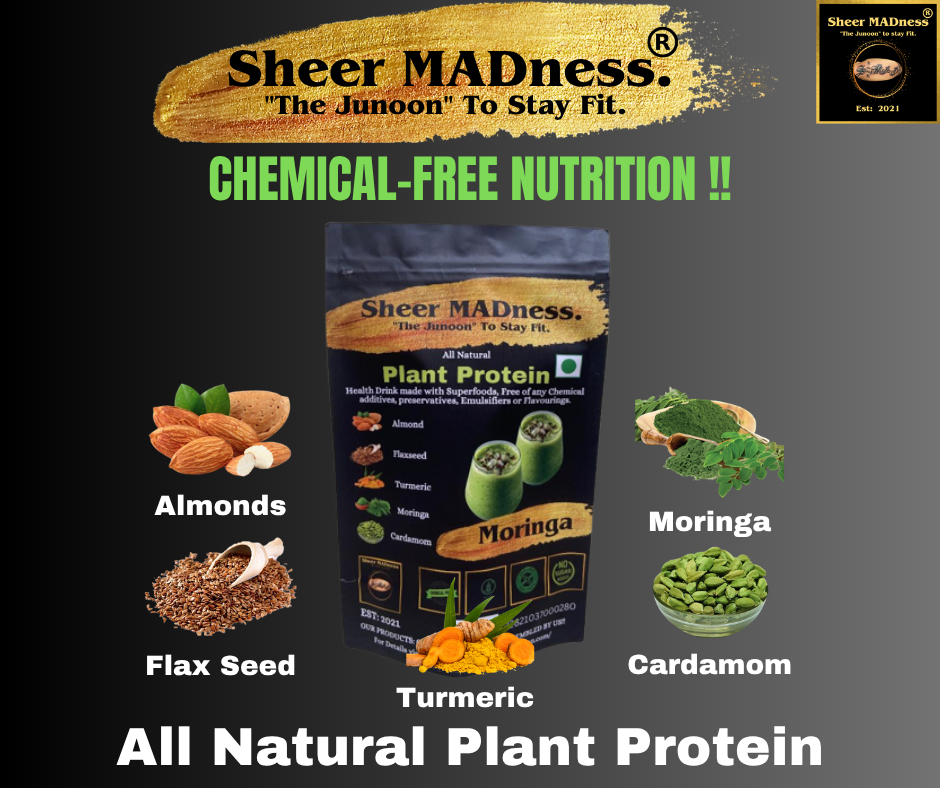
Sheer MADness Plant Protein Moringa provides five-pathway anti-inflammatory coverage from five whole-food ingredients that no single-ingredient supplement matches.
Moringa isothiocyanates: NF-κB inhibition via Keap1 modification → HO-1 → NF-κB suppression and direct IKK cysteine modification. Moringa quercetin: COX-2 dual inhibition (transcription + enzyme) and 5-LOX inhibition. Flaxseed ALA: eicosanoid substrate competition reducing PGE2 and LTB4 production, plus resolvin and protectin production that actively resolves inflammation. Turmeric curcumin: complementary IKKβ direct inhibition providing redundant NF-κB suppression. Moringa and flaxseed prebiotic fibres: gut microbiome support reducing LPS endotoxemia and the TLR4-NF-κB systemic inflammatory signalling that drives India’s metabolic disease burden.
Zero chemical additive that would itself activate TLR4 or NF-κB — no synthetic preservatives, no gut-disrupting artificial sweeteners, no xenobiotic hepatic metabolites. Since 2021, every ingredient is on the front of every pack. The anti-inflammatory mechanisms are in the ingredients.
Sheer MADness holds a registered trademark under the Government of India. The Natural Plant Protein formula is patent published under Patent No. 202331036733, searchable on Intellectual Property India. The brand holds a valid FSSAI licence and GSTIN registration.
| Inflammatory Target | Anti-Inflammatory Mechanism | Compound | Source |
|---|---|---|---|
| NF-κB activation (primary) | Keap1 cysteine modification → Nrf2 → HO-1 → NF-κB suppression | Isothiocyanates | Moringa leaf |
| NF-κB activation (secondary) | Direct IKK cysteine modification → IκB preservation | Isothiocyanates | Moringa leaf |
| NF-κB activation (tertiary) | Direct IKKβ kinase inhibition | Curcumin | Turmeric |
| TNF-α, IL-1β, IL-6, IL-8 production | NF-κB transcription suppression | Isothiocyanates + curcumin | Moringa + turmeric |
| COX-2 gene expression | NF-κB-dependent COX-2 transcription reduction | Quercetin + isothiocyanates | Moringa leaf |
| COX-2 enzyme activity | Direct competitive enzyme inhibition | Quercetin | Moringa leaf |
| 5-LOX enzyme activity | Iron-chelation inhibition of 5-LOX active site | Quercetin | Moringa leaf |
| Prostaglandin E2 production | Reduced arachidonic acid-COX-2 flux | ALA omega-3 substrate competition | Flaxseed |
| Leukotriene B4 production | Reduced arachidonic acid-5-LOX flux | ALA omega-3 substrate competition | Flaxseed |
| Inflammation resolution | Resolvin and protectin production from EPA | ALA → EPA conversion | Flaxseed |
| Gut LPS endotoxemia | Akkermansia muciniphila mucosal barrier strengthening | Prebiotic mucilage + lignans | Flaxseed |
| Gut LPS endotoxemia | Faecalibacterium prausnitzii butyrate → tight junctions | Prebiotic almond fibre | Almonds |
| TLR4-NF-κB activation | Reduced LPS translocation from better gut barrier | Moringa + flaxseed prebiotic | Moringa + flaxseed |
| Oxidative-inflammatory amplification cycle | Nrf2 antioxidant → HO-1 → NF-κB suppression | Isothiocyanates → Nrf2 | Moringa leaf |
Can moringa reduce inflammation?
Yes — moringa reduces chronic inflammation through five documented molecular mechanisms: NF-κB inhibition via isothiocyanate-Keap1 modification, COX-2 and 5-LOX dual inhibition via quercetin, eicosanoid balance restoration via flaxseed omega-3, complementary NF-κB inhibition via turmeric curcumin, and gut endotoxemia reduction via moringa and flaxseed prebiotic fibres that restore intestinal barrier integrity. These are specific, documented dietary anti-inflammatory mechanisms.
What is NF-κB and why does moringa’s inhibition of it matter for inflammation?
NF-κB is the master transcription factor that drives the expression of hundreds of inflammatory genes — including TNF-α, IL-1β, IL-6, and COX-2. When NF-κB is activated by inflammatory signals (LPS, oxidative stress, cytokines), it enters the nucleus and produces all the major inflammatory mediators simultaneously. Moringa’s isothiocyanates and turmeric curcumin inhibit NF-κB through different molecular mechanisms — reducing the entire inflammatory gene expression programme from its upstream controller.
When gut microbiome dysbiosis compromises the intestinal barrier, LPS from gram-negative gut bacteria leaks into systemic circulation (metabolic endotoxemia). LPS activates TLR4 on adipocytes, liver cells, and endothelial cells, triggering NF-κB-mediated inflammatory cytokine production throughout the body — driving the chronic systemic inflammation underlying metabolic syndrome, NAFLD, and cardiovascular disease. Moringa and flaxseed prebiotic fibres strengthen the gut barrier through Akkermansia muciniphila and F. prausnitzii support, specifically reducing LPS leakage.
What is the difference between acute and chronic inflammation and why does it matter for moringa?
Acute inflammation is beneficial — it heals wounds and contains infections. Moringa does not and should not suppress acute inflammation. Chronic inflammation is harmful — persistent low-grade NF-κB activation generating cytokines that damage tissues over years. Moringa’s anti-inflammatory mechanisms specifically target the chronic inflammatory pathway components — NF-κB transcription, COX-2/5-LOX enzyme activity, eicosanoid substrate balance — without suppressing the acute inflammatory healing response.
How do quercetin’s COX-2 and 5-LOX inhibition compare to NSAIDs?
NSAIDs (aspirin, ibuprofen, naproxen) inhibit COX enzymes at pharmacological concentrations — producing strong, acute anti-inflammatory and analgesic effects. Quercetin from moringa inhibits COX-2 and 5-LOX at dietary concentrations — producing weaker but sustained anti-inflammatory effects with daily consistent consumption. NSAIDs are appropriate for acute pain management. Dietary quercetin is appropriate for chronic inflammatory biomarker reduction over weeks and months of daily consumption. They are not interchangeable — and moringa does not replace NSAIDs for acute pain.
Both. Omega-3 ALA reduces pro-inflammatory arachidonic acid-derived prostaglandin and leukotriene production through substrate competition at COX and LOX enzymes — actively reducing ongoing inflammatory mediator production. Additionally, EPA converted from ALA generates resolvins and protectins — active pro-resolution molecules that terminate existing inflammatory responses. This dual preventive (less pro-inflammatory mediators) and active (more pro-resolution mediators) activity makes flaxseed omega-3 specifically effective for chronic inflammation management.
Is moringa safe for people with inflammatory conditions like arthritis or IBD?
Moringa is a food with documented anti-inflammatory nutritional mechanisms. It is safe for daily consumption as a food for most adults. However, inflammatory conditions — arthritis, inflammatory bowel disease, autoimmune conditions — are diagnosed medical conditions requiring medical management. Dietary additions including moringa are adjuncts to medical treatment, not replacements for prescribed anti-inflammatory medication. Always discuss dietary changes with your physician if you have diagnosed inflammatory conditions.
How long does consistent daily moringa use take to reduce inflammation biomarkers?
CRP reduction from dietary anti-inflammatory interventions typically requires 4 to 12 weeks of consistent daily consumption to produce measurable changes in human clinical trials. This reflects the time required to shift eicosanoid substrate pools (omega-3 incorporation into membrane phospholipids), establish anti-inflammatory gut microbiome populations (Akkermansia abundance changes over weeks), and sustain NF-κB suppression at levels sufficient to reduce circulating cytokine production. Daily consistent moringa consumption is a long-term dietary strategy, not an acute anti-inflammatory intervention.

Chronic inflammation is not caused by a single compound deficiency that a single supplement can fix. It is driven by dietary patterns over years — specifically the shift from traditional whole-food, high-fibre, high-plant-diversity diets toward refined carbohydrate, processed oil, and ultra-processed food dietary patterns that simultaneously increase NF-κB activation signals (refined carbohydrate → AGEs → TLR4), reduce anti-inflammatory substrate availability (omega-6 > omega-3), and disrupt the gut microbiome that maintains intestinal barrier integrity against LPS endotoxemia.
Reversing chronic inflammation requires consistent daily dietary pattern correction — not an occasional supplement. Moringa’s isothiocyanates (NF-κB inhibition), quercetin (COX-2 and 5-LOX inhibition), flaxseed omega-3 (eicosanoid balance), curcumin (IKKβ inhibition), and prebiotic fibres (gut endotoxemia reduction) address every component of the chronic inflammatory cascade simultaneously — from a daily whole-food preparation that requires no chemistry to understand.
Sheer MADness Plant Protein Moringa delivers this five-mechanism anti-inflammatory nutritional system from five whole-food ingredients — vacuum packed to preserve the isothiocyanates and quercetin that drive NF-κB and 5-LOX inhibition, with every ingredient on the front of every pack since 2021.
The anti-inflammatory system is in the ingredients. Build it daily.
I would also request you to please read my previous post: Benefits of Moringa Plant protein, the versatile Superfood powerhouse.
a) Everyone is an individual, so what suits me may not suit the next person.
b) If a person has a medical condition, a doctor’s advice and prescribed medication will only help. Chronic inflammatory conditions — arthritis, inflammatory bowel disease, autoimmune diseases — require medical management. Moringa is a nutritional food that supports healthy inflammatory balance. It does not replace prescribed anti-inflammatory medications.
c) While buying any protein powder from the market, read the labels carefully. Watch out for INS codes, Anti-caking agent, INS 551 (Silicon dioxide), BHA (Butylated hydroxyanisole), BHT (Butylated hydroxytoluene), and sucralose. Sucralose specifically reduces gut microbiome beneficial bacteria populations — worsening the gut dysbiosis that drives LPS endotoxemia and TLR4-NF-κB systemic inflammation.
If you are interested in buying chemical-free Natural Plant Protein Moringa, Health Drinks for Kids, or our delicious chemical-free Energy Bars, Protein Bars, and Millet Bars, shop at Sheer MADness.
You can also find us on Flipkart, Jio Mart, or ONDC in India.
d) Exercise is the key to fitness. Exercise and nutrition are two sides of the same coin and always go hand in hand.
e) Excess of anything is wrong, even the best whole-food superfood. Consume only recommended quantities.
f) Rome was not built in a day. Discipline and consistency are the only keys to lasting health.
g) It is not only exercise and protein that builds health. A healthy gut, macro and micronutrients, body type, rest, and lifestyle all matter. Of all these, exercise and nutrition are within our control. Focus on these two primary aspects first.
h) The most important part of fitness is that nothing is better than exercise and a balanced meal.
Article by Chef Ashutosh Awasthi
Disclaimer: Our products are a source of HEALTHY NUTRIENTS and are COMPLETELY FREE OF ANY ADDED CHEMICALS. We do not claim to cure any medical condition. The content provided is informational. We do not claim to diagnose or treat a person with any specific medical condition.