

Critical medical notice before the direct answer: Diabetes — Type 1 and Type 2 — is a serious medical condition requiring physician management and prescribed medication. Moringa is a food. This post explains the nutritional mechanisms through which moringa’s compounds support blood glucose management as a dietary adjunct to prescribed treatment — not as a replacement for medication or medical care. Anyone managing diabetes with prescribed medication must discuss moringa with their diabetologist before beginning, because moringa’s blood glucose-lowering nutritional mechanisms can compound medication effects and cause hypoglycaemia if not monitored.
Direct answer: Moringa plant protein powder supports blood glucose management through four specific, documented nutritional mechanisms relevant to Type 2 diabetes pathophysiology. Chlorogenic acid activates the AMPK pathway through LKB1, increasing GLUT4 glucose transporter translocation to muscle cell membranes and reducing hepatic glucose output. Quercetin activates SIRT1-LKB1-AMPK signalling, improving insulin receptor sensitivity. Flaxseed mucilage viscous fibre slows gastric emptying and reduces postprandial glucose absorption rate — reducing glucose spikes after meals. And moringa’s Nrf2 antioxidant activation reduces the pancreatic beta-cell oxidative stress that progressively impairs insulin secretion in Type 2 diabetes. These are nutritional mechanisms supporting healthy blood glucose balance — not disease treatment claims.
I am Chef Ashutosh Awasthi, founder of Sheer MADness, professional chef, marathon runner, and author of Great Health Comes from Exercise & Nutrition. India has 100 million people living with Type 2 diabetes — more than any other country. This topic deserves the most honest, scientifically precise, and medically responsible treatment in the entire series.
Type 2 diabetes (T2D) is not a single metabolic defect — it is a progressive condition with multiple compounding pathophysiological mechanisms. Understanding these mechanisms explains precisely where moringa’s nutritional compounds intervene and why those intervention points matter.
Insulin resistance is the central mechanism of T2D. In healthy physiology, insulin binds to insulin receptor tyrosine kinase on muscle and fat cells, triggering autophosphorylation of insulin receptor substrate-1 (IRS-1) at tyrosine residues. This phosphorylated IRS-1 activates PI3K (phosphatidylinositol 3-kinase), which activates Akt, which phosphorylates AS160 — triggering GLUT4 glucose transporter translocation from intracellular vesicles to the cell membrane. GLUT4 at the membrane takes up glucose from the blood, lowering blood glucose.
In insulin resistance, IRS-1 is instead phosphorylated at serine residues — by inflammatory kinases including JNK (c-Jun N-terminal kinase, activated by LPS-TLR4 gut endotoxemia) and IKKβ (activated by NF-κB inflammatory signalling). Serine-phosphorylated IRS-1 cannot activate PI3K — the insulin signalling cascade is broken — and GLUT4 remains intracellular rather than translocating to the membrane. Blood glucose remains elevated despite normal or even elevated insulin production.
This is why inflammation is not just a complication of diabetes — it is a cause. The LPS-TLR4-NF-κB-JNK-IRS-1 serine phosphorylation pathway connects gut dysbiosis directly to insulin resistance through a specific molecular mechanism.
As insulin resistance develops, the pancreatic beta-cells compensate by producing more insulin. The sustained hyperstimulation of beta-cell ATP production generates elevated mitochondrial ROS (reactive oxygen species). Pancreatic beta-cells have notably low antioxidant enzyme capacity (lower superoxide dismutase and catalase than other tissues) — making them specifically vulnerable to this oxidative stress. Progressive ROS-driven beta-cell apoptosis reduces the insulin-secreting beta-cell mass — eventually producing the relative insulin deficiency that characterises advanced T2D.
Type 1 diabetes (T1D) is an autoimmune condition — T-cells destroy beta-cells, eliminating insulin production. Insulin replacement is essential for survival. Moringa’s nutritional mechanisms — AMPK activation, insulin sensitivity support, beta-cell antioxidant protection — do not address the autoimmune beta-cell destruction of T1D and cannot meaningfully support T1D management. People with T1D should not consume moringa in expectation of blood glucose benefits.
Type 2 diabetes involves insulin resistance (not insulin absence) and progressive beta-cell dysfunction. Moringa’s mechanisms address both components of T2D specifically. This post applies exclusively to T2D and prediabetes — not T1D.
India is the world’s most severely affected country for Type 2 diabetes by absolute numbers — with approximately 100 million diagnosed adults and an estimated further 130 million in prediabetes. Several India-specific factors compound this burden:
Indian adults develop insulin resistance and metabolic syndrome at significantly lower BMI than Western populations. An Indian adult with a BMI of 23 to 25 — considered normal weight by WHO criteria — frequently has visceral adiposity percentages equivalent to a Western adult with BMI 30 to 32. This “thin-fat Indian phenotype” — characterised by disproportionately high visceral fat relative to BMI — produces the inflammatory and insulin-resistance-driving adipokine profile of obesity at a weight that appears normal.
The mechanism: visceral adipocytes produce resistin, TNF-α, and IL-6 at rates proportional to their mass and inflammatory state. In thin-fat Indians, the visceral fat produces these insulin-resistance-driving cytokines at much higher absolute levels than their BMI would suggest — driving IRS-1 serine phosphorylation and GLUT4 trafficking impairment from the adipose tissue inflammatory axis.
India’s urban dietary transition — high refined carbohydrate intake from maida, white rice, processed snacks, and sugar-sweetened beverages — drives the postprandial glucose spikes and chronic hyperinsulinaemia that progressively impair insulin receptor sensitivity through glucose toxicity mechanisms. High glycaemic index dietary patterns also drive the gut dysbiosis that generates LPS endotoxemia — connecting India’s processed food consumption directly to the gut-inflammation-insulin resistance pathway described above.
This dietary context explains why moringa’s nutritional mechanisms are specifically relevant to the Indian T2D population — moringa addresses both the AMPK/insulin signalling pathway and the gut endotoxemia-IRS-1 serine phosphorylation pathway that India’s dietary patterns are specifically activating.
Chlorogenic acid — moringa’s primary phenolic acid — activates AMPK (AMP-activated protein kinase) through the LKB1 (liver kinase B1) phosphorylation pathway. This mechanism was covered in detail in the cholesterol post. Here its specific T2D relevance is developed.
In skeletal muscle — the primary site of postprandial glucose disposal, accounting for 70 to 80 percent of insulin-stimulated glucose uptake — AMPK activation produces GLUT4 translocation to the cell membrane through a pathway independent of the insulin-IRS-1 pathway. This is specifically important for T2D: when insulin signalling is impaired by IRS-1 serine phosphorylation, AMPK-mediated GLUT4 activation provides an alternative, insulin-independent pathway for glucose uptake into muscle cells.
This is precisely the mechanism through which metformin — the most widely prescribed T2D medication globally — reduces blood glucose. Metformin activates AMPK through Complex I inhibition in the mitochondrial electron transport chain. Chlorogenic acid activates the same AMPK pathway through LKB1 phosphorylation at a different upstream point. The overlap in mechanism between moringa’s chlorogenic acid and metformin is the primary reason why individuals taking metformin and consuming moringa simultaneously require blood glucose monitoring — the combined AMPK activation from both sources can produce additive blood glucose-lowering that exceeds the desired therapeutic range, causing hypoglycaemia.
Additionally, AMPK in the liver inhibits PEPCK and G6Pase — the enzymes of hepatic gluconeogenesis that produce glucose from non-carbohydrate precursors during fasting. Elevated hepatic gluconeogenesis is a primary contributor to elevated fasting blood glucose in T2D. AMPK inhibiting hepatic gluconeogenesis specifically reduces fasting blood glucose — the most important measure of T2D control.
Research published in Phytomedicine confirmed chlorogenic acid’s LKB1-AMPKα activation with measured reduction in hepatic glucose output in human liver cell models — directly relevant to the fasting glucose elevation that is central to T2D pathophysiology.
Quercetin activates SIRT1 — as established in the cholesterol, metabolism, and memory posts. SIRT1’s role in T2D physiology is specifically important and deserves dedicated development here.
SIRT1 deacetylates LKB1 — activating it and enhancing its ability to phosphorylate and activate AMPK. This creates a SIRT1-LKB1-AMPK axis that quercetin activates through SIRT1, complementing chlorogenic acid’s direct LKB1 phosphorylation through a parallel but distinct upstream entry point.
SIRT1 also deacetylates and activates PGC-1α — the master regulator of mitochondrial biogenesis and fatty acid oxidation in skeletal muscle. Improved mitochondrial function in muscle specifically reduces the intramyocellular lipid accumulation (diacylglycerol and ceramide) that activates PKC-θ — a kinase that phosphorylates IRS-1 at serine residues, directly causing insulin resistance. By improving mitochondrial fatty acid oxidation, SIRT1-PGC-1α reduces the lipid intermediates that are the proximal cause of muscle insulin resistance.
Research published in the Journal of Nutritional Biochemistry confirmed quercetin’s SIRT1-LKB1-AMPK activation with measured improvement in insulin sensitivity in metabolic syndrome models.
Furthermore, SIRT1 deacetylates and inhibits NF-κB — reducing the inflammatory signalling that produces JNK and IKKβ activation and the consequent IRS-1 serine phosphorylation that breaks the insulin signalling cascade. Quercetin’s SIRT1 activation addresses insulin resistance through the inflammatory component of the mechanism simultaneously with the direct metabolic component.
The most clinically significant dietary intervention for postprandial blood glucose management — the blood glucose spikes after meals that drive glucose toxicity, HbA1c elevation, and long-term complication risk in T2D — is viscous dietary fibre.
Flaxseed’s mucilage — a soluble gel-forming fibre — dissolves in water in the gastrointestinal tract to form a viscous gel that slows gastric emptying and reduces the rate of glucose absorption from the small intestine. The EFSA has approved the health claim that beta-glucan and other viscous fibres reduce postprandial blood glucose response — the same mechanism by which flaxseed mucilage operates.
By slowing gastric emptying, flaxseed mucilage converts the rapid glucose surge of a high-carbohydrate meal into a slower, more sustained glucose release — reducing the peak postprandial glucose concentration, the amplitude of the insulin response required, and the glucose toxicity accumulated at peak glucose. Over time, reduced postprandial glucose peaks reduce HbA1c — the three-month integrated blood glucose measure that is the primary clinical T2D control metric.
Research published in Nutrition and Metabolism confirmed that regular flaxseed consumption significantly reduced postprandial blood glucose response in human participants, with the effect attributed to the mucilage’s viscosity-mediated gastric emptying delay. For individuals managing T2D or prediabetes, the pre-meal moringa-flaxseed preparation — one tablespoon in warm water 20 to 30 minutes before the highest-carbohydrate meal — provides maximal gastric emptying delay coinciding with the largest postprandial glucose challenge.
As described in the T2D pathophysiology section, pancreatic beta-cell oxidative stress is the mechanism through which T2D progressively worsens from a reversible insulin resistance condition toward irreversible insulin deficiency. Protecting beta-cell oxidative integrity is therefore the most important long-term T2D management mechanism available from nutrition.
Moringa’s isothiocyanates activate the Nrf2-Keap1 antioxidant pathway — as established in the oxidative stress post. In the pancreatic beta-cell context specifically, Nrf2 activation upregulates glutathione peroxidase, superoxide dismutase, and catalase — the three primary antioxidant enzymes that neutralise the mitochondrial ROS generated by hyperstimulated ATP production during compensatory hyperinsulinaemia.
Research published in Oxidative Medicine and Cellular Longevity confirmed moringa’s Nrf2 activation specifically in pancreatic tissue — demonstrating protection of beta-cell viability against oxidative stress-induced apoptosis. This mechanism suggests moringa may specifically protect the beta-cell mass that determines long-term T2D trajectory — a more strategically important mechanism than acute blood glucose reduction.
Turmeric curcumin in Sheer MADness Plant Protein Moringa provides complementary NF-κB inhibition in beta-cell tissue — reducing the inflammatory IKKβ that contributes to beta-cell apoptosis and further protecting functional beta-cell mass.
Magnesium is the third most important nutritional factor in T2D management after fibre and specific phytochemicals — yet the most poorly recognised.
Magnesium is required for insulin receptor tyrosine kinase function. The insulin receptor’s autophosphorylation reaction that initiates the IRS-1 cascade requires Mg²⁺ as a cofactor. When magnesium is deficient — as it is in a large proportion of Indian adults eating refined carbohydrate-dominant diets that provide minimal magnesium — insulin receptor function is impaired at its initial activation step, compounding the insulin resistance from IRS-1 serine phosphorylation by an independent upstream mechanism.
Research published in Diabetes Care confirmed that higher dietary magnesium intake is associated with lower risk of T2D development and lower HbA1c in established T2D — with each additional 100mg of daily magnesium intake associated with approximately 15 percent reduction in T2D risk in large prospective cohorts.
Almonds provide magnesium at 270 milligrams per 100 grams — the highest magnesium density of any common nut. Two tablespoons of Sheer MADness Plant Protein Moringa provide approximately 50 to 60 milligrams of magnesium from almond content — a meaningful daily contribution to the magnesium sufficiency that insulin receptor function specifically requires.
Skeletal muscle is the primary site of postprandial glucose disposal — accounting for 70 to 80 percent of insulin-stimulated glucose uptake. Maintaining adequate muscle mass specifically supports blood glucose management by preserving the glucose disposal tissue volume. Sarcopenia — muscle loss from ageing or inactivity — reduces this glucose disposal capacity and specifically worsens glycaemic control.
The complete protein from moringa, almonds, and flaxseed in Sheer MADness Plant Protein Moringa — 8 to 10 grams per two-tablespoon serving — contributes to the protein adequacy required for skeletal muscle mass maintenance. For Indian T2D patients whose protein intake is typically inadequate (40 to 55 grams daily versus 70 to 80 grams recommended), moringa protein specifically supports the muscle mass that is the primary glucose disposal tissue.
Furthermore, protein’s high TEF (20 to 30 percent) and satiety hormone effects (GLP-1, PYY, CCK, ghrelin suppression) reduce subsequent meal caloric intake — supporting the modest caloric deficit that improves insulin sensitivity in T2D management. Moringa protein before meals is the most evidence-based pre-meal intervention for reducing postprandial caloric intake in T2D dietary management.
This section is the most important safety section for this population and must be read by anyone managing T2D with prescribed medication.
Moringa’s chlorogenic acid (LKB1-AMPK activation) and quercetin (SIRT1-LKB1-AMPK activation) produce blood glucose-lowering effects through the same AMPK pathway that metformin uses. Additionally, moringa’s magnesium improves insulin receptor function, flaxseed fibre reduces postprandial glucose absorption, and the overall nutritional package improves insulin sensitivity — all producing blood glucose-lowering from multiple simultaneous mechanisms.
When these nutritional blood glucose-lowering mechanisms are combined with:
Metformin (AMPK activator) — additive AMPK activation can produce blood glucose reduction exceeding the therapeutic target, causing hypoglycaemia.
Sulfonylureas (glipizide, glibenclamide — insulin secretagogues) — moringa’s blood glucose-lowering compounds add to sulfonylurea-driven insulin release, amplifying hypoglycaemia risk.
Insulin (exogenous) — reduced blood glucose from dietary moringa combined with insulin doses calibrated to a higher dietary glucose load can produce serious hypoglycaemia.
SGLT2 inhibitors (dapagliflozin, empagliflozin) — additional blood glucose lowering from moringa compounds the already-substantial glucose reduction from SGLT2 inhibition.
The clinical guidance: Discuss moringa with your diabetologist before starting if you take any blood glucose-lowering medication. Begin with half a tablespoon daily. Monitor blood glucose more frequently (including fasting and two-hour post-meal readings) for the first four weeks. Report any hypoglycaemia symptoms immediately (sweating, tremor, confusion, hunger, dizziness). Your physician may need to adjust medication doses as dietary patterns change.
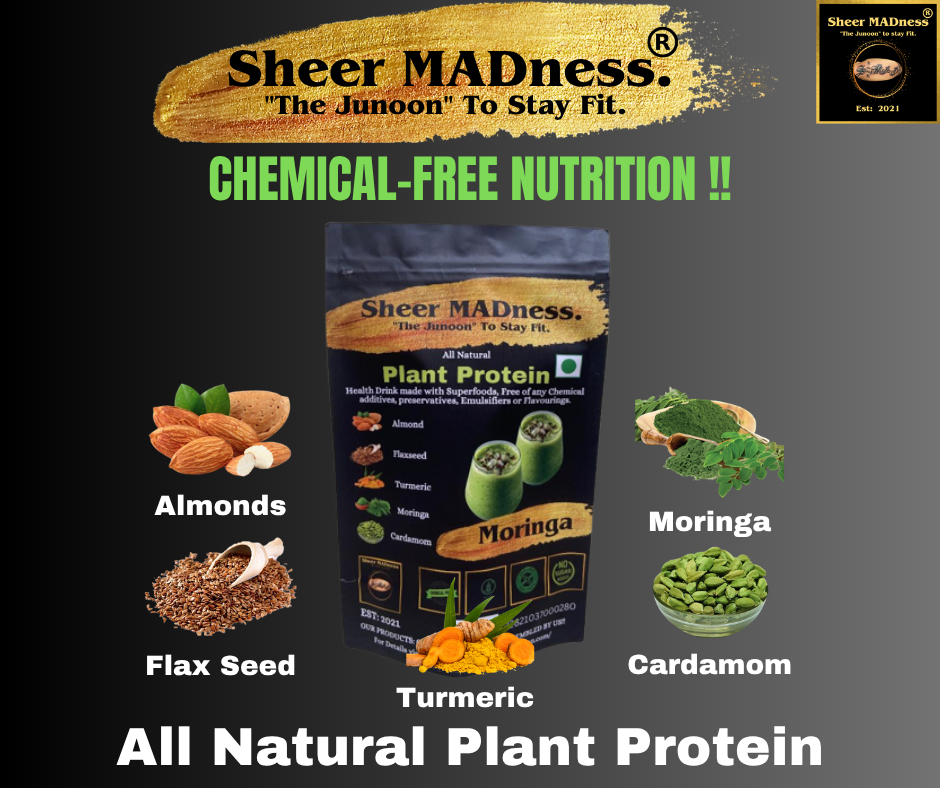
Sheer MADness Plant Protein Moringa provides five complementary blood glucose-supporting nutritional mechanisms from five whole-food ingredients. And that too without any ingredient that would worsen glycaemic control.
Zero refined carbohydrate — no maltodextrin, no glucose syrup, no refined sugar that would contribute to postprandial glucose spikes. Zero sucralose. Despite being a “zero-calorie” sweetener, sucralose disrupts gut microbiome beneficial bacteria that support insulin sensitivity through the gut-inflammation-IRS-1 pathway. Five whole foods — moringa chlorogenic acid for AMPK, moringa quercetin for SIRT1-LKB1-AMPK and Nrf2. Flaxseed mucilage for postprandial glucose attenuation. Almond magnesium for insulin receptor function, and turmeric curcumin for beta-cell NF-κB protection.
Since 2021, every ingredient is on the front of every pack. The first product in India to provide this level of transparency. For T2D patients who must scrutinise every ingredient they consume daily. This front-of-pack labelling provides the verification that medical necessity demands.
Sheer MADness holds a registered trademark under the Government of India. The Natural Plant Protein formula is patent published under Patent No. 202331036733, searchable on Intellectual Property India. The brand holds a valid FSSAI licence and GSTIN registration.
| T2D Pathophysiology | Moringa Mechanism | Compound | Evidence Level |
|---|---|---|---|
| IRS-1 serine phosphorylation (insulin resistance) | SIRT1-NF-κB inhibition → reduced JNK/IKKβ → IRS-1 tyrosine restored | Quercetin → SIRT1 | Moderate — mechanism confirmed |
| GLUT4 trafficking impairment | AMPK-independent GLUT4 translocation | Chlorogenic acid → LKB1-AMPK | Moderate — Phytomedicine human liver cell study |
| Insulin receptor function | Mg²⁺ cofactor for insulin receptor tyrosine kinase | Almond magnesium | Strong — Diabetes Care prospective cohort |
| Hepatic gluconeogenesis (fasting glucose) | AMPK inhibits PEPCK and G6Pase | Chlorogenic acid + quercetin → AMPK | Moderate — mechanism confirmed |
| Postprandial glucose spike | Gastric emptying delay — viscous mucilage gel | Flaxseed mucilage | Strong — EFSA health claim + human RCT |
| Beta-cell oxidative stress and apoptosis | Nrf2 → GPx, SOD, catalase upregulation | Isothiocyanates → Nrf2 | Moderate — OMCL moringa beta-cell study |
| Beta-cell NF-κB inflammation | IKKβ inhibition protecting beta-cell mass | Curcumin (turmeric) | Moderate — curcumin beta-cell studies |
| Muscle glucose disposal capacity | Protein supporting skeletal muscle mass | Complete protein moringa-almond-flaxseed | Strong — protein-muscle glucose disposal |
| Intramyocellular lipid-IRS-1 serine phosphorylation | SIRT1-PGC-1α mitochondrial FA oxidation | Quercetin → SIRT1-PGC-1α | Moderate — mechanism confirmed |
| Gut endotoxemia-insulin resistance pathway | Akkermansia prebiotic — LPS reduction | Moringa + flaxseed prebiotic | Growing — gut-insulin resistance connection |
Can moringa help with diabetes?
Moringa supports blood glucose management through specific nutritional mechanisms relevant to Type 2 diabetes. Chlorogenic acid activates AMPK for GLUT4 translocation and hepatic glucose output reduction. Quercetin activates SIRT1-LKB1-AMPK for insulin sensitivity. Flaxseed viscous fibre reduces postprandial glucose absorption; and Nrf2 activation protects beta-cell mass from oxidative stress. These are dietary support mechanisms — not disease treatment. Moringa must be used as a nutritional adjunct to prescribed T2D medication and medical management, never as a replacement.
Does moringa work for Type 1 diabetes?
No. Moringa’s mechanisms address insulin resistance and beta-cell protection — both relevant to Type 2 diabetes. Type 1 diabetes involves autoimmune destruction of beta-cells and absolute insulin deficiency. Moringa’s nutritional mechanisms do not address the autoimmune mechanism of T1D and cannot support T1D management in any meaningful way. People with T1D should not consume moringa in expectation of blood glucose benefits.
Moringa’s chlorogenic acid activates the same AMPK pathway that metformin uses — producing additive blood glucose-lowering that can cause hypoglycaemia. Moringa’s quercetin further improves insulin sensitivity through SIRT1-LKB1-AMPK, and flaxseed fibre reduces postprandial glucose absorption. Combined with metformin, sulfonylureas, insulin, or SGLT2 inhibitors, these nutritional effects can reduce blood glucose further than the medication dose was calibrated for. Physician discussion and increased blood glucose monitoring are essential before beginning moringa if on antidiabetic medication.
What is the “thin-fat Indian phenotype” and why is it relevant to moringa?
The thin-fat Indian phenotype refers to the pattern where Indian adults have significantly higher visceral adiposity relative to BMI than Western populations — developing insulin resistance and metabolic syndrome at BMI levels considered normal weight by WHO criteria. This makes India’s T2D burden particularly severe at population scale. Moringa’s AMPK activation, SIRT1-mediated insulin sensitivity, and gut prebiotic support address the inflammatory-insulin resistance pathway that visceral adiposity drives — making moringa’s mechanisms specifically relevant to the most common Indian T2D driver.
HbA1c (glycated haemoglobin) is the three-month integrated blood glucose measure — the primary clinical T2D control metric. It reflects the average blood glucose over the preceding three months. Reducing postprandial glucose spikes — through flaxseed viscous fibre slowing gastric emptying — reduces the contribution of post-meal glucose excursions to the HbA1c measurement. Consistent daily flaxseed consumption reducing postprandial peaks over months specifically contributes to lower HbA1c — the most clinically meaningful T2D management outcome.
How should someone with T2D use Sheer MADness Plant Protein Moringa?
After physician discussion and medication review: start with half a tablespoon in warm water before the highest-carbohydrate meal of the day. Monitor blood glucose more frequently in the first four weeks. Gradually increase to one tablespoon if well-tolerated and blood glucose is stable. Do not use as a meal replacement for balanced whole-food meals. Continue all prescribed medication at prescribed doses unless your physician specifically advises adjustment based on blood glucose monitoring results. Report any hypoglycaemia symptoms immediately.
Yes — moringa’s blood glucose-supporting mechanisms are appropriate and lower-risk for people with prediabetes who are not yet on blood glucose-lowering medication. For prediabetes management specifically, the dietary lifestyle intervention is the primary recommended approach. Moringa’s AMPK activation, insulin sensitisation, postprandial glucose attenuation, and gut microbiome support are aligned with the dietary pattern goals of prediabetes reversal. No medication interaction risk exists for those not on antidiabetic drugs. Physician guidance for prediabetes management overall remains appropriate.
Does moringa replace a diabetic diet and exercise programme?
No. The most evidence-based interventions for T2D management are dietary pattern change (reducing refined carbohydrate, increasing fibre and protein, reducing ultra-processed food), regular aerobic and resistance exercise, and prescribed medication. Moringa provides specific nutritional mechanisms that complement these — it does not substitute for any of them. The most effective use of moringa for T2D dietary management is as part of a comprehensive dietary pattern change. That reduces refined carbohydrate-dominant snacks and meals, with moringa providing the AMPK and insulin sensitivity support within that broader dietary change.

Managing Diabetes requires a Holistic Approach.
One hundred million Indian adults are living with Type 2 diabetes. Many more are in prediabetes. The dietary pattern driving this epidemic — high refined carbohydrate, low fibre, low whole-food diversity, high processed food consumption — produces the gut dysbiosis, chronic low-grade inflammation, hepatic fat accumulation, visceral adiposity, and postprandial glucose burden that drives progressive insulin resistance.
Moringa addresses this pathophysiology at four simultaneous levels: AMPK activation providing insulin-independent GLUT4 translocation and hepatic gluconeogenesis inhibition; SIRT1-mediated insulin sensitivity improvement through PGC-1α and NF-κB inhibition; flaxseed viscous fibre reducing postprandial glucose absorption; and Nrf2-mediated beta-cell antioxidant protection preserving insulin secretion capacity.
These are meaningful, specific, and documented nutritional mechanisms. They are not a cure. These are not a substitute for metformin, insulin, or any prescribed medication. They are whole-food nutritional support for the most important chronic metabolic condition affecting India today — from five whole-food ingredients, with zero synthetic additive, every ingredient on the front of every pack since 2021.
Consult your diabetologist. Monitor your blood glucose. And let whole-food nutrition do what it does best — support the metabolic environment that medication manages, from the inside.
I would also request you to please read my previous post: Benefits of Moringa Plant protein, the versatile Superfood powerhouse.
a) Everyone is an individual, so what suits me may not suit the next person.
b) If a person has a medical condition, a doctor’s advice and prescribed medication will only help. Diabetes — Type 1 and Type 2 — is a serious medical condition requiring ongoing physician management. Moringa is a food, not a medicine. It is an adjunct to, not a replacement for, prescribed diabetes treatment. Anyone on blood glucose-lowering medication must discuss moringa with their diabetologist before starting — the drug interaction risk is real and can cause hypoglycaemia.
c) While buying any protein powder from the market, read the labels carefully. Watch out for INS codes, BHA (Butylated hydroxyanisole), BHT (Butylated hydroxytoluene), and — critically for T2D patients — hidden refined carbohydrate ingredients like maltodextrin (GI 85-95), glucose syrup, and sucralose that would worsen the postprandial glycaemic response the supplement is supposed to support.
If you are interested in buying chemical-free Natural Plant Protein Moringa, Health Drinks for Kids, or our delicious chemical-free Energy Bars, Protein Bars, and Millet Bars, shop at Sheer MADness.
You can also find us on Flipkart, Jio Mart, or ONDC in India.
d) Exercise is the key to fitness. Exercise and nutrition are two sides of the same coin and always go hand in hand. For T2D specifically, both aerobic exercise (improving insulin sensitivity through AMPK in muscle) and resistance exercise (maintaining skeletal muscle glucose disposal capacity) are the most evidence-based non-pharmacological interventions — moringa supports the nutritional side of this same equation.
e) Excess of anything is wrong, even the best whole-food superfood. Consume only recommended quantities.
f) Rome was not built in a day. Discipline and consistency are the only keys to lasting health.
g) It is not only exercise and protein that builds health. A healthy gut, macro and micronutrients, body type, rest, and lifestyle all matter. Of all these, exercise and nutrition are within our control. Focus on these two primary aspects first.
h) The most important part of fitness is that nothing is better than exercise and a balanced meal.
Disclaimer: Our products are a source of HEALTHY NUTRIENTS and are COMPLETELY FREE OF ANY ADDED CHEMICALS. We do not claim to cure any medical condition. The content provided is informational. We do not claim to diagnose or treat a person with any specific medical condition.