

Direct answer: Moringa is one of the most alkaline-forming foods available — with a highly negative Potential Renal Acid Load (PRAL) score that places it among the top tier of alkaline foods alongside dark leafy greens and vegetables. However, it is important to be scientifically honest about what “alkalizing the body” means and what it does not mean. Food cannot change your blood pH — that is regulated within the precise range of 7.35 to 7.45 by the kidneys, lungs, and bicarbonate buffer system regardless of what you eat. What alkaline-forming foods like moringa genuinely do is reduce the acid load the kidneys must neutralise and excrete, support urinary pH toward the alkaline range, reduce systemic inflammation, and provide the mineral buffers — calcium, magnesium, potassium — that the body uses to manage acid-base balance.
These are genuinely meaningful health benefits, supported by nutritional science. They are also different from the popular claim that moringa “changes your body’s pH.” Honest content on this topic explains the real mechanism — because the real mechanism is genuinely beneficial, and moringa genuinely provides it.
I am Chef Ashutosh Awasthi, founder of Sheer MADness, professional chef, marathon runner, and author of Great Health Comes from Exercise & Nutrition. I built Sheer MADness on a commitment to honest nutrition. That means explaining the science accurately — including when the popular framing of a genuine benefit is not quite right. Let me explain what moringa actually does for the body’s acid-base balance, what the research shows, and why it genuinely matters for Indian health.
The pH scale runs from 0 to 14. Seven is neutral. Below 7 is acidic. Above 7 is alkaline. Your blood maintains a pH of 7.35 to 7.45 — slightly alkaline — through one of the most tightly regulated biological systems in the human body.
Three systems work continuously to maintain this precise range. The lungs excrete carbon dioxide — adjusting respiratory rate to change the concentration of carbonic acid in the blood. The kidneys excrete hydrogen ions and bicarbonate — adjusting the acid-base composition of urine to compensate for dietary acid load. The bicarbonate buffer system — a chemical equilibrium between carbonic acid and bicarbonate ions in the blood — provides immediate buffering capacity that the lungs and kidneys then correct more slowly.
When any of these systems fails — through kidney disease, respiratory failure, or severe metabolic disorder — blood pH moves outside its normal range. The consequences are serious: acidosis (blood pH below 7.35) causes tissue dysfunction, impaired enzyme activity, and cardiovascular instability. Alkalosis (blood pH above 7.45) causes muscle cramps, cardiac arrhythmias, and seizures. Both are medical emergencies.
The critical point for understanding the moringa alkalinity question: a healthy person cannot change their blood pH through food. The regulatory systems are too powerful. If you eat a highly alkaline diet, your kidneys adjust by excreting more alkaline urine. Blood pH stays constant.
What food genuinely affects is the kidney’s workload in maintaining that constant blood pH. And this is where the genuine, scientifically sound benefit of alkaline-forming foods — including moringa — comes in.
The Potential Renal Acid Load (PRAL) is the measure developed by nutritional scientists to evaluate the actual acid-forming or alkaline-forming effect of foods on the body. It calculates the net acid load reaching the kidneys based on the sulphur-containing amino acids (which produce acid when metabolised), phosphorus (acid-forming), and the alkaline minerals — calcium, magnesium, and potassium — that buffers acid.
Foods with positive PRAL scores are acid-forming — they increase the kidney’s acid excretion burden. Foods with negative PRAL scores are alkaline-forming — they reduce the kidney’s acid load and promote alkaline urine.
Moringa leaf has a strongly negative PRAL score. This means moringa genuinely reduces the kidney’s acid excretion burden. The mechanism is its exceptional mineral content — calcium at approximately 2,000 milligrams per 100 grams of dry leaf powder, potassium at approximately 259 milligrams per 100 grams, and magnesium at approximately 368 milligrams per 100 grams. These alkaline minerals form bicarbonate and other alkaline compounds during metabolism that reduce net acid production.
For comparison, common acid-forming foods include meat, fish, eggs, and most dairy products — all with positive PRAL scores. Fruit, vegetables, and most plant foods have negative PRAL scores. Moringa’s negative PRAL score is among the most strongly negative of any plant food — reflecting its exceptional mineral density.
So the accurate statement is: moringa is highly alkaline-forming in dietary terms. It reduces the acid load on your kidneys, promotes alkaline urine, and provides the mineral buffers that the body uses to manage acid-base balance. It does not change blood pH — but it genuinely reduces the metabolic work required to maintain that pH.
If blood pH stays constant regardless of diet, why does dietary acid load matter? This is the most important question for understanding why alkaline-forming foods like moringa are genuinely beneficial.
The answer lies in what happens when the kidneys must process high acid loads daily over years and decades.
Chronic high dietary acid load — from diets heavy in meat, processed foods, and refined grains without adequate fruit and vegetable intake — is associated with several documented health consequences in research.
Bone density loss is the most studied consequence. When the body needs to buffer a high acid load and dietary alkaline minerals are insufficient, it draws calcium from bone to provide the alkaline calcium buffer. This process — called diet-induced bone calcium loss — has been documented in multiple studies. Research published in the Journal of Nutrition confirmed that higher dietary acid load is associated with greater urinary calcium excretion and lower bone density over time. Conversely, alkaline-forming diets that provide abundant calcium and potassium reduce this calcium leaching from bone.
Kidney stone formation is another documented consequence of chronic high acid urine. Uric acid kidney stones — the type most common in India alongside calcium oxalate stones — form more readily in acidic urine. Alkaline-forming foods that shift urine toward a higher pH reduce uric acid stone formation risk. This is why physicians managing uric acid kidney stones frequently advise increasing fruit and vegetable intake — increasing dietary alkaline load.
Muscle wasting in ageing adults is a third documented consequence. Research published in the Clinical Journal of the American Society of Nephrology found that higher dietary acid load is associated with accelerated muscle loss in adults with chronic kidney disease, and that dietary acid load may contribute to sarcopenia (age-related muscle loss) in healthy older adults. The mechanism involves the body breaking down muscle protein to release glutamine — an amino acid used to produce ammonium in the kidneys to excrete acid. Higher acid load means more glutamine drawn from muscle, accelerating muscle loss.
Moringa’s strongly negative PRAL score — combined with its exceptional alkaline mineral content — directly addresses all three of these consequences. The calcium, potassium, and magnesium in moringa reduce the need for the kidneys to draw on bone calcium as a buffer. The alkaline urine promoted by moringa consumption reduces uric acid stone risk. And by reducing the kidney acid load, moringa reduces the muscle protein degradation pathway that the body uses to manage excess dietary acid.
The alkaline-forming property of moringa is not incidental. It is the direct result of moringa leaf’s exceptional mineral density — among the highest of any plant food.
Moringa leaf powder provides calcium at approximately 2,000 milligrams per 100 grams of dry weight. This is roughly four times the calcium in dairy milk on a weight basis. Calcium is the primary alkaline mineral buffer in the body — ionising to provide alkalinity in both blood and urine.
Potassium at approximately 259 milligrams per 100 grams supports the kidney’s acid excretion mechanism. The kidney uses potassium in a counter-transport mechanism to excrete hydrogen ions — increasing acid excretion while retaining potassium. Adequate dietary potassium directly improves the kidney’s capacity to manage acid loads.
Magnesium at approximately 368 milligrams per 100 grams per day is an essential cofactor for more than 300 enzymatic reactions — including those involved in bicarbonate buffer production. Adequate magnesium supports the bicarbonate buffering system that provides immediate acid-base correction in the blood.
Together, these three minerals give moringa the extraordinary alkaline-forming capacity that its strongly negative PRAL score reflects. No protein supplement built on whey isolate provides these alkaline minerals alongside its protein — the isolation process removes them. Sheer MADness Plant Protein Moringa delivers all three from the whole moringa leaf, chemically unchanged by any extraction process.
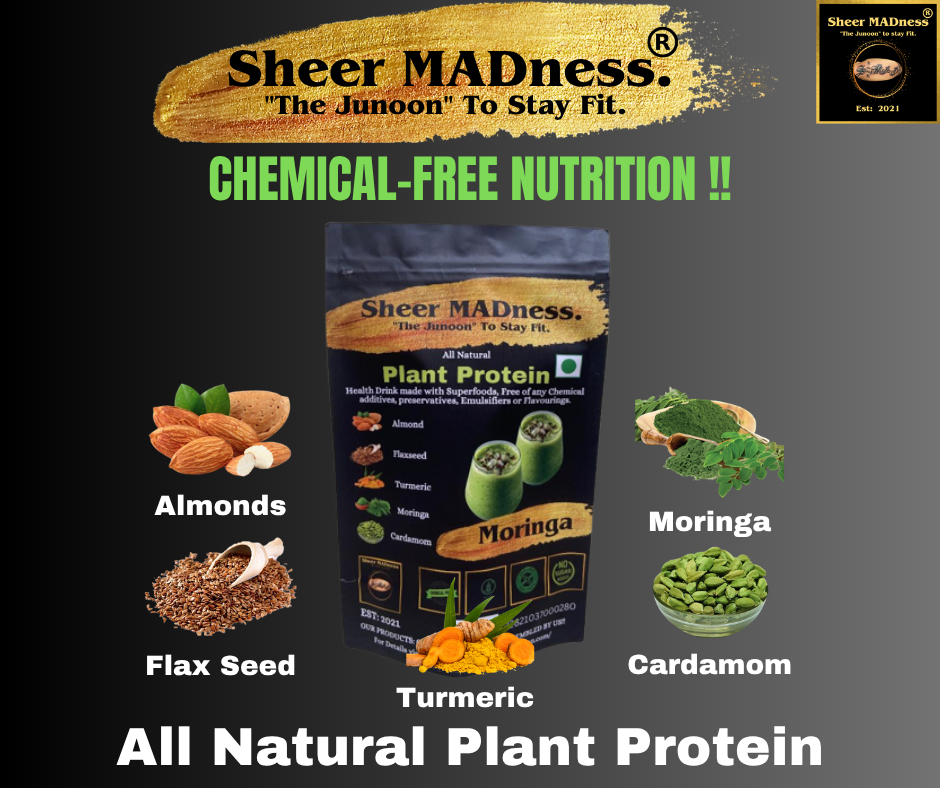
Sheer MADness Plant Protein Moringa combines moringa leaf powder with almonds, flaxseed, turmeric, and cardamom — each of which contributes its own alkaline-forming properties alongside moringa’s exceptional mineral density.
Almonds are one of the few protein-rich foods with a negative PRAL score. Most protein foods — meat, eggs, dairy, and most legumes — are acid-forming because their high sulphur amino acid content produces acid during metabolism. Almonds, by contrast, leave an alkaline ash after digestion — their high calcium and magnesium content outweighs their modest acid-producing amino acid load.
Furthermore, almonds provide additional magnesium at 270 milligrams per 100 grams — compounding moringa’s magnesium contribution and further supporting the bicarbonate buffer system and enzymatic acid management.
The combination of moringa’s calcium and magnesium with almond’s magnesium and calcium creates a genuinely substantial alkaline mineral foundation in one serving of Sheer MADness Plant Protein Moringa — delivering the alkaline minerals that dietary science confirms reduce kidney acid load and support bone density simultaneously.
Flaxseed does not directly provide strongly alkaline minerals — its contribution is through anti-inflammatory omega-3 fatty acids that reduce systemic inflammation. The connection to alkalinity is through inflammation’s role in acid production.
Inflammatory processes generate organic acids as metabolic by-products. Interleukins, prostaglandins, and the cellular metabolism of immune activation all produce acidic compounds that add to the body’s acid load. Reducing chronic inflammation through dietary omega-3 therefore reduces one source of endogenous acid production — contributing to a lower net acid load that the kidneys must manage.
A 2020 meta-analysis published in Nutrients on omega-3 supplementation confirmed significant reductions in C-reactive protein and other inflammatory markers with consistent daily omega-3 intake. Lower inflammation means less inflammatory acid production — contributing indirectly to the body’s alkaline balance.
Turmeric’s curcumin specifically reduces inflammatory cytokine production — TNF-α, IL-6, and IL-1β — through NF-κB pathway inhibition. These same inflammatory cytokines, when chronically elevated, produce metabolic acidosis patterns in tissue that the alkaline-forming minerals in moringa and almonds must counteract.
The combined anti-inflammatory effect of turmeric curcumin, flaxseed omega-3, and moringa’s antioxidants (quercetin, kaempferol, chlorogenic acid) addresses the inflammation-acidity cycle from three separate molecular directions — making the complete Sheer MADness blend more effective for pH-related health support than any single ingredient alone.
The “alkaline diet” as a nutritional philosophy has been widely popularised — and widely criticised by mainstream medicine. Let me navigate this landscape honestly, because the truth sits between the extremes.
The most enthusiastic alkaline diet advocates make claims that are not scientifically supported. You cannot change blood pH through food. Acidic blood does not cause cancer. The alkaline diet does not cure disease. These claims go beyond what the evidence supports.
However, the core dietary pattern recommended by alkaline diet advocates — high fruit and vegetable intake, reduced processed food and meat, adequate hydration — is genuinely health-promoting. The observational health benefits associated with “alkaline diets” are more accurately attributed to the high fibre, high antioxidant, high mineral content of plant-rich diets than to any direct effect on blood pH.
Moringa fits perfectly into this evidence-based interpretation. Its health benefits are real and well-documented across multiple research domains — anti-inflammatory, antioxidant, mineral-rich, complete protein, iron-providing. The alkaline-forming aspect of moringa — its strongly negative PRAL score and its exceptional alkaline mineral content — is a genuine and meaningful component of these benefits.
It is not magic. It is nutrition. And Sheer MADness Plant Protein Moringa delivers it honestly, from whole-food ingredients, without overstating what the science supports.
Indian urban diets have shifted dramatically toward acid-forming food patterns over the past two decades. Increased meat consumption in urban areas, heavy refined grain consumption, reduced fresh vegetable intake, and processed food dependence have all increased the dietary acid load on Indian kidneys and bones.
The consequences are visible in epidemiological data. India has one of the world’s highest rates of kidney stone disease, with prevalence estimates ranging from 12 to 15 percent in some northern and western states. A significant proportion of these are uric acid stones — the specific type most directly linked to high dietary acid load and low urine pH.
Bone density insufficiency is increasingly documented in Indian adults, particularly women — with the calcium leaching from high dietary acid load compounding the calcium deficiency already present in many Indian diets. Sarcopenia is a growing concern in India’s ageing population.
A daily alkaline-forming food like moringa — consumed as Sheer MADness Plant Protein Moringa — specifically addresses the dietary acid load problem that these health trends reflect. Not through any magical blood pH change, but through the documented mechanisms of reduced kidney acid burden, alkaline urinary pH, reduced bone calcium leaching, and anti-inflammatory support that alkaline-forming whole foods provide.
As a chef, I want to be direct about something that most supplement brands avoid saying.
I do not believe in miracle claims. I do not believe that moringa cures cancer, that alkaline water reverses disease, or that changing blood pH through diet is possible or beneficial. These claims are not supported by science, and I will not make them to sell more product.
What I do believe — as a professional chef, as a marathon runner who thinks carefully about daily nutrition, and as someone who has read the actual research rather than the supplement marketing — is this:
Plant-rich, mineral-dense, anti-inflammatory whole foods reduce the metabolic burden on the kidneys, bones, and immune system. Moringa is one of the most mineral-dense, antioxidant-rich, anti-inflammatory plant foods available in India. These are documented facts from multiple independent research sources. They are meaningful health benefits that the Indian population — with its increasing acid load from dietary shifts, its high kidney stone rates, and its prevalent mineral deficiencies — specifically needs.
Sheer MADness Plant Protein Moringa delivers these benefits from five whole-food ingredients, preserved through vacuum packing rather than chemistry, with every ingredient visible on the front of the pack since 2021. No chemical additive undermines the alkaline-forming benefit of the moringa, almonds, and flaxseed by adding acid-generating synthetic compounds.
That is the honest alkaline story of Sheer MADness Plant Protein Moringa.
Sheer MADness holds a registered trademark under the Government of India. The Natural Plant Protein formula is patent published under Patent No. 202331036733, searchable on Intellectual Property India. The brand holds a valid FSSAI licence and GSTIN registration.
| Feature | Sheer MADness Moringa Blend | Whey Protein Isolate | Pea Protein Isolate |
|---|---|---|---|
| PRAL score orientation | Strongly negative — alkaline-forming | Positive — acid-forming | Slightly negative |
| Calcium content | High — moringa and almonds | Low — stripped in isolation | Low |
| Magnesium content | High — moringa, almonds, flaxseed | Very low — stripped | Very low |
| Potassium content | High — moringa leaf naturally | Very low | Low |
| Anti-inflammatory compounds | Yes — turmeric, flaxseed omega-3, moringa antioxidants | Absent | Absent |
| Chlorophyll — green plant compounds | Yes — moringa leaf | None | None |
| Synthetic acid-forming additives | Zero | BHA, BHT, synthetic sweeteners common | Common |
| Net acid load effect | Reduces kidney acid burden | Increases kidney acid burden | Approximately neutral |
| Bone density support | Yes — high calcium, magnesium | Negative — high protein acid load | Variable |
| Kidney stone risk effect | Reduces uric acid stone risk | Neutral to negative | Neutral |
Does moringa alkalize the body?
Moringa is one of the most alkaline-forming foods available, with a strongly negative PRAL (Potential Renal Acid Load) score. It reduces the acid load the kidneys must excrete, promotes alkaline urine, provides calcium and magnesium that the body uses as alkaline buffers, and reduces systemic inflammation — all genuine pH-related health benefits. However, moringa does not change blood pH, which is regulated within 7.35 to 7.45 by the lungs, kidneys, and bicarbonate buffer system regardless of diet.
What is the PRAL score and why does it matter for moringa?
PRAL (Potential Renal Acid Load) is the scientifically accepted measure of whether a food increases or decreases the kidney’s acid excretion burden. Positive PRAL scores indicate acid-forming foods. Negative PRAL scores indicate alkaline-forming foods. Moringa has a strongly negative PRAL score — meaning it genuinely reduces the kidney’s acid burden — due to its exceptional calcium, potassium, and magnesium content.
Can eating moringa change my blood pH?
No — blood pH is regulated between 7.35 and 7.45 by the body’s respiratory and renal systems regardless of diet. What moringa affects is the kidney’s workload in maintaining that pH and the urinary pH that the kidneys excrete. These are genuine and meaningful health effects, but they are not the same as changing blood pH.
High chronic dietary acid load forces the kidneys and bones to work harder to maintain blood pH. The consequences over years and decades include calcium leaching from bone (reducing bone density), increased uric acid kidney stone formation risk, and accelerated muscle protein degradation as the body scavenges glutamine from muscle to help kidneys excrete acid. Alkaline-forming foods like moringa reduce all three of these consequences.
Is moringa good for kidney stones?
Moringa’s strongly alkaline-forming properties may help reduce uric acid kidney stone risk by promoting more alkaline urine. Uric acid stones form more readily in acidic urine — alkaline-forming foods that shift urine pH upward reduce this risk. However, kidney stones have multiple causes and types. People with diagnosed kidney stone disease should consult a nephrologist for personalised dietary guidance.
Does whey protein increase the body’s acid load?
Yes. Whey protein has a positive PRAL score — it is acid-forming. High protein diets in general, particularly from animal-derived proteins, increase dietary acid load because sulphur-containing amino acids produce acid during metabolism. This is one reason why replacing whey protein with alkaline-forming plant protein from moringa, almonds, and flaxseed specifically supports better acid-base balance.
Partially. The claim that food changes blood pH is not scientifically valid — blood pH is regulated by physiological systems, not diet. However, the core pattern of alkaline diets — high fruit and vegetable intake, reduced processed foods, adequate mineral intake — is genuinely health-promoting. The health benefits attributed to alkaline diets are more accurately attributed to high fibre, high antioxidant, and high mineral intake from plant-rich foods than to any direct blood pH effect.
How much moringa should I take daily for alkaline benefits?
Two to three tablespoons of Sheer MADness Plant Protein Moringa per day — mixed in warm milk or water — provides a meaningful daily alkaline-forming mineral contribution from moringa alongside almonds and flaxseed. This is consistent with general nutritional guidance for incorporating moringa into a plant-rich dietary pattern.
Moringa genuinely supports the body’s acid-base balance — but through specific, scientifically understood mechanisms rather than through the popular claim that it “changes your body’s pH.”
Its strongly negative PRAL score means it reduces the acid load your kidneys must excrete. This exceptional calcium, potassium, and magnesium content provides the alkaline mineral buffers that bone density and acid-base management depend on. Its antioxidants reduce the inflammatory acid production that chronic inflammation generates. This anti-inflammatory companion — turmeric in Sheer MADness Plant Protein Moringa — reduces the NF-κB-driven cytokine cascade that contributes to metabolic acid burden. Its omega-3 from flaxseed reduces the inflammatory acid production that completes the cycle.
For Indian adults managing the consequences of dietary shifts toward more acid-forming foods — higher kidney stone rates, declining bone density, increasing metabolic disease — a daily alkaline-forming whole-food blend like Sheer MADness Plant Protein Moringa provides specific, meaningful, and honestly framed nutritional support.
Not magic. Not blood pH change. Genuine nutritional benefit from India’s most mineral-dense plant food, formulated with honesty, vacuum packed without chemistry, and displayed transparently on the front of every pack since 2021.
I would also request you to please read my previous post: Benefits of Moringa Plant protein, the versatile Superfood powerhouse.
a) Everyone is an individual, so what suits me may not suit the next person.
b) If a person has a medical condition, a doctor’s advice and prescribed medication will only help. People with kidney disease, kidney stones, or acid-base disorders should consult their nephrologist before making dietary changes.
c) While buying any protein powder from the market, read the labels carefully. Watch out for INS codes, Anti-caking agent, INS 551 (Silicon dioxide), BHA (Butylated hydroxyanisole), BHT (Butylated hydroxytoluene), and other lab-made chemicals. Every synthetic additive in a supplement increases dietary acid load — the opposite of what alkaline-forming foods provide.
If you are interested in buying chemical-free Natural Plant Protein Moringa, Health Drinks for Kids, or our delicious chemical-free Energy Bars, Protein Bars, and Millet Bars, shop at Sheer MADness.
You can also find us on Flipkart, Jio Mart, or ONDC in India.
d) Exercise is the key to fitness. Exercise and nutrition are two sides of the same coin and always go hand in hand.
e) Excess of anything is wrong, even the best whole-food superfood. Consume only recommended quantities.
f) Rome was not built in a day. Discipline and consistency are the only keys to lasting health.
g) It is not only exercise and protein that builds health. A healthy gut, macro and micronutrients, body type, rest, and lifestyle all matter. Of all these, exercise and nutrition are within our control. Focus on these two primary aspects first.
h) The most important part of fitness is that nothing is better than exercise and a balanced meal.
Disclaimer: Our products are a source of HEALTHY NUTRIENTS and are COMPLETELY FREE OF ANY ADDED CHEMICALS. We do not claim to cure any medical condition. The content provided is informational. We do not claim to diagnose or treat a person with any specific medical condition.