

Direct answer: Moringa impacts immunity through five specific and well-documented mechanisms that operate across both the innate and adaptive immune system. Vitamin C from moringa stimulates neutrophil chemotaxis and enhances natural killer cell activity — supporting the first-line immune defences that respond within hours of pathogen exposure. Vitamin A from moringa’s beta-carotene maintains the epithelial barriers of the gut, respiratory tract, and skin that physically prevent pathogen entry. Zinc from moringa supports T-cell maturation in the thymus and B-cell antibody synthesis — the adaptive immune responses that produce pathogen-specific defence. Quercetin and kaempferol reduce the chronic inflammation that suppresses immune function when sustained beyond the acute response. And through the gut-immune axis — where 70 percent of the body’s immune tissue resides — moringa’s prebiotic effect on beneficial gut bacteria specifically trains and calibrates the immune system’s tolerance and response thresholds.
I am Chef Ashutosh Awasthi, founder of Sheer MADness, professional chef, marathon runner, and author of Great Health Comes from Exercise & Nutrition. Let me explain the immune science behind moringa honestly, specifically, and at the cellular and molecular level that this important health topic deserves.
Important: Moringa is a nutritional food that supports immune function through documented dietary mechanisms. It does not prevent or treat any specific disease, viral infection, or medical condition. Anyone with immune disorders or serious infections must be under medical care.
Most discussions of “immunity boosting” treat the immune system as a single entity that can simply be turned up. The immune system is actually a highly complex, multi-layered system in which different nutritional deficiencies impair different components. Moringa’s nutritional profile supports all three layers of immune defence simultaneously — which is the most important point about moringa and immunity.
The body’s first immune layer is not cellular — it is physical. The epithelial barriers of the skin, respiratory tract, gastrointestinal tract, and urogenital tract physically prevent pathogen entry through intact cell layers and their secreted protective compounds — mucus, defensins, and secretory immunoglobulin A (sIgA).
These barriers require Vitamin A for their maintenance. Vitamin A drives the differentiation of epithelial stem cells into the secretory goblet cells that produce mucus and the ciliated cells that clear inhaled particles. Without adequate Vitamin A, epithelial cells undergo squamous metaplasia — converting from functional secretory cells to non-functional flat cells that cannot produce mucus or maintain the physical barrier. This Vitamin A-deficiency epithelial dysfunction is the most direct nutritional pathway to increased infection susceptibility — affecting respiratory, gastrointestinal, and urogenital barriers simultaneously.
Moringa provides beta-carotene at approximately 6.78 milligrams per 100 grams — converted to Vitamin A with self-limiting conversion that prevents toxicity. For Indian adults and children with any degree of Vitamin A insufficiency — particularly in populations with low dietary fat for beta-carotene absorption — moringa’s beta-carotene alongside almond fat in Sheer MADness Plant Protein Moringa provides the Vitamin A substrate that maintains the physical barrier layer that keeps pathogens out before the immune system even needs to respond.
When pathogens breach the physical barrier, the innate immune system responds within hours. Neutrophils — the most abundant white blood cell — migrate to infection sites and engulf bacteria through phagocytosis. Natural killer (NK) cells identify and destroy virus-infected cells and tumour cells through cytotoxic granule release. Macrophages engulf pathogens and present their antigens to lymphocytes. Mast cells and dendritic cells initiate and modulate the acute inflammatory response.
Vitamin C is the primary nutritional support for innate immune function. Research published in Nutrients confirmed that Vitamin C specifically enhances neutrophil chemotaxis — the directional migration of neutrophils toward infection sites — and increases neutrophil oxidative burst capacity — the ability of neutrophils to generate the reactive oxygen species that kill engulfed bacteria.
Moringa’s Vitamin C — at approximately 17 times orange concentration gram for gram — provides exceptional daily Vitamin C availability for these neutrophil functions. Furthermore, Vitamin C regenerates oxidised Vitamin E — maintaining the antioxidant capacity of immune cell membranes under the oxidative stress of active infection response.
NK cell activity is specifically enhanced by adequate Vitamin C and Vitamin A availability. NK cells require both for optimal cytotoxic granule production and target cell recognition. Moringa provides both simultaneously — making it specifically more valuable for NK cell function than either Vitamin C or Vitamin A alone.
Iron from moringa — at 28 milligrams per 100 grams — supports the haemoglobin that delivers oxygen to infection sites for the aerobic metabolism that innate immune cells require at their peak killing capacity. Iron deficiency specifically impairs neutrophil oxidative burst — reducing the killing capacity of the most abundant innate immune cell at the moment it is most needed.
When innate immunity initiates the response, adaptive immunity develops the pathogen-specific response that provides lasting protection. T-cells — cytotoxic T-lymphocytes that kill infected cells and helper T-cells that coordinate the immune response — mature in the thymus. B-cells produce antibodies — pathogen-specific immunoglobulins that neutralise pathogens and mark them for destruction.
Zinc is the most critical nutritional support for adaptive immunity. Zinc-finger transcription factors are essential for T-cell differentiation in the thymus — the organ where immature T-cells receive their pathogen-specific education. Without adequate zinc, T-cell maturation is impaired, producing a reduced repertoire of functional T-cell clones that recognise a narrower range of pathogen epitopes.
Zinc is also required for B-cell antibody synthesis — specifically for the activation-induced cytidine deaminase (AID) enzyme that mediates the antibody class switching that produces the IgG and IgA antibodies essential for durable immune memory.
Research published in the American Journal of Clinical Nutrition confirmed that zinc deficiency significantly reduces the number of circulating T-cells, reduces NK cell cytotoxicity, and reduces the antibody response to vaccination — the functional consequences that make zinc insufficiency one of the most clinically significant nutritional immunodeficiencies.
Moringa provides zinc alongside the Vitamin C that improves zinc bioavailability by reducing phytate-zinc binding in the gut. Almond magnesium in Sheer MADness Plant Protein Moringa supports the ATP-dependent antigen presentation process that activates T-cells at the initiation of adaptive immune responses.
This is the immune mechanism most completely absent from existing discussions of moringa and immunity — and potentially the most important.
Approximately 70 percent of the body’s immune tissue is located in the gut — specifically in the gut-associated lymphoid tissue (GALT), which includes Peyer’s patches, mesenteric lymph nodes, and the lamina propria lymphocytes. The gut immune system has two primary functions: tolerating the trillions of beneficial commensal bacteria that inhabit the gut without triggering inflammation, and mounting vigorous responses to pathogens that breach the gut epithelial barrier.
The balance between these two functions — tolerance to commensals, responsiveness to pathogens — is calibrated by gut microbiome composition. Beneficial bacteria produce short-chain fatty acids (particularly butyrate) and specific bacterial pattern molecules that train regulatory T-cells (Tregs), suppress pro-inflammatory Th17 cells, and maintain the secretory IgA production that neutralises pathogens at mucosal surfaces.
Moringa’s quercetin and flaxseed’s lignans and mucilage in Sheer MADness Plant Protein Moringa specifically support Akkermansia muciniphila and Faecalibacterium prausnitzii — the gut bacteria whose butyrate and metabolic products most specifically calibrate gut immune balance toward the regulatory, tolerant-toward-commensals, responsive-toward-pathogens phenotype that optimal immune function requires.
The 2022 Cell study on dietary patterns and gut microbiome confirmed that consistent daily dietary patterns — not occasional supplements — determine gut microbiome composition and the gut-immune calibration that follows. Daily moringa consumption is therefore a gut-immune training investment that compounds over weeks and months.
Furthermore, moringa’s Vitamin A is specifically required for the production of gut secretory IgA (sIgA) — the mucosal antibody that lines the gut surface and neutralises pathogens before they penetrate the epithelium. Vitamin A deficiency reduces gut sIgA production specifically — impairing the first mucosal immune defence against gut pathogens.
Quercetin’s immune effects go beyond the general “reduces inflammation” framing that most moringa immunity content uses.
Quercetin specifically inhibits the production of histamine from mast cell degranulation — reducing the allergic immune responses that excessive mast cell activation produces. For Indian adults managing allergic rhinitis, atopic dermatitis, or food allergies — all conditions involving mast cell hyper-reactivity — quercetin’s mast cell stabilisation provides specific immune regulation beyond pathogen defence.
Quercetin also specifically inhibits viral replication in cell models — interfering with RNA polymerase activity that RNA viruses require for replication. Research published in Viruses (MDPI) confirmed quercetin’s antiviral activity in cell models against multiple RNA virus families through RNA polymerase inhibition. This is cell-model research — not a clinical trial proving quercetin prevents viral infection in humans. However, the mechanism is biologically plausible and the in vitro evidence is consistent across multiple virus families.
Quercetin activates the Nrf2 pathway — as established in the oxidative stress post — upregulating the antioxidant enzymes that protect immune cells from the oxidative stress they generate during active immune responses. This immune cell self-protection from Nrf2-activated antioxidants is essential for sustaining immune activity without self-destruction during prolonged infections.
This is a distinction that most moringa immunity content misses — and that significantly improves the scientific credibility of this post.
Most “immunity boosting” nutrition claims focus on stimulating immune function. However, many of India’s most prevalent immune-mediated conditions — allergic rhinitis, asthma, atopic eczema, autoimmune thyroiditis — arise from excessive rather than insufficient immune activation. For these conditions, what the immune system needs is not more stimulation but better regulation.
Turmeric curcumin in Sheer MADness Plant Protein Moringa provides immune regulation rather than simple stimulation. Curcumin inhibits NF-κB — reducing pro-inflammatory cytokine production that drives excessive immune activation. Curcumin specifically promotes regulatory T-cell (Treg) differentiation — the cells that suppress excessive immune responses and maintain the tolerance that prevents autoimmune activation.
Research published in the Journal of Clinical Immunology confirmed that curcumin’s immune-regulatory effects are specifically relevant to conditions of chronic immune over-activation — making it specifically complementary to moringa’s immune-stimulatory Vitamin C and zinc effects. The combination addresses both immune insufficiency (Vitamin C, zinc, iron for innate and adaptive defences) and immune dysregulation (curcumin for regulatory balance).
Flaxseed omega-3 ALA in Sheer MADness Plant Protein Moringa influences immunity through the eicosanoid regulatory system — a dimension of immune nutrition that is rarely discussed in accessible health content.
Eicosanoids — prostaglandins, thromboxanes, and leukotrienes — are lipid signalling molecules produced from membrane fatty acids by cyclooxygenase and lipoxygenase enzymes. They are the primary mediators of the acute inflammatory response. Arachidonic acid (omega-6) is the primary substrate for the most pro-inflammatory eicosanoids — prostaglandin E2, leukotriene B4, and thromboxane A2.
ALA omega-3 from flaxseed competes with arachidonic acid for cyclooxygenase and lipoxygenase enzymes, reducing the production of pro-inflammatory eicosanoids. Furthermore, the EPA partially converted from ALA produces the E-series resolvins — eicosanoids that specifically terminate the acute inflammatory response and promote tissue resolution and repair.
This eicosanoid competition mechanism makes dietary omega-3 one of the most directly anti-inflammatory nutritional interventions available — specifically relevant for conditions where excessive eicosanoid-driven inflammation impairs immune function rather than supporting it.
India’s immune health burden is specific and significant — and moringa’s nutritional profile addresses multiple dimensions simultaneously.
Vitamin A insufficiency — while dramatically improved over the past three decades through supplementation programmes — remains a concern particularly in rural populations and in populations with inadequate dietary fat for beta-carotene absorption. Moringa’s beta-carotene alongside almond fat in Sheer MADness addresses this absorption requirement directly.
Zinc insufficiency is prevalent among Indian vegetarians on phytate-heavy diets — with research confirming lower serum zinc in Indian vegetarians compared to omnivores. Zinc’s critical role in T-cell maturation and antibody synthesis makes this insufficiency specifically relevant to India’s vegetarian population’s adaptive immunity.
India’s high communicable disease burden — respiratory infections, gastrointestinal infections, and endemic diseases — creates a specific need for robust innate and mucosal immunity. Moringa’s Vitamin C for neutrophil function and Vitamin A for sIgA production specifically addresses the front-line defences most critical for communicable disease resistance.
India’s rapidly growing burden of immune-mediated conditions — allergic diseases, autoimmune thyroiditis, inflammatory bowel conditions — creates a specific need for immune regulation alongside immune stimulation. Curcumin’s Treg-promoting immune regulatory effect and omega-3’s eicosanoid modulation address this regulatory dimension specifically.
This practical guidance section addresses the most common misunderstanding about nutrition and immunity.
Immunity is not a state that can be acutely “boosted” by consuming large amounts of any nutrient. The immune system’s functional capacity is determined by the nutritional status it has maintained over weeks and months — not by the single large dose consumed the day before exposure to a pathogen.
Zinc status that supports T-cell maturation builds over weeks of adequate daily zinc intake — not from a single high dose. Vitamin A that maintains epithelial barriers builds from consistent daily beta-carotene conversion — not from a single megadose. The butyrate-producing gut bacteria that calibrate gut immune balance require consistent daily prebiotic fibre feeding over weeks to establish significant populations.
This is why consistent daily moringa consumption — two to three tablespoons of Sheer MADness Plant Protein Moringa in warm milk or water, every morning, fifty weeks a year — is the correct immunity application. Not an occasional high dose before infection season. Daily nutritional infrastructure building that keeps every immune layer — physical barriers, innate cells, adaptive lymphocytes, and gut mucosal immunity — at optimal functional capacity throughout the year.
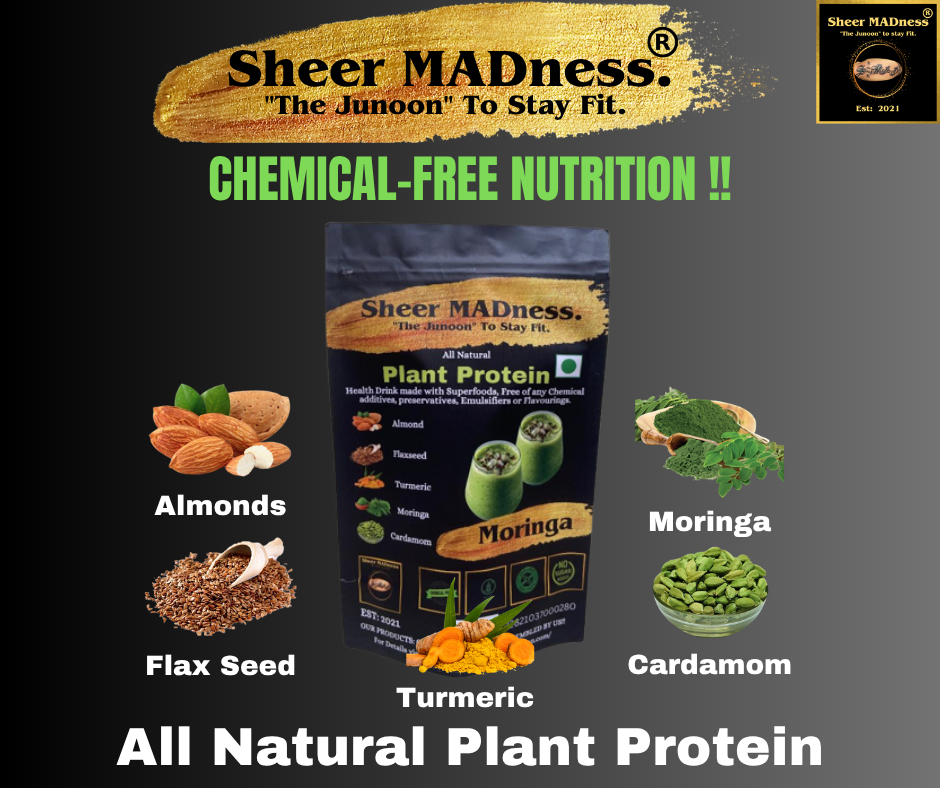
Sheer MADness Plant Protein Moringa addresses immune health through the complete nutritional infrastructure that all three immune layers require — not through a single “immunity booster” compound marketed as a silver bullet.
Moringa Vitamin C for neutrophil and NK cell function. Beta-carotene for Vitamin A-dependent epithelial barriers and gut sIgA. Moringa zinc for T-cell and B-cell adaptive immune function. Moringa quercetin for mast cell regulation, NF-κB inflammatory balance, and Nrf2 immune cell antioxidant protection. Flaxseed omega-3 for eicosanoid immune regulation and anti-inflammatory resolution. Turmeric curcumin for Treg-promoting immune regulation that prevents excessive immune activation. Almond fat for beta-carotene absorption. Almond Vitamin E for immune cell membrane oxidative protection.
Zero synthetic chemical additive that would add daily detoxification burden to the liver — diverting metabolic resources from immune function to xenobiotic processing. Zero gut-disrupting artificial sweetener that would reduce the Lactobacillus and Bifidobacterium populations whose short-chain fatty acid production calibrates gut-immune balance.
Since 2021, every ingredient is on the front of every pack. The immune infrastructure is in the ingredients.
Sheer MADness holds a registered trademark under the Government of India. The Natural Plant Protein formula is patent published under Patent No. 202331036733, searchable on Intellectual Property India. The brand holds a valid FSSAI licence and GSTIN registration.
| Immune Layer | Mechanism | Nutrient | Source |
|---|---|---|---|
| Physical barriers | Epithelial cell differentiation, mucus production | Vitamin A from beta-carotene | Moringa leaf — 6.78mg/100g |
| Physical barriers | Gut sIgA mucosal antibody production | Vitamin A | Moringa leaf |
| Innate immunity | Neutrophil chemotaxis and oxidative burst | Vitamin C | Moringa — 17x oranges/gram |
| Innate immunity | NK cell cytotoxic function | Vitamin C + Vitamin A | Moringa leaf |
| Innate immunity | Macrophage oxygen delivery (haemoglobin) | Iron — 28mg/100g | Moringa leaf |
| Innate immunity | Vitamin E membrane protection of immune cells | Vitamin E (mixed tocopherols) | Almonds — 12.5mg/100g |
| Adaptive immunity | T-cell maturation in thymus | Zinc | Moringa leaf + almonds |
| Adaptive immunity | B-cell antibody synthesis (AID enzyme) | Zinc | Moringa leaf |
| Adaptive immunity | Antigen presentation (ATP-dependent) | Magnesium | Almonds |
| Immune regulation | Mast cell stabilisation (allergic response) | Quercetin | Moringa leaf — 50-60mg/100g |
| Immune regulation | Treg differentiation (autoimmune prevention) | Curcumin | Turmeric |
| Immune regulation | NF-κB cytokine inflammatory balance | Curcumin + isothiocyanates | Turmeric + moringa |
| Gut-immune axis | Gut microbiome → butyrate → Treg calibration | Prebiotic fibre | Moringa leaf fibre |
| Gut-immune axis | Akkermansia → mucosal barrier integrity | Lignan + mucilage prebiotic | Flaxseed |
| Eicosanoid regulation | PGE2, LTB4 reduction → anti-inflammatory | Omega-3 ALA | Flaxseed — 22g/100g |
| Resolvin production | Acute inflammation termination | ALA → EPA conversion | Flaxseed |
How does moringa impact immunity?
Moringa supports immunity through five documented nutritional mechanisms: Vitamin C for innate immune neutrophil and NK cell function, beta-carotene/Vitamin A for physical epithelial barrier maintenance, zinc for T-cell and B-cell adaptive immune function, quercetin for immune regulation and mast cell stabilisation, and gut-immune axis support through prebiotic effects on beneficial bacteria. These are nutritional support mechanisms — moringa does not prevent or treat any specific disease.
Which specific immune cells does moringa support?
Moringa’s Vitamin C supports neutrophil chemotaxis and oxidative burst capacity, and NK cell cytotoxic activity. Vitamin A supports epithelial barrier cells and gut sIgA-producing plasma cells. Zinc supports T-cell maturation in the thymus and B-cell antibody synthesis. Quercetin stabilises mast cells and supports Nrf2-mediated antioxidant protection of all immune cells.
Approximately 70 percent of the body’s immune tissue is in the gut. Gut bacteria produce butyrate and other compounds that calibrate immune balance — promoting tolerance to commensal bacteria while maintaining responsiveness to pathogens. Moringa’s prebiotic fibre feeds Akkermansia muciniphila and Bifidobacterium that produce these immune-calibrating compounds. Moringa’s Vitamin A is specifically required for gut secretory IgA production.
Is moringa better for innate or adaptive immunity?
Moringa supports both layers — with different nutrient contributions to each. Vitamin C and iron support innate immune function (neutrophils, NK cells). Zinc specifically supports adaptive immune function (T-cell and B-cell development). Quercetin and curcumin regulate both layers by reducing the excessive chronic inflammation that suppresses immune function when sustained. The gut microbiome effects from moringa’s prebiotic fibre calibrate the balance between both layers.
How does curcumin in Sheer MADness support immunity differently from moringa?
Curcumin provides immune regulation rather than stimulation. It promotes regulatory T-cell (Treg) differentiation — the cells that suppress excessive immune activation. This is specifically relevant to conditions of immune dysregulation (allergic disease, autoimmunity) where the immune system is too active rather than insufficiently active. Together, moringa’s stimulatory (Vitamin C, zinc) and curcumin’s regulatory effects create a more balanced immune support than either alone.
Why is consistent daily moringa use better for immunity than occasional high doses?
Zinc status supporting T-cell maturation, Vitamin A status maintaining epithelial barriers, and gut microbiome composition calibrating immune balance all require weeks to months of consistent daily nutritional support to build. Single high doses do not maintain the nutritional status that immune function depends on. Daily moringa consumption builds and maintains the immune infrastructure rather than providing a temporary spike in one nutrient.
Yes — moringa leaf, almonds, flaxseed, turmeric, and cardamom are fully plant-based. The combination provides the Vitamin C, Vitamin A precursor, zinc, quercetin, omega-3, curcumin, and gut prebiotic fibre that both innate and adaptive immune layers require, from completely plant-derived sources. Suitable for vegetarians and vegans without any animal-derived immune support nutrient.
Does moringa prevent viral infections?
Moringa does not prevent any specific viral infection — this would be a prohibited health claim that is unsupported by clinical trial evidence. Moringa provides specific nutrients that support the immune system’s general functional capacity. Adequate immune function — supported by good nutrition including moringa’s Vitamin C, Vitamin A, zinc, and quercetin — is one component of the body’s ability to respond to infections alongside many other factors.

The immune system is not a single switch that nutrition can turn up or down. It is a multi-layered, carefully regulated network of physical barriers, innate cellular defences, and adaptive lymphocyte responses — with 70 percent of its tissue in the gut and its daily calibration determined by gut microbiome composition.
Moringa supports every layer of this system simultaneously. Beta-carotene for Vitamin A that maintains the epithelial barriers that prevent pathogen entry. Vitamin C for neutrophil and NK cell function that destroy pathogens that breach the barriers. Zinc for T-cell and B-cell adaptive responses that produce pathogen-specific immunity. Quercetin for regulatory balance that prevents the chronic inflammation that suppresses immune function. Gut prebiotic effects that train gut-immune balance toward optimal regulatory calibration.
Sheer MADness Plant Protein Moringa compounds these moringa-specific immune mechanisms with almond Vitamin E for immune cell membrane protection, flaxseed omega-3 for eicosanoid regulation and inflammatory resolution, and turmeric curcumin for Treg immune regulatory promotion — from five whole-food ingredients, vacuum packed to preserve the Vitamin C and quercetin that lead the immune support, with zero chemical additive that would divert metabolic resources from immunity to xenobiotic detoxification.
Since 2021, every ingredient is on the front of every pack. The immune infrastructure is in the ingredients. Build it daily. Consistently. Year round.
I would also request you to please read my previous post: Benefits of Moringa Plant protein, the versatile Superfood powerhouse.
a) Everyone is an individual, so what suits me may not suit the next person.
b) If a person has a medical condition, a doctor’s advice and prescribed medication will only help. Immune disorders, autoimmune conditions, recurrent infections, and immunodeficiency require medical management. Moringa is a nutritional food that supports immune function — it does not replace medical treatment.
c) While buying any protein powder from the market, read the labels carefully. Watch out for INS codes, Anti-caking agent, INS 551 (Silicon dioxide), BHA (Butylated hydroxyanisole), BHT (Butylated hydroxytoluene), and sucralose — which specifically reduces Lactobacillus and Bifidobacterium populations whose short-chain fatty acid production calibrates gut-immune balance.
If you are interested in buying chemical-free Natural Plant Protein Moringa, Health Drinks for Kids, or our delicious chemical-free Energy Bars, Protein Bars, and Millet Bars, shop at Sheer MADness.
You can also find us on Flipkart, Jio Mart, or ONDC in India.
d) Exercise is the key to fitness. Exercise and nutrition are two sides of the same coin and always go hand in hand.
e) Excess of anything is wrong, even the best whole-food superfood. Consume only recommended quantities.
f) Rome was not built in a day. Discipline and consistency are the only keys to lasting health.
g) It is not only exercise and protein that builds health. A healthy gut, macro and micronutrients, body type, rest, and lifestyle all matter. Of all these, exercise and nutrition are within our control. Focus on these two primary aspects first.
h) The most important part of fitness is that nothing is better than exercise and a balanced meal.
Article by Chef Ashutosh Awasthi
Disclaimer: Our products are a source of HEALTHY NUTRIENTS and are COMPLETELY FREE OF ANY ADDED CHEMICALS. We do not claim to cure any medical condition. The content provided is informational. We do not claim to diagnose or treat a person with any specific medical condition.