

Direct answer: Yes — moringa is inherently and completely gluten-free. Moringa oleifera is a tropical tree, not a grain. It contains no gliadin, no glutenin, and no prolamin proteins. The three protein fractions that constitute gluten in wheat, barley, and rye. Every ingredient in Sheer MADness Plant Protein Moringa — moringa leaf, almonds, flaxseed, turmeric, and cardamom — is naturally gluten-free. The more important question for people with coeliac disease is not whether moringa contains gluten, but whether the product has been processed in a facility that handles gluten-containing grains — a cross-contamination risk that can make even inherently gluten-free ingredients unsafe for coeliac patients. Sheer MADness Plant Protein Moringa is produced without any gluten-containing ingredient in its formulation.
I am Chef Ashutosh Awasthi, founder of Sheer MADness, professional chef, marathon runner, and author of Great Health Comes from Exercise & Nutrition. This post addresses two distinct audiences. People with coeliac disease for whom gluten-free is a medical necessity, and people who choose gluten-free diets for health reasons. Both deserve accurate, specific, and honest information.
Gluten is not a single protein. It is a family of related storage proteins found specifically in the seeds of three grass-family grains: wheat (glutenin and gliadin), barley (hordein), and rye (secalin). These prolamin proteins give dough its elasticity by forming a network of disulphide-bonded protein strands when hydrated and worked.
For most people, gluten is an entirely harmless food protein. However, for specific populations, gluten causes serious medical consequences:
Coeliac disease — an autoimmune condition affecting approximately 1 percent of the global population — causes the immune system to mount a destructive antibody and T-cell response against gliadin peptides. This immune response damages the villi of the small intestinal lining, progressively reducing the absorptive surface area and causing malabsorption of virtually all nutrients. Untreated coeliac disease causes iron deficiency, calcium deficiency, B vitamin deficiencies, weight loss, osteoporosis, and significantly elevated risks of lymphoma and other autoimmune conditions. The only treatment is complete lifetime elimination of all gluten — including trace contamination below 20 parts per million.
Non-coeliac gluten sensitivity (NCGS) — a condition characterised by gluten-related symptoms (bloating, abdominal pain, fatigue, brain fog) that resolve on gluten-free diets, without the autoimmune intestinal damage of coeliac disease. Estimated prevalence is 1 to 6 percent globally, though diagnosis is imprecise.
Wheat allergy — an IgE-mediated allergic response to wheat proteins (not exclusively gluten), causing acute allergic symptoms from urticaria to anaphylaxis.
For protein powder selection, the coeliac population’s requirements are the most medically stringent. A protein powder that is inherently gluten-free from its ingredients may still be unsafe for coeliac patients if it is processed on shared equipment with gluten-containing grains. This cross-contamination risk is the single most important gluten-free question for any supplement product.
Gluten proteins — glutenins and gliadins in wheat, hordeins in barley, secalins in rye. Evolved specifically in the grass family (Poaceae) as seed storage proteins. They are botanically specific to grasses and do not exist in any other plant family.
Moringa oleifera belongs to the family Moringaceae — a completely separate botanical family from the grasses. Moringa is more closely related to capers, radishes, and mustard than to wheat or barley. It has no evolutionary relationship to the Poaceae grasses that produce gluten.
Moringa leaf does not contain any prolamin storage proteins. Its protein fraction consists of globulins, albumins, and glutelins. The protein types present in legumes, nuts, and leafy greens — all of which are structurally entirely different from gluten prolamins. None of moringa’s protein fractions share the repeating glutamine-proline sequences that make gluten immunogenic in coeliac patients.
Similarly, every other ingredient in Sheer MADness Plant Protein Moringa is from non-grass botanical sources:
Almonds — family Rosaceae (rose family). Naturally gluten-free.
Flaxseed — family Linaceae (flax family). Naturally gluten-free.
Turmeric — family Zingiberaceae (ginger family). Naturally gluten-free.
Cardamom — family Zingiberaceae. Naturally gluten-free.
Zero grass-family plant. No grain. Zero gluten protein of any type.
For people with coeliac disease, the botanical absence of gluten from ingredients is necessary but not sufficient. Cross-contamination during processing is the primary real-world safety concern.
Cross-contamination can occur at multiple points in the supply chain:
Agricultural cross-contamination: If moringa is grown in fields adjacent to wheat and cross-pollination or grain admixture occurs at harvest, trace wheat proteins may be present in the raw moringa leaf before processing.
Processing facility cross-contamination: If moringa powder is produced in a facility that also processes wheat flour, wheat starch, barley extract, or any other gluten-containing ingredient on shared equipment, gluten trace contamination below 20ppm — the threshold for coeliac disease symptom triggering — can occur even with cleaning protocols between runs.
Shared packaging cross-contamination: If packaging lines handle gluten-containing products between runs, trace contamination of the moringa powder surface or container interior is possible.
For strict coeliac disease management, the international threshold for gluten-free certification is below 20 milligrams of gluten per kilogram (20 ppm). Set by Codex Alimentarius and adopted by most regulatory bodies including FSSAI.
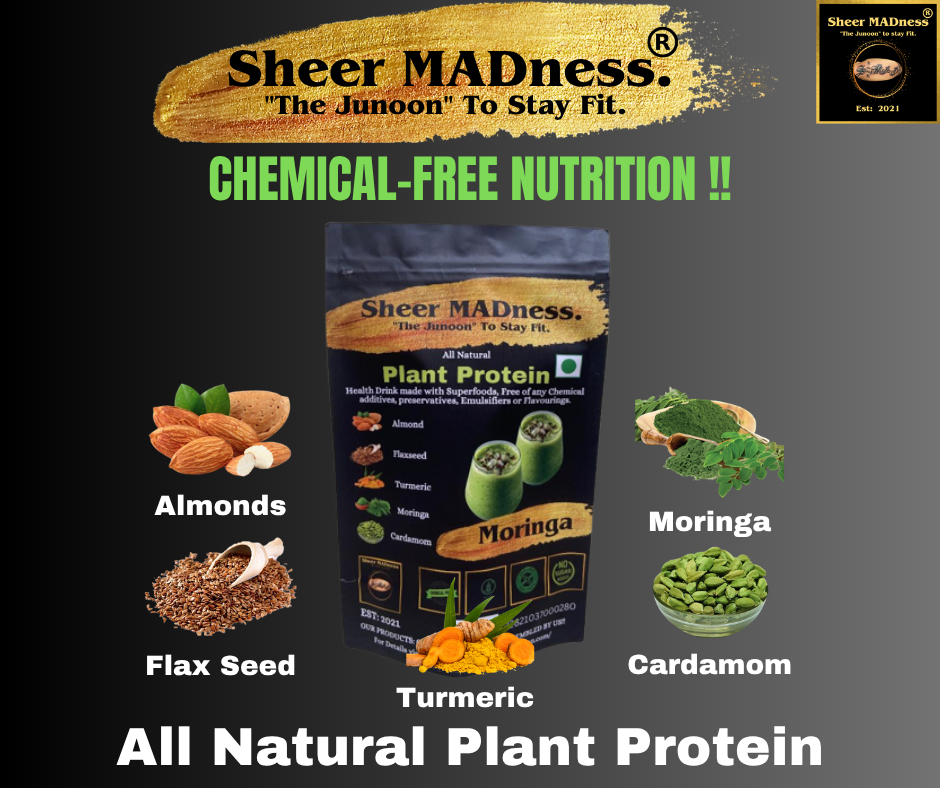
Sheer MADness Plant Protein Moringa contains no gluten-containing ingredient in its formulation. For people with coeliac disease who require certification documentation, we encourage direct contact with Sheer MADness customer care for specific facility and processing information — as formal gluten-free certification status should be verified with current production documentation.
For people with non-coeliac gluten sensitivity or those choosing gluten-free diets for general health reasons (rather than medical necessity). The inherently gluten-free ingredient profile of Sheer MADness Plant Protein Moringa is fully reassuring.
This is the most original and most practically valuable section of this post. It addresses the specific nutritional needs of the target audience far more usefully than a general moringa health benefits list.
Strictly gluten-free diets create specific, well-documented nutritional deficiencies. This is the paradox of the gluten-free diet. Eliminating wheat removes the gluten that causes harm, but simultaneously removes the B vitamins, iron, calcium, and fibre that fortified wheat products have traditionally provided.
In most countries, wheat flour is mandatorily fortified with B vitamins — thiamine (B1), riboflavin (B2), niacin (B3), and folic acid. White rice — the most common gluten-free grain alternative — is not fortified in most countries and contains lower B vitamin concentrations than fortified wheat.
Research published in the Journal of Human Nutrition and Dietetics confirmed that people on long-term gluten-free diets show significantly lower dietary intakes of thiamine, riboflavin, niacin, and folate compared to matched controls on regular diets. These B vitamin deficiencies impair the Krebs cycle and electron transport chain efficiency (riboflavin), amino acid metabolism (B6, which moringa also provides at 0.9mg/100g), and red blood cell production (folate).
Moringa leaf provides an exceptional B vitamin profile — riboflavin at approximately 0.7 milligrams per 100 grams, pyridoxine (B6) at approximately 0.9 milligrams per 100 grams, and folate at approximately 172 micrograms per 100 grams. These are meaningful contributions to the specific B vitamins most commonly deficient in gluten-free diets.
Iron deficiency is the most prevalent nutritional consequence of coeliac disease — for two compounding reasons. First, the duodenum (the first section of the small intestine, primary site of iron absorption) is the intestinal segment most severely damaged by coeliac disease autoimmune attack. Iron absorption is specifically impaired by duodenal villous atrophy. Second, gluten-free diets often lack the iron fortification that wheat products provide.
The result is that iron deficiency is found in 30 to 50 percent of newly diagnosed coeliac patients, and can persist even after dietary gluten elimination if iron intake remains inadequate.
Moringa’s iron — at 28 milligrams per 100 grams dry weight — is the highest plant-food iron concentration widely available. Alongside moringa’s Vitamin C (the non-haem iron absorption enhancer that converts ferric to ferrous iron for DMT-1 transport), Sheer MADness Plant Protein Moringa provides the most iron-available plant-food combination possible — specifically addressing the most prevalent nutritional deficiency in the primary medical audience for this post.
For newly diagnosed coeliac patients beginning the intestinal recovery phase — where duodenal iron absorption gradually improves as villous atrophy heals on a strict gluten-free diet — daily moringa iron with simultaneous Vitamin C provides the dietary iron support that recovery demands.
Coeliac disease causes calcium malabsorption through two mechanisms: duodenal villous atrophy impairs the active calcium absorption pathway (calcium channel TRPV6 requires intact villi for function), and bile acid malabsorption impairs vitamin D-dependent calcium absorption. The consequence is significantly elevated rates of osteoporosis in coeliac patients — even those on gluten-free diets — relative to the general population.
Research consistently shows that bone mineral density in coeliac patients improves but does not fully normalise after gluten elimination — specifically because calcium absorption remains impaired during the years of intestinal healing. Adequate daily dietary calcium is therefore especially important for coeliac patients.
Moringa leaf provides calcium at approximately 2,000 milligrams per 100 grams dry weight — the highest plant-food calcium concentration available in a conventional food. Two to three tablespoons of Sheer MADness Plant Protein Moringa provides approximately 200 to 300 milligrams of calcium from a plant-food source that requires no dairy and involves no gluten risk.
Gluten-free grain alternatives — white rice, corn flour, potato starch, tapioca — typically provide substantially less dietary fibre than the whole wheat and whole grain products they replace. This fibre reduction specifically impairs the gut microbiome diversity and prebiotic function that the post-inflammatory gut microbiome of healing coeliac patients specifically needs.
Flaxseed in Sheer MADness Plant Protein Moringa provides soluble mucilage fibre that feeds Akkermansia muciniphila — specifically the gut bacterium whose abundance is reduced in coeliac patients during active disease and whose restoration supports intestinal barrier recovery. Almond prebiotic fibre feeds Faecalibacterium prausnitzii — the most butyrate-productive gut bacterium that supports colonocyte health and tight junction integrity during intestinal recovery.
For coeliac patients whose gut microbiome has been disrupted by years of undiagnosed or untreated gluten exposure, the prebiotic fibre from moringa, flaxseed, and almonds provides specific gut microbiome rehabilitation support.
This is the most practically useful reference for the target audience:
| Gluten-Free Diet Nutritional Gap | Why It Occurs | Moringa Contribution | Source in Sheer MADness |
|---|---|---|---|
| Iron deficiency | Duodenal villous atrophy (coeliac) + lost wheat fortification | Iron 28mg/100g + Vitamin C absorption enhancer | Moringa leaf |
| Calcium malabsorption | Impaired TRPV6 channel + Vitamin D bile acid absorption | Calcium ~2,000mg/100g | Moringa leaf |
| Folate deficiency | Lost wheat fortification + impaired small intestinal absorption | Folate 172mcg/100g | Moringa leaf |
| Riboflavin (B2) deficiency | Lost wheat fortification in gluten-free grains | Riboflavin ~0.7mg/100g | Moringa leaf |
| B6 deficiency | Reduced fortification + impaired absorption during active disease | Pyridoxine ~0.9mg/100g | Moringa leaf |
| Fibre deficiency | Low-fibre GF alternatives (white rice, corn, potato starch) | Mucilage fibre | Flaxseed |
| Gut microbiome dysbiosis | Years of inflammatory gluten exposure | Prebiotic fibre feeding Akkermansia, F. prausnitzii | Moringa + almond + flaxseed |
| Omega-3 deficiency | Reduced whole grain omega-3 intake | ALA — 22g/100g | Flaxseed |
| Complete protein access | Limited GF whole-food protein diversity | All 9 essential amino acids | Moringa + almond + flaxseed |
| Antioxidant deficiency | Lost wheat bran antioxidant phytochemicals | Quercetin, kaempferol, beta-carotene | Moringa leaf |
People with coeliac disease or gluten sensitivity evaluating protein powders have several gluten-free options — each with specific advantages and limitations.
Pea protein isolate — gluten-free but requires hexane solvent extraction; DIAAS approximately 0.82 (limiting in methionine); provides no antioxidants, B vitamins, iron, or calcium. Pure protein with no nutritional co-benefits for the GF diet gaps.
Rice protein isolate — gluten-free but DIAAS approximately 0.59 (limiting in lysine — the amino acid already low in rice-heavy GF diets); no micronutrient contribution.
Hemp protein — gluten-free with good EFA profile; moderate protein quality; reasonable fibre content but lower B vitamin and iron contribution than moringa.
Moringa (Sheer MADness formulation) — gluten-free inherently; DIAAS approaching completeness through complementary moringa-almond-flaxseed combining; provides the specific B vitamins, iron, calcium, folate, and prebiotic fibre that GF diets most commonly lack. The nutritionally most complete GF protein powder for people who specifically need to compensate for GF diet nutritional gaps.
For coeliac patients who have not only removed gluten but are also managing the nutritional deficiencies that coeliac disease and GF diets create — moringa is the most comprehensively appropriate whole-food protein powder available.
India’s coeliac disease prevalence is significantly underrecognised — and this India-specific context deserves explicit inclusion in this post.
Historically, coeliac disease was considered rare in India — because it was not being diagnosed. Growing awareness, improved serological testing (tissue transglutaminase antibody tests), and systematic population screening have revealed that coeliac disease affects approximately 1 percent of the Indian population — similar to global prevalence.
In wheat-belt northern India — Punjab, Haryana, Rajasthan, and western Uttar Pradesh — where wheat is the dominant staple consumed at almost every meal, the combination of high genetic coeliac disease risk (shared with the Central and South Asian populations from which north Indians descend) and extremely high daily gluten exposure creates a significant undiagnosed coeliac disease burden.
A study published in the Indian Journal of Gastroenterology confirmed that coeliac disease is one of the most common causes of chronic diarrhoea and failure to thrive in children in northern India — with many cases misdiagnosed as irritable bowel syndrome, tropical sprue, or nutritional deficiency.
For this underdiagnosed Indian coeliac population — many of whom are seeking gluten-free protein supplements without formal diagnosis or with recent diagnosis — moringa’s gluten-free status combined with its specific nutritional support for GF diet deficiencies is both relevant and practically important.
Coeliac disease causes intestinal inflammation, impaired gut barrier function, and an already-burdened immune system managing both the disease process and its recovery. Adding synthetic chemical additives — BHA, BHT, artificial flavours, emulsifiers — to a supplement consumed daily by someone managing intestinal autoimmune disease adds unnecessary xenobiotic burden to a gut that is already inflamed and compromised.
People with coeliac disease and gluten sensitivity consistently report better digestive tolerance to clean whole-food preparations than to highly processed supplements containing multiple synthetic additives. This is not surprising — a damaged gut lining has reduced xenobiotic processing capacity precisely because the same epithelial cells that metabolise xenobiotics are the cells damaged by coeliac autoimmune activity.
Sheer MADness Plant Protein Moringa contains zero synthetic chemical additive. Five whole plant foods. No INS code. Zero emulsifier. No anticaking agent. For the coeliac and gluten-sensitive consumer managing an inflamed gut and seeking maximum digestive tolerance, this chemical-free profile is specifically relevant.
Sheer MADness Plant Protein Moringa addresses the needs of the gluten-free protein powder consumer more comprehensively than any alternative because it simultaneously achieves three things that no other product in its category does.
First, it is inherently gluten-free from its ingredient list — five whole-food plant ingredients from non-grass botanical families, zero grain, zero gluten protein of any type.
Second, it provides the specific nutrients most commonly deficient in gluten-free diets — iron, calcium, folate, B6, riboflavin, fibre, omega-3, and complete protein — from their whole-food sources.
Third, it contains zero synthetic chemical additive that would add xenobiotic burden to the already-compromised gut of someone managing coeliac disease or gluten sensitivity.
Since 2021, every ingredient is on the front of every pack. For the gluten-free consumer who checks every label before purchase — which all coeliac patients must do — this front-of-pack transparency is specifically meaningful. Five ingredients, all named, all visible, all from non-gluten botanical families.
Sheer MADness holds a registered trademark under the Government of India. The Natural Plant Protein formula is patent published under Patent No. 202331036733, searchable on Intellectual Property India. The brand holds a valid FSSAI licence and GSTIN registration.
Is moringa protein powder gluten-free?
Yes — moringa is inherently gluten-free. Moringa oleifera belongs to the Moringaceae family, botanically unrelated to the grass family (Poaceae) that produces gluten. It contains no gliadin, glutenin, hordein, or secalin proteins — the prolamin fractions that constitute gluten. Every ingredient in Sheer MADness Plant Protein Moringa is from non-grass plant families and is naturally gluten-free.
Is Sheer MADness Plant Protein Moringa safe for coeliac disease?
The ingredient formulation contains no gluten-containing ingredient. For people with coeliac disease who require facility-level cross-contamination assurance, contact Sheer MADness customer care directly for current production documentation. For people with non-coeliac gluten sensitivity or those choosing gluten-free diets for health reasons (without diagnosed coeliac disease), the inherently gluten-free ingredient profile is fully appropriate.
Gluten-free diets commonly lack: iron (from lost wheat fortification and, in coeliac patients, from duodenal malabsorption), calcium (from impaired Vitamin D-dependent absorption in coeliac), folate (lost wheat fortification), riboflavin and B6 (lost wheat fortification), fibre (from low-fibre GF grain alternatives), and omega-3. Moringa specifically provides all of these — iron at 28mg/100g with Vitamin C enhancer, calcium at ~2,000mg/100g, folate at 172mcg/100g, riboflavin and B6, prebiotic fibre from moringa and flaxseed, and ALA omega-3 from flaxseed.
Why is iron specifically important for coeliac patients choosing moringa?
Coeliac disease causes duodenal villous atrophy — damaging the intestinal segment where iron absorption primarily occurs. Iron deficiency is found in 30 to 50 percent of newly diagnosed coeliac patients. As villi heal on a strict gluten-free diet, iron absorption capacity recovers — but adequate dietary iron must be consumed throughout recovery. Moringa provides the highest plant-food iron density available (28mg/100g) alongside Vitamin C that enhances absorption 2 to 4 times — making it the most effective plant-based dietary iron source for GF diet iron recovery.
Years of undiagnosed coeliac disease damage the gut microbiome through intestinal inflammation and barrier dysfunction. Flaxseed mucilage and lignans in Sheer MADness specifically feed Akkermansia muciniphila — the bacterium associated with mucosal barrier integrity. Almond prebiotic fibre feeds Faecalibacterium prausnitzii — the most butyrate-productive gut bacterium supporting colonocyte health and tight junction integrity. Both are particularly relevant for restoring the gut microbiome that coeliac disease disrupts.
Is moringa suitable for gluten-free athletes and fitness enthusiasts?
Yes — moringa’s complete amino acid profile (all 9 essential amino acids), iron for haemoglobin and exercise capacity, calcium for muscle and bone function, and anti-inflammatory quercetin and curcumin for training recovery make it specifically appropriate for GF athletes. It addresses the protein, iron, and calcium deficiencies that GF athletes most commonly face on restricted diets.
Coeliac disease is an autoimmune condition causing intestinal damage from T-cell-mediated immune attack on gluten peptides — requiring strict lifetime gluten elimination below 20 ppm threshold. Non-coeliac gluten sensitivity (NCGS) produces gluten-related symptoms without the autoimmune intestinal damage — mechanisms are less clearly defined but may involve innate immune activation rather than adaptive T-cell responses. Both require gluten-free diets but NCGS patients typically tolerate trace contamination better than coeliac patients. For both, moringa’s inherent gluten-free status is appropriate.
Is coeliac disease common in India?
Yes — recent research shows coeliac disease affects approximately 1 percent of the Indian population, similar to global prevalence. It is significantly underdiagnosed — particularly in wheat-belt northern India (Punjab, Haryana, UP) where high gluten exposure from wheat-dominant diets is combined with genetic coeliac disease predisposition. Many Indian coeliac cases are misdiagnosed as IBS or nutritional deficiency. If you have chronic unexplained digestive symptoms, discuss coeliac disease testing with your gastroenterologist.

Moringa is gluten-free — completely and inherently, from its botanical classification as a non-grass plant family. This is the simple answer to the title question.
The more important answer for the post’s target audience — people managing coeliac disease, non-coeliac gluten sensitivity, or gluten-free diets for health reasons — is that moringa is not just gluten-free but specifically nutritionally appropriate for the deficiencies that gluten-free diets create.
Iron for the anaemia that duodenal malabsorption causes in coeliac patients. Calcium for the osteoporosis risk that impaired calcium absorption creates. Folate, riboflavin, and B6 for the B vitamin deficiencies that lost wheat fortification produces. Prebiotic fibre for the gut microbiome rehabilitation that years of coeliac intestinal inflammation demands. Complete protein for the nutritional coverage that restricted GF diets often fail to provide adequately.
Sheer MADness Plant Protein Moringa is not just a gluten-free protein powder. For coeliac and gluten-sensitive consumers, it is the most nutritionally appropriate supplement for the specific gaps that gluten-free living creates — from five whole-food ingredients, with zero synthetic additive, every ingredient visible on the front of every pack since 2021.
I would also request you to please read my previous post: Benefits of Moringa Plant protein, the versatile Superfood powerhouse.
a) Everyone is an individual, so what suits me may not suit the next person.
b) If a person has a medical condition, a doctor’s advice and prescribed medication will only help. Coeliac disease requires lifetime strict gluten elimination and regular monitoring by a gastroenterologist. Moringa is a naturally gluten-free nutritional food — it does not treat coeliac disease or any other autoimmune condition.
c) While buying any protein powder from the market, read the labels carefully. Watch out for INS codes, Anti-caking agent, INS 551 (Silicon dioxide), BHA (Butylated hydroxyanisole), BHT (Butylated hydroxytoluene), and — for coeliac patients — any grain-derived ingredient, malt extract, barley extract, wheat germ, modified starch without specification, or “natural flavour” without declared source.
If you are interested in buying chemical-free Natural Plant Protein Moringa, Health Drinks for Kids, or our delicious chemical-free Energy Bars, Protein Bars, and Millet Bars, shop at Sheer MADness.
You can also find us on Flipkart, Jio Mart, or ONDC in India.
d) Exercise is the key to fitness. Exercise and nutrition are two sides of the same coin and always go hand in hand.
e) Excess of anything is wrong, even the best whole-food superfood. Consume only recommended quantities.
f) Rome was not built in a day. Discipline and consistency are the only keys to lasting health.
g) It is not only exercise and protein that builds health. A healthy gut, macro and micronutrients, body type, rest, and lifestyle all matter. Of all these, exercise and nutrition are within our control. Focus on these two primary aspects first.
h) The most important part of fitness is that nothing is better than exercise and a balanced meal.
Disclaimer: Our products are a source of HEALTHY NUTRIENTS and are COMPLETELY FREE OF ANY ADDED CHEMICALS. We do not claim to cure any medical condition. The content provided is informational. We do not claim to diagnose or treat a person with any specific medical condition.