

Direct answer: Moringa plant protein supports cardiovascular health through five specific and well-researched mechanisms: reducing LDL cholesterol oxidation through quercetin and Vitamin E; improving endothelial function through nitric oxide-enhancing compounds; reducing arterial inflammation through isothiocyanate-mediated NF-κB inhibition; supporting blood pressure regulation through potassium’s sodium counter-regulation and magnesium’s arterial smooth muscle relaxation; and reducing triglycerides through flaxseed omega-3’s PPAR-α fat oxidation activation. These are meaningful nutritional contributions to cardiovascular health — supported by research — but moringa is a food, not a pharmaceutical. It supports cardiovascular health through diet; it does not treat diagnosed cardiovascular disease.
This is a YMYL health topic and India’s most significant disease burden. Cardiovascular disease is responsible for approximately 28 percent of deaths in India. Anyone with diagnosed cardiovascular conditions — coronary artery disease, hypertension, heart failure, arrhythmia, or dyslipidaemia — must be under cardiologist care. This post explains how moringa specifically supports cardiovascular health through documented dietary mechanisms.
I am Chef Ashutosh Awasthi, founder of Sheer MADness, professional chef, marathon runner, and author of Great Health Comes from Exercise & Nutrition. Let me explain the cardiovascular science behind moringa honestly, specifically, and with the research citations this critically important health topic deserves.
India has one of the world’s highest and most rapidly growing cardiovascular disease burdens — with characteristics that make Indian adults more vulnerable than the global average cardiovascular research datasets suggest.
The Global Burden of Disease study estimated that cardiovascular disease accounted for approximately 28 percent of all deaths in India — making it India’s leading cause of death. Furthermore, Indian adults develop coronary artery disease (CAD) approximately a decade earlier than Western counterparts — with Indian CAD patients typically presenting in their forties and fifties rather than their fifties and sixties. This premature CAD is now recognised as a specific South Asian cardiovascular risk phenotype.
The South Asian cardiovascular risk paradox specifically describes the phenomenon where South Asian populations develop CAD at lower BMI and lower blood cholesterol levels than Western populations. The mechanisms under investigation include higher central adiposity despite lower BMI, higher dietary carbohydrate-to-fat ratios driving more triglyceride-driven dyslipidaemia, higher homocysteine levels from lower dietary folate, and higher lipoprotein(a) concentrations in Indian genetic backgrounds.
India’s dietary transition — from whole grain, pulse-based, vegetable-rich traditional diets toward refined carbohydrate, refined oil, and ultra-processed food consumption — is specifically accelerating this cardiovascular risk. Refined carbohydrate consumption drives triglyceride elevation and small dense LDL formation. Refined seed oil consumption increases omega-6 to omega-3 ratios, promoting the pro-inflammatory prostaglandin pathways that drive arterial inflammation.
Against this specific Indian cardiovascular risk context, a daily moringa-based whole-food nutrition habit addresses multiple cardiovascular risk factors simultaneously through the mechanisms detailed below.
Understanding the atherosclerosis mechanism explains precisely where moringa’s cardiovascular support is most relevant.
Atherosclerosis — the progressive arterial narrowing that causes heart attacks and strokes — is not caused by cholesterol per se. It is caused by oxidised LDL cholesterol. This distinction is critical for understanding moringa’s cardiovascular role.
The process begins when LDL particles enter the subendothelial space of arterial walls through areas of endothelial dysfunction — points where the arterial lining cells are damaged by oxidative stress, hypertension, or inflammatory mediators. Once in the subendothelial space, LDL particles are oxidised by reactive oxygen species already present there. This oxidised LDL (oxLDL) is recognised by scavenger receptors on macrophages that enter the arterial wall from the bloodstream.
Macrophages engulf oxLDL through these scavenger receptors without any feedback inhibition — unlike normal cholesterol uptake, which is self-limiting. The lipid-laden macrophages become foam cells — the characteristic cells of atherosclerotic plaques. Foam cells accumulate in arterial walls, triggering further inflammation, smooth muscle cell migration, and fibrous cap formation. Over decades, these plaques enlarge, narrow the arterial lumen, and may rupture to cause the thrombotic events that produce heart attacks and strokes.
The intervention points for dietary cardiovascular protection are therefore: prevent LDL oxidation, maintain endothelial integrity that prevents LDL entry to the subendothelial space, reduce the inflammatory environment that sustains plaque development, and manage the risk factors — hypertension, dyslipidaemia, insulin resistance — that accelerate atherosclerosis.
Moringa addresses all four intervention points through specific nutrient mechanisms.
This is the most important cardiovascular mechanism of moringa and the most directly linked to atherosclerosis initiation.
Quercetin — at 50 to 60 milligrams per 100 grams of moringa dry leaf — specifically prevents LDL oxidation through two complementary mechanisms. First, quercetin chelates the transition metals — iron and copper — that catalyse the Fenton reaction free radical generation responsible for LDL oxidation in the subendothelial space. By chelating these metals, quercetin prevents the hydroxyl radical generation that initiates LDL lipid peroxidation.
Second, quercetin directly scavenges the peroxyl radicals generated during LDL lipid peroxidation chain reactions — terminating the chain before it can propagate through the full LDL particle’s lipid content.
Research published in the Journal of the American College of Cardiology found in a large prospective study that flavonoid intake — particularly quercetin from plant foods — was independently associated with a 29 percent reduced risk of cardiovascular disease. This is among the most clinically meaningful cardiovascular risk reductions associated with any single dietary compound in a prospective study.
Almond Vitamin E in Sheer MADness Plant Protein Moringa complements quercetin’s LDL oxidation prevention specifically in the lipid phase. LDL particles carry Vitamin E as their primary antioxidant protection against oxidative modification. When LDL Vitamin E is depleted, the LDL particle becomes susceptible to oxidative modification. Dietary Vitamin E from almonds replenishes LDL particle Vitamin E content — maintaining the primary antioxidant protection that prevents the oxidised LDL formation that initiates foam cell development.
Endothelial dysfunction — impaired arterial lining cell function — is the earliest detectable event in atherosclerosis, preceding plaque formation by years or decades. Healthy endothelial cells produce nitric oxide (NO) through endothelial nitric oxide synthase (eNOS), which maintains arterial dilation, prevents platelet aggregation, reduces leukocyte adhesion to the arterial wall, and inhibits smooth muscle cell proliferation in the intima.
When endothelial cells are damaged by oxidative stress, inflammation, or hypertension, eNOS activity declines and NO production falls. Reduced NO allows arterial constriction, platelet aggregation, and the leukocyte adhesion that initiates the macrophage infiltration of the subendothelial space.
Moringa’s quercetin specifically stimulates eNOS activity — a mechanism confirmed in multiple endothelial cell research models. By maintaining eNOS function and NO production, quercetin preserves the endothelial barrier that prevents LDL entry to the subendothelial space. This upstream barrier maintenance is more important than any downstream plaque-management strategy.
Furthermore, moringa leaf contains nitrates — compounds that the body converts to nitric oxide through dietary nitrate reduction pathways. This dietary nitrate pathway provides an eNOS-independent source of NO — particularly relevant when eNOS function is already impaired in established cardiovascular disease. Research confirms dietary nitrate supplementation improves endothelial function and reduces blood pressure — the same mechanisms relevant to moringa’s nitrate contribution.
Hypertension is the single most powerful modifiable risk factor for cardiovascular disease globally — and Indian hypertension prevalence has been rising dramatically in the past two decades, now estimated to affect approximately 28 percent of the adult population.
Blood pressure is determined primarily by two factors: cardiac output and peripheral vascular resistance. Dietary nutrients influence both. Potassium reduces peripheral vascular resistance by competitively inhibiting sodium’s vasoconstrictive effect. Magnesium relaxes vascular smooth muscle through calcium channel modulation. Omega-3 fatty acids improve arterial compliance through anti-inflammatory mechanisms that reduce arterial stiffness.
Moringa provides potassium at approximately 259 milligrams per 100 grams dry weight and magnesium at approximately 368 milligrams per 100 grams. These are meaningful mineral contributions to the two dietary blood pressure regulators most commonly insufficient in modern Indian diets.
Almond magnesium — at 270 milligrams per 100 grams — compounds the moringa magnesium contribution. Adequate magnesium is required for the Na⁺/K⁺-ATPase enzyme that maintains cellular sodium-potassium balance and vascular smooth muscle relaxation. Magnesium deficiency — estimated to affect a large proportion of urban Indian adults on refined grain-heavy diets — allows vascular smooth muscle to become hypercontractile, raising peripheral resistance and blood pressure.
A meta-analysis published in the American Journal of Clinical Nutrition confirmed that dietary magnesium intake is inversely associated with blood pressure in dose-dependent fashion — supporting daily dietary magnesium from whole-food sources including moringa and almonds as a meaningful blood pressure management strategy.
Furthermore, moringa’s isothiocyanates’ NF-κB inhibition specifically reduces endothelin-1 production — the most potent endogenous vasoconstrictor. Reduced endothelin-1 directly reduces peripheral vascular resistance and blood pressure.
The lipid profile in Indian adults typically shows a specific pattern: triglyceride elevation and small dense LDL predominance, rather than simply high total LDL — driven by high refined carbohydrate diets. Small dense LDL particles are more atherogenic than large buoyant LDL because they penetrate the endothelium more easily and are more susceptible to oxidative modification.
Flaxseed ALA omega-3 in Sheer MADness Plant Protein Moringa directly reduces triglyceride levels through PPAR-α activation — the nuclear receptor that upregulates fat oxidation in the liver, reducing the hepatic triglyceride production that drives VLDL (the triglyceride-rich lipoprotein precursor to small dense LDL) secretion. Research in the American Journal of Clinical Nutrition confirmed that ALA supplementation reduces fasting triglyceride levels significantly — specifically relevant to India’s triglyceride-driven cardiovascular risk pattern.
Moringa’s plant sterols compete with cholesterol for intestinal absorption — reducing total cholesterol uptake from food. The European Food Safety Authority recognises plant sterols at 1.5 to 3 grams daily as producing clinically meaningful LDL reductions of 7 to 10 percent — confirming the mechanism through which moringa’s plant sterols specifically reduce LDL cholesterol absorption.
Moringa’s chlorogenic acid specifically reduces hepatic lipogenesis — the de novo synthesis of fatty acids and cholesterol in the liver — through AMPK pathway activation that reduces the transcriptional activity of SREBP-1c and SREBP-2, the master regulators of lipogenic and cholesterogenic gene expression. This reduces hepatic VLDL production independently of dietary fat absorption.
Arterial inflammation drives atherosclerosis progression from stable plaque to vulnerable rupture-prone plaque. The inflammatory markers C-reactive protein (CRP), fibrinogen, and IL-6 independently predict cardiovascular events beyond traditional lipid risk factors.
Moringa’s isothiocyanates suppress NF-κB-driven cytokine production — reducing IL-6, TNF-α, and IL-1β in arterial smooth muscle cells and macrophages. Turmeric curcumin in Sheer MADness Plant Protein Moringa provides complementary NF-κB inhibition through the IκB kinase pathway.
Flaxseed omega-3 reduces the prostaglandin E2 and leukotriene B4 production from arterial macrophages — specifically reducing the lipid mediator-driven inflammation that sustains plaque inflammatory activity.
Research published in the European Heart Journal confirmed that CRP levels independently predict cardiovascular event risk — making dietary CRP reduction through anti-inflammatory foods a clinically meaningful cardiovascular risk management strategy. Moringa’s multiple anti-inflammatory mechanisms specifically target the biomarkers that predict cardiovascular events beyond cholesterol alone.
This section provides the most important product differentiation argument for moringa-specific cardiac health context.
The 2023 Nature Medicine study found that high blood erythritol levels were associated with a significantly increased risk of major adverse cardiovascular events (MACE) — specifically heart attack and stroke — over a 3-year follow-up. The mechanism involved erythritol’s direct enhancement of platelet aggregation — the event that triggers arterial thrombosis at plaque rupture sites.
For patients with cardiovascular disease, who already have vulnerable plaques, the daily consumption of erythritol-sweetened protein supplements specifically increases the platelet aggregation risk that could trigger a heart attack at the moment of plaque rupture.
Sheer MADness Plant Protein Moringa contains zero erythritol, zero sucralose, zero maltitol, and zero synthetic sweetener. The natural whole-food flavour from cardamom and the mild natural sweetness from moringa itself require no sweetener intervention. For cardiac patients specifically, this zero-chemical-sweetener commitment is not merely a wellness preference — it is a specific cardiovascular safety consideration.
India’s specific cardiovascular risk pattern — premature CAD, triglyceride-driven dyslipidaemia, high homocysteine, high central adiposity, dietary transition accelerants — creates a specific set of nutritional priorities that moringa addresses more completely than most dietary interventions.
Quercetin reduces LDL oxidation for the premature atherosclerosis tendency. Omega-3 ALA reduces triglycerides for the triglyceride-driven dyslipidaemia pattern. Folate from moringa reduces homocysteine — the amino acid whose elevated plasma levels damage arterial endothelium independently of lipid risk. Potassium and magnesium address the blood pressure elevation driven by India’s high dietary sodium intake. Plant sterols and AMPK-activating chlorogenic acid reduce hepatic cholesterol and lipid production driven by India’s refined carbohydrate dietary transition.
The combination of these five mechanisms in one daily whole-food drink — moringa, almonds, flaxseed, turmeric, cardamom — creates what is arguably the most cardiovascular-relevant whole-food nutritional package available in the Indian market.
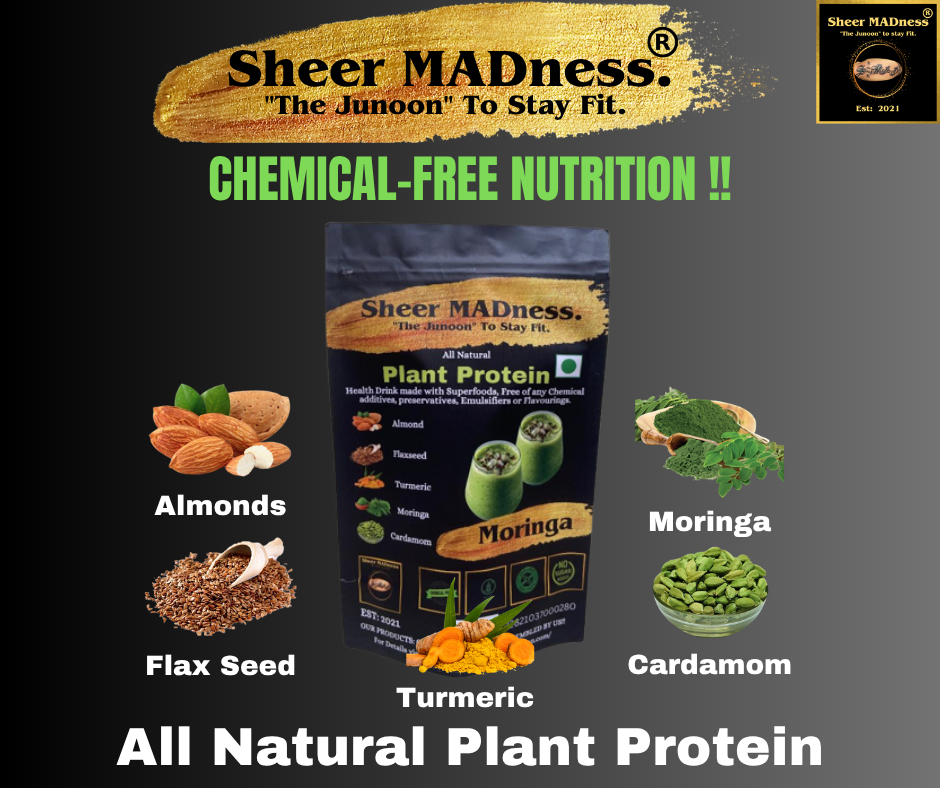
Sheer MADness Plant Protein Moringa addresses Indian cardiovascular health through a formulation that no isolated protein product matches.
Zero erythritol — no platelet aggregation risk for cardiac patients. No BHA and BHT — no xenobiotic hepatic oxidative stress that would compound arterial oxidative burden. Zero maltitol — no gut fermentation disruption that would impair the gut microbiome-cardiovascular axis. No artificial sweetener — no NF-κB-stimulating sweetener pathway activation.
Furthermore, the product is completely dairy-free — specifically important for the large proportion of Indian adults with lactose intolerance who cannot use whey-based cardiovascular supplements without digestive disruption.
This section is specifically important for the significant proportion of people reading this post because of their own cardiovascular conditions.
Moringa is a food. It is not a statin. It does not replace prescribed cardiovascular medications — ACE inhibitors, beta-blockers, aspirin, statins, or anti-coagulants — that cardiac patients require. The LDL reduction from moringa’s dietary mechanisms is nutritionally meaningful but not comparable to pharmaceutical statin therapy.
Anyone with diagnosed cardiovascular disease — coronary artery disease, previous myocardial infarction, heart failure, atrial fibrillation, or severe hypertension — must remain under cardiologist supervision. Dietary changes, including adding moringa, should be discussed with their treating cardiologist.
Specific drug interactions require physician awareness. Moringa may potentiate blood pressure medications — the additive blood pressure reduction from moringa’s potassium and magnesium alongside antihypertensive drugs requires monitoring. Moringa’s Vitamin K content may affect warfarin anticoagulation dosing. People on cardiac medications should always discuss new dietary supplements with their cardiologist.
Sheer MADness holds a registered trademark under the Government of India. The Natural Plant Protein formula is patent published under Patent No. 202331036733, searchable on Intellectual Property India. The brand holds a valid FSSAI licence and GSTIN registration.
| Cardiovascular Mechanism | Nutrient | Source | Evidence Level |
|---|---|---|---|
| LDL oxidation prevention — iron chelation | Quercetin | Moringa leaf — 50-60mg/100g | JACC flavonoid CVD risk study |
| LDL particle Vitamin E replenishment | Vitamin E — mixed tocopherols | Almonds — 12.5mg/100g | LDL oxidation research literature |
| eNOS activation — nitric oxide production | Quercetin | Moringa leaf | Endothelial cell research models |
| Dietary nitrate → NO pathway | Nitrates | Moringa leaf | Nitrate blood pressure research |
| Blood pressure — potassium/sodium counter | Potassium — 259mg/100g | Moringa leaf | DASH diet research literature |
| Arterial smooth muscle relaxation | Magnesium — 368mg/100g | Moringa leaf + almonds | American Journal Clinical Nutrition meta-analysis |
| Triglyceride reduction — PPAR-α activation | Omega-3 ALA | Flaxseed — 22g/100g | American Journal Clinical Nutrition |
| Plant sterol LDL cholesterol reduction | Plant sterols | Moringa leaf | EFSA health claim |
| Hepatic lipogenesis inhibition | Chlorogenic acid → AMPK | Moringa leaf | AMPK-SREBP pathway research |
| Endothelin-1 reduction | Isothiocyanates → NF-κB | Moringa leaf | NF-κB vascular research |
| Arterial inflammation — CRP reduction | Isothiocyanates + curcumin | Moringa + turmeric | European Heart Journal |
| Homocysteine reduction | Folate — 172mcg/100g | Moringa leaf | Folate-homocysteine literature |
| Platelet aggregation — zero erythritol | Absence of erythritol | Full formulation | Nature Medicine 2023 |
| Omega-6/omega-3 balance improvement | ALA omega-3 | Flaxseed | Prostaglandin pathway research |
Is moringa good for cardiovascular health?
Moringa supports cardiovascular health through five documented dietary mechanisms: LDL oxidation prevention through quercetin and Vitamin E, endothelial function support through eNOS activation and dietary nitrate, blood pressure modulation through potassium and magnesium, triglyceride reduction through flaxseed omega-3 PPAR-α activation, and arterial inflammation reduction through isothiocyanate NF-κB inhibition. These are meaningful nutritional contributions — moringa is a food, not a cardiac medication.
Can moringa replace heart medications?
No. Moringa is a food providing dietary cardiovascular support. It does not replace prescribed cardiac medications — statins, ACE inhibitors, beta-blockers, aspirin, or anticoagulants. People with diagnosed cardiovascular conditions must remain under cardiologist supervision. Discuss any dietary change including moringa with your cardiologist before beginning.
Moringa’s plant sterols reduce dietary cholesterol absorption — the EFSA recognises plant sterols as producing 7 to 10 percent LDL reduction at 1.5 to 3 grams daily. It’s chlorogenic acid reduces hepatic lipogenesis through AMPK pathway activation. Moringa’s most important cholesterol-related mechanism is preventing LDL oxidation — the conversion of LDL to atherogenic oxLDL — through quercetin iron chelation and direct peroxyl radical scavenging.
Why is the erythritol in commercial supplements a concern for cardiac patients?
The 2023 Nature Medicine study found high blood erythritol levels associated with significantly increased risk of major cardiovascular events through direct platelet aggregation enhancement. For cardiac patients with vulnerable plaques, erythritol’s pro-aggregatory effect is a specific safety concern. Sheer MADness Plant Protein Moringa contains zero erythritol and zero synthetic sweetener.
Does moringa help with blood pressure?
Moringa provides potassium (259mg/100g) and magnesium (368mg/100g) — the two dietary minerals most consistently associated with blood pressure reduction in meta-analyses. Almond magnesium in Sheer MADness Plant Protein Moringa compounds these contributions. Moringa’s isothiocyanates specifically reduce endothelin-1 production — a potent endogenous vasoconstrictor. These are dietary blood pressure support mechanisms, not pharmaceutical antihypertensive therapy.
How does flaxseed in Sheer MADness support heart health?
Flaxseed provides ALA omega-3 (22g/100g) that reduces triglycerides through PPAR-α activation and reduces arterial inflammation through prostaglandin pathway modulation. Flaxseed lignans specifically reduce LDL cholesterol through their phytoestrogenic modulation of hepatic LDL receptor expression. Together, these mechanisms address India’s specific triglyceride-driven cardiovascular risk pattern.
Yes — moringa’s blood pressure-supporting potassium and magnesium may add to the effect of prescribed antihypertensive drugs, potentially causing over-reduction of blood pressure. Moringa’s Vitamin K content may affect warfarin anticoagulation dosing. Consult your cardiologist or physician before beginning regular moringa consumption if you are on any cardiovascular medication.
What makes Sheer MADness specifically appropriate for heart health?
The combination of moringa quercetin (LDL oxidation prevention), almond Vitamin E (LDL particle protection), flaxseed omega-3 (triglyceride reduction), turmeric curcumin (NF-κB arterial inflammation reduction), and moringa potassium and magnesium (blood pressure support) — with zero erythritol, zero BHA, zero BHT, and zero synthetic sweetener — makes Sheer MADness Plant Protein Moringa the most comprehensive whole-food cardiovascular nutritional support available in India.

Cardiovascular disease is India’s leading cause of death. Indian adults develop coronary artery disease a decade earlier than Western populations. The dietary drivers — refined carbohydrate, refined oil, ultra-processed food, inadequate dietary antioxidants — are addressable through whole-food nutritional choices.
Moringa addresses the most important nutritional cardiovascular risk factors simultaneously. Quercetin prevents LDL oxidation — the initiation event of atherosclerotic plaque formation. Quercetin activates eNOS — maintaining the endothelial nitric oxide that protects arterial walls. Potassium and magnesium regulate blood pressure through the dietary mineral mechanisms that population research consistently confirms. Flaxseed omega-3 reduces triglycerides and arterial inflammation through PPAR-α and prostaglandin pathway effects. Chlorogenic acid inhibits hepatic lipogenesis through AMPK activation. Folate reduces homocysteine — the endothelial-damaging amino acid elevated in Indian diets low in green vegetables.
Sheer MADness Plant Protein Moringa delivers all of these through five whole-food ingredients — with zero erythritol that platelet aggregation research identifies as a specific cardiac patient concern, zero BHA and BHT that add hepatic oxidative burden to an already oxidatively challenged cardiovascular system, and zero dairy protein that would cause digestive disruption in the majority of Indian adults.
This is not the best thing for cardiovascular health — exercise, diet diversity, smoking cessation, and stress management are all more important than any single food. But as a daily whole-food nutritional practice supporting multiple specific cardiovascular protection mechanisms, moringa and the Sheer MADness blend represent the most comprehensive plant-based cardiovascular nutritional support available in the Indian market.
Since 2021, every ingredient is on the front of every pack. The cardiovascular mechanisms are in the ingredients.
I would also request you to please read my previous post: Benefits of Moringa Plant protein, the versatile Superfood powerhouse.
a) Everyone is an individual, so what suits me may not suit the next person.
b) If a person has a medical condition, a doctor’s advice and prescribed medication will only help. Cardiovascular disease is a serious medical condition requiring cardiologist management. Moringa is a nutritional food — it does not replace prescribed cardiac medications. Consult your cardiologist before adding any new supplement if you have diagnosed cardiovascular disease.
c) While buying any protein powder from the market, read the labels carefully. Watch out for INS 320 (BHA), INS 321 (BHT), erythritol, maltitol, sucralose, and other chemical additives. The 2023 Nature Medicine study specifically linked erythritol to increased cardiovascular event risk — making zero-erythritol formulations a specific cardiovascular health consideration.
If you are interested in buying chemical-free Natural Plant Protein Moringa, Health Drinks for Kids, or our delicious chemical-free Energy Bars, Protein Bars, and Millet Bars, shop at Sheer MADness.
You can also find us on Flipkart, Jio Mart, or ONDC in India.
d) Exercise is the key to fitness. Exercise and nutrition are two sides of the same coin and always go hand in hand.
e) Excess of anything is wrong, even the best whole-food superfood. Consume only recommended quantities.
f) Rome was not built in a day. Discipline and consistency are the only keys to lasting health.
g) It is not only exercise and protein that builds health. A healthy gut, macro and micronutrients, body type, rest, and lifestyle all matter. Of all these, exercise and nutrition are within our control. Focus on these two primary aspects first.
h) The most important part of fitness is that nothing is better than exercise and a balanced meal.
Article by Chef Ashutosh Awasthi
Disclaimer: Our products are a source of HEALTHY NUTRIENTS and are COMPLETELY FREE OF ANY ADDED CHEMICALS. We do not claim to cure any medical condition. The content provided is informational. We do not claim to diagnose or treat a person with any specific medical condition.