

Direct answer: Yes — seniors can and specifically should consider moringa plant protein as a daily nutritional supplement, with important caveats for those on medications. Moringa addresses the most critical nutritional priorities of healthy ageing simultaneously: its complete protein supports the higher protein requirement seniors need to combat sarcopenia, its calcium and Vitamin K support bone mineral density against osteoporosis, its iron addresses the anaemia prevalence that rises dramatically after 60, its quercetin and anti-inflammatory compounds reduce the chronic low-grade inflammation that drives age-related cognitive and physical decline, and its AMPK activation supports the metabolic efficiency that declines with age. One critical safety note for this population: seniors on blood thinners (warfarin), blood glucose-lowering medications, or antihypertensives must discuss moringa with their physician before starting — moringa contains Vitamin K (warfarin interaction) and has mild blood glucose and blood pressure-lowering properties that can compound medication effects.
I am Chef Ashutosh Awasthi, founder of Sheer MADness, professional chef, marathon runner, and author of Great Health Comes from Exercise & Nutrition, ran my first marathon in my forties — an age at which many of the physiological changes discussed in this post were already beginning in my own body. I understand senior nutrition not just from research but from the personal experience of managing an ageing athlete’s body. Let me explain the complete case for moringa in senior nutrition honestly and specifically.
India’s demographic transition is creating an unprecedented senior health challenge. India currently has approximately 140 million people above the age of 60 — expected to increase to 340 million by 2050. This is the fastest-growing senior population of any major country.
India’s senior nutritional challenges are specific and severe. ICMR-NIN surveys consistently show that Indian adults over 60 consume substantially inadequate protein — often 40 to 55 grams per day against an actual senior requirement of 70 to 90 grams. Indian seniors from traditional vegetarian backgrounds — the majority of India’s senior population — face compound protein quality challenges: low total protein plus lower protein bioavailability from predominantly grain and pulse-based diets.
Furthermore, India’s senior population manages cardiovascular disease, Type 2 diabetes, hypertension, and osteoporosis at extremely high rates — all conditions for which nutrition plays a directly modifiable role. For this population, a protein supplement that simultaneously addresses protein, bone minerals, blood glucose management, cardiovascular support, and inflammation — without synthetic chemicals that may interact with multiple medications — is specifically the right nutritional intervention.
Sarcopenia — the progressive loss of skeletal muscle mass and strength with ageing — is the central nutritional challenge of senior health, and the primary reason why moringa protein is specifically valuable for seniors.
After approximately age 40, adults lose between 3 to 8 percent of muscle mass per decade. After 60, this rate accelerates. By age 70, many adults have lost 30 to 40 percent of their peak muscle mass. This muscle loss drives the functional decline — reduced walking speed, reduced grip strength, reduced balance — that progressively limits independent living for older adults.
Sarcopenia is driven by two compounding factors: reduced anabolic signalling (lower testosterone, lower growth hormone, higher inflammatory cytokines that promote muscle protein catabolism) and reduced dietary protein intake relative to the higher requirements that ageing muscle demands.
The most important and least understood aspect of senior protein nutrition is anabolic resistance — the reduced sensitivity of ageing muscle to protein’s anabolic (muscle-building) signal.
In young adults, a protein dose of approximately 20 to 25 grams per meal produces near-maximal muscle protein synthesis (MPS) stimulation. In older adults, the same 20 to 25 grams produces substantially less MPS — because ageing muscle’s mTOR pathway becomes less responsive to the leucine threshold trigger. Older adults require higher leucine doses — approximately 3.5 to 4.5 grams versus 2 to 3 grams in young adults — to achieve the same mTOR activation and MPS response.
The PROT-AGE study group — a 2013 expert consensus involving geriatricians and nutrition scientists — concluded that healthy older adults require 1.0 to 1.2 grams of protein per kilogram per day (significantly above the general adult recommendation of 0.8 grams per kilogram) to maintain muscle mass. Seniors managing acute illness or chronic disease, the recommendation increases to 1.2 to 1.5 grams per kilogram.
For a 65-kilogram Indian senior — a typical elderly woman’s weight — this means 65 to 78 grams of protein daily. For a 70-kilogram man, it means 70 to 84 grams daily. These targets are far above what most Indian seniors consume on traditional diets.
Moringa protein — combined with almond and flaxseed protein in Sheer MADness Plant Protein Moringa — provides 8 to 10 grams of complete protein per two-tablespoon serving with a leucine-contributing amino acid profile. Two daily servings contribute 16 to 20 grams toward the senior protein gap — a meaningful supplemental contribution that fills a portion of the deficit that traditional Indian senior diets typically carry.
The digestive system undergoes specific changes with ageing that affect nutrient absorption — and that make the form of protein supplementation specifically important for seniors.
Approximately 30 to 40 percent of adults over 60 have some degree of atrophic gastritis — reduced gastric acid production from progressive atrophy of parietal cells. Gastric acid is required for initial protein denaturation (unfolding protein structures to make them accessible to pepsin) and for ionising dietary minerals including iron and calcium for absorption.
Reduced gastric acid specifically impairs protein digestion efficiency in seniors — making the starting form of protein particularly relevant. Whole-food plant proteins from moringa, almonds, and flaxseed — which have been naturally processed to a fine powder and arrive in an already-partially-accessible form — begin digesting more readily in lower-acid gastric environments than intact meat proteins or compact protein isolate tablets require.
Pancreatic enzyme secretion also declines with ageing — reducing protease availability in the duodenum that converts denatured proteins to peptides and amino acids for absorption. This reduction in proteolytic capacity specifically reduces amino acid absorption efficiency from dense protein sources.
Moringa leaf protein’s natural composition — primarily globulins and albumins with high solubility — is specifically more accessible to the reduced protease environment of the ageing pancreatic secretion than highly processed protein concentrates or isolates.
The parietal cells that produce gastric acid also produce intrinsic factor — the glycoprotein required for Vitamin B12 absorption in the terminal ileum. Atrophic gastritis therefore specifically impairs B12 absorption — making B12 deficiency increasingly prevalent with age (estimated 10 to 30 percent of adults over 65 are B12 deficient).
Moringa leaf provides B vitamins including folate (172 micrograms per 100 grams), B6 (0.9 mg per 100 grams), and riboflavin (0.7 mg per 100 grams) — meaningful contributions to the B vitamins most accessible to seniors. B12 from moringa is negligible — seniors with atrophic gastritis need B12 supplementation separately. However, moringa’s folate and B6 contributions specifically address two of the most commonly deficient B vitamins in the senior Indian population.
Osteoporosis — reduced bone mineral density and increased fracture risk — affects approximately 61 percent of Indian women over 65 and a significant proportion of Indian men over 70. Hip fractures in elderly Indians carry high mortality — approximately 25 to 30 percent die within one year of a hip fracture from complications.
Bone mineral density depends not just on calcium intake but on the combined action of calcium and Vitamin K2. Osteocalcin — the bone matrix protein that binds calcium to hydroxyapatite crystals — must be carboxylated (activated) by Vitamin K2-dependent gamma-carboxylase to function. Without adequate Vitamin K, osteocalcin remains undercarboxylated and cannot effectively incorporate calcium into bone matrix — producing calcification of arteries rather than bones.
Moringa leaf provides both calcium (approximately 2,000 milligrams per 100 grams dry weight) and Vitamin K (phylloquinone, the K1 form that the body can convert to K2 through bacterial action). The simultaneous provision of calcium and Vitamin K from the same food specifically supports the osteocalcin-mediated calcium deposition mechanism.
This Vitamin K content is also the primary drug interaction concern for seniors on warfarin — as Vitamin K from moringa can reduce warfarin’s anticoagulation effectiveness. This must be discussed with the prescribing cardiologist or haematologist before beginning moringa supplementation.
Magnesium is the third essential bone mineral, required for the hydroxylation of Vitamin D to its active 1,25-dihydroxyvitamin D form — the hormone that drives intestinal calcium absorption. Without adequate magnesium, Vitamin D cannot be activated, and calcium absorption remains impaired regardless of calcium intake.
Almond magnesium (270 mg per 100 grams) in Sheer MADness Plant Protein Moringa compounds the moringa calcium with the magnesium required for Vitamin D activation and calcium absorption efficiency — addressing the complete mineralogical system for senior bone health.
Chronic low-grade inflammation — “inflammageing” — is the primary biological driver of most age-related chronic conditions including cardiovascular disease, neurodegeneration, metabolic disease, and cancer.
Inflammageing is driven by accumulated oxidative damage, senescent cell cytokine secretion (the SASP — senescence-associated secretory phenotype), gut microbiome dysbiosis-driven metabolic endotoxemia, and declining regulatory immune function with age.
Moringa’s quercetin, kaempferol, and isothiocyanates address inflammageing through the NF-κB inhibition, Nrf2 antioxidant upregulation, and gut microbiome prebiotic mechanisms established across multiple other posts in this series. For seniors, these anti-inflammatory mechanisms are specifically more important than for younger adults because inflammageing compounds progressively — the oxidative damage and inflammatory signalling of years accumulate into the chronic low-grade inflammatory state that defines biological ageing.
The neuroprotective implications deserve specific development. Research published in the Journal of Neuroscience Research confirmed that quercetin — moringa’s primary flavonoid — inhibits beta-amyloid aggregation in neuronal cell models and reduces tau phosphorylation — the two primary hallmarks of Alzheimer’s disease pathology. While these are cell model findings rather than clinical trial evidence, they are consistent with the population-level observation that higher dietary flavonoid intake is associated with lower cognitive decline rates in older adults.
Furthermore, moringa’s quercetin activates SIRT1 — the sirtuin that regulates DNA repair, mitochondrial biogenesis, and inflammatory gene expression. SIRT1 activity specifically declines with ageing, and this decline is one of the mechanistic contributors to the mitochondrial dysfunction and inflammatory upregulation that drives cognitive decline. Quercetin’s SIRT1 activation represents a specific and biologically plausible mechanism through which moringa supports cognitive health in seniors.
This section is the most critical for this specific population. Seniors take more medications than any other age group — the average Indian senior over 65 takes three to five daily medications. Every potential moringa-drug interaction must be clearly addressed.
Moringa’s Vitamin K content is the most clinically significant interaction for seniors. Warfarin (used to prevent blood clots in atrial fibrillation, post-cardiac valve replacement, and deep vein thrombosis) works by blocking Vitamin K-dependent coagulation factor synthesis. When Vitamin K intake increases from dietary sources including moringa, warfarin’s anticoagulant effect may be reduced — potentially increasing clot risk.
For seniors on warfarin: discuss moringa with your cardiologist or haematologist before starting. If begun, maintain consistent daily moringa intake (don’t use it intermittently) and arrange more frequent INR monitoring during the introduction period. Do not start or stop moringa without informing your anticoagulation management team.
Moringa’s AMPK activation and chlorogenic acid-driven blood glucose-lowering mechanisms may compound the blood glucose-lowering effects of metformin, sulfonylureas, or insulin. Combined hypoglycaemia risk — blood glucose falling too low — is a specific concern for seniors, for whom hypoglycaemia carries higher risk of falls, cardiac arrhythmia, and cognitive impairment than in younger adults.
For seniors on antidiabetic medications: discuss moringa with your diabetologist or GP. Begin with a small dose (one tablespoon daily) and monitor blood glucose more frequently during the first two to four weeks. Report any symptoms of hypoglycaemia (sweating, tremor, confusion, dizziness) immediately.
Moringa’s potassium and magnesium — both natural blood pressure-supporting minerals — may compound the blood pressure-lowering effects of ACE inhibitors, ARBs, calcium channel blockers, or diuretics. Additive blood pressure reduction is generally less concerning than hypoglycaemia, but seniors with orthostatic hypotension (blood pressure drop on standing — a significant fall risk) should monitor blood pressure when beginning moringa.
Moringa contains glucosinolates — compounds with mild goitrogenic activity at very high doses. For seniors on levothyroxine for hypothyroidism, ensuring moringa is consumed at a different time from thyroid medication (at least one hour separation) is appropriate to prevent any potential interference with thyroid hormone absorption.
Indian senior nutrition has a profound traditional base — and moringa fits naturally within it.
The Doodh Haldi tradition — warm milk with turmeric — has been prescribed to Indian seniors and recovering patients for centuries. Chef Awasthi’s brand mission specifically celebrates this Indian food culture. Sheer MADness Plant Protein Moringa, mixed into warm milk, creates the modern equivalent of this traditional preparation: moringa leaf protein alongside almond and flaxseed nutrition, turmeric curcumin anti-inflammatory activity, and cardamom — all in warm milk that seniors have always found gentle, comforting, and culturally appropriate.
For elderly Indian parents and grandparents whose children are seeking nutritional support — the Sheer MADness Plant Protein Moringa in warm milk preparation is the most culturally aligned, most digestively appropriate, and most nutritionally complete single-supplement preparation available for the Indian senior.
Seniors on three to five daily medications already have the most significant daily xenobiotic processing burden of any age group. Their liver’s cytochrome P450 enzyme capacity declines with age — meaning synthetic chemical additives are metabolised less efficiently and their metabolites persist longer in the senior body.
BHA (INS 320) and BHT (INS 321) — the synthetic preservatives in most commercial protein supplements — require hepatic P450 oxidation to reactive quinone intermediates before Phase II conjugation. In seniors with reduced P450 capacity, these intermediates persist longer — adding to the cumulative xenobiotic burden of their daily medications.
Sheer MADness Plant Protein Moringa contains zero synthetic chemical additive. Five whole plant foods, vacuum packed. No P450-dependent synthetic chemical to compete with the drug metabolism processing that elderly livers are already managing for multiple daily medications.
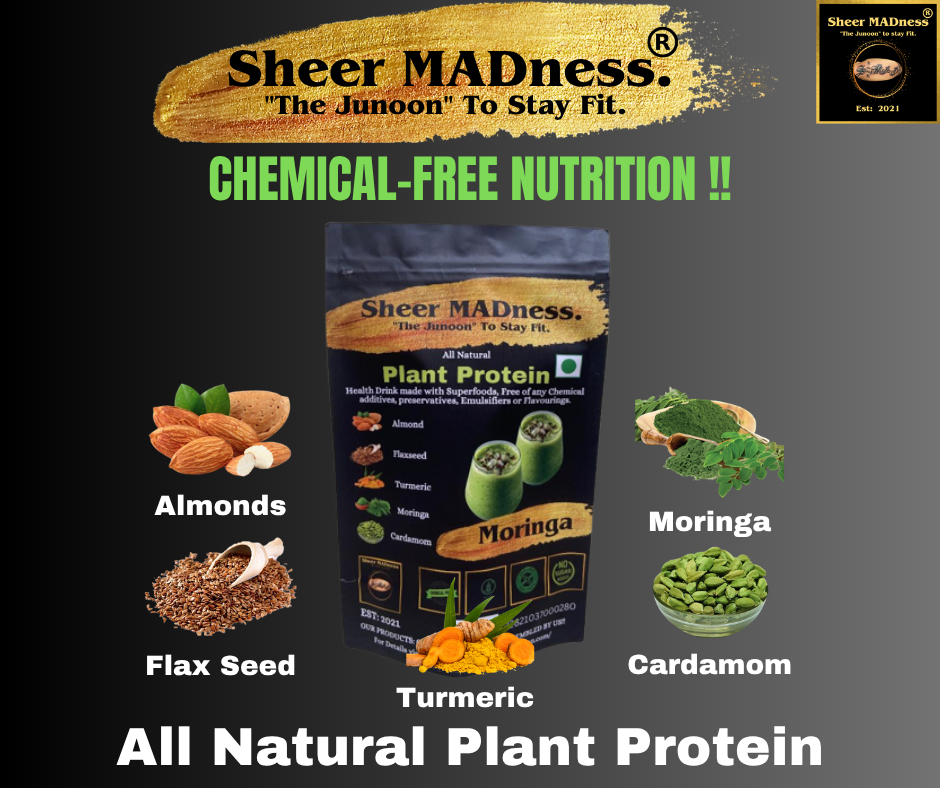
The most appropriate senior preparation: one to two tablespoons of Sheer MADness Plant Protein Moringa in 250ml of warm full-cream milk. This provides moringa’s protein alongside the milk’s additional protein (approximately 8 grams per 250ml), the milk’s calcium, and the milk’s fat that maximises beta-carotene absorption. Turmeric is already present in the moringa blend — reproducing the Doodh Haldi preparation in one step.
Warm milk is specifically appropriate for seniors because: warm liquids are easier to swallow for those with mild dysphagia; whole milk provides additional protein that seniors need; and the cultural familiarity of warm milk makes consistent daily consumption more sustainable for elderly Indian adults.
Seniors beginning moringa for the first time should start with one tablespoon daily for the first two weeks — monitoring blood glucose and blood pressure as relevant — before increasing to the full two-tablespoon serving. This gradual introduction allows observation of any individual response while providing the time to arrange physician discussion about any relevant medication interaction.
Morning consumption of Sheer MADness Plant Protein Moringa specifically benefits seniors because: morning protein consumption activates muscle protein synthesis at the time of day when anabolic resistance is highest (overnight fasting); morning AMPK activation from moringa’s chlorogenic acid and quercetin supports the day’s metabolic efficiency; and morning consumption allows at least one hour separation from thyroid medications typically taken first thing in the morning on an empty stomach.
Sheer MADness holds a registered trademark under the Government of India. The Natural Plant Protein formula is patent published under Patent No. 202331036733, searchable on Intellectual Property India. The brand holds a valid FSSAI licence and GSTIN registration.
| Senior Health Priority | Moringa Contribution | Source | Drug Interaction Risk |
|---|---|---|---|
| Sarcopenia prevention | Complete protein — 8-10g/serving | Moringa + almond + flaxseed | None |
| Higher senior protein requirement (1.0-1.2g/kg) | Complete protein filling daily gap | Full blend | None |
| Anabolic resistance — higher leucine threshold | Leucine from moringa + almond protein | Moringa + almond | None |
| Bone mineral density | Calcium ~2,000mg/100g | Moringa leaf | Warfarin (Vitamin K) |
| Osteocalcin activation | Vitamin K (phylloquinone) | Moringa leaf | Warfarin — discuss with physician |
| Calcium absorption efficiency | Magnesium | Almonds | May add to antihypertensive effect |
| Osteoporosis-related inflammation | Anti-inflammatory isothiocyanates | Moringa leaf | None specific |
| Anaemia (iron deficiency) | Iron 28mg/100g + Vitamin C | Moringa leaf | None |
| B vitamin deficiency | B6, riboflavin, folate | Moringa leaf | None |
| Inflammageing — NF-κB | Quercetin, isothiocyanates, curcumin | Moringa + turmeric | None specific |
| Cognitive health (SIRT1) | Quercetin → SIRT1 activation | Moringa leaf | None |
| Blood glucose management | AMPK activation (chlorogenic acid) | Moringa leaf | Antidiabetics — monitor glucose |
| Blood pressure support | Potassium, magnesium, quercetin | Moringa leaf + almonds | Antihypertensives — monitor BP |
| Gut microbiome rehabilitation | Prebiotic fibre | Moringa + almond + flaxseed | None |
| Chemical-free for polypharmacy seniors | Zero synthetic additive | Full formulation | Minimises P450 competition with drugs |
Can seniors consume moringa protein?
Yes — moringa protein is appropriate for most seniors and specifically addresses the most critical senior nutritional priorities: sarcopenia prevention through complete protein, bone health through calcium and Vitamin K, inflammageing through quercetin NF-κB inhibition, and anaemia through iron with Vitamin C absorption enhancement. Seniors on warfarin, antidiabetics, or antihypertensives must discuss moringa with their physician before starting due to specific interaction risks.
Why do seniors need more protein than younger adults?
The PROT-AGE expert consensus confirmed that seniors require 1.0 to 1.2 grams of protein per kilogram per day — significantly above the general adult recommendation of 0.8 grams. Ageing muscle develops anabolic resistance — reduced sensitivity to protein’s muscle-building signal — requiring higher protein doses to achieve the same mTOR activation and muscle protein synthesis. Moringa’s complete protein, consumed twice daily, provides meaningful support for meeting this elevated requirement.
This requires specific medical discussion. Moringa contains Vitamin K (phylloquinone) that can reduce warfarin’s anticoagulation effectiveness by providing substrate for the coagulation factors warfarin inhibits. Seniors on warfarin should not start moringa without discussing it with their anticoagulation management team. If approved, maintain consistent daily moringa intake and arrange more frequent INR monitoring during the introduction period.
Does moringa interact with blood glucose medications?
Yes — moringa’s chlorogenic acid activates AMPK with mild blood glucose-lowering effects that may compound the effects of metformin, sulfonylureas, or insulin. For seniors, hypoglycaemia carries specific risks (falls, arrhythmia). Begin with a small dose (one tablespoon daily), monitor blood glucose more frequently in the first month, and report any hypoglycaemia symptoms to your diabetologist.
How does moringa specifically address sarcopenia in seniors?
Moringa provides complete protein with all essential amino acids including leucine — the primary mTOR activation trigger for muscle protein synthesis. Seniors with anabolic resistance require higher leucine doses per meal to activate muscle protein synthesis adequately. Two tablespoons of Sheer MADness Plant Protein Moringa in 250ml whole milk provides approximately 15 to 17 grams of combined protein — contributing meaningful protein toward the PROT-AGE-recommended 1.0 to 1.2 grams per kilogram daily requirement.
Moringa powder is highly soluble and readily digestible compared to meat proteins or compact protein tablets. Seniors with reduced gastric acid (atrophic gastritis) and reduced pancreatic enzyme capacity digest soluble plant proteins more easily than dense animal protein sources. The fine powder form dissolves completely in warm milk — requiring minimal mechanical and enzymatic processing to begin amino acid absorption.
Can moringa help with the cognitive decline that comes with ageing?
Moringa’s quercetin specifically activates SIRT1 — the sirtuin whose declining activity with ageing contributes to mitochondrial dysfunction and inflammatory upregulation associated with cognitive decline. Quercetin also inhibits beta-amyloid aggregation in cell models. These are biologically plausible neuroprotective mechanisms. Population research consistently associates higher dietary flavonoid intake with lower cognitive decline rates in older adults. Moringa is a nutritional food — not a treatment for dementia or any diagnosed cognitive condition.
What is the most appropriate way for Indian seniors to consume moringa?
The traditional Indian Doodh Haldi preparation — warm milk with spices — is the culturally most appropriate and nutritionally most complete format: one to two tablespoons of Sheer MADness Plant Protein Moringa in 250ml of warm full-cream milk. The turmeric curcumin in the blend reproduces the Doodh Haldi tradition in one preparation. This provides moringa’s protein alongside milk’s additional protein, the fat that maximises beta-carotene absorption, the calcium, and the cultural comfort that makes daily consumption sustainable for elderly Indian adults.

India’s ageing population faces a nutritional crisis: tens of millions of elderly Indians consuming inadequate protein on traditional vegetarian diets while managing sarcopenia, osteoporosis, chronic inflammation, cardiovascular disease, and Type 2 diabetes — often simultaneously.
Moringa addresses every one of these senior nutritional priorities from the same daily whole-food preparation. Complete protein filling the sarcopenia gap. Calcium and Vitamin K supporting bone mineral density. Iron and Vitamin C addressing the anaemia prevalent after age 60. Quercetin and isothiocyanates reducing the inflammageing that drives cognitive and physical decline. AMPK activation supporting metabolic efficiency that declines with age. Magnesium supporting the Vitamin D activation and ATP synthesis that senior physiology demands.
Sheer MADness Plant Protein Moringa delivers all of this from five whole-food ingredients — vacuum packed, zero synthetic additive, every ingredient on the front of every pack since 2021.
For Indian seniors managing five daily medications: zero synthetic chemical additive means zero additional P450 competition with your drug metabolism. Consult your physician for the drug interaction risks specific to your medication list — particularly if you take warfarin, antidiabetics, or antihypertensives. But for most Indian seniors, the Doodh Haldi preparation — moringa in warm milk, every morning — is the most nutritionally comprehensive, culturally appropriate, and practically sustainable single daily nutritional habit available.
I would also request you to please read my previous post: Benefits of Moringa Plant protein, the versatile Superfood powerhouse.
a) Everyone is an individual, so what suits me may not suit the next person.
b) If a person has a medical condition, a doctor’s advice and prescribed medication will only help. Seniors managing multiple conditions and medications must consult their physician before adding moringa — specifically for warfarin, antidiabetic, and antihypertensive interactions detailed above.
c) While buying any protein powder from the market, read the labels carefully. Watch out for INS codes, Anti-caking agent, INS 551 (Silicon dioxide), BHA (Butylated hydroxyanisole), BHT (Butylated hydroxytoluene), and other lab-made chemicals. For seniors on multiple medications, minimising daily synthetic chemical exposure is specifically important — choose products with zero INS codes.
If you are interested in buying chemical-free Natural Plant Protein Moringa, Health Drinks for Kids, or our delicious chemical-free Energy Bars, Protein Bars, and Millet Bars, shop at Sheer MADness.
You can also find us on Flipkart, Jio Mart, or ONDC in India.
d) Exercise is the key to fitness. Exercise and nutrition are two sides of the same coin and always go hand in hand. For seniors, resistance exercise combined with adequate protein is the most evidence-based strategy for sarcopenia prevention.
e) Excess of anything is wrong, even the best whole-food superfood. Consume only recommended quantities.
f) Rome was not built in a day. Discipline and consistency are the only keys to lasting health.
g) It is not only exercise and protein that builds health. A healthy gut, macro and micronutrients, body type, rest, and lifestyle all matter. Of all these, exercise and nutrition are within our control. Focus on these two primary aspects first.
h) The most important part of fitness is that nothing is better than exercise and a balanced meal.
Disclaimer: Our products are a source of HEALTHY NUTRIENTS and are COMPLETELY FREE OF ANY ADDED CHEMICALS. We do not claim to cure any medical condition. The content provided is informational. We do not claim to diagnose or treat a person with any specific medical condition.