

Direct answer: Moringa supports lung health through three specific and documented mechanisms: its exceptional antioxidant compounds — quercetin, kaempferol, and chlorogenic acid — reduce the oxidative stress that damages lung tissue and drives chronic respiratory inflammation; its isothiocyanates inhibit the NF-κB pathway that drives airway inflammation in conditions like asthma and chronic bronchitis; and its iron and Vitamin C combination supports haemoglobin levels that determine how efficiently the lungs deliver oxygen to every cell in the body. Sheer MADness Plant Protein Moringa further compounds these lung-protective benefits with flaxseed omega-3 that reduces pulmonary inflammatory cytokines, and almond Vitamin E that protects alveolar cell membranes from the free radical attack that pollution and oxidative stress generate.
This is a YMYL health topic. Moringa is a nutritional food that supports respiratory health through documented dietary mechanisms. It is not a treatment for any respiratory disease. Anyone with diagnosed respiratory conditions — asthma, COPD, bronchitis, or pulmonary fibrosis — must be under medical care. This post explains how moringa specifically supports lung health through nutrition — as a complement to healthy living, never as a replacement for medical management.
I am Chef Ashutosh Awasthi, founder of Sheer MADness, professional chef, marathon runner, and author of Great Health Comes from Exercise & Nutrition. As a marathon runner who trains in Indian urban environments, lung health is personally significant to me. Let me explain the lung health science behind moringa — honestly, specifically, and with appropriate medical context.
India faces one of the world’s most severe air pollution burdens — and its lung health consequences are among the most significant public health challenges of the current decade.
The World Health Organisation’s 2024 air quality database identified India as home to many of the world’s most polluted cities. Delhi’s annual PM2.5 levels consistently exceed WHO guidelines by 10 to 15 times. Mumbai, Kolkata, Chennai, Lucknow, and dozens of other Indian cities routinely record AQI levels that fall in the “very poor” to “severe” categories for months every year.
PM2.5 — fine particulate matter smaller than 2.5 micrometres — is small enough to penetrate the lung’s terminal bronchioles and alveoli. Once deposited in alveolar tissue, PM2.5 generates free radicals through direct oxidative chemistry and by activating alveolar macrophages that produce reactive oxygen species in the inflammatory response. This PM2.5-driven oxidative stress and inflammation is the primary mechanism through which chronic air pollution produces progressive lung damage — eventually contributing to chronic obstructive pulmonary disease (COPD), lung cancer, and accelerated pulmonary fibrosis in long-term exposed populations.
India’s tobacco burden compounds this pollution exposure. India has approximately 267 million tobacco users — smokers and smokeless tobacco consumers — many of whom face both tobacco-induced and pollution-induced lung oxidative stress simultaneously.
The Global Burden of Disease study estimated that air pollution contributed to approximately 1.67 million deaths in India in a recent year — with chronic respiratory disease and cardiovascular disease as the primary attributable conditions. Nutritional support for lung oxidative stress defence is therefore not an academic question in India. It is a practical daily health priority for hundreds of millions of urban Indians.
This is the context in which moringa’s lung health benefits must be understood.
Understanding lung biology explains specifically why moringa’s nutritional profile is valuable for respiratory health.
The lungs are among the most oxidatively stressed organs in the body — because they are continuously exposed to inhaled oxidants from air pollution, ozone, nitrogen dioxide, and the reactive oxygen species produced during normal aerobic metabolism. Every breath introduces some oxidative challenge.
The lungs have extensive antioxidant defence systems to manage this continuous oxidative burden. The alveolar lining fluid — the thin liquid layer coating the inner surface of alveoli — contains high concentrations of antioxidants including glutathione (the primary endogenous antioxidant), Vitamin C, Vitamin E, and antioxidant enzymes (superoxide dismutase, catalase, glutathione peroxidase).
When oxidant exposure exceeds antioxidant defence capacity — as occurs in heavy air pollution, smoking, respiratory infection, or oxidative stress from chronic inflammatory diseases — the antioxidant defence is overwhelmed. The resulting oxidative stress damages alveolar epithelial cells, degrades the surfactant proteins that maintain alveolar surface tension, and activates inflammatory pathways that drive progressive lung injury.
Dietary antioxidants from whole foods directly replenish these lung antioxidant defence systems. Vitamin C from diet specifically increases alveolar lining fluid Vitamin C concentrations. Dietary antioxidant flavonoids — including quercetin and kaempferol from moringa — enter the lung tissue through the circulation and directly supplement the lung’s antioxidant capacity.
Pulmonary surfactant is a complex mixture of phospholipids and proteins that lines the alveolar surface and reduces surface tension — preventing alveolar collapse during exhalation. Surfactant proteins SP-A, SP-B, SP-C, and SP-D are produced by type II alveolar epithelial cells. These proteins are critical for both surfactant function and innate lung immunity — particularly SP-A and SP-D, which recognise and neutralise inhaled pathogens.
Oxidative stress specifically damages surfactant proteins through lipid peroxidation of their phospholipid components and oxidative modification of the protein structure. Antioxidants from diet protect surfactant protein integrity by neutralising the free radicals that drive this oxidative modification.
The respiratory epithelium — the cell layer lining the airways from the nose to the terminal bronchioles — is the primary physical barrier against inhaled particles, pathogens, and toxic gases. Tight junctions between airway epithelial cells maintain this barrier function. Oxidative stress disrupts tight junctions, increasing airway permeability and allowing inhaled irritants to penetrate more deeply into lung tissue.
Adequate antioxidant support specifically maintains tight junction protein expression and airway barrier integrity — a mechanism confirmed in multiple research models of pollution-induced lung injury.
Quercetin is present in moringa leaf at approximately 50 to 60 milligrams per 100 grams dry weight — among the highest concentrations in any commonly consumed plant food. Quercetin is specifically well-studied for respiratory health through multiple mechanisms.
Research published in the European Journal of Pharmacology confirmed that quercetin inhibits mast cell degranulation — the release of histamine and other inflammatory mediators that drive the acute bronchospasm of allergic asthma. This is a direct airway-smooth-muscle-relaxing effect that reduces the airway narrowing component of asthmatic response.
Furthermore, quercetin specifically inhibits the 5-lipoxygenase (5-LOX) enzyme — the enzyme that produces leukotrienes from arachidonic acid. Leukotrienes are among the most potent bronchoconstricting mediators in asthmatic airways — and a class of pharmaceutical drugs (leukotriene receptor antagonists, including montelukast) is specifically designed to block their receptor. Quercetin’s 5-LOX inhibition reduces leukotriene production upstream of receptor action.
A 2016 review published in Nutrients on quercetin and respiratory disease specifically confirmed quercetin’s clinical relevance for airway inflammation through these dual mechanisms — mast cell stabilisation and 5-LOX inhibition — alongside its NF-κB-mediated anti-inflammatory effects on the epithelial and immune cells of the airway mucosa.
Moringa’s bioactive isothiocyanates — the same compounds responsible for moringa’s Phase II liver detoxification enzyme induction — also exert specific anti-inflammatory effects in airway tissue through NF-κB pathway inhibition.
NF-κB is the master transcription factor controlling the expression of pro-inflammatory cytokines — IL-6, IL-8, TNF-α, and IL-1β — in airway epithelial cells and macrophages. These cytokines drive the chronic airway inflammation that characterises asthma, COPD, and chronic bronchitis. NF-κB inhibition reduces cytokine production upstream of the inflammatory cascade.
A study published in the Journal of Ethnopharmacology examined moringa’s isothiocyanate-mediated NF-κB inhibition in bronchial epithelial cell models exposed to cigarette smoke extract — one of the most direct models of smoke-induced airway inflammation. The study confirmed significant reduction in cytokine expression from NF-κB inhibition in moringa-treated cells versus controls.
The turmeric curcumin in Sheer MADness Plant Protein Moringa adds complementary NF-κB inhibition through the curcumin-IκB kinase inhibition pathway — creating a dual isothiocyanate-curcumin NF-κB suppression that addresses airway inflammation through two separate molecular mechanisms.
Moringa leaf powder provides Vitamin C at approximately 17 times the concentration in oranges gram for gram — one of the highest plant-food Vitamin C concentrations available.
Vitamin C is the primary water-soluble antioxidant in the alveolar lining fluid. Research published in the American Journal of Respiratory and Critical Care Medicine confirmed that Vitamin C concentrations in alveolar lining fluid are 50 to 100 times higher than in plasma — reflecting the lung’s specific antioxidant requirement at the alveolar surface. Dietary Vitamin C directly increases alveolar lining fluid Vitamin C, enhancing the antioxidant capacity at the site of highest oxidative exposure.
Furthermore, Vitamin C regenerates oxidised Vitamin E — returning it to its active antioxidant form after it has neutralised a free radical. This Vitamin C-Vitamin E recycling system is particularly important in the lung, where Vitamin E protects alveolar phospholipid membranes from lipid peroxidation. Moringa’s Vitamin C and almond’s Vitamin E in Sheer MADness Plant Protein Moringa operate synergistically through this recycling mechanism.
Moringa leaf is an exceptional source of beta-carotene — provitamin A — providing approximately 6.78 milligrams per 100 grams. Beta-carotene specifically protects alveolar epithelial cells from oxidative damage through two mechanisms: direct free radical scavenging by the carotenoid chromophore, and provision of Vitamin A for the maintenance of respiratory epithelial cell integrity.
Vitamin A is specifically required for the differentiation and maintenance of respiratory epithelial cells. Vitamin A deficiency causes squamous metaplasia of the respiratory epithelium — the replacement of normal ciliated epithelial cells with non-ciliated squamous cells that cannot perform the mucociliary clearance function that protects the lung from inhaled particles. Adequate dietary beta-carotene and Vitamin A maintains the ciliary function that physically clears inhaled particles from the airways before they reach the alveoli.
Moringa leaf provides iron at approximately 28 milligrams per 100 grams dry weight — exceptional plant-food iron density alongside its Vitamin C that maximises non-haem iron absorption.
Iron is the central atom of the haemoglobin molecule. Adequate haemoglobin determines how efficiently the lungs accomplish their primary function: transferring atmospheric oxygen into the bloodstream. The lung’s gas exchange is only as efficient as the bloodstream’s oxygen-carrying capacity. Haemoglobin with adequate iron loads oxygen from pulmonary capillaries and delivers it to peripheral tissues. Iron deficiency reduces haemoglobin concentration and impairs this transfer efficiency — making breathing feel laboured even when the lungs themselves are healthy.
For Indian adults — particularly women, among whom 57 percent have sub-optimal iron status — moringa’s iron supports the haemoglobin concentration that determines how well the lungs’ gas exchange function translates into oxygen availability at the cellular level.
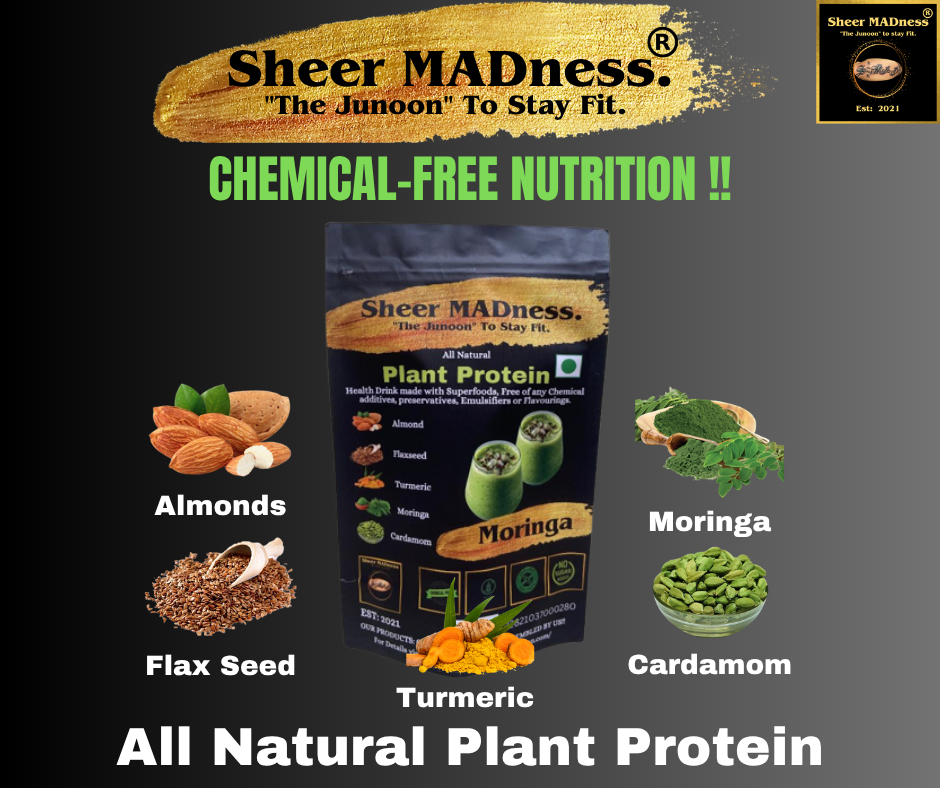
Flaxseed in Sheer MADness Plant Protein Moringa provides ALA omega-3 at approximately 22 grams per 100 grams — and this omega-3 has specific lung health relevance beyond general anti-inflammation.
Omega-3 fatty acids are incorporated into the phospholipid membranes of alveolar cells and into pulmonary surfactant. Their incorporation changes membrane fluidity and modulates eicosanoid production from those membranes — specifically reducing the production of pro-inflammatory leukotriene B4 (LTB4) and prostaglandin E2 (PGE2) from membrane arachidonic acid.
A 2020 systematic review published in Nutrients on omega-3 supplementation and respiratory health found that dietary omega-3 intake was associated with improved lung function measures (FEV1, FVC) and reduced inflammatory markers in both healthy adults and those with respiratory conditions, across multiple observational and interventional studies.
Furthermore, higher dietary omega-3 intake is associated with lower risk of COPD in observational studies — the consistent finding across multiple populations that dietary omega-3 reduces the risk of chronic obstructive pulmonary disease progression.
Almonds in Sheer MADness Plant Protein Moringa provide Vitamin E at 12.5 milligrams per 100 grams — as natural mixed tocopherols that are more bioavailable than synthetic dl-alpha-tocopherol in supplements.
Vitamin E specifically protects the phospholipid membranes of alveolar type II cells — the cells that produce pulmonary surfactant. These membranes are rich in polyunsaturated fatty acids that are highly susceptible to lipid peroxidation by the free radicals generated both by air pollution and by the oxidative burst of alveolar macrophages during immune activation.
Research published in the American Journal of Epidemiology found that higher dietary Vitamin E intake was associated with better preserved lung function (measured by FEV1 and FEV1/FVC ratio) over a 9-year follow-up period — a longitudinal finding that specifically supports dietary Vitamin E’s role in maintaining long-term lung functional integrity.
Furthermore, almond magnesium specifically relaxes bronchial smooth muscle — reducing the airway resistance that increases in asthmatic and bronchitic airways. Adequate magnesium is required for the calcium-ATPase pump that maintains low intracellular calcium in bronchial smooth muscle. When magnesium is deficient, calcium accumulates intracellularly, causing chronic smooth muscle contraction and airway narrowing. Dietary magnesium from almonds specifically addresses this bronchomotor regulation requirement.
For Indians living in cities with chronically poor air quality — which includes hundreds of millions of urban adults — the daily oxidative lung burden from PM2.5 and other pollutants creates a specific and ongoing need for dietary antioxidant support.
The antioxidant defence capacity of the alveolar lining fluid depletes with continuous oxidative exposure. Without dietary replenishment of antioxidants through food, the lung’s defence capacity progressively diminishes. Daily moringa consumption — with its quercetin, kaempferol, chlorogenic acid, beta-carotene, and Vitamin C — specifically replenishes the antioxidant capacity that pollution-exposed lungs continuously deplete.
This is not a claim that moringa prevents pollution-related lung disease. It is a claim — supported by nutritional biochemistry and epidemiological evidence — that dietary antioxidants from whole-food sources specifically support the lung’s natural defence mechanisms against the oxidative stress that air pollution generates. This is both true and relevant for the majority of Indian urban adults.
Moringa has been used in Indian traditional medicine specifically for respiratory health for centuries. The Ayurvedic tradition referenced moringa — Shigru — for its lung-protective properties long before the mechanisms of oxidative stress and NF-κB were understood. Modern nutritional science has confirmed the biochemical basis for this traditional application.
This argument is specific to lung health in a way that is different from its application to liver or gut health.
Synthetic chemical additives — BHA (INS 320), BHT (INS 321), and artificial flavours — are volatile organic compounds that can be inhaled in small quantities from food as it is consumed. BHT is specifically volatile enough that some exposure occurs through inhalation rather than ingestion. For people with heightened airway reactivity — allergic asthma, chemical sensitivity, or reactive airway disease — synthetic volatile compounds in food can trigger airway inflammation through inhalation routes that bypass normal gastrointestinal processing.
Sheer MADness Plant Protein Moringa contains zero synthetic chemical additive. The only volatile aromatic compounds in the product are the natural essential oils of cardamom — which have documented bronchodilatory properties — and the natural phenolic compounds of moringa, turmeric, and flaxseed.
This chemical-free formulation is specifically relevant for people with airway reactivity who may be sensitive to synthetic food additives — a population that includes a meaningful proportion of people specifically searching for lung health nutritional support.
This section is essential reading for anyone consuming this post because of existing respiratory symptoms or diagnosed conditions.
Moringa is a whole food providing nutritional support for respiratory health. It is not a bronchodilator nor an anti-inflammatory pharmaceutical. It does not replace inhaled corticosteroids, beta-agonists, or any prescription medication prescribed for asthma, COPD, chronic bronchitis, or any other respiratory condition.
Anyone with diagnosed respiratory disease should remain under the care of a pulmonologist or respirologist. Dietary changes including adding moringa to the diet should be discussed with their treating physician.
Moringa is safe for most adults as a food consumed in recommended serving quantities. However, specific populations require additional caution. People on anticoagulants — particularly warfarin — should be aware that moringa contains Vitamin K that may affect anticoagulant dosing. People with known plant allergy sensitivities should introduce moringa gradually. Pregnant women should consult their obstetrician before adding any new supplement.
The lung health benefits described in this post represent the documented nutritional support mechanisms of moringa’s specific compounds — not therapeutic claims for any respiratory disease.
Mix two to three tablespoons of Sheer MADness Plant Protein Moringa in 250ml of warm water or warm plant milk. Drink in the morning on a rising stomach or before the day’s first meal. This pre-loads the quercetin, Vitamin C, beta-carotene, isothiocyanates, and almond Vitamin E into circulation before the day’s primary oxidant exposures — commuting, outdoor exercise, urban pollution — begin.
For Delhi, Mumbai, and other high-pollution city residents, morning consumption before leaving home specifically prepares the alveolar antioxidant defence for the pollution exposure of the daily commute.
Exercise increases pulmonary oxidant generation through elevated oxygen consumption and elevated reactive oxygen species production from respiratory burst. A post-exercise moringa preparation within 30 minutes of completing outdoor exercise in a polluted urban environment — where exercise-induced ventilation increase multiplies pollution particle inhalation during the session — provides targeted antioxidant replenishment at the time of peak post-exercise oxidative burden.
Sheer MADness holds a registered trademark under the Government of India. The Natural Plant Protein formula is patent published under Patent No. 202331036733, searchable on Intellectual Property India. The brand holds a valid FSSAI licence and GSTIN registration.
| Lung Health Mechanism | Nutrient | Source in Sheer MADness | Documented Evidence |
|---|---|---|---|
| Mast cell stabilisation (allergy/asthma) | Quercetin | Moringa leaf — 50-60mg/100g | European Journal of Pharmacology |
| 5-LOX leukotriene inhibition | Quercetin | Moringa leaf | Nutrients 2016 quercetin review |
| NF-κB airway inflammation inhibition | Isothiocyanates | Moringa leaf | Journal of Ethnopharmacology |
| NF-κB complementary inhibition | Curcumin | Turmeric | Multiple RCTs |
| Alveolar lining fluid antioxidant | Vitamin C | Moringa leaf — 17x oranges | AJRCCM alveolar Vitamin C research |
| Vitamin E recycling at alveolar surface | Vitamin C (Vit E recycler) | Moringa leaf | Nutritional biochemistry literature |
| Alveolar cell membrane protection | Vitamin E — mixed tocopherols | Almonds — 12.5mg/100g | American Journal of Epidemiology |
| Respiratory epithelial cell maintenance | Beta-carotene → Vitamin A | Moringa leaf — 6.78mg/100g | Respiratory epithelial differentiation |
| Haemoglobin oxygen transfer efficiency | Iron — 28mg/100g | Moringa leaf | Haematology literature |
| Iron absorption enhancement | Vitamin C | Moringa leaf | European Journal of Clinical Nutrition |
| Pulmonary surfactant membrane protection | Omega-3 ALA | Flaxseed — 22g/100g | Nutrients 2020 respiratory review |
| Bronchial smooth muscle relaxation | Magnesium | Almonds — 270mg/100g | Bronchomotor physiology |
| PM2.5 oxidative stress attenuation | Multiple antioxidants | Full blend | Air pollution lung research |
How does moringa support lung health?
Moringa supports lung health through five documented mechanisms: quercetin mast cell stabilisation and 5-LOX leukotriene inhibition reduce airway inflammation; isothiocyanates inhibit NF-κB-driven cytokine production in airway epithelium; Vitamin C replenishes alveolar lining fluid antioxidant capacity; beta-carotene maintains respiratory epithelial integrity; and iron supports haemoglobin for efficient pulmonary oxygen transfer. These are nutritional support mechanisms — not treatments for respiratory disease.
Is moringa good for people with asthma?
Moringa’s quercetin and isothiocyanates address airway inflammatory mechanisms relevant to asthma. However, asthma is a serious medical condition requiring prescribed bronchodilators and anti-inflammatory medications. Moringa is a nutritional food that may support the dietary aspects of asthma management — it is not a replacement for prescribed asthma medication. Anyone with asthma should maintain their prescribed treatment and consult their doctor about dietary changes.
Does India’s air pollution make moringa more relevant for lung health?
Yes — specifically. India’s chronically high PM2.5 pollution levels generate daily alveolar oxidative stress that depletes the lung’s antioxidant defences. Daily dietary antioxidant replenishment from moringa’s quercetin, Vitamin C, and beta-carotene specifically supports the antioxidant defence capacity that pollution continuously depletes. For Indian urban adults with significant daily pollution exposure, this is one of moringa’s most practically relevant health applications.
COPD is a serious chronic condition requiring medical management. Moringa’s anti-inflammatory compounds and antioxidants address oxidative stress and inflammation pathways that contribute to COPD progression — these are documented nutritional mechanisms. However, moringa does not replace bronchodilators, corticosteroids, or pulmonary rehabilitation programmes prescribed for COPD management. Consult a pulmonologist.
Why is Vitamin E from almonds important for lung health?
Vitamin E specifically protects alveolar type II cell membranes — the cells that produce pulmonary surfactant — from lipid peroxidation. It also relaxes bronchial smooth muscle through calcium homeostasis mechanisms alongside almond magnesium. Research in the American Journal of Epidemiology found higher dietary Vitamin E intake was associated with better preserved lung function over a 9-year follow-up.
Moringa’s antioxidants address the oxidative mechanisms through which smoking damages lung tissue. Research on moringa’s isothiocyanate-mediated NF-κB inhibition has specifically used cigarette smoke extract models. However, the most important action for smoking-related lung damage is cessation of smoking — no dietary intervention can substitute for removing the primary oxidant source. Moringa provides nutritional support alongside — not instead of — smoking cessation.
Is Sheer MADness Plant Protein Moringa safe for people with respiratory conditions?
Sheer MADness Plant Protein Moringa is a food product containing whole-food ingredients with established safety profiles. People with respiratory conditions managed with medication should consult their physician before adding any new supplement to their regimen. Particular care for those on warfarin, due to moringa’s Vitamin K content that may affect anticoagulant dosing.
How does vacuum packing protect moringa’s lung-health compounds?
Vitamin C — critical for alveolar antioxidant replenishment — degrades with oxygen exposure. Quercetin and other flavonoids also undergo oxidative degradation over time. Vacuum packing removes oxygen from the sealed pouch, preserving Vitamin C, quercetin, and flavonoid concentrations from production to consumption. A product using chemical preservatives that allows oxygen contact would show declining antioxidant activity over its shelf life.

Lung health is the single most urgent nutrition priority for Indian urban adults — because the air quality of Indian cities creates a daily oxidative challenge to respiratory tissue that no other country faces at the same scale.
Moringa provides the most comprehensive plant-food antioxidant profile for this specific challenge. Quercetin stabilises mast cells and inhibits leukotriene production. Isothiocyanates suppress NF-κB airway inflammatory signalling. Vitamin C replenishes the alveolar lining fluid’s primary water-soluble antioxidant. Beta-carotene maintains respiratory epithelial integrity. Iron supports haemoglobin for efficient oxygen transfer. Sheer MADness Plant Protein Moringa adds almond Vitamin E for alveolar membrane protection, almond magnesium for bronchial smooth muscle relaxation, and flaxseed omega-3 for pulmonary surfactant membrane integrity and anti-inflammatory leukotriene reduction.
This is not a cure for lung disease. It is the most comprehensive plant-based dietary antioxidant support for lung tissue available in a single daily whole-food drink — from five ingredients, vacuum-packed without chemistry, displayed transparently on the front of every pack since 2021.
For 267 million tobacco users, hundreds of millions of pollution-exposed Indian urban adults, and anyone who breathes Indian air in Indian cities — this is among the most practically relevant nutritional priorities available.
I would also request you to please read my previous post: Benefits of Moringa Plant protein, the versatile Superfood powerhouse.
a) Everyone is an individual, so what suits me may not suit the next person.
b) If a person has a medical condition, a doctor’s advice and prescribed medication will only help. Respiratory conditions — asthma, COPD, chronic bronchitis, pulmonary fibrosis — require medical management. Moringa is a nutritional food that supports lung health through documented dietary mechanisms. It does not replace prescribed respiratory medication.
c) While buying any protein powder from the market, read the labels carefully. Watch out for INS codes, Anti-caking agent, INS 551 (Silicon dioxide), BHA (Butylated hydroxyanisole), BHT (Butylated hydroxytoluene), and other lab-made chemicals. For people with airway reactivity, synthetic volatile compounds in food may carry additional inhalation exposure risks.
If you are interested in buying chemical-free Natural Plant Protein Moringa, Health Drinks for Kids, or our delicious chemical-free Energy Bars, Protein Bars, and Millet Bars, shop at Sheer MADness.
You can also find us on Flipkart, Jio Mart, or ONDC in India.
d) Exercise is the key to fitness. Exercise and nutrition are two sides of the same coin and always go hand in hand.
e) Excess of anything is wrong, even the best whole-food superfood. Consume only recommended quantities.
f) Rome was not built in a day. Discipline and consistency are the only keys to lasting health.
g) It is not only exercise and protein that builds health. A healthy gut, macro and micronutrients, body type, rest, and lifestyle all matter. Of all these, exercise and nutrition are within our control. Focus on these two primary aspects first.
h) The most important part of fitness is that nothing is better than exercise and a balanced meal.
Disclaimer: Our products are a source of HEALTHY NUTRIENTS and are COMPLETELY FREE OF ANY ADDED CHEMICALS. We do not claim to cure any medical condition. The content provided is informational. We do not claim to diagnose or treat a person with any specific medical condition.