

Direct answer: Moringa plant protein provides specific and documented benefits for women’s health through a nutritional profile uniquely aligned with the elevated and cyclical demands of the female body. Its iron at 28 milligrams per 100 grams directly addresses the menstruation-driven iron loss that makes Indian women the most anaemic female population in the world. The phytosterols — beta-sitosterol, campesterol, and stigmasterol — act as weak oestrogen receptor modulators, supporting hormonal balance across the reproductive cycle and menopause. Its AMPK activation and quercetin insulin sensitivity specifically address the insulin resistance-hyperandrogenaemia cycle driving PCOS — India’s most prevalent female endocrine disorder. Its calcium at approximately 2,000 milligrams per 100 grams and Vitamin K support osteocalcin-mediated bone mineral deposition — protecting against the accelerated bone density loss of the perimenopausal years. Furthermore, its complete protein supports the additional tissue demands of pregnancy, lactation, and every phase of the female lifecycle.
I am Chef Ashutosh Awasthi, founder of Sheer MADness, professional chef, marathon runner, and author of Great Health Comes from Exercise & Nutrition. Women’s nutritional requirements are fundamentally different from men’s across every phase of life. Consequently, this post organises moringa’s benefits around the female biological lifecycle — reproductive years, perimenopause, and menopause — rather than as a generic list of nutrients.
The female body performs biological functions that are entirely absent in male physiology. Menstruation creates monthly blood and iron losses. Pregnancy imposes the highest combined nutritional demand of any human physiological state. Lactation demands protein, calcium, iron, and Vitamin A at elevated levels simultaneously. Perimenopause accelerates bone mineral density loss through oestrogen withdrawal. Menopause shifts the hormonal environment entirely — changing cardiovascular risk, bone metabolism, and metabolic health simultaneously.
India’s female population faces these demands under specific constraints. NFHS-5 data shows that 57 percent of Indian women aged 15 to 49 are anaemic — the highest female anaemia prevalence among major countries. Additionally, 20 to 25 percent of Indian women of reproductive age have PCOS — the highest PCOS prevalence estimated in the world. Furthermore, Indian women’s predominantly grain-based vegetarian diets provide insufficient protein, iron, calcium, and zinc for the elevated requirements these additional physiological demands create.
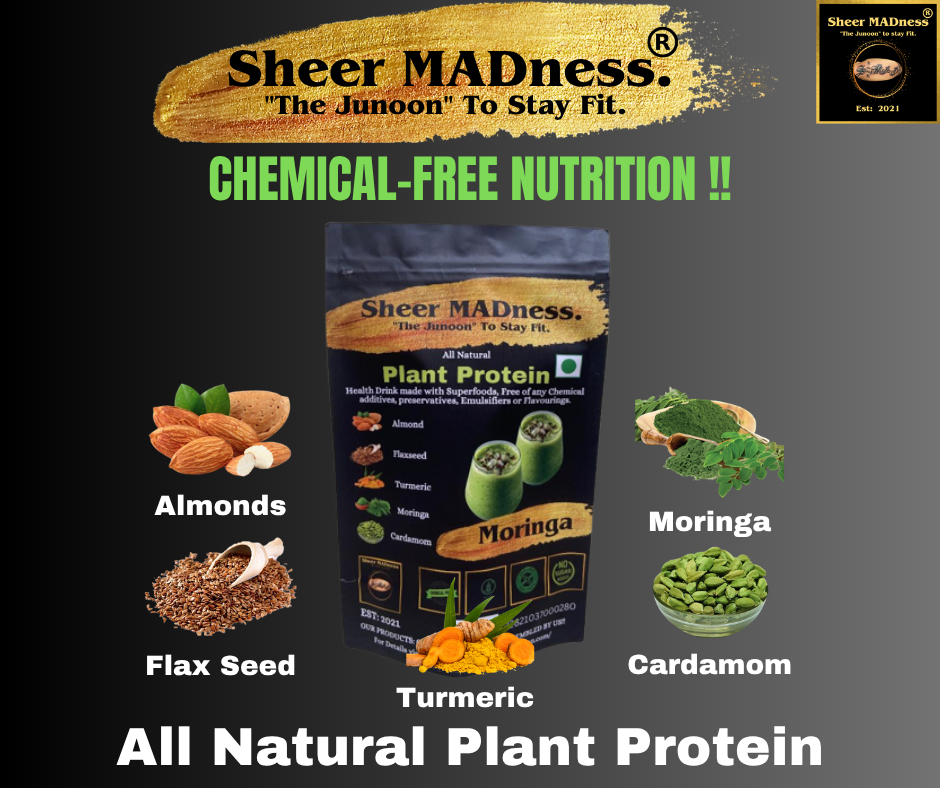
Moringa’s nutritional profile specifically addresses these female Indian nutritional constraints. Furthermore, moringa is not a foreign supplement — it is murungai keerai in Tamil Nadu, sahjan in Hindi, drumstick leaf in all Indian regional cuisines. It is a food that Indian women have consumed during every life phase for centuries. Sheer MADness Plant Protein Moringa carries that traditional nutrition into a convenient, chemically clean, concentrated form.
Every menstrual cycle, an Indian woman loses approximately 20 to 80 milligrams of iron through blood loss. The ICMR-NIN 2024 recommends 29 milligrams of iron per day for menstruating women — nearly double the general adult recommendation. Yet India’s vegetarian diets typically provide 15 to 22 milligrams of iron daily, predominantly as non-haem iron from plant sources with low absorption efficiency.
The consequences of this iron gap are specific and severe. Iron is central to haem in haemoglobin — the oxygen-carrying protein of red blood cells. When ferritin falls below approximately 30 micrograms per litre, the body cannot maintain adequate haemoglobin production. Consequently, oxygen delivery to muscle, brain, and organ tissue falls — producing the fatigue, reduced concentration, exertional breathlessness, and cold intolerance that characterise iron-deficiency anaemia. These are not vague “feeling tired” symptoms — they are measurable physiological impairments that reduce work capacity, academic performance, and quality of life.
Moringa provides iron at 28 milligrams per 100 grams dry weight — the highest plant-food iron density available from any conventional food source. Furthermore, moringa’s Vitamin C — at approximately 17 times the concentration of oranges gram for gram — converts ferric iron (Fe³⁺) to ferrous iron (Fe²⁺), the form that DMT-1 transporters in duodenal enterocytes absorb. Consequently, moringa provides both the iron and the absorption enhancer from the same source — delivering the most iron-absorption-optimised plant food combination available to Indian vegetarian women.
The female Hypothalamic-Pituitary-Gonadal (HPG) axis drives the menstrual cycle through precisely timed hormonal cascades. The hypothalamus releases GnRH in pulses that stimulate pituitary LH and FSH secretion. LH drives oestrogen production from ovarian granulosa cells. The oestrogen surge triggers LH surge, ovulation, corpus luteum formation, and progesterone production for the luteal phase. Disruption at any point in this cascade produces irregular cycles, anovulation, or subfertility.
Two specific disruptions are most prevalent in Indian women. First, chronic NF-κB-driven inflammation — from gut dysbiosis-driven LPS endotoxemia — suppresses hypothalamic GnRH secretion. Reduced GnRH pulsatility reduces LH pulse amplitude and frequency. Consequently, the LH surge that triggers ovulation fails to occur with normal regularity — producing anovulatory cycles and irregular menstruation. Moringa’s isothiocyanates and curcumin inhibit NF-κB through four simultaneous mechanisms — specifically reducing the inflammatory HPG axis suppression that disrupts menstrual cycle regularity.
Second, insulin resistance — the metabolic driver of PCOS — activates ovarian theca cells to overproduce androgens. This androgen excess (hyperandrogenaemia) disrupts follicle development at the antral stage — arresting multiple follicles in immature states rather than selecting a single dominant follicle for ovulation. The arrested follicles accumulate as the multiple cysts characteristic of PCOS. Moringa’s AMPK activation and quercetin SIRT1 insulin sensitivity improvement specifically address this insulin-androgen-anovulation cycle — the primary mechanism of PCOS.
PCOS (Polycystic Ovary Syndrome) affects an estimated 20 to 25 percent of Indian women of reproductive age — the highest prevalence estimate among major countries. Consequently, PCOS represents the single most impactful female reproductive health challenge in India. Understanding its mechanism explains why moringa’s specific metabolic profile is particularly relevant.
PCOS is fundamentally a metabolic condition with reproductive consequences, not primarily a reproductive condition. The central mechanism is insulin resistance in ovarian theca cells and peripheral tissues. When insulin resistance is present, the pancreas compensates with hyperinsulinaemia — elevated blood insulin. High insulin specifically activates theca cell CYP17A1 — the enzyme that converts cholesterol precursors to androgen precursors in the ovary. Consequently, hyperinsulinaemia drives excess androgen production in theca cells. This androgen excess disrupts follicle development, suppresses LH receptor expression in granulosa cells, and triggers the anovulatory cycle that prevents normal ovulation and menstruation.
Furthermore, high androgens from insulin-driven theca overactivity reduce SHBG (sex hormone-binding globulin) production in the liver. Consequently, more testosterone circulates in free, biologically active form — amplifying the androgenic effects on follicle development, sebaceous glands (causing acne), and hair follicles (causing hirsutism). This is the full PCOS mechanism: insulin resistance → hyperinsulinaemia → theca androgen overproduction → anovulation + androgen excess symptoms.
Moringa’s chlorogenic acid activates AMPK through LKB1 phosphorylation — the same pathway as metformin, the first-line PCOS medication. Active AMPK in ovarian theca cells specifically inhibits CYP17A1 activity — reducing the androgen overproduction that disrupts follicle development. Additionally, AMPK in peripheral tissues improves insulin sensitivity — reducing the hyperinsulinaemia that drives theca cell androgen overproduction from the upstream signal.
Furthermore, quercetin’s SIRT1 activation deacetylates PGC-1α — improving mitochondrial insulin signalling in skeletal muscle and adipose tissue. Consequently, peripheral insulin sensitivity improves — reducing the compensatory hyperinsulinaemia that activates theca CYP17A1. The combined effect of chlorogenic acid-AMPK and quercetin-SIRT1-insulin sensitivity specifically targets both arms of the PCOS metabolic mechanism simultaneously.
Additionally, moringa’s prebiotic effect on gut microbiome — specifically the LPS endotoxemia reduction from Akkermansia muciniphila restoration — reduces the NF-κB-HPG axis inflammatory suppression of GnRH pulsatility. Consequently, moringa addresses PCOS through the metabolic, inflammatory, and HPG axis pathways simultaneously. Moringa is a food — not a PCOS treatment. However, for Indian women managing PCOS through dietary and lifestyle approaches alongside medical management, moringa’s specific metabolic mechanisms are directly relevant.
This is the most original and most specifically female content in this post — the mechanism that explains moringa’s traditional reputation for hormonal balance in Indian women’s medicine.
Moringa contains significant concentrations of phytosterols — specifically beta-sitosterol, campesterol, and stigmasterol. Phytosterols are plant-derived sterol compounds structurally similar to cholesterol. Their structural similarity to oestradiol (the primary female oestrogen) allows them to bind oestrogen receptors (ERα and ERβ) as weak ligands — specifically at a fraction of oestradiol’s binding affinity.
This weak binding produces selective oestrogenic or anti-oestrogenic effects depending on the tissue type and the existing hormonal environment. In conditions of low oestrogen — perimenopause and menopause — phytosterols provide mild ER activation that partially compensates for declining oestrogen. In conditions of oestrogen excess or ER-positive sensitivity — certain breast tissue contexts — phytosterols compete with stronger oestrogens for ER binding, potentially reducing net oestrogenic stimulation. This context-dependent activity makes them SERMs (Selective Oestrogen Receptor Modulators) at very low potency — similar in principle to pharmaceutical SERMs like tamoxifen but at dietary concentrations with dietary-level effects.
Research published in the Asian Pacific Journal of Tropical Biomedicine confirmed moringa’s phytosterol content and its mild oestrogen-modulating activity. The study found that moringa phytosterols reduced hot flush frequency in animal models of oestrogen withdrawal — consistent with mild ERβ agonist activity providing partial compensation for oestrogen decline.
For Indian women in perimenopause experiencing vasomotor symptoms (hot flushes, night sweats), mood changes, and disrupted sleep from declining oestrogen, moringa’s phytosterol-ER modulation provides gentle, food-based oestrogenic support. Furthermore, for Indian women of reproductive age with oestrogen-related cycle irregularities, moringa’s phytosterols may contribute to the mild cycle-regulating oestrogenic environment that supports regular ovulation.
This is traditional knowledge confirmed by modern biochemistry. The phytosterols in moringa are precisely the compounds that explain why Indian traditional medicine specifically recommended moringa for women’s reproductive health — not because of generalised health benefits, but because of a specific molecular interaction with the female oestrogen receptor system.
Perimenopause — the five to ten years of declining oestrogen before menopause — accelerates bone mineral density loss faster than any other life phase in women. Understanding the mechanism explains precisely where moringa’s calcium and Vitamin K contribute.
Oestrogen protects bone mineral density by inhibiting osteoclast (bone-dissolving cell) activity. Specifically, oestrogen reduces RANKL (receptor activator of nuclear factor κB ligand) expression in osteoblasts. RANKL, when expressed, binds to RANK receptors on osteoclast precursors — activating them into mature osteoclasts that dissolve the hydroxyapatite mineral matrix of bone. Additionally, oestrogen upregulates OPG (osteoprotegerin) — the decoy receptor that binds RANKL and prevents it from reaching RANK. Consequently, oestrogen maintains the OPG:RANKL ratio in favour of OPG, keeping osteoclast activity suppressed.
When oestrogen withdraws during perimenopause, RANKL expression rises and OPG expression falls. The RANK/RANKL pathway is therefore uninhibited — osteoclast activation accelerates significantly. The result is the approximately 2 to 3 percent annual bone mineral density loss that characterises the early perimenopausal years — several times faster than the 0.5 to 1 percent annual loss of general ageing.
Moringa’s calcium at approximately 2,000 milligrams per 100 grams provides the mineral substrate for hydroxyapatite crystal formation in bone matrix. However, calcium alone is insufficient for effective bone mineral deposition. Osteocalcin — the non-collagenous protein that binds calcium to the hydroxyapatite crystal lattice — must be carboxylated by Vitamin K-dependent gamma-carboxylase to function. Without adequate Vitamin K, osteocalcin remains undercarboxylated and cannot effectively anchor calcium into bone.
Moringa provides Vitamin K (phylloquinone) alongside its calcium — providing both the mineral substrate and the osteocalcin activation cofactor from the same food source. Furthermore, almond magnesium in Sheer MADness Plant Protein Moringa activates Vitamin D hydroxylation — enabling the intestinal calcium absorption that delivers dietary calcium to the bone mineralisation site. Consequently, the moringa-almond combination provides the complete mineralogical system for bone health support — calcium, Vitamin K for osteocalcin activation, and magnesium for Vitamin D activation — from two whole-food ingredients in one preparation.
For perimenopausal women specifically, this simultaneous calcium-Vitamin K provision directly addresses the accelerated mineral loss driven by the RANKL-osteoclast pathway. Adequate dietary calcium and Vitamin K do not reverse the oestrogen-RANKL mechanism — but they ensure that the bone remodelling process has maximum mineral availability to sustain bone density during the period of accelerated resorption.
Folate is the most critical single micronutrient for female reproductive health in the periconceptional period. It is required for the closure of the neural tube — the embryonic structure that develops into the brain and spinal cord — in the first 28 days of pregnancy, often before the pregnancy is confirmed. Neural tube defects (NTDs) are among the most preventable birth defects, and adequate folate is the primary prevention.
Furthermore, folate is required for red blood cell production through the methylation of homocysteine and the synthesis of thymidine for DNA replication in rapidly dividing cells. During pregnancy — when red blood cell mass expands by 20 to 30 percent to support the growing foetal circulation — folate demands increase significantly. Moringa provides folate at approximately 172 micrograms per 100 grams dry weight — a meaningful contribution toward the 400 micrograms daily recommended in the periconceptional period and the 500 micrograms recommended during pregnancy.
Women experience significantly higher rates of depression and anxiety than men — approximately twice the prevalence across most populations. A significant proportion of this difference reflects female hormonal cycling, specifically the interaction between sex hormones and serotonin neurotransmitter system regulation.
Oestrogen upregulates serotonin receptor expression and reduces serotonin reuptake transporter activity — increasing serotonergic tone. Consequently, oestrogen withdrawal in the premenstrual phase (falling progesterone and oestrogen in the late luteal phase), postpartum, perimenopause, and menopause specifically reduces serotonergic tone — producing the mood changes characteristic of PMS, postpartum depression, and menopausal mood disruption.
As established in the gut-brain axis section of the memory post, approximately 90 percent of the body’s serotonin is produced by gut enterochromaffin cells from dietary tryptophan, with gut microbiome bacteria specifically regulating this production. Furthermore, gut Faecalibacterium prausnitzii and Bifidobacterium species produce GABA — the primary inhibitory neurotransmitter reducing anxiety. Moringa’s prebiotic fibres feed both Akkermansia muciniphila and F. prausnitzii — specifically supporting the gut bacteria that produce serotonin precursors and GABA. Consequently, daily moringa consumption supports the gut-brain serotonin production that partially compensates for the hormonally-driven serotonergic reduction during cyclical oestrogen withdrawal.
Female skin undergoes specific changes with the hormonal transitions of pregnancy, postpartum, and menopause. During perimenopause and menopause, declining oestrogen reduces collagen synthesis (oestrogen directly upregulates ColI and ColIII gene expression in fibroblasts), reduces skin hyaluronic acid production, and reduces sebaceous gland activity — producing the dryness, reduced elasticity, and accelerated wrinkling that many women first notice in their late 40s.
Almond Vitamin E at 12.5 milligrams per 100 grams — consumed alongside moringa’s Vitamin C for tocopherol regeneration — protects skin cell membranes from the oxidative lipid peroxidation that accelerates the visible skin ageing of the menopausal transition. Furthermore, moringa’s Vitamin C provides the prolyl hydroxylase cofactor for collagen synthesis — partially compensating for the oestrogen-driven reduction in collagen gene expression through the nutritional pathway. Additionally, moringa’s beta-carotene undergoes enzymatic conversion to Vitamin A — which maintains keratinocyte differentiation and skin renewal rate even as hormonal signals for these processes decline with age.
Sheer MADness Plant Protein Moringa provides the nutritional coverage most specifically required by the female body across its lifecycle — from a preparation that is culturally familiar, traditionally established, and chemically clean.
Iron for menstruation-driven anaemia correction — at the highest plant-food density available with simultaneous Vitamin C absorption enhancement. Phytosterols for oestrogen receptor modulation across the reproductive cycle and menopause. AMPK and SIRT1 activation for the insulin sensitivity improvement that specifically addresses PCOS pathophysiology. Calcium and Vitamin K for osteocalcin-mediated bone mineral deposition against perimenopausal RANKL-driven bone loss. Almond magnesium for Vitamin D activation supporting calcium absorption. Folate for periconceptional neural tube protection and pregnancy red blood cell expansion. Gut prebiotic support for serotonin production addressing female mood cycle sensitivity. Vitamin C and Vitamin E for skin collagen maintenance through hormonal transitions.
Zero synthetic chemical additive that would add unnecessary processing burden to a body already managing the complex monthly hormonal cycle. Since 2021, every ingredient appears on the front of every pack — providing the transparency that allows women to verify exactly what they consume daily.
Sheer MADness holds a registered trademark under the Government of India. The Natural Plant Protein formula is patent published under Patent No. 202331036733, searchable on Intellectual Property India. The brand holds a valid FSSAI licence and GSTIN registration.
| Life Phase | Primary Female Challenge | Moringa Mechanism | Key Compound |
|---|---|---|---|
| Reproductive years (all) | Iron deficiency anaemia from menstruation | Iron 28mg/100g + Vitamin C absorption | Moringa leaf |
| Reproductive years | HPG axis disruption from inflammation | NF-κB inhibition → GnRH pulsatility support | Isothiocyanates + curcumin |
| PCOS (reproductive years) | Insulin resistance-androgen-anovulation cycle | AMPK → CYP17A1 inhibition, SIRT1 insulin sensitivity | Chlorogenic acid + quercetin |
| Reproductive years | Hormonal cycle oestrogen support | Phytosterol weak ERβ agonism | Beta-sitosterol, campesterol |
| Periconceptional | Folate for neural tube protection | Dietary folate | Moringa leaf 172mcg/100g |
| Pregnancy | Elevated iron, calcium, protein | All three from one preparation | Full formulation |
| Lactation | Galactagogue + infant nutrition transfer | Phytosterol mammary duct stimulation | Moringa phytosterols |
| Perimenopause | Accelerated bone loss (RANKL-driven) | Calcium + Vitamin K → osteocalcin carboxylation | Moringa leaf + magnesium |
| Perimenopause | Vasomotor symptoms (hot flushes) | Phytosterol mild ERβ agonism | Beta-sitosterol |
| Menopause | Skin collagen decline | Vitamin C-prolyl hydroxylase + Vitamin E protection | Moringa leaf + almonds |
| All phases | Mood and serotonin cycle sensitivity | Gut prebiotic → serotonin + GABA production | Moringa + flaxseed prebiotic |
| All phases | Protein for tissue demands | Complete protein, all 9 EAAs | Full formulation |

What are the benefits of moringa for women’s health?
Moringa provides specific benefits aligned with female physiology across every life phase. Its iron at 28mg/100g with Vitamin C addresses menstrual iron loss and anaemia — the most prevalent female nutritional deficiency in India. The phytosterols modulate oestrogen receptors — supporting hormonal cycle balance and reducing perimenopausal vasomotor symptoms. Its AMPK and SIRT1 activation addresses the insulin resistance-androgen cycle driving PCOS. Its calcium and Vitamin K support osteocalcin-mediated bone mineral deposition against perimenopausal bone loss. Furthermore, its folate supports periconceptional neural tube protection.
How does moringa specifically help women with PCOS?
PCOS is fundamentally driven by insulin resistance → hyperinsulinaemia → theca cell CYP17A1 androgen overproduction → anovulation and androgen excess. Moringa’s chlorogenic acid activates AMPK — the same pathway as metformin — specifically inhibiting theca CYP17A1 and reducing androgen overproduction. Additionally, quercetin’s SIRT1 activation improves peripheral insulin sensitivity, reducing the hyperinsulinaemia that drives theca androgen overproduction. Moringa is a food, not a PCOS treatment. However, its mechanisms are specifically relevant to the metabolic root cause of PCOS. Discuss with your gynaecologist before adding moringa if you have diagnosed PCOS.
What are phytosterols in moringa and how do they affect female hormones?
Moringa contains beta-sitosterol, campesterol, and stigmasterol — phytosterols structurally similar to oestradiol. These bind oestrogen receptors (particularly ERβ) as weak ligands — producing mild oestrogenic activity at a fraction of oestradiol’s potency. In low-oestrogen states (perimenopause, menopause), this weak ER activation partially compensates for declining oestrogen — reducing vasomotor symptoms like hot flushes. In normal oestrogenic states, phytosterols compete with stronger oestrogens for receptor binding — potentially moderating oestrogen excess. This context-dependent activity makes phytosterols mild natural SERMs from a dietary source.
How does moringa support bone health during perimenopause?
Oestrogen withdrawal during perimenopause removes the primary inhibitor of the RANK/RANKL osteoclast activation pathway — dramatically accelerating bone mineral density loss. Moringa provides calcium at approximately 2,000mg/100g for hydroxyapatite mineral substrate. It simultaneously provides Vitamin K for osteocalcin carboxylation — the activation that allows osteocalcin to anchor calcium into the bone matrix. Furthermore, almond magnesium in Sheer MADness activates Vitamin D hydroxylation that drives intestinal calcium absorption. Together, these provide the complete mineralogical system to maximise bone mineral deposition during the highest-risk bone loss period of a woman’s life.
Is moringa safe during pregnancy?
Moringa leaf in culinary quantities has a long tradition of safe use in South Asian pregnancy. At supplementary concentrated doses during pregnancy, the conservative guidance is to discuss with your obstetrician before beginning. The moringa leaf used in Sheer MADness is safe — moringa root, which contains uterotonic alkaloids, is categorically different and contraindicated. Moringa’s folate, iron, calcium, and protein are specifically relevant to pregnancy’s elevated nutritional demands.
Can moringa help with PMS and menstrual cramps?
Moringa’s anti-inflammatory mechanisms — NF-κB inhibition reducing prostaglandin production, quercetin’s COX-2 inhibition — reduce the inflammatory prostaglandin-E2 production that causes menstrual cramping. Its magnesium (from almond) contributes to smooth muscle relaxation that reduces cramping severity. Furthermore, its iron supports haemoglobin maintenance during blood loss. Its B vitamins — particularly B6 at 0.9mg/100g — support serotonin and GABA neurotransmitter production that influences premenstrual mood and nervous system regulation. These are nutritional support mechanisms — not pharmaceutical analgesics for severe dysmenorrhoea, which requires medical assessment.
How does moringa support mood and mental health across the female hormonal cycle?
Oestrogen upregulates serotonin receptor expression. Consequently, oestrogen withdrawal in the premenstrual phase, postpartum, and menopause reduces serotonergic tone — producing the mood changes characteristic of PMS, postpartum depression, and menopausal mood disruption. Moringa’s prebiotic fibres feed gut bacteria (F. prausnitzii, Bifidobacterium) that produce serotonin precursors and GABA through the gut-brain axis. Therefore, daily moringa consumption specifically supports the gut-brain serotonin production that partially compensates for hormonally-driven serotonergic reduction across the female hormonal cycle.
Why is the chemical-free formulation of Sheer MADness specifically important for women?
Women consuming Sheer MADness Plant Protein Moringa may do so across reproductive years, pregnancy, lactation, and menopause — phases in which the body is most sensitive to endocrine-disrupting synthetic chemicals. BHA and BHT have documented oestrogenic metabolites at certain doses — contradicting moringa’s phytosterol-mediated hormonal balance mechanisms. Sucralose disrupts gut microbiome producing the serotonin and GABA that moringa’s prebiotic specifically builds. Zero synthetic chemical additive removes these contradictions — providing clean nutritional support aligned with the female body’s specific sensitivity to chemical endocrine influences.
Indian women face the world’s highest female anaemia prevalence, one of the world’s highest PCOS rates, accelerating urban lifestyle-driven gut microbiome disruption, and progressive perimenopausal bone loss — simultaneously, across a female lifecycle that imposes the highest nutritional demands of any human physiological programme.
Moringa addresses these specifically — not generically. Its iron and Vitamin C address anaemia from the most iron-absorption-efficient plant source available. Its chlorogenic acid-AMPK and quercetin-SIRT1 address the insulin resistance at the root of PCOS. The phytosterols modulate oestrogen receptors across the hormonal lifecycle from menarche to menopause. Its calcium and Vitamin K support osteocalcin-mediated bone mineralisation against perimenopausal RANKL-driven bone loss. The prebiotic fibres support the gut-brain serotonin pathway that female hormonal cycling disrupts. Its folate protects the periconceptional neural tube. Its complete protein supports the tissue demands of pregnancy, lactation, and every phase of a woman’s life.
Sheer MADness Plant Protein Moringa delivers all of this from five whole-food ingredients — zero synthetic additive, every ingredient on the front of every pack since 2021. Murungai keerai in your grandmother’s kitchen. Now in your daily preparation. The tradition was right. Now the science explains why.
I would also request you to please read my previous post: Benefits of Moringa Plant protein, the versatile Superfood powerhouse.
a) Everyone is an individual, so what suits me may not suit the next person.
b) If a person has a medical condition, a doctor’s advice and prescribed medication will only help. PCOS, endometriosis, perimenopause-related osteoporosis, and postpartum depression are medical conditions requiring specialist management. Moringa is nutritional food supporting general health as a dietary adjunct to medical care — not as a replacement.
c) While buying any protein powder from the market, read the labels carefully. Watch out for INS codes, Anti-caking agent, INS 551 (Silicon dioxide), BHA (Butylated hydroxyanisole), BHT (Butylated hydroxytoluene), and synthetic additives with documented endocrine-disrupting potential. For women specifically, minimising synthetic chemical additive exposure from daily supplements is a specific precautionary consideration.
If you are interested in buying chemical-free Natural Plant Protein Moringa, Health Drinks for Kids, or our delicious chemical-free Energy Bars, Protein Bars, and Millet Bars, shop at Sheer MADness.
You can also find us on Flipkart, Jio Mart, or ONDC in India.
d) Exercise is the key to fitness. Exercise and nutrition are two sides of the same coin and always go hand in hand. For women specifically, weight-bearing resistance exercise is the most evidence-based intervention for perimenopausal bone density preservation — moringa’s calcium and Vitamin K support the nutritional side of this same bone health equation.
e) Excess of anything is wrong, even the best whole-food superfood. Consume only recommended quantities.
f) Rome was not built in a day. Discipline and consistency are the only keys to lasting health.
g) It is not only exercise and protein that builds health. A healthy gut, macro and micronutrients, body type, rest, and lifestyle all matter. Of all these, exercise and nutrition are within our control. Focus on these two primary aspects first.
h) The most important part of fitness is that nothing is better than exercise and a balanced meal.
Article by Chef Ashutosh Awasthi
Disclaimer: Our products are a source of HEALTHY NUTRIENTS and are COMPLETELY FREE OF ANY ADDED CHEMICALS. We do not claim to cure any medical condition. The content provided is informational. We do not claim to diagnose or treat a person with any specific medical condition.