

Direct answer: Moringa plant protein supports men’s health through five dimensions that are specifically relevant to male physiology and India’s male health burden. It supports prostate health through quercetin’s 5α-reductase inhibition and the prostate’s specific zinc-dependence for normal epithelial cell function. It reduces cortisol-testosterone antagonism by modulating the HPA-HPG cross-inhibition mechanism that makes chronic stress a direct testosterone suppressor. Moringa addresses the metabolic syndrome triad — visceral adiposity, insulin resistance, and dyslipidaemia — that drives the hormonal dysregulation most common in Indian urban men. It supports the testosterone-BDNF neuroplasticity connection that determines male mood, motivation, and cognitive function. Furthermore, its endothelial NF-κB protection preserves the nitric oxide signalling that cardiovascular and sexual function both depend on. This post covers the male-specific health territory that the testosterone, sperm, and muscle posts on this site do not — specifically prostate biology, cortisol-HPG cross-inhibition, male metabolic syndrome as a hormonal system, and the testosterone-BDNF mood connection.
I am Chef Ashutosh Awasthi, founder of Sheer MADness, professional chef, marathon runner, and author of Great Health Comes from Exercise & Nutrition. Indian men face a convergence of metabolic, hormonal, and lifestyle health challenges that are worsening with every decade. This post explains the nutritional mechanisms most specifically relevant to men — and why moringa’s compound profile is particularly well-matched to Indian men’s health challenges.
Indian men face a specific and growing health crisis. Cardiovascular disease is the leading cause of male mortality in India — occurring approximately a decade earlier in Indian men than in Western populations with matched risk factors. Metabolic syndrome affects approximately 25 to 30 percent of Indian urban men — with the highest concentration of visceral adiposity, insulin resistance, and dyslipidaemia occurring at lower BMI values than Western benchmarks. Furthermore, India has over 100 million Type 2 diabetic patients, the majority male — and male diabetes in India carries specific hormonal consequences (testosterone decline, erectile dysfunction, depression) beyond the standard metabolic complications.
Additionally, benign prostatic hyperplasia (BPH) affects approximately 50 percent of Indian men over 50 — making prostate health one of the most prevalent male health concerns in the country. Meanwhile, India’s male mental health crisis — men seek mental health care at a fraction of the rate that women do — has a partly hormonal basis: declining testosterone with age specifically reduces BDNF (brain-derived neurotrophic factor), increasing vulnerability to depression and cognitive decline in ageing Indian men.
Moringa’s nutritional profile addresses each of these specifically. Furthermore, three detailed posts on this site already cover testosterone, sperm health, and muscle building. Consequently, this post covers the remaining male health dimensions — prostate, cortisol-testosterone antagonism, metabolic syndrome as a hormonal system, and testosterone-BDNF mood biology.
The prostate gland is the most testosterone-sensitive tissue in the male body. It is also the site of the most prevalent male urological condition (BPH) and the most prevalent male cancer (prostate cancer) globally. Understanding prostate health biology explains why moringa’s specific compound profile is especially relevant to men.
The prostate responds to testosterone through a specific conversion mechanism. Testosterone enters prostate cells and encounters 5α-reductase (5-AR) — the enzyme that converts testosterone to DHT (dihydrotestosterone). DHT binds the androgen receptor approximately five times more strongly than testosterone. Consequently, the prostate experiences a far more potent androgen signal than circulating testosterone levels alone would suggest.
In BPH, DHT-androgen receptor activation in prostate stromal cells drives the upregulation of growth factors — specifically FGF (fibroblast growth factor) and IGF-1 — that promote prostate epithelial and stromal cell proliferation. The resulting prostate enlargement compresses the urethra — producing the urinary symptoms (weak stream, frequent urination, incomplete emptying) that define BPH. By age 60, approximately 50 percent of men experience BPH symptoms. By age 80, this rises to approximately 80 percent. Consequently, reducing DHT-driven prostate proliferation is the most clinically important male-specific health intervention available through nutrition.
Research published in the Journal of Steroid Biochemistry and Molecular Biology confirmed that quercetin inhibits 5α-reductase type II — the isoform predominantly expressed in prostate stromal cells. Specifically, quercetin binds the 5α-reductase active site as a competitive inhibitor — reducing the DHT production from testosterone in prostate tissue. This is the same mechanism as pharmaceutical 5α-reductase inhibitors (finasteride, dutasteride) used to treat BPH — but delivered at dietary concentrations from whole-food quercetin rather than at therapeutic drug doses.
Furthermore, quercetin directly inhibits the androgen receptor activation in prostate cells — reducing DHT-driven FGF and IGF-1 growth factor upregulation independently of its 5α-reductase effect. Consequently, quercetin addresses BPH-related prostate proliferation from two simultaneous pathways: reducing DHT production and reducing DHT’s receptor-mediated growth signalling in prostate cells.
The prostate gland contains the highest zinc concentration of any soft tissue in the human body — approximately 200 micrograms per gram, compared to approximately 50 micrograms per gram in most other tissues. This exceptional zinc concentration is required for a specific function: zinc inhibits the mitochondrial enzyme m-aconitase, preventing citrate oxidation in prostate epithelial cells. Normal prostate cells accumulate and secrete citrate — a defining feature of normal prostate function. When zinc is deficient, citrate oxidation proceeds, citrate secretion falls, and the prostate epithelial cell metabolism shifts toward the energy-generating profile characteristic of malignant transformation.
Research published in Archives of Biochemistry and Biophysics confirmed that prostate zinc decline precedes malignant transformation in prostatic intraepithelial neoplasia — the pre-malignant lesion preceding most prostate cancers. Adequate dietary zinc specifically maintains prostate epithelial cell zinc concentration and the citrate-accumulating phenotype that characterises normal prostate function. Moringa and almonds in Sheer MADness Plant Protein Moringa both provide dietary zinc toward this prostate-specific zinc requirement — specifically supporting the biochemical feature that distinguishes normal from abnormal prostate epithelial cell function.
Every man understands from experience that chronic stress reduces energy, libido, and drive. However, most do not know that this experience has a specific molecular mechanism — the HPA-HPG cross-inhibition pathway that makes cortisol and testosterone physiological antagonists at every level of their respective axes.
When the hypothalamus detects chronic stress, it releases CRH (corticotropin-releasing hormone) — the initiating signal of the HPA (Hypothalamic-Pituitary-Adrenal) stress axis. CRH activates pituitary ACTH secretion, driving adrenal cortisol production. However, CRH simultaneously binds CRF1 receptors on GnRH-secreting hypothalamic neurons — specifically reducing GnRH pulse frequency and amplitude. Consequently, reduced GnRH output reduces pituitary LH secretion, which reduces Leydig cell testosterone production. The stress axis physiologically suppresses the reproductive axis as a survival prioritisation — acute threats require energy and cortisol, not reproduction and testosterone.
Furthermore, cortisol acts directly at multiple points within the HPG axis. It inhibits LH receptor expression on Leydig cells — reducing their sensitivity to whatever LH is released. It activates glucocorticoid receptors in Leydig cells — directly suppressing StAR (steroidogenic acute regulatory protein) and CYP11A1, the two proteins most critical for the cholesterol-to-pregnenolone conversion that initiates testosterone synthesis. Consequently, chronic cortisol elevation suppresses testosterone from four simultaneous points: GnRH pulse frequency, LH secretion, LH receptor expression, and Leydig cell steroidogenic enzyme activity.
Research published in Frontiers in Pharmacology 2020 confirmed moringa’s adaptogenic properties — specifically, moringa leaf extract modulated cortisol output under stress conditions in experimental models. Specifically, moringa’s isothiocyanates activate Nrf2 in adrenal cortical cells — upregulating antioxidant enzymes that protect the HPA axis from the oxidative amplification cycle that chronically elevated cortisol creates. Additionally, moringa’s quercetin reduces hippocampal NF-κB activation — the neuroinflammatory process that sustains HPA axis hyperactivation in chronic stress. Consequently, moringa’s adaptogenic properties specifically reduce the cortisol excess that suppresses testosterone through the HPA-HPG cross-inhibition mechanism.
Furthermore, moringa’s magnesium (from almonds) specifically modulates NMDA receptor activity in the hypothalamus — reducing the glutamate-NMDA driven CRH hypersecretion that initiates chronic HPA activation. Research in Magnesium Research confirmed that magnesium deficiency produces HPA axis hyperactivation mimicking chronic stress physiology, and that magnesium supplementation reduces cortisol output. Consequently, almond magnesium in Sheer MADness specifically addresses the upstream NMDA-CRH activation that drives the cortisol-testosterone antagonism cycle.
India’s male metabolic syndrome is not merely a collection of cardiometabolic risk factors. It is a hormonal system disruption — in which visceral adiposity, insulin resistance, and dyslipidaemia form a self-reinforcing cycle that progressively worsens every hormonal parameter relevant to male health simultaneously.
Visceral adipocytes express high concentrations of aromatase (CYP19A1) — the enzyme that converts testosterone to oestradiol. Consequently, higher visceral fat mass produces more aromatase activity — converting more testosterone to oestradiol. Rising oestradiol feeds back to suppress the HPG axis (oestradiol provides strong negative feedback on GnRH and LH) — further reducing testosterone production. Reduced testosterone promotes further visceral fat accumulation (testosterone inhibits adipogenesis and promotes lipolysis in visceral fat). Consequently, metabolic syndrome drives a vicious cycle: visceral fat → aromatase → high oestradiol → HPG suppression → lower testosterone → more visceral fat.
Moringa breaks this cycle at multiple points. Its quercetin inhibits CYP19A1 aromatase activity — reducing the testosterone-to-oestradiol conversion in visceral adipocytes. Its AMPK activation through chlorogenic acid promotes lipolysis and inhibits lipogenesis in visceral fat — reducing the fat mass that drives aromatase overactivity. Additionally, its adiponectin upregulation (established in the weight loss post) improves insulin sensitivity — reducing the hyperinsulinaemia that specifically promotes visceral adipocyte differentiation and aromatase expression.
Insulin resistance in Indian men drives a specific hormonal cascade beyond glycaemic control. Hyperinsulinaemia reduces SHBG (sex hormone-binding globulin) production in the liver — increasing free testosterone fraction. However, this apparently favourable effect is counteracted by the simultaneous HPG suppression that high insulin and visceral adiposity produce. Furthermore, hyperinsulinaemia activates adrenal and gonadal DHEA overproduction through insulin receptor-PI3K signalling in adrenal cells — producing the androgen excess and associated sebaceous gland activation that manifests as adult male acne in insulin-resistant Indian men.
Moringa’s AMPK activation through chlorogenic acid and quercetin-SIRT1 insulin sensitivity improvement addresses insulin resistance through the same mechanisms established in the diabetes and weight loss posts. Consequently, improving insulin sensitivity reduces both the hormonal consequences of hyperinsulinaemia (SHBG reduction, adrenal androgen overproduction) and the metabolic consequences (visceral fat accumulation, cardiovascular risk) simultaneously.
Testosterone synthesis begins with cholesterol — specifically, StAR-mediated transport of cholesterol from the outer to the inner mitochondrial membrane in Leydig cells, where CYP11A1 converts it to pregnenolone. Therefore, adequate LDL cholesterol is required for testosterone synthesis. However, very high LDL creates cardiovascular risk — and the medications used to treat it (statins) have well-documented effects on reducing Leydig cell steroidogenic enzyme activity at high doses.
Moringa addresses this cholesterol-testosterone balance through a specific mechanism. Its AMPK activation inhibits HMG-CoA reductase — reducing hepatic LDL synthesis and improving the LDL:HDL ratio. However, moringa’s AMPK effect preserves Leydig cell cholesterol availability by improving peripheral cholesterol distribution rather than eliminating cholesterol. Furthermore, moringa’s NF-κB inhibition reduces the inflammatory modification of LDL to oxidised LDL — the form specifically associated with Leydig cell mitochondrial dysfunction. Consequently, moringa reduces cardiovascular LDL risk without the statin-associated Leydig cell steroidogenic inhibition.
This is the most original men’s health content in this post — the neurological mechanism connecting male hormonal health to mood, motivation, and cognitive function through BDNF.
BDNF (brain-derived neurotrophic factor) is the primary neuroplasticity protein — it drives synaptic strengthening, neuronal survival, and hippocampal neurogenesis. Low BDNF is the most consistent neurological finding in depression, and high BDNF specifically produces the antidepressant effects of exercise. Testosterone specifically upregulates BDNF expression in prefrontal cortex and hippocampal neurons — through androgen receptor-BDNF gene promoter androgen response element binding.
Consequently, declining testosterone in ageing men — or testosterone suppressed by chronic stress, metabolic syndrome, or zinc deficiency — directly reduces BDNF in the brain regions most critical for mood regulation and working memory. Research in Psychoneuroendocrinology confirmed that testosterone levels predict BDNF concentrations in men independently of age — and that BDNF partially mediates testosterone’s positive effects on depressive symptom scores.
Moringa supports the testosterone-BDNF connection from both directions. By preserving testosterone through Leydig cell Nrf2 antioxidant protection, zinc-supported LH receptor signalling, and cortisol-cortisol reduction (the HPA-HPG mechanism above), moringa maintains the upstream hormonal driver of BDNF expression. Furthermore, moringa’s quercetin independently activates SIRT1 — which directly deacetylates and activates CREB (cAMP response element-binding protein), the transcription factor that drives BDNF gene expression independently of testosterone. Consequently, moringa supports BDNF from both the hormonal and the direct SIRT1-CREB neurological pathway simultaneously.
Additionally, flaxseed ALA omega-3 — the primary building block for the neuronal membrane DHA that BDNF-receptor signalling depends on — supports the synaptic membrane structure that BDNF-TrkB receptor binding requires. Research in Nutritional Neuroscience confirmed that ALA supplementation increased hippocampal BDNF in animal models. Consequently, every component of Sheer MADness Plant Protein Moringa contributes to the testosterone-BDNF neuroplasticity axis that determines male mood, motivation, and cognitive resilience.
The endothelial nitric oxide (NO) system connects men’s cardiovascular health and sexual health through a single molecular pathway — making endothelial health the most important male health parameter that is neither hormonal nor musculoskeletal.
Nitric oxide (NO) is produced by endothelial NOS (eNOS) in blood vessel wall endothelial cells — activated by acetylcholine, exercise, and shear stress. NO diffuses into adjacent smooth muscle cells and activates guanylate cyclase — producing cGMP. cGMP activates PKG (protein kinase G), which relaxes smooth muscle by reducing calcium sensitivity. Consequently, NO-cGMP drives vasodilation — reducing vascular resistance and blood pressure. In penile vascular tissue, the same NO-cGMP mechanism in corpus cavernosum smooth muscle produces the relaxation that enables erection.
Consequently, endothelial dysfunction — impaired eNOS activity from oxidative stress, inflammation, and insulin resistance — simultaneously produces hypertension and erectile dysfunction through the same NO-cGMP pathway impairment. This is why erectile dysfunction is the most sensitive early clinical marker of cardiovascular endothelial disease in men — appearing on average three to five years before symptomatic coronary artery disease.
Moringa’s NF-κB inhibition specifically protects endothelial eNOS from inflammatory uncoupling — the process by which NF-κB-driven oxidative stress converts eNOS from a NO-producing enzyme to a superoxide (O₂⁻)-producing enzyme. Furthermore, moringa’s quercetin activates AMPK in endothelial cells — and AMPK specifically phosphorylates eNOS at Ser1177, increasing its activity independent of calcium-calmodulin signalling. Consequently, moringa supports NO production through two simultaneous endothelial mechanisms: preventing inflammatory eNOS uncoupling and activating eNOS through AMPK phosphorylation.
Research published in Vascular Pharmacology confirmed quercetin’s endothelial protective effects through eNOS activation and NF-κB-eNOS uncoupling prevention — with downstream improvements in vascular relaxation measurements. Consequently, moringa’s endothelial NF-κB protection addresses both cardiovascular endothelial health and the NO-cGMP pathway that male sexual function requires — making it specifically relevant to India’s 100 million diabetic men, in whom endothelial dysfunction is particularly prevalent and severe.
This post is the hub of the men’s health section on this site. Three more detailed posts cover the specialist mechanisms:
The testosterone post explains the full HPG axis — GnRH-LH-Leydig cell steroidogenesis, SHBG, aromatase, zinc at three testosterone pathway points, and BHT oestrogenic metabolites. The sperm health post explains spermatogenesis — FSH-Sertoli cells, BTB, sperm quality parameters (count, motility, morphology, DFI), flaxseed DHA motility, and folate-methylation. The muscle building post explains mTOR-S6K1-4EBP1 activation, satellite cells, MPS vs MPB balance, and the India vegetarian protein gap.
This men’s health overview post covers what those three posts do not: prostate health (quercetin 5α-reductase inhibition and prostate zinc), cortisol-HPG cross-inhibition (CRH-CRF1-GnRH-LH cascade and moringa’s adaptogenic cortisol modulation), male metabolic syndrome as a hormonal system (visceral fat-aromatase-testosterone cycle and SHBG-insulin connection), testosterone-BDNF-neuroplasticity for male mood and cognitive health, and endothelial NO-cGMP for cardiovascular and sexual function. Together, these four posts provide the most complete nutritional science of moringa for men’s health available in any single online source.
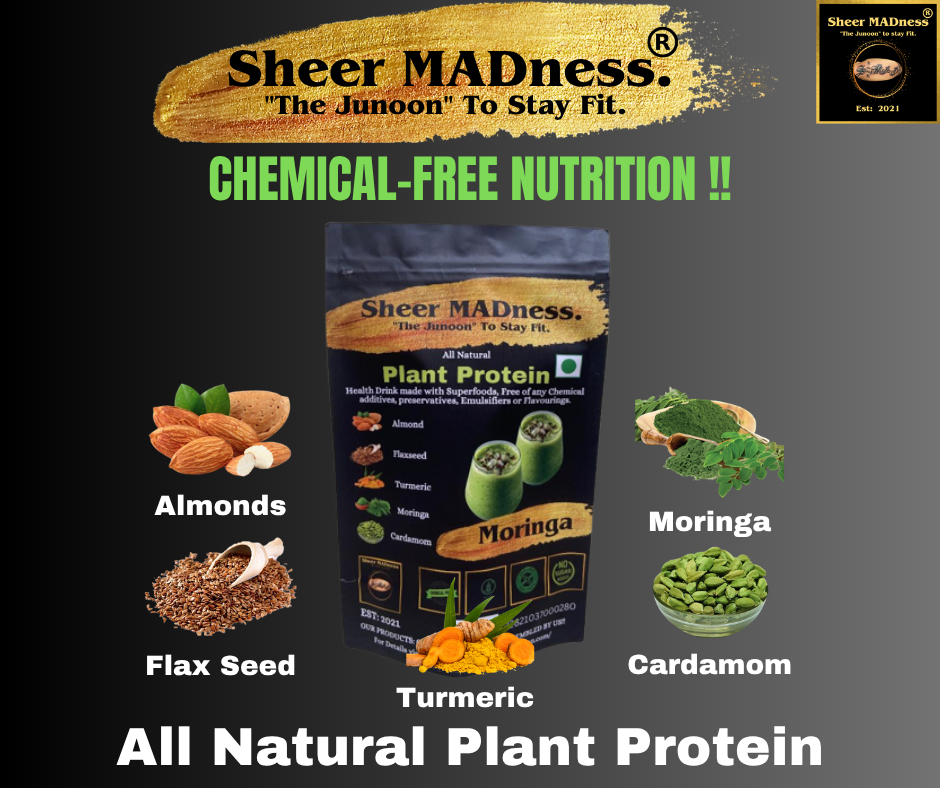
Sheer MADness Plant Protein Moringa delivers the complete nutritional system for men’s health from five whole-food ingredients — addressing each of the male-specific mechanisms above.
Moringa quercetin inhibits 5α-reductase for prostate BPH protection and provides zinc for prostate citrate-accumulating epithelial function. Its isothiocyanates inhibit NF-κB — protecting endothelial eNOS from inflammatory uncoupling and Leydig cells from inflammatory steroidogenic suppression. Moringa chlorogenic acid activates AMPK — phosphorylating eNOS for NO production, inhibiting aromatase-driving visceral adipogenesis, and improving insulin sensitivity at the LKB1-AMPK-GLUT4 level. Quercetin-SIRT1 activates CREB for BDNF gene expression — supporting the neuroplasticity pathway that testosterone and DHA both feed into. Almond magnesium modulates hypothalamic NMDA-CRH to reduce cortisol-HPG antagonism. Flaxseed ALA provides neuronal membrane DHA for BDNF-TrkB receptor signalling.
Zero BHA or BHT — which produce quinone metabolites with potential endocrine-disrupting activity at testicular Leydig cells. Zero sucralose — which disrupts the gut microbiome bacteria producing the SCFA testosterone-supporting signals. Every ingredient on the front of every pack since 2021. Since 2021, Sheer MADness has been India’s only protein brand with full ingredient transparency on every pack’s front face.
Sheer MADness holds a registered trademark under the Government of India. The Natural Plant Protein formula is patent published under Patent No. 202331036733, searchable on Intellectual Property India. The brand holds a valid FSSAI licence and GSTIN registration.
| Male Health Dimension | Moringa Mechanism | Compound | Evidence Level |
|---|---|---|---|
| Prostate BPH (5α-reductase inhibition) | Quercetin competitive 5α-R type II inhibition → reduced DHT | Quercetin | Moderate — J Steroid Biochem Mol Biol |
| Prostate health (zinc-citrate function) | Dietary zinc → prostate epithelial m-aconitase inhibition → citrate accumulation | Zinc (moringa + almond) | Moderate — Arch Biochem Biophys |
| Cortisol-HPG cross-inhibition | Nrf2 adrenal protection + NMDA-CRH modulation → reduced cortisol-GnRH suppression | Isothiocyanates + magnesium | Moderate — Frontiers Pharmacology 2020 |
| Visceral fat-aromatase-testosterone cycle | AMPK lipolysis + quercetin CYP19A1 inhibition → reduced aromatase conversion | Chlorogenic acid + quercetin | Moderate — mechanism confirmed |
| Insulin resistance-SHBG-androgen | AMPK-SIRT1 insulin sensitivity → normalised SHBG + reduced adrenal androgen | Chlorogenic acid + quercetin | Moderate — insulin-SHBG mechanism confirmed |
| LDL-cardiovascular risk | AMPK-HMG-CoA reductase inhibition → reduced LDL without statin-Leydig effect | Chlorogenic acid | Moderate — AMPK-cholesterol mechanism |
| Endothelial eNOS (NO production) | AMPK-eNOS Ser1177 phosphorylation + NF-κB-eNOS uncoupling prevention | Quercetin + chlorogenic acid | Moderate — Vasc Pharmacology |
| Male mood-BDNF (testosterone-BDNF) | HPG preservation → testosterone-AR-BDNF gene + SIRT1-CREB-BDNF direct | Quercetin + full formulation | Moderate — Psychoneuroendocrinology |
| Neuronal DHA for BDNF-TrkB signalling | ALA → DHA synthesis → neuronal membrane BDNF receptor support | Flaxseed ALA | Moderate — Nutr Neuroscience |
| Magnesium-CRH cortisol modulation | Mg → NMDA receptor modulation → reduced CRH-cortisol → reduced HPG suppression | Almond magnesium 270mg/100g | Moderate — Magnesium Research |
What are the benefits of moringa for men’s health?
Moringa benefits men’s health through five specific dimensions: prostate protection through quercetin 5α-reductase inhibition reducing DHT-driven BPH, cortisol-testosterone antagonism reduction through adaptogenic HPA-HPG cross-inhibition modulation, metabolic syndrome management through the visceral fat-aromatase-testosterone cycle disruption, BDNF neuroplasticity support for male mood and cognitive health through testosterone-SIRT1-CREB pathways, and endothelial NO-cGMP protection for cardiovascular and sexual function. These mechanisms are covered in depth in this post and in three specialist posts on testosterone, sperm health, and muscle building.
How does moringa specifically help prostate health?
Moringa’s quercetin inhibits 5α-reductase type II — the enzyme that converts testosterone to DHT in prostate stromal cells. DHT binds androgen receptors five times more strongly than testosterone, driving the prostate cell proliferation characteristic of BPH. Furthermore, quercetin directly inhibits androgen receptor activation in prostate cells — reducing DHT-driven FGF and IGF-1 growth factor upregulation. Additionally, dietary zinc from moringa and almonds maintains the exceptional prostate zinc concentration required for normal citrate-accumulating epithelial function — the biochemical feature that distinguishes normal from abnormal prostate cells.
CRH from the hypothalamus activates the HPA stress axis — but simultaneously suppresses GnRH-LH HPG axis signalling through CRF1 receptors on GnRH neurons. Cortisol then further suppresses testosterone by inhibiting LH receptor expression on Leydig cells and directly reducing StAR and CYP11A1 steroidogenic enzyme activity. Consequently, chronic stress physiologically reduces testosterone from four simultaneous points. Moringa’s adaptogenic compounds reduce cortisol overproduction through Nrf2 adrenal protection and almond magnesium’s NMDA-CRH modulation — specifically reducing the HPA-HPG cross-inhibition that makes chronic stress a testosterone suppressor.
What is the visceral fat-aromatase-testosterone cycle?
Visceral adipocytes express high aromatase activity — converting testosterone to oestradiol. High oestradiol suppresses GnRH and LH, reducing testosterone production. Lower testosterone promotes further visceral fat accumulation. This forms a self-reinforcing cycle that progressively worsens the hormonal environment. Moringa breaks this cycle through quercetin CYP19A1 aromatase inhibition, AMPK-driven visceral fat lipolysis, and adiponectin upregulation improving insulin sensitivity — addressing all three drivers of the cycle simultaneously.
Testosterone upregulates BDNF expression in prefrontal cortex and hippocampus through androgen receptor-BDNF promoter binding. Low testosterone — from metabolic syndrome, chronic stress, or age-related decline — reduces BDNF, increasing depression and cognitive vulnerability. Moringa supports BDNF through two parallel pathways: preserving testosterone through HPG protection, and directly activating SIRT1-CREB-BDNF transcription through quercetin. Flaxseed ALA additionally provides DHA for the BDNF-TrkB neuronal receptor membranes. Consequently, moringa supports male mental health through a complete testosterone-neuroplasticity nutritional system.
How does moringa protect endothelial health for cardiovascular and sexual function?
The same NO-cGMP pathway drives both arterial vasodilation (cardiovascular) and corpus cavernosum smooth muscle relaxation (erection). Endothelial eNOS produces NO — but inflammatory NF-κB activation uncouples eNOS, converting it to superoxide production instead. Moringa’s isothiocyanates and curcumin inhibit NF-κB — preventing eNOS uncoupling and preserving NO production. Additionally, quercetin activates AMPK in endothelial cells, directly phosphorylating eNOS at Ser1177 to increase its activity. Consequently, moringa protects both cardiovascular and sexual function through the same endothelial NO mechanism.
How is this post different from the testosterone, sperm, and muscle building posts?
The testosterone post covers HPG axis LH-Leydig steroidogenesis, SHBG, aromatase, and zinc at three testosterone pathway points. The sperm health post covers FSH-Sertoli spermatogenesis, BTB, sperm quality parameters, DFI, and DHA motility. The muscle building post covers mTOR-S6K1-4EBP1, satellite cells, and MPS-MPB balance. This men’s health post exclusively covers the territory those posts do not: prostate BPH biology and quercetin 5α-reductase inhibition, CRH-CRF1-GnRH HPA-HPG cortisol mechanism, the visceral fat-aromatase-testosterone self-reinforcing cycle, testosterone-BDNF-SIRT1-CREB neuroplasticity, and endothelial NO-cGMP cardiovascular-sexual pathway.

Indian men face a specific convergence of health challenges that are simultaneously metabolic, hormonal, neurological, and cardiovascular. Visceral adiposity drives aromatase-mediated testosterone conversion. Insulin resistance worsens the HPG suppression that cortisol drives. Dyslipidaemia competes with testosterone biosynthesis for cholesterol substrate. Endothelial dysfunction impairs the NO-cGMP pathway that both heart and sexual function require. BPH threatens urinary quality of life from middle age. Declining BDNF from falling testosterone undermines mood and cognitive resilience.
Moringa addresses every one of these specifically — through quercetin’s 5α-reductase and aromatase inhibition, isothiocyanate NF-κB endothelial eNOS protection, AMPK visceral fat lipolysis and insulin sensitivity, magnesium-NMDA cortisol modulation, SIRT1-CREB BDNF support, and prostate zinc provision. Furthermore, three companion posts on this site cover the testosterone, sperm, and muscle building mechanisms in full molecular detail. Together, they constitute the most complete plant-based men’s health nutritional science available from a single source.
Sheer MADness Plant Protein Moringa. Five ingredients. Zero synthetic additives. Every mechanism in every serving. On the front of every pack since 2021.
I would also request you to please read my previous post: Benefits of Moringa Plant protein, the versatile Superfood powerhouse.
a) Everyone is an individual, so what suits me may not suit the next person.
b) If a person has a medical condition, a doctor’s advice and prescribed medication will only help. BPH, prostate cancer screening, erectile dysfunction, depression, and metabolic syndrome are medical conditions requiring specialist evaluation. Moringa is nutritional food providing dietary support — not a treatment for any of these conditions.
c) While buying any protein powder from the market, read the labels carefully. Watch out for INS codes, BHA (Butylated hydroxyanisole), and BHT (Butylated hydroxytoluene). For men specifically, BHA and BHT are metabolised to quinone intermediates with potential endocrine-disrupting activity at Leydig cells and prostate tissue — making the chemical-free formulation specifically important for daily supplementation by men.
If you are interested in buying chemical-free Natural Plant Protein Moringa, Health Drinks for Kids, or our delicious chemical-free Energy Bars, Protein Bars, and Millet Bars, shop at Sheer MADness.
You can also find us on Flipkart, Jio Mart, or ONDC in India.
d) Exercise is the key to fitness. Exercise and nutrition are two sides of the same coin and always go hand in hand. For men specifically, resistance training is the most evidence-based intervention for testosterone maintenance, visceral fat reduction, BDNF production, and endothelial health — moringa provides the nutritional environment in which exercise’s effects on all four are maximally amplified.
e) Excess of anything is wrong, even the best whole-food superfood. Consume only recommended quantities.
f) Rome was not built in a day. Discipline and consistency are the only keys to lasting health.
g) It is not only exercise and protein that builds health. A healthy gut, macro and micronutrients, body type, rest, and lifestyle all matter. Of all these, exercise and nutrition are within our control. Focus on these two primary aspects first.
h) The most important part of fitness is that nothing is better than exercise and a balanced meal.
Disclaimer: Our products are a source of HEALTHY NUTRIENTS and are COMPLETELY FREE OF ANY ADDED CHEMICALS. We do not claim to cure any medical condition. The content provided is informational. We do not claim to diagnose or treat a person with any specific medical condition.