

Direct answer: Moringa supports healthy cholesterol management through four specific mechanisms that operate at different points in cholesterol metabolism. Its plant sterols competitively inhibit dietary cholesterol absorption at the intestinal NPC1L1 transporter — the same protein that the drug ezetimibe targets. Moringa’s chlorogenic acid activates AMPK, which phosphorylates and inhibits HMGR — the rate-limiting enzyme of hepatic cholesterol biosynthesis, which is the target of the statin drug class.
Its soluble fibre binds bile acids in the intestinal lumen, increasing their faecal excretion and forcing the liver to convert more cholesterol to bile acid replacement — reducing hepatic cholesterol stores. And its quercetin and kaempferol prevent LDL oxidation — the conversion of LDL to the oxidised form that foam cells engulf to initiate atherosclerotic plaque formation. Each of these mechanisms is biologically specific and scientifically documented — though their magnitude in human dietary use is meaningfully smaller than pharmaceutical cholesterol management, which must always be the priority for diagnosed dyslipidaemia.
I am Chef Ashutosh Awasthi, founder of Sheer MADness, professional chef, marathon runner, and author of Great Health Comes from Exercise & Nutrition. Let me explain the cholesterol management science behind moringa at the mechanistic depth this important YMYL topic deserves.
Important: Elevated cholesterol is a medical condition managed by physicians. Moringa is a dietary food that supports healthy cholesterol management through specific nutritional mechanisms. It does not replace prescribed cholesterol-lowering medications. Anyone with diagnosed dyslipidaemia must be under medical care.
Understanding how the body manages cholesterol explains exactly where moringa’s mechanisms intervene most effectively.
Cholesterol is an essential structural and functional molecule. Every cell membrane in the body contains cholesterol that regulates membrane fluidity and organises lipid raft signalling platforms. Cholesterol is the precursor to all steroid hormones — cortisol, aldosterone, testosterone, oestrogen, progesterone, and the active form of Vitamin D. It is the precursor to bile acids required for dietary fat digestion.
The body synthesises approximately 700 to 900 milligrams of cholesterol daily — primarily in the liver — through the mevalonate pathway, with HMGR (HMG-CoA reductase) as the rate-limiting enzyme. Dietary cholesterol from food contributes an additional 200 to 500 milligrams depending on diet. The liver regulates total cholesterol availability through feedback mechanisms: when dietary cholesterol is high, hepatic HMGR activity is reduced; when dietary cholesterol is low, HMGR is upregulated.
Cholesterol itself does not cause disease. Excess cholesterol — specifically excess LDL cholesterol and particularly oxidised LDL — initiates the atherosclerotic cascade as described in the cardiovascular post. Managing cholesterol means managing LDL quantity (reducing hepatic synthesis and intestinal absorption) and preventing LDL oxidation (the conversion that makes LDL atherogenic).
Cholesterol and triglycerides are hydrophobic — they cannot dissolve in the aqueous bloodstream. They are packaged in lipoproteins — spherical particles with a phospholipid shell and apolipoprotein proteins that determine their receptor-binding properties and metabolic fates.
VLDL (very low-density lipoprotein) is secreted by the liver carrying triglycerides and cholesterol. As VLDL circulates, lipoprotein lipase removes its triglycerides, converting it to IDL and then LDL (low-density lipoprotein). LDL carries cholesterol to peripheral tissues and is the lipoprotein most associated with cardiovascular risk when elevated.
LDL is cleared from the bloodstream primarily by hepatic LDL receptors — protein structures on liver cell surfaces that bind the apolipoprotein B-100 on LDL particles and internalise them. The number of hepatic LDL receptors determines LDL clearance rate. When LDL receptor number is high — as it is when hepatic cholesterol stores are low — LDL is cleared efficiently and blood LDL is low. When hepatic cholesterol is abundant, PCSK9 protein targets LDL receptors for degradation, reducing clearance and raising blood LDL.
HDL (high-density lipoprotein) performs reverse cholesterol transport — collecting cholesterol from peripheral tissues and foam cells and returning it to the liver for excretion through bile. Higher HDL is protective because it removes cholesterol from where it causes damage.
India’s predominant dyslipidaemia pattern differs specifically from the Western pattern that most cholesterol research describes. Western dyslipidaemia is typically characterised by high LDL cholesterol. Indian dyslipidaemia — driven by India’s dietary transition, central adiposity, and metabolic syndrome — is more commonly characterised by:
Hypertriglyceridaemia — elevated VLDL-derived triglycerides — from high refined carbohydrate diets that drive hepatic de novo lipogenesis from excess glucose. Low HDL cholesterol — from the high triglyceride environment that promotes HDL catabolism through cholesteryl ester transfer protein (CETP) activity. Small dense LDL — the more atherogenic LDL subtype that forms when triglyceride-rich VLDL transfers triglycerides to LDL through CETP, making smaller, denser LDL particles that penetrate the endothelium more easily and oxidise more readily.
This Indian dyslipidaemia pattern specifically benefits from moringa’s AMPK activation — which reduces hepatic de novo lipogenesis from refined carbohydrates through SREBP-1c inhibition — and from flaxseed’s omega-3 PPAR-α activation that directly reduces VLDL secretion and triglyceride levels.
Plant sterols — phytosterols — are the most directly documented moringa cholesterol mechanism with the strongest regulatory backing.
Plant sterols have a chemical structure that is nearly identical to cholesterol — differing only in small modifications to the sterol side chain. Because of this structural similarity, plant sterols compete with cholesterol for intestinal absorption at the NPC1L1 (Niemann-Pick C1-like protein 1) transporter — the primary cholesterol uptake transporter of the small intestinal brush border epithelium.
NPC1L1 has limited capacity and transport specificity. When plant sterols compete with cholesterol at NPC1L1, cholesterol absorption is reduced — less dietary cholesterol enters the bloodstream. The hepatic cholesterol pool falls slightly, which upregulates LDL receptor expression through SREBP-2 transcription factor activation — increasing LDL clearance from the blood and reducing LDL levels.
The European Food Safety Authority (EFSA) has formally recognised plant sterols with an approved health claim: consuming 1.5 to 3 grams of plant sterols daily is associated with a 7 to 10 percent reduction in blood LDL cholesterol. This is the gold standard of dietary health claims — EFSA approval requires systematic evidence review and specific quantification.
Moringa leaf provides plant sterols — specifically beta-sitosterol, campesterol, and stigmasterol — though at concentrations below the 1.5-gram EFSA threshold in realistic serving quantities. The contribution is meaningful but not equivalent to therapeutic plant sterol supplementation. It is a genuine dietary cholesterol-management mechanism, contributing alongside the three other moringa mechanisms described below.
This is moringa’s most pharmacologically significant cholesterol mechanism — and the one that most closely parallels the mechanism of the most widely prescribed cholesterol-lowering drug class.
Statins (atorvastatin, rosuvastatin, simvastatin) reduce LDL cholesterol by inhibiting HMGR — the rate-limiting enzyme of cholesterol biosynthesis in hepatocytes. When HMGR is inhibited, hepatic cholesterol synthesis falls, hepatic cholesterol stores deplete, and the liver upregulates LDL receptor expression through SREBP-2 — increasing LDL clearance from the blood. This HMGR inhibition is the primary mechanism of statin therapy.
Moringa’s chlorogenic acid activates AMPK — the cellular energy sensor — specifically through the LKB1-AMPK kinase pathway as established in the metabolism post. Activated AMPK phosphorylates and inactivates HMGR — reducing its activity through the same functional outcome as statin therapy, through an upstream signalling mechanism rather than direct competitive inhibition.
Research published in Phytomedicine specifically confirmed chlorogenic acid’s AMPK-mediated HMGR inhibition in hepatocyte models. The magnitude is smaller than pharmacological statin doses — this is dietary modulation of hepatic cholesterol synthesis, not statin-equivalent therapy. However, it is genuine and biologically specific.
Furthermore, AMPK activation through chlorogenic acid and quercetin inhibits SREBP-1c — the transcription factor that drives fatty acid synthesis and VLDL production. SREBP-1c inhibition reduces hepatic VLDL secretion — directly addressing India’s specific hypertriglyceridaemia-driven dyslipidaemia pattern.
The gut is the most important site of dietary cholesterol management — not because the gut produces or removes blood cholesterol directly, but because the enterohepatic circulation of bile acids creates the most efficient pathway through which the liver eliminates cholesterol.
Bile acids are synthesised from cholesterol in the liver and secreted into the small intestine to emulsify dietary fats. After fat absorption, bile acids are reabsorbed in the terminal ileum and returned to the liver through the portal circulation — recycled for further secretion. This enterohepatic circulation recycles approximately 95 percent of secreted bile acids, with only 5 percent lost in faeces.
When soluble dietary fibre is present in the intestinal lumen, it binds bile acids, forming insoluble fibre-bile acid complexes that cannot be reabsorbed in the terminal ileum. These complexes are excreted in faeces — increasing bile acid loss. The liver must then synthesise replacement bile acids from hepatic cholesterol, depleting hepatic cholesterol stores. Depleted hepatic cholesterol stores trigger SREBP-2 upregulation of LDL receptor expression — increasing LDL clearance from the blood.
This is the mechanism behind the drug class of bile acid sequestrants (cholestyramine, colesevelam) — they bind bile acids in the gut to force increased cholesterol-to-bile acid conversion in the liver. Dietary soluble fibre works through the identical mechanism.
Moringa leaf provides dietary fibre alongside its polyphenols. Flaxseed in Sheer MADness Plant Protein Moringa contributes particularly meaningful soluble mucilage fibre with high bile acid-binding capacity. Research confirmed that flaxseed soluble fibre significantly reduces LDL cholesterol in multiple controlled trials — through this bile acid sequestration mechanism.
As established in the cardiovascular post, LDL cholesterol only becomes atherogenic when oxidised. Native LDL is taken up by liver LDL receptors through regulated pathways with feedback inhibition. Oxidised LDL (oxLDL) is taken up by macrophage scavenger receptors — without feedback inhibition — creating the foam cells that constitute atherosclerotic plaques.
Moringa’s quercetin prevents LDL oxidation through two specific mechanisms: iron chelation that prevents Fenton reaction hydroxyl radical generation (hydroxyl radicals are the primary oxidants responsible for LDL lipid peroxidation), and direct peroxyl radical scavenging that terminates LDL lipid peroxidation chain reactions.
Furthermore, quercetin upregulates the Nrf2 pathway (as established in the oxidative stress post) — increasing the endogenous antioxidant enzymes that protect LDL particles from oxidative modification in the subendothelial space where LDL accumulates and oxidation initiates plaque formation.
Almond Vitamin E in Sheer MADness Plant Protein Moringa provides the fat-soluble antioxidant that specifically protects LDL particle phospholipids from peroxidation — Vitamin E is the primary endogenous antioxidant carried within LDL particles. Dietary Vitamin E replenishes LDL particle Vitamin E content, maintaining primary oxidative protection at the LDL particle level.
Research published in the Journal of the American College of Cardiology confirmed that quercetin-rich flavonoid diets are associated with a 29 percent reduction in cardiovascular risk — a magnitude of risk reduction that is partly attributable to LDL oxidation prevention.
This mechanism is specifically relevant to India’s hypertriglyceridaemia-dominated dyslipidaemia.
Flaxseed ALA omega-3 at 22 grams per 100 grams activates PPAR-α (peroxisome proliferator-activated receptor alpha) — the nuclear receptor that upregulates hepatic fat oxidation gene expression. When PPAR-α is activated, the liver oxidises fatty acids more efficiently, reducing the hepatic lipid pool available for VLDL synthesis and secretion.
Furthermore, ALA omega-3 directly inhibits SREBP-1c — the transcription factor that drives hepatic VLDL synthesis in response to high dietary carbohydrate. Inhibition of SREBP-1c reduces VLDL production, reduces triglycerides, and reduces the formation of small dense LDL from VLDL-to-LDL triglyceride transfer through CETP.
Research in the American Journal of Clinical Nutrition confirmed that ALA supplementation significantly reduces fasting triglycerides — directly addressing the hypertriglyceridaemia pattern most prevalent in Indian adults with metabolic syndrome. For Indian consumers managing the specific lipid pattern of elevated triglycerides and low HDL alongside modest LDL elevation — which is far more common than pure LDL elevation in India — moringa’s flaxseed omega-3 addresses the most clinically significant lipid parameter.
Cardamom in Sheer MADness Plant Protein Moringa contains terpenoids that specifically inhibit cholesterol biosynthesis in hepatocyte models — a recently identified mechanism with in vitro evidence. While human evidence is limited, the mechanism is consistent with cardamom’s traditional use for cardiovascular health in Indian cuisine.
Turmeric curcumin reduces LDL receptor degradation by inhibiting PCSK9 expression — the protein that targets LDL receptors for degradation. When PCSK9 is inhibited, more LDL receptors remain on hepatocyte surfaces, clearing more LDL from the blood. This is the same mechanism as the newest class of cholesterol drugs — PCSK9 inhibitors (evolocumab, alirocumab) — though at a dietary rather than pharmaceutical magnitude.
The cardiovascular post covers atherosclerosis as a disease process — LDL oxidation, endothelial dysfunction, blood pressure, arterial inflammation, and the erythritol cardiac risk warning. This cholesterol post covers cholesterol as a lipid metabolism problem — HMGR hepatic biosynthesis, LDL receptor clearance dynamics, the Indian dyslipidaemia pattern (hypertriglyceridaemia + small dense LDL), VLDL-CETP-LDL conversion, bile acid sequestration and enterohepatic circulation, and SREBP-1c lipogenesis regulation. These are completely different mechanisms and completely different primary audiences: the cardiovascular post serves people worried about heart disease broadly; this post serves people specifically managing cholesterol numbers and wanting to understand the lipid metabolism science.
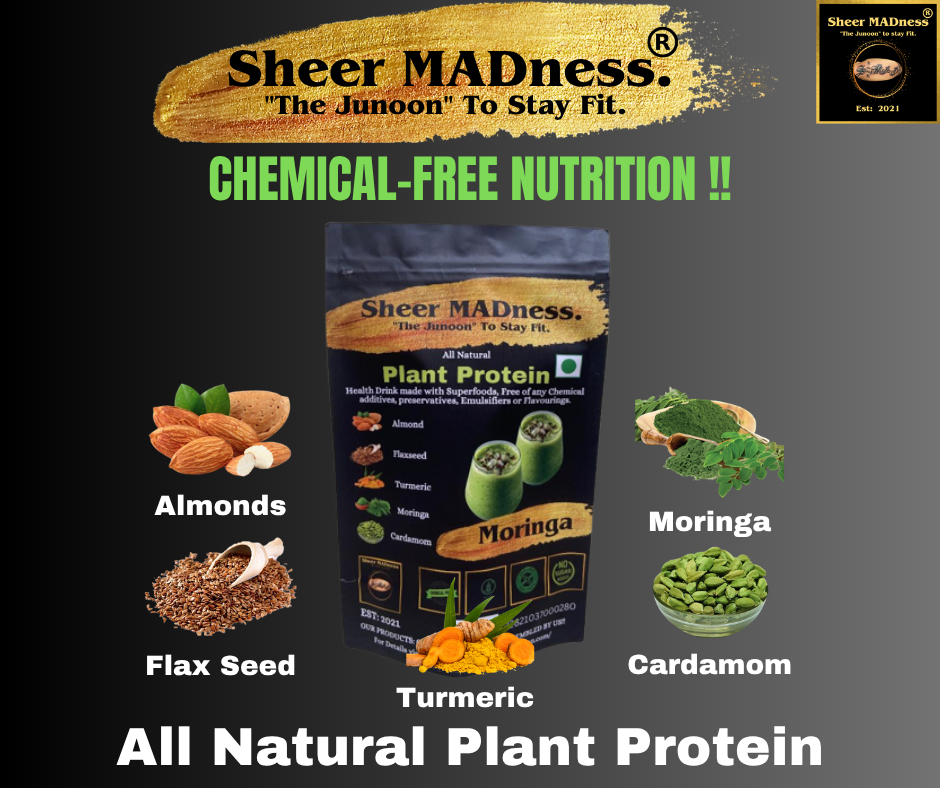
Sheer MADness Plant Protein Moringa addresses cholesterol management through all four of the mechanisms described above simultaneously.
Plant sterols from moringa leaf reduce dietary cholesterol absorption at NPC1L1. Chlorogenic acid activates AMPK to inhibit HMGR and reduce hepatic cholesterol biosynthesis. Soluble fibre from moringa and flaxseed mucilage sequesters bile acids for faecal excretion, forcing increased cholesterol-to-bile acid conversion. Quercetin and almond Vitamin E prevent LDL oxidation — the conversion that makes LDL atherogenic. Flaxseed omega-3 reduces triglycerides through PPAR-α activation and SREBP-1c inhibition.
Furthermore, zero refined carbohydrate — no glucose syrup, no maltodextrin, no refined sugar — means Sheer MADness Plant Protein Moringa adds no hepatic SREBP-1c lipogenesis stimulus from refined carbohydrate excess. Every calorie from natural sweeteners (dates, jaggery, raisins) arrives with fibre that moderates hepatic carbohydrate flux. This absence of refined carbohydrate is specifically relevant to India’s carbohydrate-driven dyslipidaemia pattern.
Since 2021, every ingredient is on the front of every pack. The cholesterol management mechanisms are in the ingredients.
Elevated cholesterol — particularly LDL above 160 mg/dL, triglycerides above 150 mg/dL, or HDL below 40 mg/dL — is a medical condition with cardiovascular consequences that require physician management. Dietary interventions including moringa are meaningful adjuncts but are not equivalents to statin therapy in patients with cardiovascular risk.
People on statins should not reduce medication based on dietary changes without physician guidance. Moringa’s AMPK-HMGR mechanism is additive to statin therapy — it does not replace it. Moringa’s Vitamin K content may interact with warfarin anticoagulation — discuss with your physician.
The human evidence base for moringa-specific cholesterol effects is still developing. The strongest evidence for dietary cholesterol management at meaningful magnitude remains plant sterol functional foods (1.5-3g daily), soluble fibre (at least 5-10g daily from multiple sources), omega-3 (at least 2g EPA+DHA daily), and dietary pattern change (Mediterranean, DASH). Moringa contributes to all of these through its natural content — but in dietary quantities rather than pharmacological doses.
Sheer MADness holds a registered trademark under the Government of India. The Natural Plant Protein formula is patent published under Patent No. 202331036733, searchable on Intellectual Property India. The brand holds a valid FSSAI licence and GSTIN registration.
| Cholesterol Mechanism | Nutrient | Source | Pathway |
|---|---|---|---|
| Intestinal cholesterol absorption inhibition | Plant sterols — beta-sitosterol, campesterol | Moringa leaf | NPC1L1 transporter competitive inhibition |
| Hepatic HMGR inhibition (cholesterol biosynthesis) | Chlorogenic acid → AMPK → HMGR phosphorylation | Moringa leaf | LKB1-AMPK kinase cascade |
| LDL receptor upregulation (SREBP-2) | Reduced hepatic cholesterol → SREBP-2 activation | Moringa + flaxseed fibre | HMGR inhibition + bile acid sequestration |
| Bile acid sequestration — faecal excretion | Soluble mucilage fibre | Flaxseed in Sheer MADness | Bile acid-fibre complexation → faecal loss |
| LDL oxidation prevention — iron chelation | Quercetin | Moringa leaf — 50-60mg/100g | Fenton reaction prevention |
| LDL particle Vitamin E maintenance | Vitamin E — mixed tocopherols | Almonds — 12.5mg/100g | LDL particle antioxidant |
| LDL oxidation prevention — peroxyl radical | Quercetin + kaempferol | Moringa leaf | Lipid peroxidation chain breaking |
| VLDL production reduction (SREBP-1c) | Chlorogenic acid + ALA → AMPK + PPAR-α | Moringa + flaxseed | SREBP-1c inhibition → less VLDL |
| Triglyceride reduction | ALA omega-3 | Flaxseed — 22g/100g | PPAR-α activation → hepatic fat oxidation |
| LDL receptor preservation | Curcumin → PCSK9 inhibition | Turmeric | Reduced LDL receptor degradation |
| Hepatic cholesterol-to-bile acid conversion | Soluble fibre bile acid sequestration | Moringa + flaxseed | Reduced bile acid reabsorption → hepatic conversion |
Is moringa good for managing cholesterol?
Moringa supports healthy cholesterol management through four specific mechanisms: plant sterols inhibit dietary cholesterol absorption at NPC1L1; chlorogenic acid activates AMPK to inhibit HMGR (hepatic cholesterol biosynthesis); soluble fibre sequesters bile acids to force increased cholesterol-to-bile acid conversion; and quercetin prevents LDL oxidation. These are genuine dietary mechanisms — meaningful nutritional contributions but smaller in magnitude than pharmaceutical statin therapy.
What is the HMGR pathway and how does moringa’s chlorogenic acid affect it?
HMGR (HMG-CoA reductase) is the rate-limiting enzyme of cholesterol biosynthesis in the liver. Statins reduce cholesterol by directly inhibiting HMGR. Moringa’s chlorogenic acid activates AMPK, which phosphorylates and inactivates HMGR — reducing hepatic cholesterol synthesis through an upstream signalling mechanism rather than direct inhibition. The magnitude is dietary, not pharmaceutical, but the mechanism is genuinely specific.
How do plant sterols in moringa reduce cholesterol?
Plant sterols compete with cholesterol at the NPC1L1 intestinal transporter — the same protein that the drug ezetimibe targets. By competing for NPC1L1, plant sterols reduce dietary cholesterol absorption. Reduced dietary cholesterol intake forces the liver to upregulate LDL receptors to meet its cholesterol needs from blood LDL — reducing blood LDL levels. EFSA has approved a health claim for 1.5-3g daily plant sterols reducing LDL by 7-10%.
Indian dyslipidaemia typically involves elevated triglycerides and low HDL rather than pure LDL elevation. Flaxseed’s ALA omega-3 activates PPAR-α (increasing hepatic fat oxidation) and inhibits SREBP-1c (reducing VLDL production) — directly addressing the triglyceride-VLDL pathway driving India’s most common lipid pattern. Flaxseed soluble fibre also sequesters bile acids, indirectly reducing LDL.
Can moringa replace statin medication for high cholesterol?
No. Statin therapy in diagnosed dyslipidaemia with cardiovascular risk reduces LDL by 30 to 60 percent through direct HMGR inhibition at pharmacological concentrations — a magnitude that dietary moringa cannot match. Moringa is an adjunct to healthy dietary and lifestyle management, not a replacement for prescribed medication. Anyone on statins must not reduce medication without physician guidance.
Does moringa affect HDL cholesterol?
The evidence for moringa’s direct HDL effect is weaker than for LDL and triglycerides. Reducing triglycerides through flaxseed omega-3 and VLDL reduction indirectly raises HDL — because the CETP enzyme that transfers triglycerides from VLDL to HDL (reducing HDL particle size and increasing HDL catabolism) is less active when VLDL triglycerides are lower. This indirect HDL-raising effect is relevant for India’s low-HDL dyslipidaemia pattern.
Oxidised LDL (oxLDL) is taken up by macrophages in arterial walls through scavenger receptors without feedback inhibition — creating foam cells, the hallmark of atherosclerotic plaques. Native LDL at normal concentrations is taken up by hepatic LDL receptors with feedback inhibition. LDL management is therefore both about reducing LDL quantity (HMGR inhibition, plant sterols) and preventing oxidation (quercetin, Vitamin E). Moringa addresses both simultaneously.
Can moringa interact with cholesterol medications?
Moringa’s AMPK-HMGR mechanism is additive to statin therapy and is not expected to cause adverse drug interactions. However, moringa’s Vitamin K content may affect warfarin anticoagulation in patients on anticoagulant therapy for cardiovascular conditions. Patients on any cardiovascular medication should discuss dietary changes including moringa with their cardiologist.

Cholesterol management from diet operates through several specific biochemical pathways — and moringa addresses more of them simultaneously than any other single whole-food powder available in India.
Plant sterols block dietary cholesterol absorption at the NPC1L1 transporter. Chlorogenic acid activates AMPK to phosphorylate and inhibit HMGR — reducing hepatic cholesterol synthesis through the upstream kinase pathway that statins address directly. Soluble fibre from moringa and flaxseed sequesters bile acids for faecal excretion, forcing increased hepatic cholesterol-to-bile acid conversion. Quercetin and almond Vitamin E prevent the LDL oxidation that converts benign LDL into the atherogenic oxLDL that foam cells engulf. Flaxseed ALA omega-3 reduces triglycerides and VLDL through PPAR-α and SREBP-1c mechanisms that specifically address India’s hypertriglyceridaemia-driven dyslipidaemia.
These are four distinct dietary cholesterol management mechanisms — each biologically specific, each research-documented, each contributing meaningfully as a daily dietary practice. No supplement replaces medical management of diagnosed dyslipidaemia. But as a daily whole-food nutritional adjunct to a cholesterol-conscious lifestyle — these moringa mechanisms are the most complete plant-based cholesterol management system available in a single daily preparation.
Since 2021, every ingredient is on the front of every pack. The cholesterol mechanisms are in the ingredients.
I would also request you to please read my previous post: Benefits of Moringa Plant protein, the versatile Superfood powerhouse.
a) Everyone is an individual, so what suits me may not suit the next person.
b) If a person has a medical condition, a doctor’s advice and prescribed medication will only help. Elevated cholesterol and diagnosed dyslipidaemia require medical management. Moringa is a nutritional food that supports healthy cholesterol management — it does not replace prescribed statin or other lipid-lowering medication.
c) While buying any protein powder from the market, read the labels carefully. Watch out for INS codes, Anti-caking agent, INS 551 (Silicon dioxide), BHA (Butylated hydroxyanisole), BHT (Butylated hydroxytoluene), and refined carbohydrate ingredients (glucose syrup, maltodextrin) that drive hepatic SREBP-1c lipogenesis and worsen India’s specific hypertriglyceridaemia-driven dyslipidaemia pattern.
If you are interested in buying chemical-free Natural Plant Protein Moringa, Health Drinks for Kids, or our delicious chemical-free Energy Bars, Protein Bars, and Millet Bars, shop at Sheer MADness.
You can also find us on Flipkart, Jio Mart, or ONDC in India.
d) Exercise is the key to fitness. Exercise and nutrition are two sides of the same coin and always go hand in hand.
e) Excess of anything is wrong, even the best whole-food superfood. Consume only recommended quantities.
f) Rome was not built in a day. Discipline and consistency are the only keys to lasting health.
g) It is not only exercise and protein that builds health. A healthy gut, macro and micronutrients, body type, rest, and lifestyle all matter. Of all these, exercise and nutrition are within our control. Focus on these two primary aspects first.
h) The most important part of fitness is that nothing is better than exercise and a balanced meal.
Disclaimer: Our products are a source of HEALTHY NUTRIENTS and are COMPLETELY FREE OF ANY ADDED CHEMICALS. We do not claim to cure any medical condition. The content provided is informational. We do not claim to diagnose or treat a person with any specific medical condition.