

Direct answer: Moringa reduces oxidative stress through two fundamentally different and complementary mechanisms that together make it one of the most powerful whole-food antioxidants available. First, moringa’s flavonoids — quercetin, kaempferol, and chlorogenic acid — directly scavenge free radicals, neutralising them before they can damage DNA, proteins, and cell membranes. Second, and more importantly, moringa’s isothiocyanates activate the Nrf2/Keap1 pathway — the master antioxidant regulatory system in every cell — triggering the upregulation of the body’s own endogenous antioxidant enzymes: glutathione S-transferase, NAD(P)H quinone oxidoreductase-1, heme oxygenase-1, and superoxide dismutase. This second mechanism makes moringa not merely an antioxidant food but an antioxidant amplifier — it activates the body’s own antioxidant production rather than simply adding external antioxidants.
Sheer MADness Plant Protein Moringa compounds these mechanisms with almond Vitamin E for lipid membrane protection, flaxseed lignans for peroxyl radical quenching, and turmeric curcumin for NF-κB-mediated inflammatory oxidative cycle interruption — creating the most comprehensive plant-based antioxidant system available from a single whole-food powder.
I am Chef Ashutosh Awasthi, founder of Sheer MADness, professional chef, marathon runner, and author of Great Health Comes from Exercise & Nutrition. Let me explain the oxidative stress science behind moringa at the molecular level — with the specificity that this important health topic deserves.
Oxidative stress is not simply “too many free radicals.” It is a specific failure of the cell’s redox homeostasis — the balance between oxidant production and antioxidant defence at the subcellular level. Understanding this precisely explains why moringa’s dual mechanism is so significant.
A free radical is a molecule with an unpaired electron in its outer orbital. This unpaired electron makes the molecule highly reactive — it seeks to steal an electron from the nearest available molecule to achieve stability. This electron theft generates a new radical from the donor molecule, creating a chain reaction of radical propagation that can involve hundreds of molecular reactions before termination.
The primary free radicals in biological systems are reactive oxygen species (ROS): the superoxide radical (O₂•⁻), hydrogen peroxide (H₂O₂), the hydroxyl radical (•OH), and singlet oxygen (¹O₂). Each is generated through specific metabolic processes.
Superoxide is generated primarily at the inner mitochondrial membrane during electron transport — as the unavoidable by-product of aerobic energy production. Every molecule of ATP produced through oxidative phosphorylation generates a small amount of superoxide. The mitochondria of the typical human cell generate approximately 10 billion molecules of superoxide per cell per day under normal metabolic conditions.
Hydroxyl radicals — the most reactive and most damaging ROS — are generated through the Fenton reaction when superoxide or hydrogen peroxide reacts with transition metals, particularly iron and copper. This is one reason adequate iron metabolism and antioxidant protection of iron from redox cycling is specifically important.
External sources of free radical generation in India’s context include PM2.5 air pollution, cigarette smoke, UV radiation at India’s tropical latitudes, and dietary xenobiotics — synthetic food additives that are metabolised through radical-generating pathways.
Free radical damage to biological molecules is specific and well-characterised.
DNA damage from free radical attack — particularly hydroxyl radical attack on deoxyribose and guanine bases — produces 8-oxoguanine (8-OHdG), one of the most common and most mutagenic DNA lesions. Cumulative DNA oxidative damage, inadequately repaired, is the molecular basis of carcinogenesis from chronic oxidative stress.
Lipid peroxidation — free radical attack on polyunsaturated fatty acids in cell membranes — generates malondialdehyde (MDA) and 4-hydroxynonenal (4-HNE) as end products. These reactive aldehydes cross-link with proteins and DNA, amplifying the damage cascade. Malondialdehyde is measured in research as the primary biomarker of oxidative stress — elevated MDA indicates overwhelmed antioxidant defence.
Protein oxidation — carbonylation and sulphur amino acid oxidation — impairs enzyme activity, receptor function, and structural protein integrity. The aggregated, misfolded proteins that characterise Alzheimer’s disease and Parkinson’s disease are specifically the product of oxidised, cross-linked protein accumulation from chronic oxidative stress.
India’s population faces a specific and elevated oxidative stress burden from three simultaneous sources that compound each other.
Air pollution — as detailed in the lung health post — creates continuous external oxidant exposure through PM2.5 that generates hydroxyl radicals and activates macrophage oxidative bursts throughout the body.
Dietary transition toward ultra-processed foods increases the intake of dietary xenobiotics — BHA, BHT, synthetic flavours, emulsifiers — that require hepatic Phase I oxidation to reactive intermediates before Phase II conjugation. This processing itself generates reactive oxygen species as enzymatic by-products, adding to the total oxidative load.
Metabolic disease — India has approximately 77 million Type 2 diabetic adults and a far larger pre-diabetic population — generates chronic oxidative stress through hyperglycaemia-induced superoxide production from glucose autoxidation and protein glycation. Hyperglycaemia is specifically the most potent single metabolic source of intracellular ROS generation.
The combined oxidative burden of pollution, dietary xenobiotics, and metabolic disease makes India one of the highest oxidative stress environments for its population — and makes dietary antioxidant support from whole foods specifically more urgently relevant than in populations with lower oxidative exposure.
This is the mechanism that distinguishes moringa from simple antioxidant supplements and makes it one of the most sophisticated antioxidant interventions available from a whole food.
Nrf2 (Nuclear factor erythroid 2-related factor 2) is a transcription factor present in virtually every cell in the body. Under basal conditions, Nrf2 is held inactive in the cytoplasm by its binding protein Keap1 (Kelch-like ECH-associated protein 1). Keap1 continuously marks Nrf2 for proteasomal degradation — keeping endogenous antioxidant enzyme production at maintenance levels.
When cells experience oxidative stress — or when they encounter specific food compounds that activate the pathway — Keap1’s cysteine residues are modified, disrupting the Keap1-Nrf2 binding. Nrf2 is released, translocates to the nucleus, and binds to Antioxidant Response Element (ARE) sequences in the promoter regions of hundreds of genes.
The genes Nrf2 upregulates include the body’s most powerful antioxidant and detoxification enzymes: glutathione S-transferase (the primary enzyme using glutathione to neutralise electrophilic toxins and reactive oxygen species), NQO1 (NAD(P)H quinone oxidoreductase-1, which prevents quinone radicals from participating in redox cycling), heme oxygenase-1 (HO-1, which degrades haem to anti-inflammatory biliverdin), and gamma-glutamylcysteine synthetase (which produces glutathione — the primary endogenous antioxidant).
The practical significance is profound. A single Nrf2 activation event can upregulate hundreds of antioxidant enzyme molecules — each capable of neutralising thousands of free radicals catalytically. One molecule of Nrf2-activated glutathione peroxidase neutralises thousands of hydrogen peroxide molecules. This catalytic amplification is orders of magnitude more potent than any dietary antioxidant that simply stoichiometrically quenches one free radical per molecule consumed.
Moringa’s isothiocyanates — particularly 4-(α-L-rhamnosyloxy)benzyl isothiocyanate (the primary moringa isothiocyanate) — are electrophilic compounds that react with Keap1’s cysteine thiols directly. This reaction modifies Keap1, disrupts Nrf2 binding, and triggers Nrf2 nuclear translocation.
This is the same mechanism through which sulforaphane from broccoli activates Nrf2 — the most extensively studied dietary Nrf2 activator. Research published in the Proceedings of the National Academy of Sciences confirmed sulforaphane’s Nrf2 activation as the primary mechanism of broccoli’s cancer-preventive properties in multiple human studies. Moringa isothiocyanates act through the same Keap1-cysteine modification mechanism.
A 2019 study published in the journal Oxidative Medicine and Cellular Longevity specifically investigated moringa’s Nrf2 pathway activation. The study confirmed that moringa leaf extract significantly increased Nrf2 nuclear translocation, increased HO-1 expression, and increased glutathione levels in oxidatively stressed cells — confirming moringa’s Nrf2-activating activity.
This Nrf2-mediated mechanism transforms moringa from a passive antioxidant food (one that donates electrons to neutralise free radicals) into an active antioxidant amplifier — a food that triggers the body’s own defence programme at the genetic level.
Alongside the Nrf2-mediated endogenous amplification, moringa’s flavonoids provide direct free radical scavenging that is specific and well-characterised.
Quercetin — at approximately 50 to 60 milligrams per 100 grams of moringa dry leaf — is one of the most extensively studied dietary antioxidants. Its molecular structure includes multiple phenolic hydroxyl groups that donate hydrogen atoms to neutralise free radicals — converting unstable radicals to stable, non-reactive products.
Quercetin specifically quenches superoxide, hydroxyl radicals, and singlet oxygen. Research confirms quercetin’s Oxygen Radical Absorbance Capacity (ORAC) is among the highest of any flavonoid — approximately 3.7 micromoles Trolox equivalents per milligram.
Furthermore, quercetin chelates iron and copper — the transition metals that drive Fenton reaction hydroxyl radical generation. By binding these metals, quercetin prevents them from catalysing the most damaging radical generation reaction in biological systems.
Kaempferol — present alongside quercetin in moringa leaf — operates through a slightly different radical scavenging chemistry. Kaempferol is particularly effective at quenching lipid peroxidation chain reactions — inserting its phenolic structure into lipid membrane bilayers and donating hydrogen atoms to lipid peroxyl radicals, terminating the chain reaction that would otherwise continue through hundreds of membrane lipid molecules.
This membrane-protective lipid peroxidation chain-breaking is specifically different from the aqueous-phase superoxide scavenging of quercetin — making the two flavonoids complementary rather than redundant antioxidants.
Chlorogenic acid in moringa leaf is a hydroxycinnamic acid with specific antioxidant activity in the endoplasmic reticulum (ER). The ER is a site of specific oxidative stress — its protein folding oxidative environment generates reactive oxygen species as a normal by-product. Chronic ER stress is specifically linked to the beta-cell dysfunction that drives Type 2 diabetes progression.
Chlorogenic acid’s antioxidant activity in the ER specifically reduces ER stress markers and protects insulin-producing beta-cells from oxidative damage — a mechanism specifically relevant to India’s enormous Type 2 diabetic and pre-diabetic population.
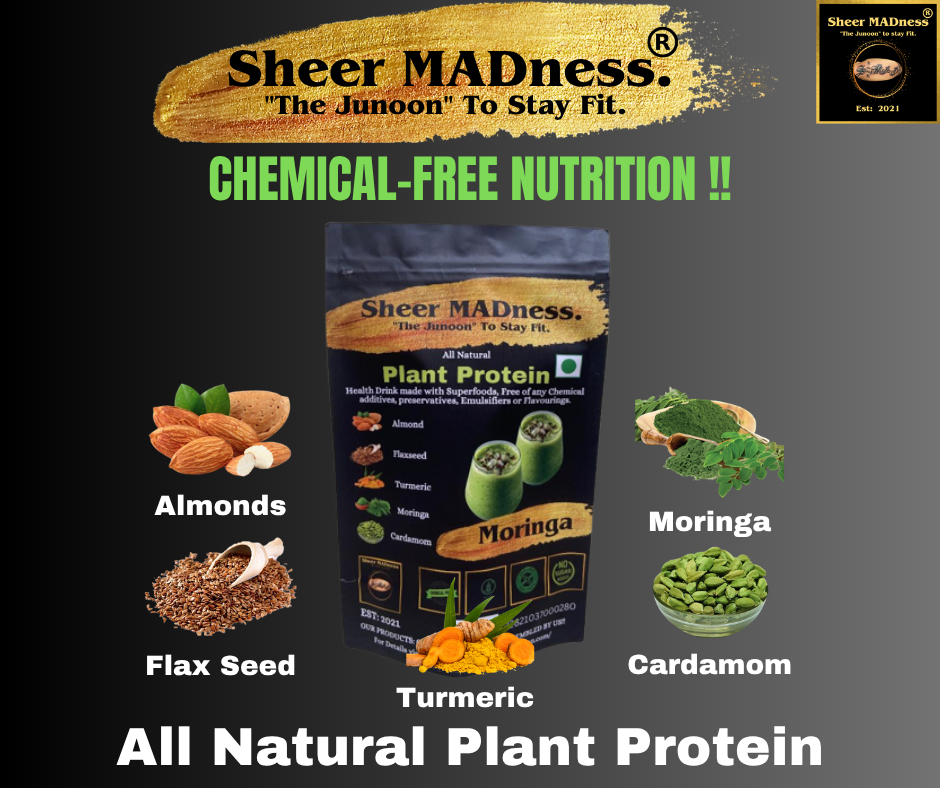
Sheer MADness Plant Protein Moringa creates a multi-mechanism antioxidant system from five whole-food ingredients that addresses oxidative stress through four distinct molecular pathways simultaneously.
Vitamin E from almonds — natural mixed tocopherols at 12.5 milligrams per 100 grams — provides fat-soluble antioxidant protection in the lipid phase of cell membranes. As a chain-breaking antioxidant, Vitamin E terminates lipid peroxidation chain reactions by donating a hydrogen atom to lipid peroxyl radicals — the same mechanism as kaempferol but operating in the lipid membrane phase where Vitamin E concentrates.
Vitamin E and Vitamin C operate as a redox couple — Vitamin C reduces oxidised Vitamin E back to its active antioxidant form after it has quenched a lipid peroxyl radical. Moringa’s Vitamin C and almond’s Vitamin E therefore operate synergistically through this recycling mechanism — each extending the other’s antioxidant effectiveness.
Flaxseed contains secoisolariciresinol diglucoside (SDG) — the primary lignan that gut bacteria convert to the bioactive enterolignans enterodiol and enterolactone. These enterolignans are potent antioxidants with free radical scavenging capacity comparable to Vitamin E in some research models.
Furthermore, flaxseed omega-3 ALA reduces the substrate available for peroxyl radical generation by competing with arachidonic acid for the cyclooxygenase enzymes that produce pro-inflammatory prostaglandins and thromboxanes — reducing the inflammatory oxidative cycle that amplifies ROS production in chronically inflamed tissue.
Oxidative stress and inflammation form a bidirectional amplification cycle. ROS activate NF-κB, which upregulates pro-inflammatory cytokines. Pro-inflammatory cytokines activate macrophage oxidative bursts that generate more ROS. The cycle sustains itself until external intervention interrupts it.
Curcumin from turmeric interrupts this cycle specifically at the NF-κB level — inhibiting IκB kinase activity that would otherwise phosphorylate IκB and release NF-κB for nuclear translocation. By preventing NF-κB activation, curcumin reduces the inflammatory cytokine production that drives the macrophage oxidative burst — interrupting the amplification cycle at its inflammatory driver.
Combined with moringa’s Nrf2 activation — which upregulates HO-1 that itself suppresses NF-κB signalling — the moringa-turmeric combination in Sheer MADness Plant Protein Moringa creates a reciprocal system: Nrf2 activation suppresses NF-κB while curcumin directly inhibits NF-κB activation. Both pathways simultaneously.
The diseases most prevalent in India — cardiovascular disease. Type 2 diabetes, metabolic syndrome, non-alcoholic fatty liver disease, and neurodegenerative disease. These are all specifically and mechanistically linked to chronic oxidative stress.
Cardiovascular disease: LDL cholesterol is only atherogenic when oxidised. It is oxidised LDL (oxLDL) that foam cells scavenge in arterial walls to form atherosclerotic plaques. Dietary antioxidants that reduce LDL oxidation specifically reduce this primary atherosclerosis-initiating event.
Type 2 diabetes: Hyperglycaemia generates superoxide through glucose autoxidation and advanced glycation end-product (AGE) formation. This superoxide activates NF-κB in pancreatic beta-cells, triggering inflammatory beta-cell destruction that accelerates insulin secretion decline. Nrf2 activation protects beta-cells from this hyperglycaemia-induced oxidative destruction.
Neurodegeneration: Alzheimer’s disease pathology — amyloid-beta accumulation and tau phosphorylation — is specifically driven by and amplified by oxidative stress. The brain, with its high oxygen consumption and high PUFA membrane content, is among the most oxidatively vulnerable organs. Dietary antioxidants that penetrate the blood-brain barrier — quercetin has documented BBB crossing — specifically protect neuronal tissue from the oxidative damage that drives cognitive decline.
Research published in the Journal of Alzheimer’s Disease found that quercetin specifically reduced amyloid-beta toxicity and tau hyperphosphorylation in neuronal cell models — confirming the relevance of quercetin’s antioxidant activity to neurodegeneration prevention.
NAFLD: As detailed in the liver health post, oxidative stress drives the progression from simple hepatic steatosis to NASH and fibrosis through MDA-driven hepatic stellate cell activation. Moringa’s Nrf2 activation upregulates glutathione and HO-1 in hepatocytes — providing specific protection against the oxidative hepatocellular damage that drives NAFLD progression.
Understanding how research measures oxidative stress explains why the research citations in this area are meaningful rather than merely claimed.
Malondialdehyde (MDA) — measured through the TBARS assay — is the most widely used oxidative stress biomarker. Elevated MDA confirms lipid peroxidation from free radical chain reactions. Moringa interventions consistently reduce MDA in both animal and human studies.
Superoxide dismutase (SOD), catalase, and glutathione peroxidase activity — the primary endogenous antioxidant enzymes — are upregulated by Nrf2 activation. Moringa interventions consistently increase all three enzymatic activities — confirming the Nrf2 activation mechanism through its functional consequences.
Glutathione levels — the most important endogenous antioxidant — increase with moringa supplementation. The 2015 Oxidative Medicine and Cellular Longevity study specifically confirmed that moringa increased glutathione levels. The functional confirmation of Nrf2-gamma-glutamylcysteine synthetase upregulation.
8-OHdG (8-hydroxydeoxyguanosine) — the primary DNA oxidative damage biomarker — decreases with moringa supplementation in multiple studies. This confirms that moringa’s antioxidant mechanisms protect DNA from oxidative modification — the most significant long-term consequence of chronic oxidative stress.
For oxidative stress specifically, this argument is more nuanced and more important than in any other health context.
BHA (INS 320) and BHT (INS 321) are synthetic phenolic antioxidants used as chemical preservatives in most commercial protein supplements and protein bars. At the concentrations in food, they function as antioxidants in the food product — preventing lipid oxidation in the bar or powder during storage.
However, when consumed daily, BHA and BHT are processed in the liver through Phase I cytochrome P450 oxidation to reactive quinone intermediates. These reactive intermediates are themselves capable of generating intracellular reactive oxygen species before they are conjugated in Phase II reactions. The compound that prevents oxidation in the food product generates oxidative intermediates in the liver — the precise organ most vulnerable to chronic oxidative stress-driven NAFLD.
A synthetic antioxidant that preserves the product but generates hepatic oxidative intermediates in the consumer is not a beneficial antioxidant. It is a chemical additive that contributes to the very oxidative burden it is marketed as preventing.
Sheer MADness Plant Protein Moringa contains zero BHA, zero BHT, zero synthetic antioxidant. The product’s oxidative stability is maintained through vacuum packing — removing the oxygen that would oxidise the moringa’s own antioxidant compounds during storage. The Vitamin C, quercetin, and flavonoids are preserved. Without any synthetic chemical that would generate hepatic oxidative intermediates in the consumer.
This is the specific, honest oxidative stress argument for chemical-free preservation. The preservative chemistry of most supplements adds to rather than reduces the consumer’s total oxidative burden.
Since 2021, Sheer MADness displays every ingredient with its own image on the front of every pack. For consumers evaluating oxidative stress support, this means the specific antioxidant sources — moringa leaf (quercetin, kaempferol, chlorogenic acid, Vitamin C, isothiocyanates), almonds (Vitamin E), flaxseed (lignans, omega-3), turmeric (curcumin), cardamom — are all visible, named, and traceable before purchase.
No “antioxidant blend” hides the source compounds. No “natural flavour” conceals an oxidative stressor. The antioxidant support of every ingredient is transparent because every ingredient is visible.
Sheer MADness holds a registered trademark under the Government of India. The Natural Plant Protein formula is patent published under Patent No. 202331036733, searchable on Intellectual Property India. The brand holds a valid FSSAI licence and GSTIN registration.
| Mechanism | Compound | Source | Specific Pathway |
|---|---|---|---|
| Nrf2 activation — endogenous antioxidant upregulation | Isothiocyanates | Moringa leaf | Keap1 cysteine modification → Nrf2 release → ARE gene transcription |
| Glutathione synthesis upregulation | Isothiocyanates → Nrf2 → γ-GCS | Moringa leaf | Gamma-glutamylcysteine synthetase gene induction |
| HO-1 upregulation (anti-inflammatory, anti-oxidant) | Isothiocyanates → Nrf2 → HO-1 | Moringa leaf | Heme oxygenase-1 gene induction → biliverdin production |
| Superoxide scavenging | Quercetin | Moringa leaf — 50-60mg/100g | H-atom donation to O₂•⁻ |
| Iron/copper chelation (Fenton reaction prevention) | Quercetin | Moringa leaf | Transition metal chelation → prevents •OH generation |
| Lipid peroxidation chain breaking (membrane) | Kaempferol | Moringa leaf | H-atom donation to lipid peroxyl radicals |
| ER stress reduction | Chlorogenic acid | Moringa leaf | ER antioxidant → beta-cell protection |
| Lipid membrane peroxyl radical quenching | Vitamin E (tocopherols) | Almonds — 12.5mg/100g | Chain-breaking in lipid phase |
| Vitamin E regeneration | Vitamin C | Moringa leaf | Ascorbate reduces tocopheroxyl radical → tocopherol |
| Peroxyl radical quenching | Lignans (SDG → enterolignans) | Flaxseed | Direct radical scavenging |
| NF-κB inflammatory oxidative cycle interruption | Curcumin | Turmeric | IκB kinase inhibition → prevents NF-κB translocation |
| NF-κB suppression (via HO-1) | Nrf2 → HO-1 | Moringa isothiocyanates | HO-1 product biliverdin suppresses NF-κB activation |
How does moringa reduce oxidative stress?
Moringa reduces oxidative stress through two complementary mechanisms. First, its flavonoids — quercetin, kaempferol, and chlorogenic acid — directly scavenge free radicals through hydrogen atom donation and transition metal chelation. Second, and more powerfully, moringa’s isothiocyanates activate the Nrf2/Keap1 pathway — triggering the upregulation of the body’s own antioxidant enzyme systems including glutathione, superoxide dismutase, and heme oxygenase-1.
What is the Nrf2 pathway and why is moringa’s activation of it important?
Nrf2 is the master antioxidant transcription factor in every cell. When activated, it enters the nucleus and upregulates hundreds of antioxidant and detoxification genes simultaneously. This catalytic amplification means one Nrf2 activation event produces far more antioxidant protection than the equivalent dose of any direct antioxidant. Moringa’s isothiocyanates activate Nrf2 through the same Keap1-cysteine mechanism as sulforaphane from broccoli — the most extensively studied dietary Nrf2 activator.
MDA is the primary biomarker of lipid peroxidation — elevated MDA confirms free radical chain reactions in cell membrane lipids. Multiple animal and human studies confirm moringa supplementation significantly reduces MDA levels — the functional confirmation of moringa’s antioxidant activity in living tissues.
Why is oxidative stress specifically a priority for Indian adults?
Indian urban adults face a specific and elevated oxidative burden from three simultaneous sources: PM2.5 air pollution that generates direct tissue-level ROS; dietary synthetic additives (BHA, BHT, synthetic flavours) that generate hepatic oxidative intermediates during metabolic processing; and metabolic disease — hyperglycaemia in India’s 77 million diabetics generates superoxide through glucose autoxidation. The combined burden makes dietary antioxidant support specifically more urgent for Indian adults than for most global populations.
How does BHA in commercial supplements worsen oxidative stress?
BHA (INS 320) is metabolised in the liver through cytochrome P450 to reactive quinone intermediates that generate intracellular ROS before Phase II conjugation. The compound that prevents oxidation in the food product generates hepatic oxidative intermediates in the consumer — adding to the total oxidative burden rather than reducing it. This is the specific reason that zero-BHA supplements like Sheer MADness Plant Protein Moringa are specifically more appropriate for oxidative stress management.
Specifically and synergistically. Curcumin inhibits NF-κB — the master inflammatory transcription factor that drives macrophage oxidative bursts — interrupting the inflammation-oxidation amplification cycle. Moringa’s Nrf2 activation upregulates HO-1 that also suppresses NF-κB. Both pathways simultaneously reduce the inflammatory oxidative cycle through different entry points.
Is moringa’s antioxidant activity confirmed in human trials?
Yes. Multiple human clinical trials — including studies in diabetic patients showing reduced MDA, increased SOD, and increased glutathione levels from moringa supplementation — confirm the antioxidant mechanisms identified in cell and animal models translate to measurable effects in human subjects. The evidence is strongest for iron-deficiency-associated oxidative stress and metabolic disease-related oxidative stress.
How does vacuum packing protect moringa’s antioxidant compounds?
Quercetin, kaempferol, Vitamin C, and isothiocyanates all undergo oxidative degradation when exposed to oxygen over time. Vacuum packing removes oxygen from the sealed pouch — preventing this degradation. Sheer MADness Plant Protein Moringa’s antioxidant compound concentrations are preserved from production to consumption without requiring any synthetic antioxidant preservative that would itself contribute oxidative intermediates during hepatic metabolism.

Moringa is one of the most mechanistically sophisticated dietary antioxidants available from a whole food — not because of its ORAC score or its flavonoid content alone, but because it activates the body’s own Nrf2-mediated antioxidant system alongside its direct free radical scavenging activity.
A direct-scavenging antioxidant like Vitamin C neutralises one free radical per molecule consumed — and is consumed in the process. An Nrf2-activating compound like moringa’s isothiocyanates triggers the production of endogenous antioxidant enzymes — each capable of neutralising thousands of free radicals catalytically — without being consumed. The amplification ratio is extraordinary.
Sheer MADness Plant Protein Moringa delivers this Nrf2 activation from moringa’s isothiocyanates, alongside quercetin’s direct superoxide scavenging and iron chelation, kaempferol’s membrane lipid peroxidation chain-breaking, chlorogenic acid’s ER stress reduction, almond Vitamin E and moringa Vitamin C’s synergistic tocopherol-ascorbate recycling system, flaxseed lignan peroxyl quenching, and turmeric curcumin’s NF-κB cycle interruption.
Twelve specific antioxidant mechanisms. Five whole-food ingredients. No BHA, no BHT, no synthetic preservative that would generate the hepatic oxidative intermediates it purports to prevent. Vacuum packed to preserve the Nrf2-activating isothiocyanates and Vitamin C that chemical preservation would allow to degrade.
Since 2021, every ingredient is on the front of every pack. The antioxidant mechanisms are in the ingredients. And for Indian urban adults facing the combined oxidative burden of pollution, dietary xenobiotics, and metabolic disease. The daily moringa preparation is among the most evidence-based nutritional priorities available.
I would also request you to please read my previous post: Benefits of Moringa Plant protein, the versatile Superfood powerhouse.
a) Everyone is an individual, so what suits me may not suit the next person.
b) If a person has a medical condition, a doctor’s advice and prescribed medication will only help.
c) While buying any protein powder from the market, read the labels carefully. Watch out for INS 320 (BHA), INS 321 (BHT), INS 551 (silicon dioxide), and other lab-made chemicals that are marketed as preservatives but generate hepatic oxidative intermediates in the consumer — compounding rather than reducing oxidative burden.
If you are interested in buying chemical-free Natural Plant Protein Moringa, Health Drinks for Kids, or our delicious chemical-free Energy Bars, Protein Bars, and Millet Bars, shop at Sheer MADness.
You can also find us on Flipkart, Jio Mart, or ONDC in India.
d) Exercise is the key to fitness. Exercise and nutrition are two sides of the same coin and always go hand in hand.
e) Excess of anything is wrong, even the best whole-food superfood. Consume only recommended quantities.
f) Rome was not built in a day. Discipline and consistency are the only keys to lasting health.
g) It is not only exercise and protein that builds health. A healthy gut, macro and micronutrients, body type, rest, and lifestyle all matter. Of all these, exercise and nutrition are within our control. Focus on these two primary aspects first.
h) The most important part of fitness is that nothing is better than exercise and a balanced meal.
Article by Chef Ashutosh Awasthi
Disclaimer: Our products are a source of HEALTHY NUTRIENTS and are COMPLETELY FREE OF ANY ADDED CHEMICALS. We do not claim to cure any medical condition. The content provided is informational. We do not claim to diagnose or treat a person with any specific medical condition.