

Direct answer: Moringa plant protein supports healthy testosterone production through four nutritional mechanisms. It protects Leydig cells from oxidative stress that impairs testosterone synthesis. Its zinc supports the LH-Leydig cell steroidogenesis pathway. Its anti-inflammatory compounds reduce the chronic inflammation that suppresses HPG axis LH secretion. Furthermore, its AMPK activation reduces the visceral adiposity that drives aromatase-mediated testosterone conversion to oestrogen. For men with nutritionally suppressed testosterone, moringa addresses root causes specifically. However, moringa does not pharmacologically raise testosterone above the physiological setpoint. It is a food — not a pharmaceutical hormone booster.
I am Chef Ashutosh Awasthi, founder of Sheer MADness, professional chef, marathon runner, and author of Great Health Comes from Exercise & Nutrition. The testosterone supplement market makes claims that science does not support. Therefore, this post gives you the honest, mechanistically grounded answer instead.
Testosterone production follows a precise cascade. Understanding each step explains where moringa’s compounds intervene and why.
The hypothalamus releases GnRH (gonadotropin-releasing hormone) in pulses. GnRH then triggers the pituitary gland to release LH (luteinising hormone). LH travels through the bloodstream to the testes. Specifically, it reaches the Leydig cells — the testosterone-producing cells. LH binds to LH receptors and activates adenylyl cyclase, increasing cAMP. cAMP then activates PKA (protein kinase A). PKA phosphorylates StAR — the steroidogenic acute regulatory protein. StAR is the rate-limiting step. It transports cholesterol into the inner mitochondrial membrane. There, CYP11A1 converts cholesterol to pregnenolone. Pregnenolone then converts to testosterone through several enzyme steps.
Anything that disrupts this pathway reduces testosterone. Leydig cell oxidative damage, inflammatory cytokines, zinc deficiency, and elevated aromatase activity all disrupt this cascade. Consequently, moringa addresses each of these disruption points.
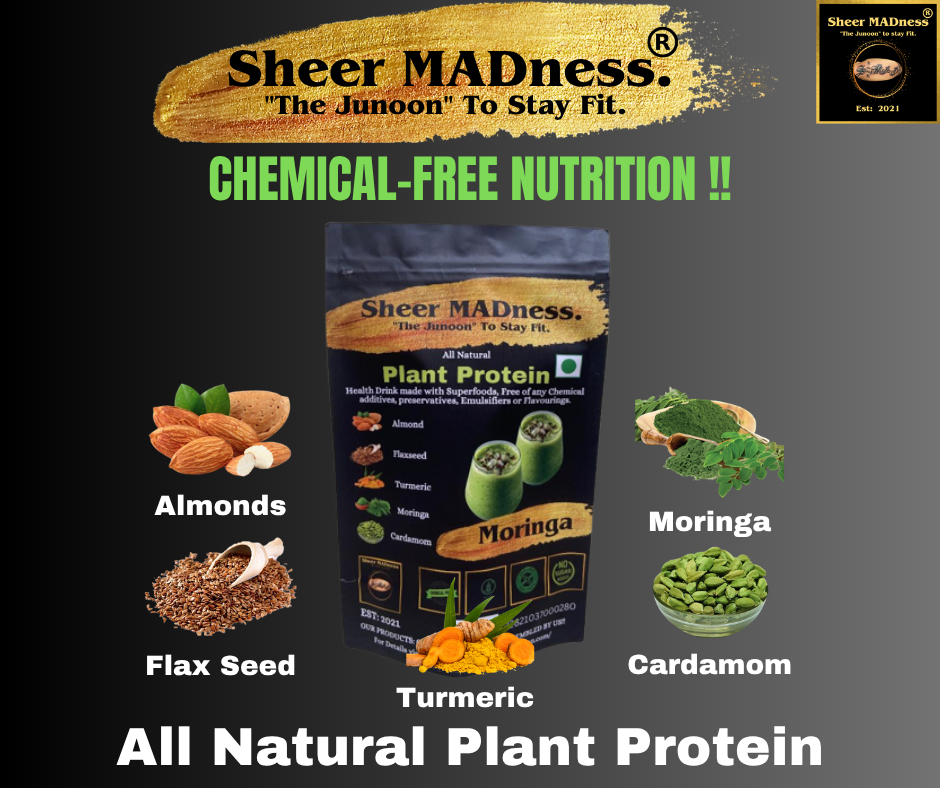
Most circulating testosterone remains biologically inactive. Approximately 60 to 70 percent binds to SHBG (sex hormone-binding globulin). Only free testosterone and albumin-bound testosterone produce biological effects. Therefore, total testosterone levels can appear adequate while free testosterone stays low. Magnesium competes with testosterone for SHBG binding sites. Consequently, higher magnesium intake increases the free testosterone fraction. Almonds in Sheer MADness Plant Protein Moringa provide 270 milligrams of magnesium per 100 grams. This is one of the most magnesium-dense whole foods available.
Leydig cells are highly metabolically active. They produce ATP for the energy-intensive steroidogenesis process. Consequently, they generate significant mitochondrial ROS (reactive oxygen species). Leydig cells have notably low antioxidant enzyme capacity. This makes them specifically vulnerable to oxidative damage.
Oxidative stress damages the StAR protein and the CYP450 steroidogenic enzymes. When these enzymes suffer oxidative damage, testosterone synthesis falls — even when LH signalling remains adequate. Furthermore, oxidative DNA damage in Leydig cells reduces their number over time, shrinking the testosterone-producing cell pool.
Moringa’s quercetin, kaempferol, and isothiocyanates activate Nrf2 — the master antioxidant transcription factor. Nrf2 then upregulates glutathione peroxidase, superoxide dismutase, and catalase in Leydig cells. These enzymes neutralise mitochondrial ROS before they damage steroidogenic proteins.
Research in Oxidative Medicine and Cellular Longevity confirmed moringa’s Nrf2 activation in gonadal tissue. The study showed increased testicular antioxidant enzyme activity and preserved testosterone output. Additionally, beta-carotene from moringa — at 6.78 milligrams per 100 grams — accumulates in the lipid-rich steroidogenic membrane environment. There it provides endogenous antioxidant protection exactly where steroidogenic ROS damage occurs.
Furthermore, Vitamin C from moringa regenerates reduced glutathione from its oxidised form GSSG. This sustains the glutathione cycle — the primary intracellular antioxidant pool in Leydig cells. Consequently, moringa’s Vitamin C specifically maintains the antioxidant capacity that protects StAR protein function. Moringa leaf provides Vitamin C at approximately 17 times the concentration of oranges gram for gram. Therefore, the Vitamin C contribution to Leydig cell protection is substantial.
Zinc is the most directly testosterone-relevant mineral in moringa’s nutritional profile. However, its mechanism is more specific than most people realise — operating at three separate points in the testosterone pathway.
First, zinc acts as a cofactor for adenylyl cyclase activity downstream of the LH receptor. Without adequate zinc, LH receptor signalling therefore falls — even when LH itself stays normal. Second, zinc inhibits aromatase (CYP19A1) — the enzyme that converts testosterone to oestradiol. When zinc is deficient, aromatase activity increases. Consequently, more testosterone converts to oestrogen, reducing serum testosterone concentrations. Third, zinc modulates 5-alpha reductase (5-AR), which converts testosterone to DHT. While some DHT is physiologically important, excess 5-AR activity diverts testosterone away from the free pool. Therefore, adequate zinc preserves the free testosterone fraction at all three points simultaneously.
Research in Biological Trace Element Research confirmed that zinc supplementation in zinc-deficient men significantly increased serum testosterone. Specifically, the study attributed this increase to zinc’s aromatase inhibition and improved LH receptor signalling. A study in Nutrients further confirmed that men with higher dietary zinc intake maintained higher testosterone levels across ageing. Moringa leaf provides zinc at approximately 0.6 milligrams per 100 grams. Almonds add further zinc to the blend. Moreover, Sheer MADness Protein Bars contain pumpkin seeds — the highest plant-food zinc source at 7.8 milligrams per 100 grams.
Chronic inflammation is the most underappreciated cause of low testosterone in Indian men. It directly suppresses the HPG axis at three simultaneous points.
TNF-α and IL-1β suppress hypothalamic GnRH secretion. Without adequate GnRH pulses, pituitary LH release falls. Consequently, Leydig cell testosterone synthesis drops — regardless of Leydig cell integrity. Additionally, IL-6 inhibits StAR protein expression in Leydig cells. Therefore, it disrupts testosterone synthesis at the intracellular level independently of LH signalling. Furthermore, chronic NF-κB activation in Leydig cells — driven by LPS-TLR4 gut endotoxemia — suppresses steroidogenic enzyme activity directly. Research in the Journal of Endocrinology confirmed that TNF-α administration produced significant testosterone suppression through GnRH-LH pathway inhibition.
Moringa’s isothiocyanates inhibit NF-κB through the Keap1-Nrf2-HO-1 pathway and through direct IKK cysteine modification. This reduces TNF-α, IL-6, and IL-1β production simultaneously — addressing HPG axis suppression at all three levels from one molecular mechanism.
Additionally, turmeric curcumin in Sheer MADness Plant Protein Moringa inhibits IKKβ through a complementary pathway. Consequently, NF-κB suppression operates through four distinct mechanisms simultaneously. For Indian men with gut dysbiosis-driven LPS endotoxemia, this NF-κB inhibition directly addresses the most common nutritional cause of testosterone suppression.
Moreover, moringa’s prebiotic fibres feed Akkermansia muciniphila. This gut bacterium’s abundance specifically correlates with reduced intestinal LPS leakage. Therefore, consistent daily moringa consumption reduces gut endotoxemia from its source — not just at the inflammatory signalling point downstream.
This mechanism is most important for metabolically unhealthy Indian men. Visceral adipose tissue expresses high levels of aromatase (CYP19A1). Therefore, more visceral fat means more testosterone converts to oestradiol. This creates a vicious cycle: more visceral fat produces more aromatase → lower testosterone → reduced muscle mass → more fat accumulation → more aromatase activity.
Additionally, visceral adipose tissue produces inflammatory adipokines — TNF-α, IL-6, and resistin. Consequently, visceral fat suppresses the HPG axis through the inflammatory cytokine mechanism described above. It therefore combines aromatase conversion with direct HPG suppression simultaneously. Research consistently confirms inverse associations between visceral adiposity and free testosterone. Each unit increase in waist circumference associates with measurable free testosterone reduction.
Moringa’s chlorogenic acid and quercetin activate AMPK through LKB1 phosphorylation. Active AMPK then inhibits fatty acid synthase — reducing new fat synthesis in visceral adipocytes. Furthermore, AMPK activates PGC-1α, increasing mitochondrial beta-oxidation of visceral fat. Over weeks and months, consistent AMPK activation therefore reduces visceral fat accumulation. Consequently, the aromatase enzyme pool and inflammatory adipokine production both decline. This gradually improves the testosterone-to-oestrogen balance and reduces HPG axis inflammatory suppression simultaneously.
Flaxseed in Sheer MADness Plant Protein Moringa provides lignans — specifically secoisolariciresinol diglucoside (SDG). Lignans competitively inhibit 5-alpha reductase (5-AR). This reduces the conversion of testosterone to DHT. Consequently, more testosterone remains in the free pool. Furthermore, this mild 5-AR inhibition is specifically relevant for men who want to support free testosterone while moderating DHT-driven androgenetic alopecia progression.
However, the concentrations from dietary flaxseed are considerably lower than pharmaceutical 5-AR inhibitors such as finasteride. Therefore, the effect is supportive and gradual — not pharmacological. Additionally, 5-AR modulation from lignans is a complementary mechanism, not a primary testosterone driver.
As established in the SHBG section above, magnesium competes with testosterone for SHBG binding. Higher magnesium intake therefore increases the fraction of biologically active free testosterone. Research in Biological Trace Element Research specifically confirmed this in male athletes — magnesium supplementation increased free testosterone through SHBG competitive displacement.
Almonds provide magnesium at 270 milligrams per 100 grams. Consequently, two tablespoons of Sheer MADness Plant Protein Moringa contribute approximately 50 to 60 milligrams of magnesium from almond content per serving. This represents a meaningful daily addition toward magnesium sufficiency. Furthermore, magnesium also acts as a cofactor for insulin receptor tyrosine kinase — as established in the diabetes post. Therefore, almond magnesium simultaneously supports insulin sensitivity and free testosterone from the same daily preparation.
The testosterone supplement market is the most aggressively overclaimed supplement category. Therefore, this honest evidence assessment is essential for E-E-A-T credibility.
The 2019 moringa-testosterone animal study demonstrates biological plausibility. Specifically, it shows that moringa’s bioactives produce testosterone-supporting effects in experimental models. However, it does not confirm that moringa directly raises testosterone in healthy humans above their normal physiological range. Animal studies must therefore be read as mechanistic proof-of-concept — not as clinical trial evidence.
The zinc-testosterone connection from Nutrients and Biological Trace Element Research represents solid population-level epidemiological evidence. However, this evidence applies to zinc specifically — not exclusively to moringa leaf powder. Moringa contributes zinc alongside its other mechanisms rather than serving as a standalone zinc source.
Furthermore, the Nrf2-Leydig cell protection and HPG axis inflammation suppression mechanisms are well-established in endocrinology literature. However, most supporting evidence comes from animal models and cell studies rather than controlled human trials of moringa leaf powder.
Moringa cannot override age-related Leydig cell number decline. It therefore cannot restore youthful testosterone in older men through dietary intervention alone. Additionally, it cannot produce supraphysiological testosterone levels. Moreover, it does not replace testosterone replacement therapy (TRT) for clinically diagnosed hypogonadism. Men with symptoms of significant testosterone deficiency — major loss of libido, severe fatigue, significant muscle loss, and mood changes — should therefore seek endocrinological evaluation rather than relying on dietary supplementation.
Indian men face a specific convergence of testosterone-suppressive conditions. Understanding these helps explain why moringa’s mechanisms are particularly relevant here.
First, high rates of metabolic syndrome with visceral adiposity increase aromatase activity. Simultaneously, LPS endotoxemia from gut dysbiosis suppresses the HPG axis. Second, predominantly grain-based diets create widespread zinc deficiency. Phytates in grains bind zinc and reduce its bioavailability. Therefore, Indian men absorb less dietary zinc than omnivorous counterparts consuming similar quantities. Consequently, LH receptor signalling and aromatase inhibition both suffer from this dietary zinc gap.
Third, chronic urban stress elevates cortisol. Cortisol suppresses hypothalamic GnRH neurons through glucocorticoid receptor binding. Consequently, LH secretion falls — reducing Leydig cell testosterone stimulation. Fourth, inadequate sleep reduces the nocturnal testosterone pulse. Specifically, 60 to 70 percent of daily testosterone production occurs during sleep. Sleep debt therefore significantly reduces daily testosterone output.
Of these four factors, moringa addresses three directly. Visceral adiposity-aromatase responds to AMPK activation. LPS-HPG axis suppression responds to NF-κB inhibition and gut prebiotic support. Zinc deficiency responds to dietary zinc from the moringa-almond formulation. Additionally, moringa’s adaptogenic properties from the Frontiers in Pharmacology 2020 review provide mild cortisol modulation. However, sleep debt requires lifestyle management — moringa cannot substitute for adequate sleep.
Sheer MADness Plant Protein Moringa provides the most comprehensive whole-food nutritional support for the testosterone production environment available from a single daily preparation.
Moringa isothiocyanates and quercetin activate Nrf2 — protecting Leydig cell steroidogenic enzymes from ROS inactivation. Furthermore, these same compounds inhibit NF-κB. Consequently, HPG axis-suppressive inflammatory cytokine production falls simultaneously. Chlorogenic acid and quercetin activate AMPK — reducing visceral adiposity and aromatase conversion over months. Zinc from moringa and almonds supports LH receptor signalling and CYP19A1 aromatase inhibition. Additionally, magnesium from almonds increases the free testosterone fraction by competitively displacing SHBG binding. Finally, flaxseed lignans modulate 5-AR activity — supporting free testosterone availability while moderating DHT conversion.
Furthermore, the product contains zero synthetic additive. Specifically, BHT — whose oestrogenic metabolites in high-dose supplementation contexts have been flagged in emerging endocrine disruption research — has no place in a hormonal health supplement. The chemical-free formulation is therefore itself a hormonal health feature. Since 2021, every ingredient has appeared on the front of every pack — giving men verifiable transparency over what they consume daily for hormonal support.
Sheer MADness holds a registered trademark under the Government of India. The Natural Plant Protein formula is patent published under Patent No. 202331036733, searchable on Intellectual Property India. The brand holds a valid FSSAI licence and GSTIN registration.
| Testosterone Factor | Moringa Mechanism | Compound | Evidence Level |
|---|---|---|---|
| Leydig cell oxidative protection | Nrf2 → GPx, SOD, catalase upregulation | Isothiocyanates + quercetin | Moderate — OMCL + APJRM |
| LH receptor cAMP signalling | Zinc as adenylyl cyclase cofactor | Zinc (moringa + almond) | Moderate — Nutrients human cohort |
| Aromatase (CYP19A1) inhibition | Zinc competitive CYP19A1 inhibition | Zinc | Moderate — Biol Trace Elem Res |
| 5-alpha reductase modulation | Lignan competitive 5-AR inhibition | Flaxseed lignans | Moderate — mechanism confirmed |
| GnRH-LH suppression via cytokines | NF-κB → TNF-α/IL-6 reduction | Isothiocyanates + curcumin | Moderate — J Endocrinology |
| Leydig cell StAR suppression by IL-6 | NF-κB inhibition preserves StAR expression | Isothiocyanates | Moderate — mechanism confirmed |
| Visceral fat aromatase reduction | AMPK inhibits fatty acid synthase | Chlorogenic acid + quercetin | Moderate — AMPK mechanism confirmed |
| Free testosterone via SHBG | Magnesium competitive SHBG displacement | Magnesium (almonds) | Moderate — athlete testosterone study |
| Gut LPS-HPG axis suppression | Akkermansia prebiotic → LPS reduction | Moringa + flaxseed prebiotic | Growing — gut-HPG connection |
| Cortisol-GnRH suppression | Mild adaptogenic cortisol modulation | Moringa isothiocyanates | Limited — Frontiers Pharmacology 2020 |
Does moringa increase testosterone?
Moringa supports healthy testosterone production by protecting Leydig cells from oxidative stress, reducing HPG axis-suppressive inflammation, providing zinc for LH receptor signalling and aromatase inhibition, and improving visceral adiposity that drives aromatase conversion. Specifically, it addresses the nutritional causes of testosterone suppression. However, it does not raise testosterone above the physiological setpoint. Additionally, it does not replace pharmaceutical interventions for clinical hypogonadism.
What is the HPG axis and how does inflammation suppress testosterone?
The HPG axis is the Hypothalamic-Pituitary-Gonadal control system — GnRH from the hypothalamus triggers LH from the pituitary, which activates Leydig cell testosterone synthesis. Inflammatory cytokines — TNF-α, IL-6, IL-1β — suppress GnRH pulsatility, reduce pituitary LH secretion, and directly inhibit StAR protein expression in Leydig cells. Furthermore, NF-κB activation in Leydig cells suppresses steroidogenic enzyme activity directly. Moringa’s isothiocyanates inhibit NF-κB across all three HPG axis levels simultaneously.
How does zinc specifically support testosterone?
Zinc acts as a cofactor for adenylyl cyclase signalling downstream of the LH receptor. It also inhibits aromatase (CYP19A1) — preventing testosterone conversion to oestrogen. Furthermore, zinc modulates 5-alpha reductase activity — reducing excess DHT conversion. Together, these three mechanisms specifically support free testosterone availability. Moringa leaf, almonds, and pumpkin seeds in Sheer MADness products all contribute dietary zinc toward these mechanisms.
Why does visceral fat lower testosterone in Indian men?
Visceral adipose tissue expresses high levels of aromatase — converting testosterone to oestradiol at rates proportional to visceral fat mass. Additionally, visceral fat produces TNF-α, IL-6, and IL-1β that suppress GnRH and LH secretion through HPG inflammatory suppression. The thin-fat Indian phenotype — high visceral adiposity at normal BMI — makes this the most prevalent testosterone suppression mechanism in Indian urban men. Consequently, AMPK-mediated visceral adiposity reduction from moringa specifically addresses this mechanism over months of consistent consumption.
Can women benefit from moringa for hormonal health?
Yes. Women produce testosterone from ovaries and adrenal glands at approximately one-tenth of male concentrations. Testosterone in women supports bone density, libido, muscle strength, and mood. The same mechanisms — Leydig/gonadal tissue oxidative stress, zinc-aromatase balance, HPG axis inflammatory suppression — apply at female physiological ranges. Therefore, moringa’s hormonal health support is appropriate for women’s testosterone balance without risk of androgen excess at dietary doses.
Is moringa a “testosterone booster” like supplement marketing suggests?
No. “Testosterone booster” is a marketing category with very poor evidence standards. Moringa is a whole food that addresses testosterone suppression from nutritional deficits and metabolic dysfunction. It does not pharmacologically amplify testosterone. Men with clinically significant testosterone deficiency — major loss of libido, severe fatigue, and significant muscle loss — should seek endocrinological evaluation first. Dietary supplementation is not a substitute for medical assessment.
How long does consistent moringa use take to affect hormonal markers?
Nrf2 antioxidant upregulation in Leydig cells begins within days of consistent consumption. Gut microbiome changes reducing LPS-driven HPG suppression develop over four to eight weeks. AMPK-mediated visceral adiposity reduction requires months before measurable body composition changes occur. Consequently, a three-to-six-month daily moringa programme — alongside resistance training — is the realistic minimum assessment period. Resistance training remains the single strongest lifestyle testosterone stimulus and should always accompany dietary support.
What is the magnesium-SHBG-free testosterone connection?
SHBG (sex hormone-binding globulin) binds 60 to 70 percent of circulating testosterone — making it biologically inactive. Magnesium competes with testosterone for SHBG binding sites. Consequently, higher magnesium intake increases the free (biologically active) testosterone fraction. Research in Biological Trace Element Research confirmed that magnesium supplementation in male athletes increased free testosterone specifically through SHBG competitive displacement. Almond magnesium at 270 milligrams per 100 grams in Sheer MADness Plant Protein Moringa provides meaningful daily contribution toward this mechanism.

Testosterone is the most commercially overclaimed hormone in the supplement industry. Most “testosterone booster” products build on weak animal studies or uncontrolled human data. The truth, however, is more useful and more honest.
Most Indian men with low testosterone have nutritionally suppressed testosterone — not clinical hypogonadism. Specifically, the suppression comes from visceral adiposity driving aromatase conversion, gut dysbiosis-generated LPS endotoxemia suppressing the HPG axis, zinc deficiency impairing LH receptor and aromatase inhibition, and chronic stress cortisol suppressing GnRH. The correct intervention, therefore, is addressing these root causes from the diet.
Moringa addresses each root cause specifically. Its Nrf2 activation protects Leydig cell steroidogenic enzymes. Its NF-κB inhibition reduces HPG axis-suppressive cytokines. AMPK activation cuts visceral adiposity and aromatase conversion over time. Its zinc contribution supports LH receptor function and aromatase inhibition. Furthermore, almond magnesium displaces SHBG to increase free testosterone. Finally, flaxseed lignans modulate 5-AR to preserve the free testosterone pool.
Combined with resistance training — the single most effective testosterone stimulus — and adequate sleep and stress management, this nutritional foundation supports what no pharmaceutical booster can: a sustainable hormonal environment built by correcting root cause deficiencies. Sheer MADness Plant Protein Moringa provides all of this from five whole-food ingredients with zero synthetic additive and every ingredient on the front of every pack since 2021.
I would also request you to please read my previous post: Benefits of Moringa Plant protein, the versatile Superfood powerhouse.
a) Everyone is an individual, so what suits me may not suit the next person.
b) If a person has a medical condition, a doctor’s advice and prescribed medication will only help. Clinical hypogonadism — significantly reduced testosterone with associated symptoms — is a medical condition requiring endocrinological assessment and management. Moringa is nutritional food. It supports hormonal health as a dietary adjunct, not as a replacement for medical evaluation or treatment.
c) While buying any protein powder from the market, read the labels carefully. Watch out for INS codes, Anti-caking agent, INS 551 (Silicon dioxide), BHA (Butylated hydroxyanisole), BHT (Butylated hydroxytoluene), and synthetic preservatives. For testosterone health specifically, BHT’s oestrogenic metabolites in high-dose supplementation contexts have been flagged in emerging endocrine disruption research.
If you are interested in buying chemical-free Natural Plant Protein Moringa, Health Drinks for Kids, or our delicious chemical-free Energy Bars, Protein Bars, and Millet Bars, shop at Sheer MADness.
You can also find us on Flipkart, Jio Mart, or ONDC in India.
d) Exercise is the key to fitness. Exercise and nutrition are two sides of the same coin and always go hand in hand. For testosterone specifically, resistance training is the single most evidence-based lifestyle stimulus. Moringa provides the nutritional foundation that resistance training’s testosterone-stimulating effects build upon.
e) Excess of anything is wrong, even the best whole-food superfood. Consume only recommended quantities.
f) Rome was not built in a day. Discipline and consistency are the only keys to lasting health.
g) It is not only exercise and protein that builds health. A healthy gut, macro and micronutrients, body type, rest, and lifestyle all matter. Of all these, exercise and nutrition are within our control. Focus on these two primary aspects first.
h) The most important part of fitness is that nothing is better than exercise and a balanced meal.
Article by Chef Ashutosh Awasthi
Disclaimer: Our products are a source of HEALTHY NUTRIENTS and are COMPLETELY FREE OF ANY ADDED CHEMICALS. We do not claim to cure any medical condition. The content provided is informational. We do not claim to diagnose or treat a person with any specific medical condition.