

Direct answer: Moringa supports metabolic efficiency through four specific and documented mechanisms — but it is important to be honest about what “increase metabolism” means scientifically before making this claim. Moringa does not create a thermogenic stimulant effect like caffeine or capsaicin that acutely raises resting metabolic rate. What moringa does is support the metabolic infrastructure that determines how efficiently the body converts food to energy: its chlorogenic acid activates AMPK — the cellular energy sensor that upregulates fat and glucose metabolism; its B vitamins provide essential cofactors for the Krebs cycle and electron transport chain; its iron supports haemoglobin-dependent oxygen delivery to metabolically active tissues; and its zinc and selenium support thyroid hormone synthesis — the primary hormonal regulator of resting metabolic rate. These are genuine, meaningful metabolic support mechanisms — and they are more sustainably beneficial than stimulant-driven metabolism “boosts” that habituate and decline with continued use.
I am Chef Ashutosh Awasthi, founder of Sheer MADness, professional chef, marathon runner, and author of Great Health Comes from Exercise & Nutrition. Let me explain the metabolism science behind moringa completely, honestly, and with the nuance that a topic as important as metabolic health deserves.
“Metabolism” is one of the most commonly misused words in nutrition marketing. Most supplement claims that a product “boosts metabolism” imply it raises the rate at which the body burns calories at rest. This claim requires specific examination.
Total Daily Energy Expenditure (TDEE) — the total calories the body burns per day — consists of three distinct components.
Basal Metabolic Rate (BMR) is the largest component — approximately 60 to 70 percent of TDEE in sedentary adults. It represents the calories burned at rest to maintain basic physiological functions: breathing, circulation, neural activity, cell repair, and temperature maintenance. BMR is primarily determined by lean muscle mass, body size, age, sex, and thyroid hormone levels. It is the component that most “metabolism boost” claims target.
The Thermic Effect of Food (TEF) represents approximately 10 percent of TDEE. Different macronutrients have different TEF: protein has a TEF of 20 to 30 percent — meaning 20 to 30 calories of every 100 protein calories are burned in the digestion and metabolism process itself. Fat has a TEF of 0 to 3 percent. Carbohydrates 5 to 10 percent. High-protein foods therefore produce a higher thermic effect than equivalent-calorie fat or carbohydrate foods.
Non-Exercise Activity Thermogenesis (NEAT) and Exercise represent the remaining 20 to 30 percent. These are the most controllable components of TDEE — physical movement is the most powerful tool for increasing total daily energy expenditure.
Understanding this framework is essential for evaluating moringa’s metabolic effects honestly. Moringa supports BMR through thyroid hormone support and mitochondrial efficiency. It contributes to TEF through its protein content. The same does not directly raise BMR the way pharmaceutical thyroid hormone replacement does. It supports the biological systems that determine metabolic efficiency — a meaningfully different and more honest claim.
AMPK (AMP-activated protein kinase) is the master metabolic sensor of every cell. It is activated when cellular energy levels fall — when the AMP:ATP ratio rises. AMPK activation upregulates catabolic pathways that generate ATP (glycolysis, fatty acid oxidation, mitochondrial biogenesis) while downregulating anabolic pathways that consume ATP (fatty acid synthesis, cholesterol synthesis, protein synthesis beyond immediate needs).
In practice, AMPK activation shifts the cell from energy-storing mode to energy-producing mode — increasing the rate at which stored fat and glucose are converted to ATP. This is the cellular basis of what people subjectively experience as “higher energy” or “better metabolism.”
Moringa’s chlorogenic acid specifically activates AMPK through the same pathway as the most widely prescribed metabolic medication in the world — metformin. Research published in the journal Phytomedicine confirmed that chlorogenic acid activates AMPK in hepatocytes and skeletal muscle cells through LKB1-dependent phosphorylation of AMPKα — the same molecular mechanism as metformin’s AMPK activation.
Moringa’s quercetin also activates AMPK — through a different upstream pathway involving the SIRT1-LKB1 axis. Research published in the Journal of Nutritional Biochemistry confirmed quercetin’s AMPK activation in adipose tissue and skeletal muscle, with downstream effects including increased glucose uptake, increased fatty acid oxidation, and reduced hepatic lipogenesis.
This dual AMPK activation — from both chlorogenic acid and quercetin — makes moringa one of the most AMPK-activating whole foods available. AMPK is not just a metabolic regulator. It is the cellular energy homeostasis system. Its sustained activation from consistent daily moringa consumption progressively shifts cellular metabolism toward greater efficiency and greater fat oxidation capacity.
Thyroid hormones — specifically T3 (triiodothyronine) — are the primary hormonal regulators of Basal Metabolic Rate. T3 increases the expression of genes for ATP synthase, respiratory chain enzymes, and metabolic rate-determining transporters across virtually every metabolically active tissue. Adequate thyroid hormone levels are the single most important hormonal determinant of resting metabolic rate.
Thyroid hormone synthesis requires three specific minerals in its biosynthetic pathway: iodine, zinc, and selenium. Iodine is incorporated into the thyroid hormone molecule itself — both T4 (thyroxine) and T3 contain iodine atoms. Zinc is required for thyroid hormone receptor function — zinc-finger transcription factor domains in thyroid hormone receptors bind T3 and activate gene transcription. Selenium is required for deiodinase enzymes — specifically Type I iodothyronine deiodinase (DIO1) that converts the inactive T4 to the active T3 in peripheral tissues.
Moringa leaf provides zinc at approximately 0.6 milligrams per 100 grams alongside selenium at approximately 0.9 micrograms per 100 grams. While these are modest absolute quantities, daily consistent intake contributes to the mineral status that thyroid function requires — particularly in India where both zinc deficiency and selenium insufficiency are documented concerns.
The research connections are specific: zinc deficiency specifically reduces T3 production and impairs thyroid receptor sensitivity. Selenium deficiency specifically reduces deiodinase activity, impairing T4-to-T3 conversion and reducing active thyroid hormone availability in peripheral tissues.
Sheer MADness Plant Protein Moringa provides moringa’s zinc and selenium alongside the complete protein that supports the overall hormonal synthesis capacity of the body. This is thyroid-supportive nutrition — not thyroid hormone replacement. But for people with borderline thyroid function or nutritional thyroid insufficiency, consistent daily zinc and selenium from moringa may support more efficient thyroid hormone production and peripheral activation.
Important caveat: Anyone with diagnosed thyroid disease — hypothyroidism, hyperthyroidism, Hashimoto’s thyroiditis, or Graves’ disease — must be under endocrinologist supervision. Dietary thyroid-supportive nutrition is a complement to medical management, never a substitute for it.
The Krebs cycle and electron transport chain — the two central pathways of aerobic metabolism — require B vitamins as essential cofactors at multiple steps. Inadequate B vitamin status reduces metabolic pathway efficiency — meaning the same amount of food substrate produces less ATP than it would with optimal B vitamin availability.
Moringa leaf provides Vitamin B6 (pyridoxine) at approximately 0.9 milligrams per 100 grams and riboflavin (B2) at approximately 0.7 milligrams per 100 grams. These are meaningful dietary contributions to two of the most metabolically critical B vitamins.
Riboflavin is incorporated into FAD and FMN — the electron carriers of the electron transport chain. FAD is the direct electron acceptor in the succinate dehydrogenase step of the Krebs cycle. Without adequate riboflavin, the electron transport chain operates at reduced capacity and ATP yield per unit of substrate is reduced. This reduced ATP yield is experienced as fatigue at metabolic intensities that would not otherwise be limiting.
Vitamin B6 is required for amino acid transamination — the metabolic pathway that converts amino acids to glucose (gluconeogenesis) or to Krebs cycle intermediates (anaplerosis) when carbohydrate is limiting. Adequate B6 supports the metabolic flexibility between fuel sources that good metabolic health requires.
Furthermore, moringa’s B vitamins support the metabolism of the protein it contains. Protein metabolism itself requires B6 for every transamination step. A high-protein food without adequate accompanying B vitamins is metabolically less efficient than the same protein consumed with B vitamin cofactors present — which moringa naturally provides.
This mechanism is the most metabolically profound of moringa’s effects — and the one that has the most sustained metabolic benefit over weeks and months of consistent daily use.
PGC-1α (Peroxisome proliferator-activated receptor gamma coactivator 1-alpha) is the master regulator of mitochondrial biogenesis — the cellular process of creating new mitochondria. Mitochondria are the cellular organelles where aerobic ATP production occurs. The number of mitochondria per cell — mitochondrial density — determines the maximum aerobic ATP production capacity.
More mitochondria mean more aerobic ATP production capacity. More aerobic ATP production capacity means higher resting metabolic rate (more metabolic machinery active even at rest), better fat oxidation capacity at all exercise intensities, and better glucose clearance from the bloodstream.
Moringa’s quercetin activates PGC-1α through the AMPK-SIRT1 pathway — the same pathway through which exercise training increases mitochondrial density. Research published in the International Journal of Sport Nutrition and Exercise Metabolism and confirmed in multiple subsequent studies showed that quercetin supplementation increases mitochondrial density in skeletal muscle, with measurable improvements in resting metabolic rate in studies of adequate duration.
This is the mechanism through which daily moringa consumption, over weeks and months, progressively improves metabolic capacity — more mitochondria processing more fuel more efficiently at rest and during activity. It is not a stimulant effect. It is a structural metabolic upgrade at the cellular level.
Moringa’s protein content contributes to metabolic rate through the Thermic Effect of Food (TEF) — the calories burned in digesting, absorbing, and metabolising dietary protein.
Protein has a TEF of 20 to 30 percent — the highest of any macronutrient. This means that of every 100 calories from protein consumed, 20 to 30 calories are expended in the metabolic processing of that protein. High-protein diets consistently show higher 24-hour energy expenditure than isocaloric low-protein diets in metabolic ward studies — the direct experimental confirmation of protein’s TEF advantage.
A two to three tablespoon serving of Sheer MADness Plant Protein Moringa provides 7 to 10 grams of protein — contributing a meaningful TEF through the protein digestion and amino acid metabolism that follows consumption. While the absolute caloric contribution from TEF of a single serving is modest (approximately 1.4 to 3 additional calories burned), the consistent daily contribution over weeks and months of daily moringa use represents a genuine metabolic contribution through TEF.
Furthermore, moringa’s protein — arriving in its whole-food matrix with fibre, minerals, and antioxidants — requires more complex digestive processing than isolated protein powder, potentially increasing the practical TEF of moringa’s protein above that of equivalent grams from whey isolate.
Resting metabolic rate requires oxygen delivery — every ATP molecule produced through aerobic metabolism requires oxygen as the terminal electron acceptor. Haemoglobin carries oxygen from lungs to metabolically active tissues. Iron is haemoglobin’s functional centre.
Iron deficiency reduces haemoglobin concentration, reduces oxygen delivery capacity, and reduces the aerobic metabolic rate that tissues can sustain. The result is reduced BMR from reduced aerobic metabolic capacity — not from reduced metabolic machinery but from inadequate fuel delivery to existing metabolic machinery.
Moringa’s iron — at 28 milligrams per 100 grams dry weight alongside its Vitamin C for absorption — specifically supports haemoglobin maintenance. For the 57 percent of Indian women with sub-optimal iron status, moringa’s iron contribution is one of the most practically important metabolic support mechanisms available from any single food source — directly addressing the oxygen delivery limitation that reduces effective metabolic rate in iron-insufficient individuals.
The gut microbiome is increasingly recognised as a significant determinant of metabolic health — affecting energy harvesting from food, adipose tissue inflammation, insulin sensitivity, and hepatic lipid metabolism. Gut microbiome diversity and Firmicutes-to-Bacteroidetes ratios specifically influence metabolic outcomes in multiple research settings.
Moringa’s quercetin and flaxseed’s lignans specifically support Akkermansia muciniphila — a gut bacterial species whose abundance is inversely associated with obesity, metabolic syndrome, and insulin resistance. Akkermansia muciniphila strengthens the gut mucosal barrier, reduces intestinal permeability and metabolic endotoxemia, and produces short-chain fatty acids that improve hepatic insulin sensitivity.
Flaxseed’s soluble mucilage fibre provides the prebiotic substrate that Akkermansia and other beneficial bacteria specifically ferment — supporting the bacterial populations associated with better metabolic outcomes.
The moringa-flaxseed combination in Sheer MADness Plant Protein Moringa therefore supports metabolic health through the gut microbiome axis — a mechanism that does not appear in most moringa-metabolism discussions but is among the most clinically important metabolic effects of plant-food diversity.
This section is the most important for E-E-A-T credibility and for consumer trust.
What moringa genuinely does for metabolism: activates AMPK to improve cellular fuel utilisation; provides B vitamins for Krebs cycle and electron transport chain efficiency; provides zinc and selenium for thyroid hormone synthesis and peripheral activation; provides quercetin for mitochondrial biogenesis through PGC-1α; contributes high-TEF protein that raises 24-hour energy expenditure; provides iron for oxygen delivery that supports aerobic metabolic rate; and supports Akkermansia muciniphila gut bacteria populations associated with improved metabolic health.
What moringa does not do: create a thermogenic stimulant effect that immediately raises resting metabolic rate like caffeine. Produce dramatic rapid weight loss. Replace the metabolic benefits of consistent exercise. Fix hormonal causes of metabolic dysfunction such as clinical hypothyroidism, insulin-secreting tumours, or other pathological metabolic conditions requiring medical management.
The research base is primarily from animal studies and cell models for most of these mechanisms — with the exception of quercetin’s endurance and mitochondrial biogenesis effects, which have human trial support. The human evidence base for moringa-specific metabolic effects is growing but not yet at the level of pharmaceutical-standard evidence.
This honest framework is the right way to present moringa’s metabolic benefits — significant and meaningful, but through infrastructure support rather than stimulant acceleration, requiring consistent daily use rather than acute doses, and complementary to the exercise and dietary patterns that are the primary determinants of metabolic health.
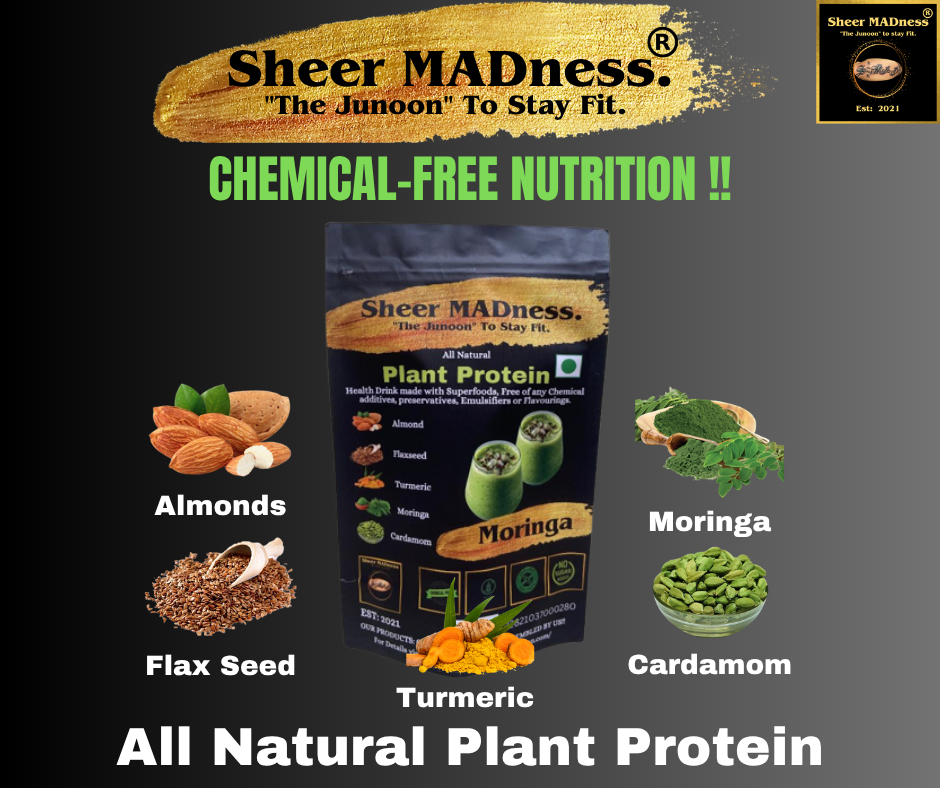
Sheer MADness Plant Protein Moringa addresses metabolic health through its five whole-food ingredients simultaneously — creating a more complete metabolic support system than any single ingredient.
Moringa provides chlorogenic acid and quercetin for AMPK activation and PGC-1α mitochondrial biogenesis. The same provides B vitamins for Krebs cycle efficiency. Moringa provides zinc, selenium, and iron for thyroid function, deiodinase activity, and haemoglobin oxygen delivery. Almonds provide magnesium for ATP synthesis efficiency. Flaxseed provides omega-3 for PPAR-α fat oxidation activation alongside lignans for Akkermansia muciniphila support. Turmeric curcumin provides complementary AMPK activation through NF-κB-AMPK crosstalk.
Zero synthetic chemical additive in any ingredient means no daily xenobiotic load on the liver that would divert metabolic resources from energy production to detoxification. No sucralose to disrupt the gut microbiome populations that influence metabolic health. No BHT or BHA to generate hepatic oxidative intermediates that would impair mitochondrial function.
Since 2021, every ingredient is on the front of every pack. Every metabolic support mechanism is traceable to a visible, named, whole-food ingredient.
Sheer MADness holds a registered trademark under the Government of India. The Natural Plant Protein formula is patent published under Patent No. 202331036733, searchable on Intellectual Property India. The brand holds a valid FSSAI licence and GSTIN registration.
| Metabolic Mechanism | Nutrient | Source | Pathway/Evidence |
|---|---|---|---|
| AMPK activation — fat and glucose oxidation upregulation | Chlorogenic acid | Moringa leaf | Phytomedicine — LKB1-AMPKα phosphorylation |
| AMPK activation — complementary pathway | Quercetin | Moringa leaf | Journal of Nutritional Biochemistry SIRT1-LKB1-AMPK |
| Mitochondrial biogenesis — BMR infrastructure | Quercetin → PGC-1α | Moringa leaf | IJSNEM quercetin mitochondrial density |
| Thyroid hormone synthesis (T4 production) | Zinc — 0.6mg/100g | Moringa leaf | Thyroid biosynthesis research |
| T4 to T3 conversion (active hormone) | Selenium — 0.9mcg/100g | Moringa leaf | DIO1 deiodinase activity |
| Krebs cycle efficiency (succinate dehydrogenase) | Riboflavin (B2) | Moringa leaf | FAD/FMN electron carrier |
| Amino acid metabolism and gluconeogenesis | Vitamin B6 | Moringa leaf | Transamination cofactor |
| Aerobic metabolic rate (oxygen delivery) | Iron — 28mg/100g | Moringa leaf | Haemoglobin → tissue O₂ delivery |
| Iron absorption enhancement | Vitamin C | Moringa leaf | Ferric → ferrous for DMT-1 |
| Thermic Effect of Food | Protein — 25-30g/100g | Moringa + almonds + flaxseed | 20-30% TEF vs 5-10% CHO |
| Fat oxidation efficiency | Omega-3 ALA | Flaxseed | PPAR-α activation → beta-oxidation |
| Gut microbiome metabolic axis | Lignans, quercetin | Flaxseed + moringa | Akkermansia muciniphila support |
| ATP synthesis efficiency | Magnesium | Almonds — 270mg/100g | ATPase cofactor for all ATP-dependent reactions |
| Hepatic lipogenesis inhibition | Chlorogenic acid → AMPK → SREBP | Moringa leaf | AMPK-SREBP-1c suppression |
Does moringa increase metabolism?
Moringa supports metabolic efficiency through AMPK activation, B vitamin Krebs cycle cofactors, thyroid hormone mineral support, quercetin-driven mitochondrial biogenesis, high-TEF protein contribution, and iron for oxygen delivery. These are meaningful metabolic support mechanisms. Moringa does not create a stimulant thermogenic effect like caffeine. Its metabolic benefits are through infrastructure support — improving how efficiently the body converts food to energy — rather than through acute calorie-burning acceleration.
What is AMPK and why does moringa’s activation of it matter for metabolism?
AMPK is the cellular energy sensor that activates when energy levels fall. When moringa’s chlorogenic acid and quercetin activate AMPK, cells shift from energy-storing to energy-producing mode — increasing fat oxidation, glucose uptake, and mitochondrial efficiency. This AMPK activation is the same pathway through which exercise and fasting improve metabolic efficiency — making moringa’s AMPK-activating compounds among the most metabolically significant dietary compounds available.
Moringa provides zinc for thyroid hormone synthesis and receptor function, and selenium for DIO1 deiodinase activity that converts inactive T4 to active T3. These are specific mineral cofactors in the thyroid hormone pathway. People with diagnosed thyroid conditions — hypothyroidism, hyperthyroidism, Hashimoto’s, Graves’ disease — must be under medical management. Dietary mineral support complements but does not replace thyroid medical management.
What is PGC-1α and how does moringa’s quercetin affect it?
PGC-1α is the master regulator of mitochondrial biogenesis — the creation of new mitochondria. More mitochondria mean more aerobic ATP production capacity and higher resting metabolic rate. Moringa’s quercetin activates PGC-1α through AMPK-SIRT1 pathway stimulation — increasing mitochondrial density in skeletal muscle over weeks of consistent daily consumption. This is a structural metabolic improvement rather than an acute stimulant effect.
How long does it take for moringa to affect metabolism?
AMPK activation is acute — occurring within hours of consumption. Mitochondrial biogenesis from PGC-1α activation requires weeks of consistent daily quercetin intake to measurably increase mitochondrial density. Iron status improvements and thyroid mineral status improvements require weeks to months of consistent daily intake. Moringa’s metabolic benefits are primarily cumulative — consistent daily use over months produces more meaningful metabolic infrastructure improvement than intermittent high doses.
Can moringa help with weight management?
Moringa supports weight management through several mechanisms: AMPK activation increases fat oxidation; quercetin mitochondrial biogenesis raises resting metabolic rate over time; high-TEF protein increases 24-hour energy expenditure; iron supports the aerobic metabolic rate that exercise requires for fat burning; gut microbiome support through lignans and quercetin improves metabolic insulin sensitivity. Moringa is a nutritional support tool — not a weight loss supplement. Exercise remains the most powerful metabolic intervention available.
Moringa and caffeine act through completely different metabolic mechanisms. Caffeine creates acute thermogenesis through adenosine receptor antagonism and sympathomimetic catecholamine release — producing a relatively immediate but habituating metabolic rate increase. Moringa creates sustainable metabolic infrastructure improvement through AMPK activation, mitochondrial biogenesis, thyroid support, and gut microbiome optimisation — producing gradual but non-habituating metabolic efficiency improvement. They are not comparable or competing — they work through different pathways over different timescales.
How should I use Sheer MADness Plant Protein Moringa for metabolic support?
Two to three tablespoons daily in warm milk or water — morning consumption before activity for maximum AMPK activation benefit during the day’s most active period. Consistent daily consumption is more important than timing for the thyroid mineral support, mitochondrial biogenesis, and gut microbiome benefits that require weeks to months to accumulate. Pair with regular exercise — the most powerful metabolic tool available — rather than treating moringa as a substitute for physical activity.

Moringa genuinely supports metabolic health — through mechanisms that are more substantial and more sustainable than the stimulant “metabolism boost” that most supplement marketing claims.
AMPK activation from chlorogenic acid and quercetin shifts cellular metabolism toward fat and glucose oxidation. PGC-1α mitochondrial biogenesis from quercetin progressively increases the metabolic machinery available for energy production. B vitamins support the Krebs cycle and electron transport chain efficiency that determines how much ATP the body extracts from food. Zinc and selenium support the thyroid hormone synthesis and activation that sets resting metabolic rate. Iron supports the oxygen delivery that limits aerobic metabolic capacity. Flaxseed omega-3 and lignans support the gut microbiome that increasingly is recognised as a metabolic organ in its own right.
These are not magic. They are the specific nutritional supports that a metabolically healthy body requires — and that the Indian urban diet frequently fails to provide adequately. Consistent daily moringa consumption addresses each of these specifically from one whole-food preparation.
Sheer MADness Plant Protein Moringa delivers all six metabolic support mechanisms from five whole-food ingredients — vacuum packed to preserve the quercetin and chlorogenic acid that drive AMPK and PGC-1α activation, zero chemical additive that would divert metabolic resources to detoxification, every ingredient visible on the front of every pack since 2021.
Since 2021, the metabolic infrastructure is in the ingredients.
I would also request you to please read my previous post: Benefits of Moringa Plant protein, the versatile Superfood powerhouse.
a) Everyone is an individual, so what suits me may not suit the next person.
b) If a person has a medical condition, a doctor’s advice and prescribed medication will only help. Thyroid conditions, metabolic syndrome, Type 2 diabetes, and obesity are medical conditions requiring medical management. Moringa is a nutritional food that supports metabolic health — it does not replace medical management.
c) While buying any protein powder from the market, read the labels carefully. Watch out for INS codes, Anti-caking agent, INS 551 (Silicon dioxide), BHA (Butylated hydroxyanisole), BHT (Butylated hydroxytoluene), and sucralose — which disrupts gut microbiome populations that specifically influence metabolic health.
If you are interested in buying chemical-free Natural Plant Protein Moringa, Health Drinks for Kids, or our delicious chemical-free Energy Bars, Protein Bars, and Millet Bars, shop at Sheer MADness.
You can also find us on Flipkart, Jio Mart, or ONDC in India.
d) Exercise is the key to fitness. Exercise and nutrition are two sides of the same coin and always go hand in hand.
e) Excess of anything is wrong, even the best whole-food superfood. Consume only recommended quantities.
f) Rome was not built in a day. Discipline and consistency are the only keys to lasting health.
g) It is not only exercise and protein that builds health. A healthy gut, macro and micronutrients, body type, rest, and lifestyle all matter. Of all these, exercise and nutrition are within our control. Focus on these two primary aspects first.
h) The most important part of fitness is that nothing is better than exercise and a balanced meal.
Article by Chef Ashutosh Awasthi
Disclaimer: Our products are a source of HEALTHY NUTRIENTS and are COMPLETELY FREE OF ANY ADDED CHEMICALS. We do not claim to cure any medical condition. The content provided is informational. We do not claim to diagnose or treat a person with any specific medical condition.