

Direct answer: Moringa does not contain collagen — and no plant food does, because collagen is synthesised by the human body, not obtained directly from food. However, moringa provides several specific nutrients that are essential for the body’s own collagen synthesis pathway. Vitamin C from moringa activates the prolyl hydroxylase and lysyl hydroxylase enzymes that are mandatory for collagen triple helix formation. Without sufficient Vitamin C, these enzymes cannot function and collagen synthesis fails entirely. Moringa also provides glycine and proline — the two amino acids that form the repeating tripeptide unit of collagen’s structure. Furthermore, moringa’s antioxidants — quercetin, kaempferol, and chlorogenic acid — specifically protect existing collagen fibres from the free radical and enzymatic degradation that causes the visible signs of collagen breakdown.
The honest, scientifically accurate answer is therefore: moringa specifically and meaningfully supports the body’s collagen production through multiple documented mechanisms — even though it does not itself contain collagen. This is genuinely more impressive than “moringa contains collagen” would be, because it explains how a plant food works with your own biology rather than replacing it.
I am Chef Ashutosh Awasthi, founder of Sheer MADness, professional chef, marathon runner, and author of Great Health Comes from Exercise & Nutrition. Let me explain the complete collagen synthesis science behind moringa — honestly and specifically.
Collagen is the most abundant protein in the human body — comprising approximately 30 percent of total body protein by weight. It is not simply a “skin protein.” Collagen is the primary structural protein of connective tissue throughout the body. Be it skin, tendons, ligaments, cartilage, bone matrix, blood vessel walls, corneas, and the gut lining. All depend on collagen for their structural integrity.
The human body contains at least 28 distinct collagen types, each with specific structural functions. Type I collagen is the most abundant — forming the fibrous structural framework of skin, bone, tendons, and ligaments. No. II collagen forms the cartilage matrix that cushions joints. Type III collagen provides the elasticity of blood vessel walls and hollow organs. Type IV collagen forms the sheet-like basement membranes of kidneys, lungs, and the blood-brain barrier.
Collagen production — called collagen biosynthesis — is a multi-step process that occurs primarily in specialised cells called fibroblasts. The process requires several essential nutrients at each step. When any of these nutrients is deficient, collagen synthesis is impaired. And the consequences appear across all the systems that collagen supports, not just in skin.
Collagen production declines by approximately 1 percent per year after the mid-twenties. By age 40, most adults have lost approximately 15 percent of their peak collagen capacity. By age 60, the cumulative loss can reach 30 percent or more. This decline drives the visible signs of ageing. Skin wrinkles, joint stiffness, reduced wound healing, thinning hair and nails — and the less visible consequences of reduced connective tissue integrity throughout the body.
Understanding collagen biosynthesis explains why specific nutritional support — through moringa and its companion ingredients in Sheer MADness Plant Protein Moringa — matters for collagen health.
The biosynthesis of collagen in fibroblasts proceeds through a specific enzymatic sequence. Understanding this sequence reveals exactly where moringa’s nutritional contributions are most critical.
Collagen is composed of a repeating tripeptide sequence — glycine-X-Y — where X is frequently proline and Y is frequently hydroxyproline. Glycine must occupy every third position in the collagen chain. Because only glycine is small enough to fit inside the triple helix structure that gives collagen its characteristic strength. Proline provides the rigidity and kinks that prevent collagen chains from adopting other conformations.
This means the collagen molecule requires glycine and proline in very high quantities relative to other proteins. Approximately one-third of collagen’s amino acid composition is glycine. Proline and hydroxyproline together constitute approximately 22 percent.
Moringa leaf protein provides both glycine and proline as part of its complete amino acid profile. Furthermore, moringa’s complete protein provides the full range of amino acids required for the non-collagen proteins that fibroblasts synthesise alongside collagen — the growth factors, extracellular matrix proteins, and signalling molecules that regulate collagen production.
This is the most important step in the collagen synthesis pathway. And the step where moringa’s Vitamin C content is most directly relevant.
After the procollagen chain is assembled from amino acids. Specific proline residues must be converted to hydroxyproline through a reaction called hydroxylation. This reaction is catalysed by two enzymes: prolyl hydroxylase and lysyl hydroxylase. Both enzymes are iron-containing dioxygenases that require molecular oxygen, alpha-ketoglutarate, iron, and Vitamin C (ascorbate) as mandatory cofactors.
Vitamin C functions as an electron donor in this hydroxylation reaction. It reduces the iron in the enzyme’s active site to allow the next round of catalysis. Without Vitamin C, prolyl and lysyl hydroxylases lose their catalytic ability after a single reaction cycle and cannot be reactivated. Collagen synthesis stops.
This is why Vitamin C deficiency causes scurvy. The historical disease characterised by collapsing connective tissue, bleeding gums, and impaired wound healing. Scurvy is collagen synthesis failure from Vitamin C deficiency. Its symptoms are the direct consequences of inadequate hydroxyproline formation in collagen’s triple helix.
Moringa leaf powder provides Vitamin C at approximately 17 times the concentration in oranges gram for gram — making it one of the most potent plant food sources of this collagen-essential vitamin available. A daily serving of Sheer MADness Plant Protein Moringa delivers a meaningful Vitamin C contribution specifically through the prolyl and lysyl hydroxylase activation that collagen synthesis requires.
After hydroxylation, three procollagen chains twist around each other to form the triple helix — the characteristic right-handed triple-stranded rope structure that gives collagen its extraordinary tensile strength. The hydroxyproline residues formed in Step 2 are critical for triple helix stability — they form hydrogen bonds that hold the three chains together.
Without adequate hydroxyproline — which requires adequate Vitamin C in Step 2 — triple helix formation is impaired and the collagen that forms is structurally weaker than normal collagen.
After the triple helix is secreted from the fibroblast into the extracellular matrix, collagen fibres are cross-linked by lysyl oxidase — a copper-dependent enzyme that converts lysine residues into reactive aldehydes that spontaneously form covalent cross-links between adjacent collagen molecules.
These cross-links are what give collagen its extraordinary tensile strength. Without cross-linking, collagen fibres are weak and cannot withstand the mechanical forces that tendons, ligaments, and bone matrix must bear.
Moringa provides both lysine — the amino acid substrate for lysyl oxidase — and meaningful copper from its mineral content. Both directly support the cross-linking step that makes collagen structurally functional.
This is the second major mechanism through which moringa supports collagen health — and it is as important as collagen synthesis for anyone over 35 whose collagen loss rate already exceeds synthesis rate.
Collagen degradation is driven by two primary mechanisms. Matrix metalloproteinases (MMPs) — enzymes that break down collagen — are upregulated by oxidative stress, UV radiation, and inflammatory cytokines. Free radicals — particularly the superoxide, hydrogen peroxide, and hydroxyl radicals generated by UV radiation and chronic inflammation — directly attack collagen molecules, breaking peptide bonds and fragmenting collagen fibres.
The result of both mechanisms is the same — net collagen loss that appears as skin wrinkling, joint cartilage thinning, and reduced tissue tensile strength.
Quercetin — at approximately 50 to 60 milligrams per 100 grams of moringa leaf powder — is one of the most potent flavonoid antioxidants identified in nutritional science. Research published in the International Journal of Molecular Sciences confirmed that quercetin specifically inhibits MMP-1 and MMP-3 — the primary collagen-degrading matrix metalloproteinases — through NF-κB pathway inhibition. This is not a generic “antioxidant reduces ageing” claim. It is a specific documented mechanism: quercetin reduces the transcription of the specific enzymes that break collagen down.
Kaempferol — another flavonoid present in moringa alongside quercetin — specifically inhibits UV-induced MMP upregulation in skin fibroblasts. UV radiation is the primary external driver of skin collagen loss — causing an estimated 80 percent of visible facial ageing through MMP activation and free radical generation. Kaempferol provides specific protection against this UV-mediated collagen degradation mechanism.
Chlorogenic acid in moringa provides complementary free radical scavenging that reduces the direct free radical attack on collagen peptide bonds — specifically the hydroxyl radical attack that cleaves collagen chains most efficiently.
Together, quercetin, kaempferol, and chlorogenic acid in moringa create a triple-antioxidant collagen protection system that specifically targets the three primary collagen degradation mechanisms — MMP enzymatic breakdown, UV-induced MMP upregulation, and direct free radical attack.
This context is almost entirely absent from available collagen content for Indian audiences — but it is specifically relevant.
India’s geographic latitude means significantly higher year-round UV Index than most Western countries where collagen supplement research originates. The UV Index in most Indian cities ranges from 8 to 12 during peak hours from March through October — well within the “very high” to “extreme” categories of UV exposure. This is substantially higher than the UV environments in which most European and North American collagen research was conducted.
This elevated UV exposure means Indian adults face a higher-than-average environmental driver of MMP upregulation and free radical collagen degradation. Indian skin — which has higher melanin content than European skin, providing some UV protection — nonetheless experiences significant UV-driven collagen loss over decades, which is why South Asian communities show early signs of facial volume loss and textural changes from their thirties onward.
Furthermore, India’s urban air pollution — PM2.5 levels in Delhi, Mumbai, Kolkata, and other major cities routinely exceed WHO safe limits — drives chronic oxidative stress that activates MMPs and degrades collagen through the same mechanisms as UV radiation. Indian urban adults face a combined UV and pollution oxidative burden on their collagen that is among the highest in the world.
Moringa’s antioxidant-rich whole-leaf powder is specifically relevant to this Indian environmental context. Daily moringa consumption provides the quercetin, kaempferol, and chlorogenic acid that specifically inhibit the MMP and free radical collagen degradation pathways most relevant to India’s UV and pollution exposures.
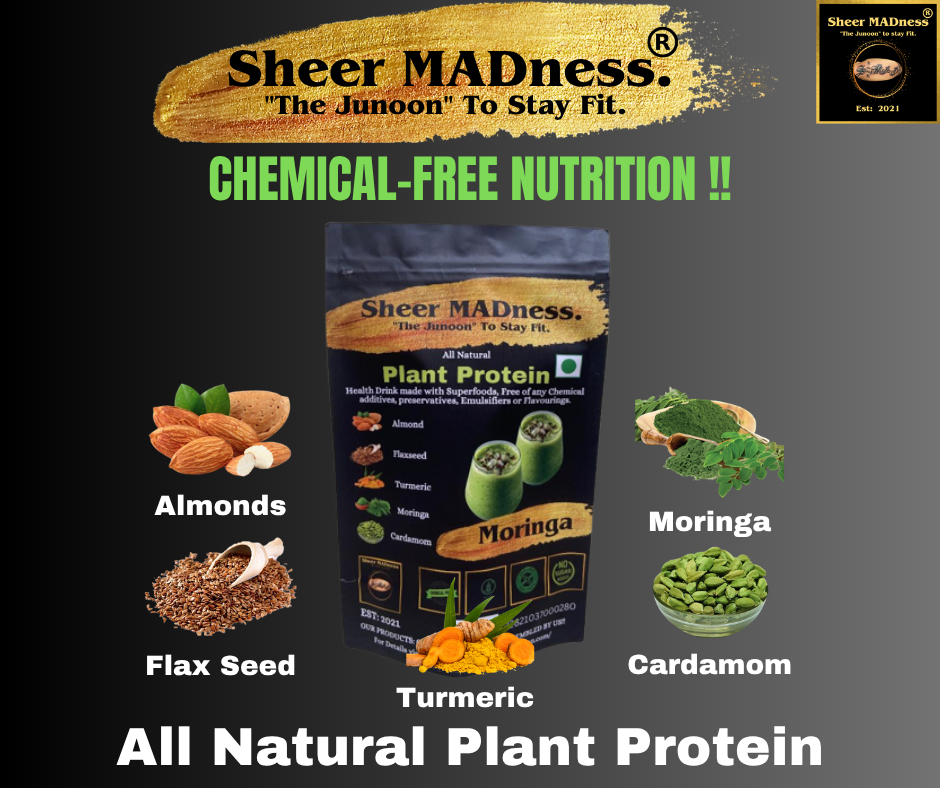
Almonds in Sheer MADness Plant Protein Moringa contribute a specific collagen protection mechanism that moringa alone does not fully provide.
Vitamin E — at 12.5 milligrams per 100 grams of almonds — is a fat-soluble antioxidant that specifically protects lipid membranes of skin fibroblasts from oxidative damage. Healthy fibroblasts are the cells that synthesise collagen. Oxidative damage to fibroblast membranes reduces their collagen synthesis capacity — even when all the required amino acids and cofactors are available. Protecting fibroblasts through adequate Vitamin E intake specifically preserves the collagen-synthesising cells’ functional capacity.
Furthermore, Vitamin E specifically quenches singlet oxygen — the excited oxygen species generated by UV radiation that initiates the radical chain reactions leading to MMP activation and collagen fragmentation. Vitamin E’s singlet oxygen quenching occurs at the skin surface and in the lipid layers of the epidermis — providing protection at the point of UV impact before radical cascades develop.
The combination of moringa’s quercetin and kaempferol (flavonoid antioxidants, water-soluble) with almond’s Vitamin E (fat-soluble membrane antioxidant) provides complementary antioxidant protection across both the aqueous and lipid phases of skin tissue — a more complete collagen-protective antioxidant spectrum than either ingredient alone.
Chronic inflammation is one of the most potent drivers of collagen degradation — through inflammatory cytokine-driven MMP upregulation and through the direct collagen-damaging effects of neutrophil-generated reactive oxygen species.
Flaxseed’s ALA omega-3 in Sheer MADness Plant Protein Moringa reduces the inflammatory cytokine levels — specifically TNF-α and IL-1β — that upregulate MMP gene expression. This anti-inflammatory mechanism reduces the biochemical trigger for collagen degradation at the cellular signalling level.
Research published in the Journal of Clinical and Aesthetic Dermatology confirmed that dietary omega-3 supplementation reduced inflammatory skin markers and improved skin elasticity — specifically through reduced MMP activity and reduced inflammatory collagen degradation. For women managing inflammatory skin conditions, for post-menopausal women with accelerated inflammatory collagen loss, and for anyone in high-pollution or high-UV environments where chronic skin inflammation is elevated, flaxseed omega-3 provides specific anti-inflammatory collagen preservation.
This is one of the most interesting and most underutilised aspects of Sheer MADness Plant Protein Moringa for collagen health.
Curcumin from turmeric specifically stimulates collagen synthesis through TGF-β (transforming growth factor-beta) pathway activation in fibroblasts. TGF-β is one of the primary intracellular signalling pathways that upregulates procollagen gene expression — increasing the fibroblast’s production of type I and type III collagen.
Research published in the Journal of Investigative Dermatology found that curcumin increased TGF-β1-stimulated collagen production in human skin fibroblasts through Smad signalling pathway activation. This is a direct collagen production-stimulating effect — not simply antioxidant protection of existing collagen.
Furthermore, curcumin specifically inhibits collagenase — one of the primary collagen-degrading enzymes — reducing collagen breakdown alongside stimulating collagen synthesis. This dual action — more production and less degradation — creates the most favourable net collagen balance of any single food compound identified in this research domain.
The Doodh Haldi tradition — turmeric milk — that Indian families have given to recovering family members for centuries was a culturally transmitted application of this TGF-β collagen synthesis stimulation. Indian grandmothers who gave turmeric milk after injuries, surgeries, and childbirth were applying food-based collagen production support long before the molecular biology was understood. Sheer MADness Plant Protein Moringa delivers this same turmeric curcumin daily — combined with moringa’s Vitamin C for prolyl hydroxylase activation and almond Vitamin E for fibroblast protection — creating the most complete plant-based collagen support system available in Indian nutrition.
Sheer MADness Plant Protein Moringa addresses collagen health through five simultaneous mechanisms — one from each primary ingredient in the blend.
Moringa Vitamin C activates prolyl hydroxylase and lysyl hydroxylase — the mandatory enzymes for hydroxyproline formation and triple helix stability. Without this step, collagen synthesis cannot proceed regardless of amino acid availability.
Moringa glycine and proline provide the specific amino acid building blocks that collagen’s repeating tripeptide structure requires in high proportion. Moringa’s complete amino acid profile ensures that the full range of collagen and extracellular matrix proteins can be synthesised.
Moringa quercetin and kaempferol inhibit MMP-1 and MMP-3 collagen-degrading enzymes through NF-κB pathway inhibition, and protect existing collagen from UV-induced MMP upregulation and free radical fragmentation.
Almond Vitamin E protects fibroblast membranes from oxidative damage — preserving the collagen-synthesising cells’ functional capacity — and quenches singlet oxygen at the site of UV impact.
Flaxseed omega-3 reduces inflammatory cytokine-driven MMP upregulation — the signalling-level prevention of collagen breakdown triggers.
Turmeric curcumin stimulates TGF-β pathway collagen synthesis in fibroblasts and inhibits collagenase — the direct collagen production enhancement mechanism.
No commercial collagen supplement — regardless of its price or marketing — addresses all six of these mechanisms simultaneously from whole-food sources. Most commercial collagen supplements provide hydrolysed collagen peptides — digested fragments that may contribute amino acids to the collagen synthesis pathway but provide none of the Vitamin C, antioxidants, anti-inflammatory compounds, or TGF-β stimulation that determine whether those amino acids are actually incorporated into new collagen.
Since 2021, every ingredient in Sheer MADness Plant Protein Moringa — moringa leaf, almonds, flaxseed, turmeric, cardamom — is displayed with its own image on the front of every pack. The mechanism behind each ingredient’s collagen support is traceable to the specific nutrient it provides. No INS code. No chemical. Every collagen-supporting compound comes from a named, visible whole food.
Women in their thirties and beyond face the combined challenge of age-related fibroblast slowdown and elevated UV-driven collagen degradation at Indian latitudes. The Vitamin C, quercetin, and curcumin in Sheer MADness Plant Protein Moringa address both the synthesis decline and the degradation acceleration simultaneously.
Urban adults in high-pollution cities — Delhi, Mumbai, Kolkata, Bangalore — face chronic oxidative stress from PM2.5 and other pollutants that activates MMPs and drives inflammatory collagen degradation. Moringa’s antioxidant triple — quercetin, kaempferol, chlorogenic acid — alongside flaxseed omega-3’s anti-inflammatory action specifically addresses pollution-driven collagen loss.
Athletes and active adults experience mechanical and oxidative stress on collagen in tendons, ligaments, and cartilage from training loads. Moringa’s amino acids provide the collagen precursor substrate. Turmeric curcumin stimulates post-exercise collagen synthesis in damaged connective tissue. Almond Vitamin E protects the collagen-rich structures from exercise-generated oxidative damage.
Vegetarians seeking plant-based collagen support — for whom commercial animal-derived collagen supplements are inappropriate — find in Sheer MADness Plant Protein Moringa the only comprehensive plant-based collagen synthesis support available in India that combines Vitamin C activation, amino acid provision, antioxidant protection, anti-inflammatory signalling, and curcumin TGF-β stimulation from whole-food plant sources.
Post-menopausal women — in whom oestrogen decline specifically reduces collagen synthesis rates and accelerates collagen degradation — benefit particularly from the curcumin TGF-β stimulation that provides a natural collagen synthesis signal independent of oestrogen pathways.
Sheer MADness holds a registered trademark under the Government of India. The Natural Plant Protein formula is patent published under Patent No. 202331036733, searchable on Intellectual Property India. The brand holds a valid FSSAI licence and GSTIN registration.
| Collagen Mechanism | Nutrient Required | Source in Sheer MADness |
|---|---|---|
| Prolyl hydroxylase activation (triple helix formation) | Vitamin C | Moringa leaf — 17x oranges gram for gram |
| Lysyl hydroxylase activation (cross-link preparation) | Vitamin C | Moringa leaf |
| Collagen triple helix amino acid provision | Glycine and proline | Moringa complete plant protein |
| Cross-link formation substrate | Lysine | Moringa complete plant protein |
| MMP-1 and MMP-3 collagen degradation enzyme inhibition | Quercetin | Moringa leaf — 50-60mg/100g |
| UV-induced MMP upregulation protection | Kaempferol | Moringa leaf |
| Free radical collagen chain fragmentation protection | Chlorogenic acid, quercetin | Moringa leaf |
| Fibroblast membrane oxidative protection | Vitamin E | Almonds — 12.5mg/100g natural mixed tocopherols |
| Inflammatory cytokine MMP upregulation reduction | Omega-3 ALA | Flaxseed — richest plant source |
| TGF-β pathway collagen synthesis stimulation | Curcumin | Turmeric |
| Collagenase enzyme inhibition | Curcumin | Turmeric |
Does moringa contain collagen?
No — and no plant food contains collagen, because collagen is synthesised by human fibroblast cells, not absorbed from food. Moringa provides the specific nutrients the body requires to synthesise its own collagen — Vitamin C for enzyme activation, glycine and proline as structural building blocks, and antioxidants that protect collagen from degradation. These indirect contributions to collagen health are as important as any direct collagen intake.
How does moringa support collagen production?
Moringa’s Vitamin C activates prolyl hydroxylase and lysyl hydroxylase — the enzymes that convert proline to hydroxyproline, which is mandatory for collagen triple helix stability. Without sufficient Vitamin C, collagen synthesis cannot complete. Moringa’s glycine and proline provide the primary structural amino acids of the collagen repeating unit. Moringa’s quercetin and kaempferol inhibit the collagen-degrading enzymes (MMPs) that cause collagen loss.
For plant-based eaters, moringa is the most appropriate choice — because commercial collagen supplements are derived from animal sources (bovine, porcine, or marine). Furthermore, moringa addresses both collagen synthesis (through Vitamin C activation and amino acid provision) and collagen protection (through antioxidant MMP inhibition) — while commercial collagen supplements primarily provide hydrolysed peptides that contribute amino acids but do not address the antioxidant and anti-inflammatory mechanisms of collagen protection.
How much Vitamin C does moringa provide?
Moringa leaf powder provides Vitamin C at approximately 17 times the concentration found in oranges gram for gram — making it one of the most potent plant-food Vitamin C sources available. This Vitamin C is specifically relevant for collagen synthesis as the mandatory cofactor for prolyl hydroxylase and lysyl hydroxylase enzyme activity.
Does the turmeric in Sheer MADness Plant Protein Moringa help with collagen?
Yes — specifically through TGF-β pathway activation. Curcumin from turmeric stimulates fibroblasts to upregulate type I and type III collagen gene expression through Smad signalling downstream of TGF-β receptor activation. This is a direct collagen synthesis-stimulating mechanism. Additionally, curcumin inhibits collagenase — reducing collagen breakdown. Together, these two mechanisms create a more favourable net collagen balance.
Flaxseed’s ALA omega-3 reduces the inflammatory cytokines — specifically TNF-α and IL-1β — that upregulate MMP collagen-degrading enzyme gene expression. This anti-inflammatory mechanism reduces the cellular signalling trigger for collagen degradation. Research in dermatology confirms dietary omega-3 supplementation reduces MMP activity and improves skin elasticity.
Why is Vitamin E from almonds relevant for collagen?
Vitamin E protects fibroblast cell membranes from oxidative damage — preserving the cells responsible for collagen synthesis. It also quenches singlet oxygen generated by UV radiation at the skin surface, preventing the radical cascade that activates MMPs and fragments collagen fibres. Healthy, protected fibroblasts with intact membranes synthesise collagen more efficiently than oxidatively damaged ones.
Is Sheer MADness Plant Protein Moringa suitable for vegans?
Yes — completely. Moringa leaf powder, almonds, flaxseed, turmeric, and cardamom are all entirely plant-based with no animal-derived ingredient of any kind. Suitable for vegans, vegetarians, and dairy-free eaters who want plant-based collagen synthesis support without commercial animal-derived collagen supplements.
How should I take Sheer MADness Plant Protein Moringa for collagen support?
Daily consistency matters more than any single serving. Two to three tablespoons in warm milk or plant milk daily — the traditional Doodh Badam Haldi Moringa preparation — delivers Vitamin C, glycine, proline, quercetin, kaempferol, Vitamin E, omega-3, and curcumin consistently to the body’s collagen synthesis and protection systems. Consistent daily intake over weeks supports progressive collagen synthesis improvement as the enzymatic systems receive consistent nutritional support.

Moringa supports collagen health through mechanisms that are more specific, more mechanistically documented, and more broadly protective than the marketing of most collagen supplements acknowledges.
It provides Vitamin C at exceptional concentrations — directly enabling the prolyl and lysyl hydroxylase enzymes that are mandatory for collagen triple helix formation. This provides glycine and proline — the structural amino acids that collagen’s distinctive triple helix requires in high proportion. It provides quercetin and kaempferol — flavonoids that specifically inhibit the collagen-degrading MMPs triggered by UV radiation, pollution, and inflammation at Indian environmental exposure levels.
Sheer MADness Plant Protein Moringa amplifies these mechanisms by combining moringa with almond Vitamin E for fibroblast protection, flaxseed omega-3 for anti-inflammatory MMP suppression, and turmeric curcumin for TGF-β pathway collagen synthesis stimulation and collagenase inhibition. Eleven mechanisms from five whole-food ingredients. No chemical additive. Vacuum packed in Kolkata. Every ingredient on the front of every pack since 2021.
The Doodh Haldi that Indian families gave for recovery. The Doodh Badam that Indian families gave for strength. The moringa that Indian communities have cooked into sambar for centuries. The science has caught up with what Indian food culture always knew. This is what collagen support looks like when a chef who understands nourishment formulates it — not a supplement laboratory chasing collagen milligram counts.
I would also request you to please read my previous post: Benefits of Moringa Plant protein, the versatile Superfood powerhouse.
a) Everyone is an individual, so what suits me may not suit the next person.
b) If a person has a medical condition, a doctor’s advice and prescribed medication will only help.
c) While buying any protein powder from the market, read the labels carefully. Watch out for INS codes, Anti-caking agent, INS 551 (Silicon dioxide), BHA (Butylated hydroxyanisole), BHT (Butylated hydroxytoluene), and other lab-made chemicals that quietly appear in most commercial supplements.
If you are interested in buying chemical-free Natural Plant Protein Moringa, Health Drinks for Kids, or our delicious chemical-free Energy Bars, Protein Bars, and Millet Bars, shop at Sheer MADness.
You can also find us on Flipkart, Jio Mart, or ONDC in India.
d) Exercise is the key to fitness. Exercise and nutrition are two sides of the same coin and always go hand in hand.
e) Excess of anything is wrong, even the best whole-food superfood. Consume only recommended quantities.
f) Rome was not built in a day. Discipline and consistency are the only keys to lasting health.
g) It is not only exercise and protein that builds health. A healthy gut, macro and micronutrients, body type, rest, and lifestyle all matter. Of all these, exercise and nutrition are within our control. Focus on these two primary aspects first.
h) The most important part of fitness is that nothing is better than exercise and a balanced meal.
Article by Chef Ashutosh Awasthi
Disclaimer: Our products are a source of HEALTHY NUTRIENTS and are COMPLETELY FREE OF ANY ADDED CHEMICALS. We do not claim to cure any medical condition. The content provided is informational. We do not claim to diagnose or treat a person with any specific medical condition.