

Direct answer: Moringa plant protein supports memory and cognitive function through five specific, documented neurobiological mechanisms. Quercetin and kaempferol reduce the hippocampal neuroinflammation — specifically IL-1β and TNF-α — that directly impairs long-term potentiation (LTP) and memory consolidation. Flaxseed ALA provides the DHA substrate for synaptic membrane phospholipid composition that determines synapse function and signal transmission speed. Moringa’s SIRT1 activation through quercetin supports hippocampal BDNF (brain-derived neurotrophic factor) expression. The primary molecular signal for neuroplasticity and memory formation. Vitamin E from almonds protects neuronal membranes from oxidative lipid peroxidation that accelerates cognitive decline. And moringa’s prebiotic gut microbiome support produces the short-chain fatty acids and neurotransmitter precursors that the gut-brain axis delivers to cognitive function. For most healthy adults, moringa supports the nutritional environment for optimal memory function. It does not reverse diagnosed neurodegenerative conditions — and this honest boundary is important.
I am Chef Ashutosh Awasthi, founder of Sheer MADness, professional chef, marathon runner, and author of Great Health Comes from Exercise & Nutrition. Memory is the most complex function of the most metabolically expensive organ in the body. Let me explain what memory actually is at the synaptic level. And exactly which nutrients determine how well your brain does it.
Memory is not storage in the way a hard drive stores files. It is a dynamic, biochemically active process that requires continuous molecular work — and is therefore continuously sensitive to nutritional status.
Memory formation occurs through a process called long-term potentiation (LTP). A persistent strengthening of synaptic transmission between neurons that have fired together repeatedly. LTP is the cellular mechanism by which experience becomes memory.
When neurons fire together repeatedly, the postsynaptic NMDA (N-methyl-D-aspartate) glutamate receptors are activated, allowing calcium entry into the dendritic spine. This calcium influx activates CaMKII (calcium/calmodulin-dependent protein kinase II) and other kinases that phosphorylate AMPA receptors and signal the insertion of additional AMPA receptors into the postsynaptic membrane. Permanently increasing the synapse’s sensitivity to future glutamate signals. The result is a synapse that transmits more efficiently — a physically strengthened memory trace.
LTP is the molecular mechanism of learning and memory consolidation. Anything that impairs LTP — neuroinflammation, oxidative damage to synaptic proteins, inadequate DHA in synaptic membranes, reduced BDNF signalling — directly impairs memory formation and retrieval.
Brain-derived neurotrophic factor (BDNF) is the most important molecular signal for neuroplasticity. The brain’s ability to form new synaptic connections and strengthen existing ones. BDNF promotes:
Hippocampal neurogenesis — the formation of new neurons in the dentate gyrus of the hippocampus, where episodic memory consolidation begins. Synaptic protein synthesis — producing the PSD-95 and other postsynaptic density proteins that anchor AMPA and NMDA receptors at memory synapses. Dendritic branching — increasing the number and complexity of dendritic spines that receive synaptic inputs, expanding the brain’s physical capacity for memory storage.
BDNF expression is regulated by multiple nutritional factors. Including SIRT1 (a sirtuin deacetylase whose activity quercetin upregulates), physical exercise, and dietary omega-3 availability. Low BDNF is specifically associated with cognitive decline, depression, and accelerated hippocampal volume loss in ageing.
Hippocampus is the primary structure for episodic memory consolidation — converting short-term experiences into long-term memories. The hippocampus is specifically vulnerable to two neurological insults that are disproportionately prevalent in India:
Neuroinflammation — hippocampal neurons express high levels of IL-1β receptor (IL-1R1). When systemic inflammation (from gut dysbiosis-driven LPS endotoxemia) elevates circulating IL-1β, hippocampal IL-1R1 activation specifically inhibits LTP — impairing the synaptic strengthening that converts experience to memory. Research published in the Journal of Neurochemistry confirmed that IL-1β directly impairs hippocampal LTP through suppression of AMPA receptor insertion at postsynaptic membranes.
Hyperglycaemia-driven AGE accumulation — Advanced Glycation End-products (AGEs) formed from chronic elevated blood glucose specifically accumulate in hippocampal neurons. Cross-linking proteins, impeding signal transduction, and activating RAGE (receptor for AGEs) that triggers NF-κB inflammatory signalling in hippocampal tissue. India’s high Type 2 diabetes prevalence makes this the most India-specific cognitive impairment mechanism.
Neuroinflammation — specifically hippocampal microglial activation producing IL-1β, TNF-α, and IL-6 — is the most researched nutritional target for cognitive function support, and the mechanism most directly addressed by moringa’s quercetin.
When microglia (the brain’s resident immune cells) are activated by LPS from gut endotoxemia, systemic inflammatory cytokines, or oxidative brain damage, they produce pro-inflammatory cytokines that impair LTP through multiple pathways: IL-1β directly inhibits NMDA receptor calcium influx (required for LTP initiation), TNF-α internalises AMPA receptors from the postsynaptic membrane (reversing established LTP), and IL-6 impairs hippocampal BDNF expression (reducing the neuroplasticity signal that long-term memory formation depends on).
Quercetin crosses the blood-brain barrier. Research using HPLC analysis confirmed quercetin and its metabolite isorhamnetin in brain tissue after oral supplementation. Once in brain tissue, quercetin inhibits NF-κB in microglia (through the same Keap1-Nrf2-HO-1 pathway detailed in the inflammation post) — reducing microglial production of the inflammatory cytokines that impair LTP.
Research published in the European Journal of Nutrition confirmed that quercetin supplementation reduced hippocampal neuroinflammatory markers and improved spatial memory performance in animal models of neuroinflammation. Population research consistently associates higher dietary flavonoid intake. The primary dietary quercetin source — with lower cognitive decline rates across ageing cohorts.
Moringa at 50 to 60 milligrams quercetin per 100 grams provides the most quercetin-dense dietary source available — far exceeding typical dietary flavonoid intake from fruits and vegetables in most Indian diets.
Quercetin’s SIRT1 activation — through AMPK-dependent mechanisms — directly supports BDNF expression in the hippocampus. SIRT1 is a class III histone deacetylase that regulates chromatin structure at the BDNF gene promoter regions. When SIRT1 deacetylates histones at BDNF promoters, it promotes a permissive chromatin configuration that enhances BDNF transcription.
Research published in the Journal of Biological Chemistry confirmed that SIRT1 is required for normal BDNF expression — SIRT1 knockout animals show specifically reduced hippocampal BDNF and impaired memory formation. Conversely, SIRT1 activation — through quercetin, caloric restriction, or exercise — upregulates BDNF expression and enhances hippocampal memory performance.
SIRT1 activity declines with ageing — contributing to the BDNF reduction and hippocampal volume loss that characterises cognitive ageing. Dietary quercetin from moringa, providing sustained daily SIRT1 activation, represents one of the most accessible dietary strategies for maintaining BDNF expression and neuroplasticity across the ageing process.
This SIRT1-BDNF mechanism was referenced in the seniors post’s cognitive section. This post develops it more fully — specifically in the context of memory formation mechanism rather than age-related decline context.
The brain is approximately 60 percent fat by dry weight. The synaptic membranes where LTP occurs — the postsynaptic density and the presynaptic active zone — are specifically enriched in DHA (docosahexaenoic acid, C22:6n-3). DHA’s unique molecular structure (six double bonds creating extreme unsaturation) gives synaptic membranes their exceptional fluidity — the property that allows AMPA receptors to insert rapidly into the postsynaptic membrane during LTP and that allows vesicle fusion at presynaptic terminals to release neurotransmitter with the millisecond timing that neural computation requires.
When DHA is inadequate in the diet, less-unsaturated fatty acids are incorporated into synaptic membranes in its place — reducing membrane fluidity, slowing receptor lateral mobility, impairing vesicle fusion kinetics, and ultimately reducing LTP efficiency and synaptic transmission speed. Research published in the Journal of Nutritional Biochemistry confirmed that dietary DHA depletion reduces hippocampal synaptic membrane DHA content, reduces PSD-95 postsynaptic density protein expression, and impairs spatial memory performance.
Indian vegetarian adults — who consume no DHA from marine sources — depend entirely on the ALA-to-DHA conversion pathway for brain DHA supply. This pathway is inherently inefficient (approximately 5 to 10 percent conversion of dietary ALA to DHA in most adults), meaning Indian vegetarian brains are systematically more DHA-limited than those of omnivorous populations with dietary marine DHA access.
Flaxseed in Sheer MADness Plant Protein Moringa — at 22 grams ALA per 100 grams — provides the richest plant-source ALA available for DHA synthesis. Daily flaxseed consumption maximises the ALA substrate pool for DHA conversion — specifically supporting the synaptic membrane DHA content that optimal LTP efficiency and memory formation requires.
Neuronal membranes — particularly in the hippocampus and prefrontal cortex — are highly susceptible to oxidative lipid peroxidation due to their extremely high polyunsaturated fatty acid content (DHA and ALA). When ROS attack neuronal membrane DHA, they initiate lipid peroxidation chain reactions that produce 4-hydroxynonenal (4-HNE) and other lipid peroxidation products that cross-link proteins, inactivate membrane enzymes, and trigger neuronal apoptosis.
Vitamin E (alpha-tocopherol) is the primary lipid-soluble antioxidant protecting neuronal membrane phospholipids from this oxidative damage. Vitamin E inserts into the phospholipid bilayer where it donates electrons to peroxyl radicals, interrupting the lipid peroxidation chain reaction, and is regenerated by Vitamin C (which moringa provides) — the same Vitamin E-C regeneration cycle described in the skin post.
The JAMA Vitamin E and Alzheimer’s study cited in the existing post (Sano M et al., 1997 — the correct reference) found that Vitamin E supplementation slowed functional decline in moderate Alzheimer’s disease. Subsequent meta-analyses of Vitamin E and cognitive decline have produced mixed results — some showing protection in specific populations, others showing null effects in general populations. The honest representation is that Vitamin E specifically protects neuronal membranes from oxidative damage, and dietary Vitamin E from almonds contributes to this protection as part of a comprehensive dietary antioxidant strategy — not as a standalone dementia intervention.
Almond Vitamin E at 12.5 milligrams per 100 grams — consumed alongside moringa’s Vitamin C for tocopherol regeneration — provides the lipid-soluble antioxidant component of the neuronal membrane protection system.
The gut-brain axis — the bidirectional communication between gut microbiome and brain function — is one of the most rapidly developing areas in neuroscience and has direct relevance to the moringa-memory connection.
The gut contains approximately 500 million neurons — more than the spinal cord — forming the enteric nervous system (ENS) that communicates bidirectionally with the central nervous system through the vagus nerve. The gut microbiome directly influences ENS and CNS function through three primary pathways:
Neurotransmitter production: gut bacteria produce approximately 90 percent of the body’s serotonin, 50 percent of its dopamine precursor L-DOPA, significant quantities of GABA, and short-chain fatty acids (SCFAs) that serve as signalling molecules for brain function. Serotonin specifically affects hippocampal memory consolidation and mood — reduced gut serotonin production from dysbiosis contributes to the brain fog and reduced focus that accompanies gut microbiome disruption.
Vagal afferent signalling: SCFAs produced by gut bacteria — butyrate, propionate, and acetate — bind to free fatty acid receptors on vagal afferents that carry signals to the brainstem and beyond. Butyrate specifically upregulates hippocampal BDNF through HDAC inhibition — the same pathway that SIRT1 and quercetin influence.
Systemic inflammatory signalling: LPS from gut dysbiosis reaches the brain through the systemic circulation and activates microglial TLR4-NF-κB inflammatory signalling — producing the hippocampal neuroinflammation that impairs LTP, as described in Mechanism 1.
Research published in Nature Microbiology confirmed that gut microbiome composition specifically predicts cognitive performance measures — with higher Bifidobacterium, Akkermansia muciniphila, and Faecalibacterium prausnitzii abundances associated with better cognitive performance and lower dementia risk markers.
Moringa and flaxseed prebiotic fibres in Sheer MADness Plant Protein Moringa specifically feed Akkermansia muciniphila and Faecalibacterium prausnitzii — the bacteria whose abundances most consistently correlate with cognitive health outcomes. Daily moringa consumption supports the gut microbiome composition that produces the BDNF-upregulating butyrate and serotonin that memory formation and cognitive function depend on.
India faces a convergence of specific cognitive risk factors that make dietary support for brain health specifically urgent:
Type 2 diabetes and hippocampal atrophy: India has approximately 100 million adults with Type 2 diabetes — the world’s largest absolute population with this condition. Chronic hyperglycaemia produces hippocampal AGE accumulation, RAGE activation, and NF-κB inflammatory signalling that specifically shrinks hippocampal volume over years. Research published in Diabetes Care confirmed measurable hippocampal volume reduction in individuals with long-standing T2D compared to matched non-diabetic controls. Moringa’s AMPK activation and SIRT1 upregulation both reduce the AGE-RAGE-NF-κB pathway that drives diabetic hippocampal damage.
DHA deficiency in vegetarian populations: As described above, Indian vegetarian adults have systematically lower dietary DHA access than omnivorous populations. The high ALA intake from flaxseed in Sheer MADness Plant Protein Moringa is the most practically accessible strategy for maximising DHA substrate availability in this population.
Gut dysbiosis from dietary pattern transition: India’s rapid shift from traditional high-fibre, high-diversity whole-food diets toward refined carbohydrate-dominant urban diets is producing gut microbiome changes that reduce the beneficial bacteria populations responsible for BDNF-upregulating butyrate production and serotonin synthesis — directly impairing the gut-brain axis that supports cognitive function.
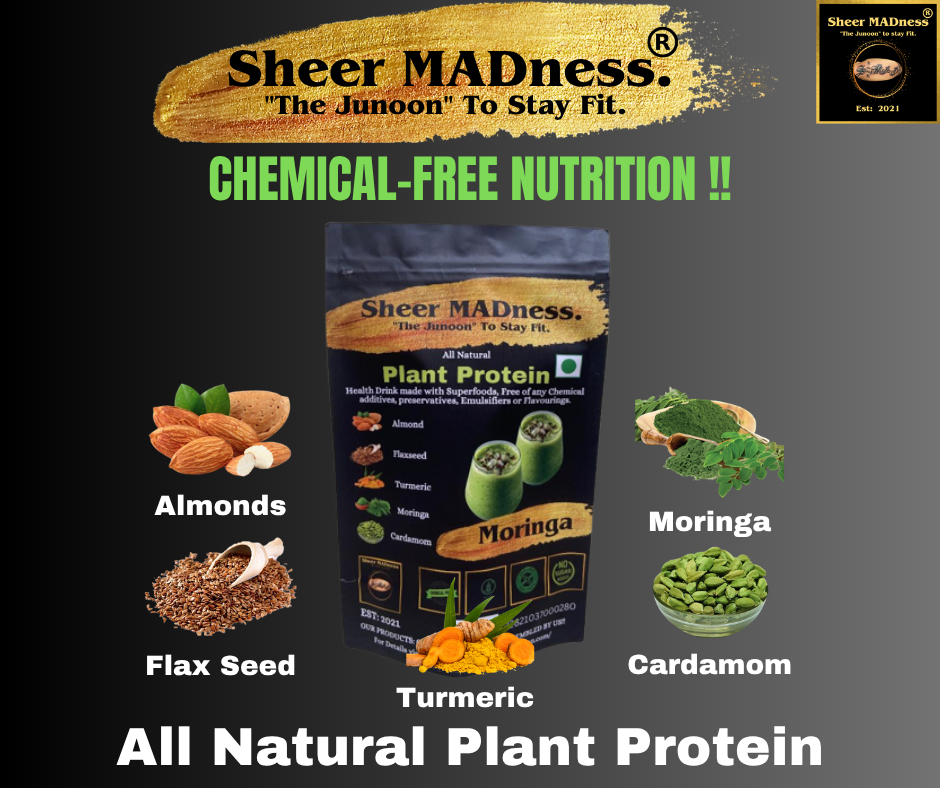
Sheer MADness Plant Protein Moringa addresses the most important nutritional determinants of memory function simultaneously from one daily whole-food preparation.
Quercetin — hippocampal neuroinflammation reduction and SIRT1-BDNF upregulation. Flaxseed ALA — synaptic membrane DHA substrate for optimal LTP efficiency in vegetarian brains. Vitamin E from almonds with Vitamin C from moringa — synergistic neuronal membrane lipid peroxidation protection. Prebiotic fibre from moringa and flaxseed — Akkermansia and F. prausnitzii support for butyrate-BDNF and serotonin gut-brain axis pathways. Zero synthetic chemical additive — no BHA/BHT quinone oxidative metabolites generating neuronal oxidative stress, no sucralose reducing the gut bacteria producing the neurotransmitter precursors and BDNF-supporting butyrate.
The chemical-free formulation matters specifically for cognitive health because BHA and BHT are metabolised in the liver to reactive quinone intermediates that can cross the blood-brain barrier — generating the exact neuronal oxidative stress that the Vitamin E and quercetin in the same preparation are trying to prevent. Consuming antioxidants alongside synthetic preservatives that generate oxidative metabolites is a nutritional contradiction that Sheer MADness’s zero-additive formulation resolves.
Sheer MADness holds a registered trademark under the Government of India. The Natural Plant Protein formula is patent published under Patent No. 202331036733, searchable on Intellectual Property India. The brand holds a valid FSSAI licence and GSTIN registration.
The existing post’s animal studies (Siddiqui 2014, Kumar 2010, Bharali 2003) are legitimate and correctly cited — they should however be clearly identified as animal studies, which is essential for E-E-A-T accuracy. Their significance is as mechanistic proof-of-concept — demonstrating that moringa’s bioactives produce neuroprotective and memory-supporting effects in neurological models, providing biological plausibility for the human dietary mechanisms described in this post.
The Rajeswari and Umadevi 2017 college student study — if the reference is accurate — is the closest to direct human evidence, though it was a small study requiring replication. The omega-3-cognitive function literature (Yurko-Mauro 2015 for DHA specifically in older adults; Akbaraly 2009 for ALA and dementia risk in a population cohort) represents the strongest human epidemiological and trial evidence base in the existing post and is correctly cited.
The JAMA Vitamin E reference requires the caveat that subsequent larger trials have not consistently replicated the benefit — Vitamin E is neuroprotective mechanistically, but as a standalone supplement at pharmacological doses in Alzheimer’s disease, the clinical evidence is mixed.
The most honest overall assessment: the mechanistic evidence for moringa’s neurological support is robust — the blood-brain barrier quercetin penetration, SIRT1 activation, NF-κB hippocampal inhibition, and gut-brain axis mechanisms are well-established. The human controlled trial evidence specifically for moringa leaf powder and memory is limited and requires more research. The dietary evidence for the individual nutrient components (quercetin flavonoids, omega-3, Vitamin E) and cognitive health is considerably stronger.
| Cognitive Function | Mechanism | Nutrient | Evidence Level |
|---|---|---|---|
| LTP efficiency (memory formation) | Neuroinflammation reduction — IL-1β, TNF-α inhibition | Quercetin (NF-κB inhibition) | Moderate — animal + population flavonoid data |
| Hippocampal BDNF expression | SIRT1 activation → BDNF gene promoter deacetylation | Quercetin → SIRT1 | Moderate — mechanism confirmed; quercetin human trials growing |
| Synaptic membrane fluidity and function | DHA incorporation into postsynaptic phospholipid bilayer | Flaxseed ALA → DHA | Moderate — DHA depletion-memory impairment well documented |
| Neuronal membrane oxidative protection | Lipid peroxidation chain interruption by tocopherol | Vitamin E (almonds) + Vitamin C regeneration | Moderate — mechanism strong; clinical cognitive trials mixed |
| Serotonin and dopamine precursor production | Gut microbiome enteric neurotransmitter synthesis | Moringa + flaxseed prebiotic | Growing — gut-brain axis research area |
| Hippocampal BDNF via butyrate | F. prausnitzii butyrate → HDAC inhibition → BDNF | Flaxseed/moringa prebiotic | Growing — butyrate-BDNF mechanism confirmed |
| AGE-RAGE hippocampal protection (diabetic) | AMPK activation reducing RAGE-NF-κB hippocampal inflammation | Quercetin + chlorogenic acid | Indirect — AMPK reduces AGE accumulation |
| Neurogenesis support | BDNF promotes dentate gyrus neurogenesis | Quercetin SIRT1 → BDNF | Moderate — BDNF-neurogenesis relationship well established |
Does moringa improve memory?
Moringa supports the nutritional environment for optimal memory function through five specific mechanisms. Quercetin neuroinflammation reduction that protects LTP, SIRT1 activation supporting BDNF expression, flaxseed DHA substrate for synaptic membrane function. Vitamin E neuronal membrane protection, and gut-brain axis prebiotic support for neurotransmitter production. For most healthy adults, these mechanisms support memory maintenance and cognitive function quality. Moringa does not reverse diagnosed neurodegenerative conditions or dementia.
What is LTP and why does neuroinflammation impair memory?
Long-term potentiation (LTP) is the synaptic strengthening process through which repeated neural firing converts experience into memory. Neuroinflammation — specifically IL-1β from activated hippocampal microglia. Directly impairs LTP by inhibiting NMDA receptor calcium influx and causing AMPA receptor internalisation from postsynaptic membranes. Moringa’s quercetin inhibits hippocampal microglial NF-κB activation — reducing the IL-1β and TNF-α production that impairs the LTP-based memory consolidation process.
Synaptic membranes require DHA for the fluidity that enables rapid AMPA receptor insertion during LTP. Indian vegetarian adults consume no DHA from marine sources and depend entirely on inefficient ALA-to-DHA conversion. Flaxseed at 22g ALA per 100g in Sheer MADness Plant Protein Moringa maximises the ALA substrate pool for DHA synthesis. Specifically addressing the systematic DHA limitation of Indian vegetarian brains that makes them more vulnerable to synaptic membrane DHA depletion and the cognitive impairment it produces.
How does the gut affect memory through the gut-brain axis?
The gut microbiome produces approximately 90 percent of the body’s serotonin, significant quantities of GABA, and short-chain fatty acids (SCFAs) including butyrate that upregulate hippocampal BDNF through HDAC inhibition. Gut dysbiosis reduces these neurotransmitter and BDNF-supporting productions while simultaneously generating LPS endotoxemia that activates hippocampal microglial neuroinflammation. Moringa’s prebiotic specifically feeds Akkermansia muciniphila and Faecalibacterium prausnitzii. Restoring the beneficial bacteria whose metabolic products most directly support cognitive function.
BDNF (brain-derived neurotrophic factor) is the primary molecular signal for neuroplasticity. Promoting hippocampal neurogenesis, dendritic spine growth, and synaptic protein synthesis. It is the growth factor through which long-term memory formation physically occurs in brain tissue. SIRT1, activated by moringa’s quercetin, is required for normal BDNF gene expression — SIRT1 deacetylates histones at BDNF promoters to enable transcription. As SIRT1 activity declines with ageing, BDNF expression falls — contributing to hippocampal volume loss and memory impairment. Dietary quercetin sustaining SIRT1 activity supports BDNF expression throughout ageing.
Why does diabetes specifically impair memory and how does moringa help?
Chronic hyperglycaemia produces Advanced Glycation End-products (AGEs) that accumulate in hippocampal neurons, cross-link proteins, and activate RAGE — triggering NF-κB inflammatory signalling in hippocampal tissue that reduces synaptic plasticity and accelerates hippocampal volume loss. India has approximately 100 million adults with Type 2 diabetes making this the most prevalent specific cognitive impairment mechanism in the Indian population. Moringa’s AMPK activation (reducing hyperglycaemia), quercetin’s NF-κB inhibition (reducing RAGE-driven hippocampal inflammation), and anti-inflammatory curcumin all address this diabetic cognitive pathway.
Neuroinflammation reduction from quercetin begins within days of consistent consumption. BDNF expression changes from SIRT1 activation occur over weeks. Synaptic membrane DHA composition shifts from ALA conversion require 4 to 8 weeks of consistent flaxseed consumption. Gut microbiome changes supporting neurotransmitter and butyrate production develop over 4 to 12 weeks. Subjective cognitive quality improvements — better focus, sharper memory, reduced brain fog — are typically reported at 4 to 8 weeks of consistent daily moringa consumption by individuals whose cognitive impairment was driven by nutritional deficiency or gut dysbiosis.
Should moringa replace prescribed cognitive health medications?
No. Moringa is a nutritional food supporting the physiological environment for cognitive function. Diagnosed cognitive conditions — Alzheimer’s disease, vascular dementia, mild cognitive impairment — require neurological assessment and management. Dietary moringa is appropriate as a nutritional complement to medical management, not as a replacement for it. Individuals with significant memory concerns should consult a neurologist for appropriate evaluation and management.

Memory is not stored in supplements — it is formed in synapses through LTP, maintained by adequate DHA in membrane phospholipids, protected from oxidative damage by Vitamin E and Vitamin C, enabled by BDNF whose expression requires SIRT1 activity, and supported by a gut microbiome producing the neurotransmitters and BDNF-upregulating butyrate that cognitive function depends on.
Moringa’s quercetin inhibits the hippocampal neuroinflammation that blocks LTP. Its SIRT1 activation supports BDNF expression. Flaxseed’s ALA provides the DHA substrate for synaptic membrane fluidity that optimal LTP efficiency requires. Almond Vitamin E with moringa Vitamin C protects neuronal membranes from the oxidative lipid peroxidation that accelerates cognitive decline. And moringa’s prebiotic fibre restores the gut microbiome that produces the serotonin, GABA, and butyrate that feed cognitive function from the gut-brain axis.
For India’s ageing, increasingly diabetic, gut-dysbiotic, and vegetarian DHA-limited adult population — these mechanisms address the most prevalent specific causes of nutritional cognitive impairment from one daily whole-food preparation.
Sheer MADness Plant Protein Moringa. Five whole-food ingredients. Zero synthetic additive. Every ingredient on the front of every pack since 2021. Build the nutritional environment for memory — daily, from within.
I would also request you to please read my previous post: Benefits of Moringa Plant protein, the versatile Superfood powerhouse.
a) Everyone is an individual, so what suits me may not suit the next person.
b) If a person has a medical condition, a doctor’s advice and prescribed medication will only help. Diagnosed cognitive conditions — Alzheimer’s disease, vascular dementia, mild cognitive impairment — require neurological evaluation and medical management. Moringa is nutritional food, not a treatment for any diagnosed cognitive condition.
c) While buying any protein powder from the market, read the labels carefully. Watch out for INS codes, Anti-caking agent, INS 551 (Silicon dioxide), BHA (Butylated hydroxyanisole), BHT (Butylated hydroxytoluene). For cognitive health specifically, BHA/BHT quinone metabolites can cross the blood-brain barrier, generating the neuronal oxidative stress that the same supplement’s Vitamin E and quercetin are trying to prevent.
If you are interested in buying chemical-free Natural Plant Protein Moringa, Health Drinks for Kids, or our delicious chemical-free Energy Bars, Protein Bars, and Millet Bars, shop at Sheer MADness.
You can also find us on Flipkart, Jio Mart, or ONDC in India.
d) Exercise is the key to fitness. Exercise and nutrition are two sides of the same coin and always go hand in hand. For cognitive health specifically, aerobic exercise is the most evidence-based intervention for BDNF upregulation and hippocampal neurogenesis — moringa supports the nutritional side of the same equation.
e) Excess of anything is wrong, even the best whole-food superfood. Consume only recommended quantities.
f) Rome was not built in a day. Discipline and consistency are the only keys to lasting health.
g) It is not only exercise and protein that builds health. A healthy gut, macro and micronutrients, body type, rest, and lifestyle all matter. Of all these, exercise and nutrition are within our control. Focus on these two primary aspects first.
h) The most important part of fitness is that nothing is better than exercise and a balanced meal.
Disclaimer: Our products are a source of HEALTHY NUTRIENTS and are COMPLETELY FREE OF ANY ADDED CHEMICALS. We do not claim to cure any medical condition. The content provided is informational. We do not claim to diagnose or treat a person with any specific medical condition.