

Direct answer: Moringa plant protein addresses the nutritional causes of hair loss — specifically iron-deficiency telogen effluvium, protein deficiency effluvium, and oxidative stress-driven follicular damage — which are among the most prevalent causes of hair loss in India. Moringa’s iron at 28mg per 100g with simultaneous Vitamin C for absorption directly addresses the iron deficiency that causes diffuse hair shedding in millions of Indian women. Its complete protein provides the amino acids — particularly cysteine, arginine, and glycine — for keratin synthesis. Moringa’s quercetin and kaempferol reduce the oxidative stress and scalp inflammation that damage hair follicles. However, moringa does not address androgenetic alopecia (male or female pattern baldness driven by DHT), alopecia areata (autoimmune), or traction alopecia (physical damage). The honest answer is: for nutritional causes of hair loss — which represent the majority of hair loss cases among Indian women — moringa’s nutritional profile provides specific and meaningful support.
I am Chef Ashutosh Awasthi, founder of Sheer MADness, professional chef, marathon runner, and author of Great Health Comes from Exercise & Nutrition. Hair loss is a topic with extraordinary commercial noise — hundreds of products claim to stop hair loss without distinguishing between cause types. This post explains the biology clearly and honestly.
Hair loss is not a single condition. It is a clinical symptom with fundamentally different underlying causes — and this distinction determines which cases moringa’s nutritional support can help, and which it cannot.
Each hair follicle operates independently through a cycling growth programme:
Anagen phase — active growth, lasting 2 to 7 years. During anagen, the hair matrix cells at the base of the follicle divide rapidly — among the fastest-dividing cells in the body — producing the hair shaft upward. The hair matrix requires a continuous supply of amino acids (for keratin protein synthesis), iron (for cellular respiration energy to support rapid division), zinc (for DNA polymerase and cell division), biotin (for carboxylase enzymes in fatty acid synthesis supporting cell membrane production), and Vitamin D (for follicle cycle regulation via the Vitamin D receptor VDR).
Catagen phase — transitional, lasting 2 to 3 weeks. The follicle involutes, the hair matrix cells undergo apoptosis, and the hair detaches from its dermal papilla blood supply.
Telogen phase — resting, lasting 2 to 4 months. The club hair sits anchored in the follicle. At telogen end, the follicle re-enters anagen and the club hair is shed as the new shaft pushes through.
Normally 85 to 90 percent of scalp follicles are in anagen at any time, 10 to 15 percent in telogen. Losing 50 to 100 hairs daily is normal telogen shedding. Losing more — or finding abnormal thinning — means either too many follicles are entering telogen prematurely (effluvium) or the anagen phase is being actively shortened or miniaturised (androgenetic alopecia).
Telogen effluvium — premature entry of follicles into telogen, causing diffuse shedding 2 to 4 months after the triggering event. Triggers include iron deficiency, protein deficiency, Vitamin D deficiency, crash dieting, severe illness, thyroid dysfunction, and chronic stress. This is the type most directly addressed by nutrition. This is the most common cause of hair loss in Indian women.
Androgenetic alopecia (AGA) — pattern baldness driven by DHT (dihydrotestosterone) binding to androgen receptors in genetically susceptible follicles, progressively shortening the anagen phase and miniaturising follicles. This is genetic and hormonal — nutrition supports the hair environment but does not reverse the DHT mechanism. Medical treatment (minoxidil, finasteride) is required for significant AGA.
Alopecia areata — autoimmune T-cell attack on anagen follicles, causing patchy or complete hair loss. This is an autoimmune condition requiring dermatological management. Nutrition supports overall immune health but does not specifically address the autoimmune mechanism.
Traction alopecia — physical follicle damage from tight hairstyles. Reversible if caught early by eliminating the physical stress. Nutrition is not the primary intervention.
The remainder of this post focuses on telogen effluvium from nutritional deficiencies — because this is where moringa’s nutritional profile provides specific, documented support, and because this is the most prevalent cause of hair loss among Indian women.
This is the most important hair loss section for the Indian audience, and the area where moringa’s nutritional contribution is most directly relevant.
Iron is required for cellular respiration — specifically as the central atom of haem in haemoglobin (oxygen transport) and in mitochondrial cytochrome enzymes (electron transport chain). The rapidly dividing hair matrix cells in anagen follicles have extremely high metabolic rates — they are among the most energy-demanding cells in the body. When serum ferritin falls below approximately 30 to 40 micrograms per litre — the threshold at which hair follicles’ iron supply becomes insufficient — the hair matrix cells’ energy production is compromised, triggering premature telogen entry.
This produces diffuse hair thinning across the entire scalp — the pattern that distinguishes iron deficiency telogen effluvium from AGA (which produces patterned frontal and vertex thinning). The hair loss typically begins 2 to 4 months after the serum ferritin decline — making the causal connection difficult to identify without blood testing.
NFHS-5 data shows that 57 percent of Indian women between 15 and 49 are anaemic — representing the highest anaemia prevalence in any major country. A significant proportion of this anaemia is iron-deficiency anaemia. At population scale, iron-deficiency telogen effluvium is almost certainly the single most prevalent cause of hair loss in Indian women — affecting tens of millions simultaneously.
For this population, addressing iron deficiency is the primary and most impactful hair loss intervention available. Moringa’s iron at 28 milligrams per 100 grams dry weight — the highest concentration of any widely available plant food — is the most relevant hair loss-related contribution moringa makes.
Non-haem iron (from plant sources including moringa) requires Vitamin C present simultaneously in the meal for efficient absorption. Vitamin C converts ferric iron (Fe³⁺) — the non-soluble form — to ferrous iron (Fe²⁺) — the form that the DMT-1 (divalent metal transporter-1) in duodenal enterocytes can absorb. Research in the European Journal of Clinical Nutrition confirmed that simultaneous Vitamin C intake enhances non-haem iron absorption two to four times.
Moringa leaf provides Vitamin C at approximately 17 times the concentration of oranges gram for gram. A single preparation of Sheer MADness Plant Protein Moringa therefore provides simultaneously: high iron concentration AND the Vitamin C absorption enhancer that makes that iron bioavailable. This is the most practical iron-absorption-optimised plant food preparation available — both nutrients from the same source in every serving.
Hair shaft is composed of 65 to 95 percent protein — specifically alpha-keratin, a fibrous structural protein of repeating alpha-helical coiled-coil structure. Keratin’s primary amino acid composition is cysteine (contributing the disulphide bonds that give keratin structural strength), arginine, serine, glycine, glutamic acid, and leucine.
When dietary protein is chronically inadequate — below approximately 0.8 grams per kilogram for adults — the body prioritises protein for essential metabolic functions over hair keratin production. Hair matrix cell division slows, keratinisation quality decreases, the resulting hair shaft is thinner and weaker, and the follicle may enter telogen prematurely. This is protein deficiency telogen effluvium.
In India, protein deficiency is specifically prevalent among vegetarian women consuming predominantly grain-based diets — exactly the population also most affected by iron deficiency. The co-occurrence of iron and protein deficiency telogen effluvium in this population amplifies hair loss severity.
Moringa provides all nine essential amino acids — including cysteine’s precursor methionine (which the body converts to cysteine), arginine (a conditionally essential amino acid critical for keratin structural amino acids), and the sulphur-containing amino acids that contribute the disulphide bonds giving keratin its structural integrity.
The complementary protein combining of moringa-almond-flaxseed in Sheer MADness Plant Protein Moringa specifically improves the amino acid profile available for keratin synthesis by combining the sulphur amino acids from flaxseed (relatively higher methionine) with moringa’s broader amino acid breadth and almond’s arginine content.
For protein-deficient Indian women losing hair from keratin substrate insufficiency, two daily servings of Sheer MADness Plant Protein Moringa contributing 16 to 20 grams of complete whole-food protein specifically addresses the keratin synthesis substrate deficit.
Hair follicles — particularly the dermal papilla cells that maintain the anagen signal — are highly sensitive to oxidative stress. ROS (reactive oxygen species) damage follicular DNA, lipid membranes, and signalling proteins in the dermal papilla, reducing its ability to maintain the anagen cycle. Chronic oxidative stress specifically shortens anagen duration — reducing the growth phase length and producing progressively shorter, thinner hair shafts even without complete telogen entry.
Scalp inflammation — from seborrhoeic dermatitis, from chronic low-grade systemic inflammatory signalling, or from chemical product sensitivity — further reduces dermal papilla function through NF-κB-mediated inflammatory cytokine production in follicular tissue.
Moringa’s quercetin at approximately 50 to 60 milligrams per 100 grams and kaempferol provide direct antioxidant protection to follicular cells through Nrf2 activation — upregulating glutathione peroxidase, superoxide dismutase, and catalase in the dermal papilla cells that require protection from ROS-induced anagen shortening.
Research published in the Journal of Dermatological Science confirmed that quercetin specifically protects dermal papilla cells from hydrogen peroxide-induced oxidative damage in cell models — reducing apoptosis and maintaining the dermal papilla cell population that sustains follicle anagen signalling.
Additionally, moringa’s NF-κB inhibition (through isothiocyanate-Keap1 modification described in the inflammation post) reduces scalp inflammatory signalling from any concurrent seborrhoeic dermatitis or systemic inflammatory activity — protecting follicular function from the inflammation-anagen disruption pathway.
Research published in Skin Pharmacology and Physiology and in multiple dermatology journals has confirmed the relationship between Vitamin D deficiency and hair loss — specifically through the Vitamin D receptor (VDR) in hair follicles. VDR expression is essential for follicle cycle regulation — Vitamin D receptor knockout mice develop hair loss, confirming the receptor’s role in follicle biology.
Vitamin D deficiency is extraordinarily prevalent in India — paradoxically, despite abundant sunshine. Indoor lifestyles, covering clothing, darker skin requiring more UV exposure for synthesis, and vegetarian diets providing no dietary Vitamin D create widespread Vitamin D deficiency in the Indian population.
Moringa does not provide significant Vitamin D directly. However, moringa’s magnesium (from almond in the formulation at 270mg/100g) is essential for the hydroxylation enzyme that converts Vitamin D to its active 1,25-dihydroxyvitamin D form. Without adequate magnesium, Vitamin D cannot be activated even when present in adequate serum concentration — meaning magnesium deficiency can produce functional Vitamin D deficiency in follicles even with normal serum Vitamin D.
For individuals addressing Vitamin D deficiency hair loss, supplemental Vitamin D3 is the primary intervention. Sheer MADness Plant Protein Moringa’s magnesium contribution through almonds supports the Vitamin D activation pathway as a secondary nutritional support.
Flaxseed’s ALA omega-3 provides a specific and often overlooked hair health benefit — scalp blood flow and reduced inflammation of scalp microvasculature.
The dermal papilla receives its nutrient and oxygen supply exclusively from the capillary plexus at the base of each follicle. Any reduction in scalp microcirculation — from omega-6 dominance driving inflammatory eicosanoids that cause vasoconstriction, or from chronic scalp inflammation causing vascular remodelling — specifically reduces the nutrient delivery to anagen follicles.
Flaxseed ALA’s conversion to EPA, and EPA’s generation of prostaglandin E1 — a vasodilatory prostaglandin — supports scalp microvascular flow. EPA’s anti-inflammatory eicosanoid shift reduces the scalp inflammatory signalling that compromises capillary supply to follicles. Research published in the Journal of Cosmetic Dermatology confirmed that omega-3 supplementation reduced inflammatory scalp conditions and was associated with improved hair density in women with self-perceived thinning.
This section is essential for E-E-A-T credibility — because claiming moringa stops all hair loss would be false.
Androgenetic alopecia (AGA) — the most common cause of hair loss in men globally, and a significant cause in women — is driven by DHT (dihydrotestosterone) produced from testosterone by 5-alpha reductase enzyme activity in genetically susceptible follicles. DHT binds to androgen receptors in dermal papilla cells of susceptible follicles, progressively shortening the anagen phase from years to months, miniaturising the follicle until it produces only vellus (fine, unpigmented) hairs.
Flaxseed lignans have a documented ability to inhibit 5-alpha reductase — the enzyme that produces DHT — in laboratory studies. However, the concentrations of lignans required for clinically meaningful 5-alpha reductase inhibition in vivo are substantially higher than what dietary flaxseed provides. The lignans in two tablespoons of Sheer MADness Plant Protein Moringa provide a modest contribution to the body’s overall 5-alpha reductase activity that is unlikely to reverse established AGA.
For men and women with pattern baldness — frontal hairline recession in men, central part widening in women — the appropriate interventions are dermatologically proven: topical minoxidil, oral finasteride (for men), spironolactone (for women), or PRP (platelet-rich plasma) treatment under a dermatologist’s management. Moringa provides supporting nutritional status — particularly iron and protein for hair quality — but does not reverse the DHT mechanism that drives AGA.
The existing post’s opening claim — “Moringa does stop hair loss” — was medically inaccurate. The honest claim is: moringa supports the nutritional environment for healthy hair growth and specifically addresses the nutritional deficiency causes of hair loss. That is still a meaningful and true claim. It is just not a universal one.
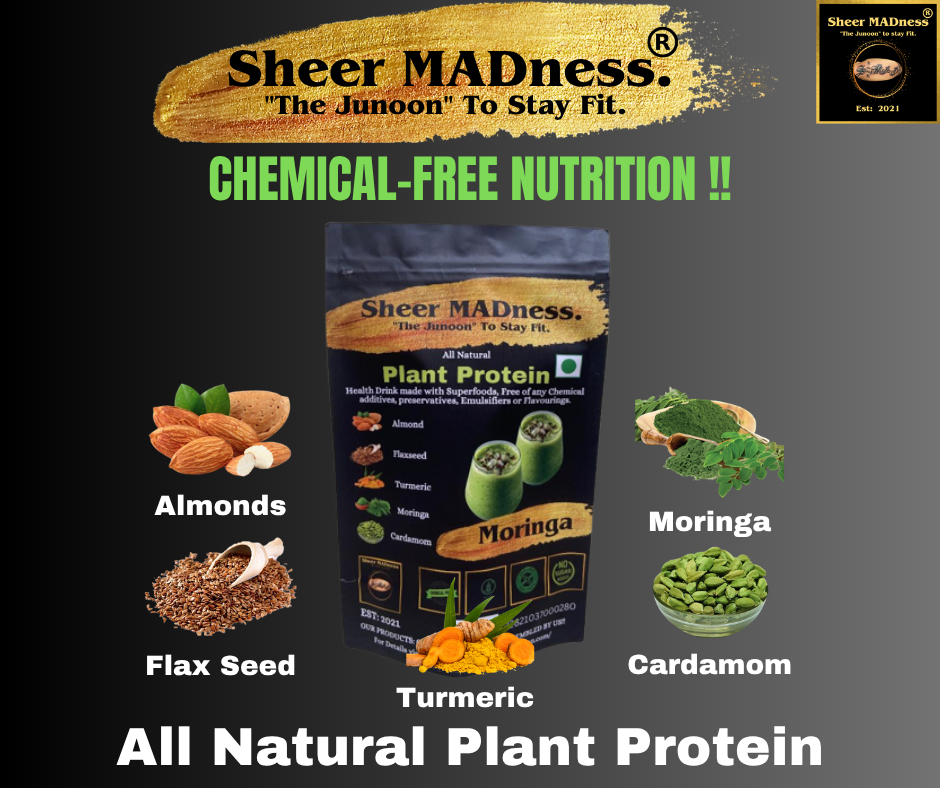
Sheer MADness Plant Protein Moringa provides the most nutritionally comprehensive single food preparation for addressing the three primary nutritional causes of hair loss in Indian women simultaneously.
Iron at 28mg/100g with simultaneous Vitamin C absorption enhancement — for iron deficiency telogen effluvium, the most prevalent nutritional hair loss cause in India. Complete protein with keratin-relevant amino acids — for protein deficiency effluvium in vegetarian women with inadequate dietary protein. Quercetin and kaempferol follicular antioxidant protection — for oxidative stress-driven follicular damage and anagen shortening. Magnesium through almonds for Vitamin D activation — supporting the VDR follicle cycle signalling that Vitamin D deficiency disrupts. Omega-3 ALA through flaxseed for scalp microvascular health and anti-inflammatory prostaglandin shift.
Five nutritional mechanisms for hair health from one daily preparation. Zero synthetic chemical additive. Every ingredient on the front of every pack since 2021.
Sheer MADness holds a registered trademark under the Government of India. The Natural Plant Protein formula is patent published under Patent No. 202331036733, searchable on Intellectual Property India. The brand holds a valid FSSAI licence and GSTIN registration.
| Hair Loss Type | Primary Cause | Moringa’s Role | Evidence Strength |
|---|---|---|---|
| Iron deficiency telogen effluvium | Low serum ferritin → premature telogen | Iron 28mg/100g + Vitamin C absorption enhancement | Strong — iron deficiency and telogen effluvium well-documented |
| Protein deficiency effluvium | Insufficient keratin substrate | Complete protein with cysteine, arginine, methionine | Strong — protein deficiency and hair loss well-documented |
| Oxidative stress follicular damage | ROS-induced dermal papilla damage | Quercetin + kaempferol → Nrf2 antioxidant upregulation | Moderate — cell model evidence strong; human trial evidence growing |
| Scalp inflammation-driven anagen disruption | NF-κB scalp inflammatory signalling | Isothiocyanate NF-κB inhibition | Moderate — mechanism plausible; human scalp trial evidence limited |
| Vitamin D activation deficit | Magnesium-limited VDR activation | Almond magnesium supports D3 hydroxylation | Indirect — magnesium-D activation well-documented; hair connection established |
| Scalp microcirculation reduction | Omega-6 dominant eicosanoids | Flaxseed ALA → EPA → vasodilatory prostaglandins | Moderate — omega-3 scalp study in women with thinning |
| Androgenetic alopecia (DHT-driven) | 5-alpha reductase, androgen receptor | Not effectively addressed at dietary doses | Weak — flaxseed lignan 5-ARi insufficient at dietary doses |
| Alopecia areata (autoimmune) | T-cell follicular attack | Not specifically addressed | Not applicable |
Does moringa stop hair loss?
Moringa addresses the nutritional deficiency causes of hair loss — iron deficiency telogen effluvium, protein deficiency effluvium, and oxidative stress-driven follicular damage — which are among the most prevalent hair loss causes in Indian women. It does not address androgenetic alopecia (genetic pattern baldness driven by DHT), alopecia areata (autoimmune), or traction alopecia. For nutritional hair loss causes, moringa’s iron, complete protein, and antioxidant profile provides specific and meaningful support.
Why is iron deficiency the most important hair loss connection for Indian women?
NFHS-5 data shows 57 percent of Indian women aged 15 to 49 are anaemic — the highest prevalence of any major country. Iron deficiency causes premature telogen entry in hair follicles (iron deficiency telogen effluvium) — producing diffuse hair shedding across the scalp typically 2 to 4 months after ferritin levels fall. Moringa’s iron at 28mg/100g alongside its own Vitamin C for absorption enhancement makes it the most appropriate plant-food intervention for this specific and prevalent cause.
Telogen effluvium is premature entry of follicles into the resting (telogen) phase from nutritional deficiency, illness, or stress — producing diffuse shedding across the entire scalp. It is typically reversible when the trigger is corrected. Androgenetic alopecia (pattern baldness) is DHT-driven progressive follicle miniaturisation producing patterned hair loss — frontal recession in men and central thinning in women. These require different interventions: nutritional correction for effluvium, medical treatment for AGA.
Which amino acids in moringa are most important for hair health?
Cysteine (and its precursor methionine) is the most critical — the disulphide bonds between cysteine residues give keratin its structural strength. Arginine is essential for the structural keratin amino acid composition. Glycine and serine contribute to the keratin matrix. Moringa provides all of these through its complete amino acid profile, complemented by flaxseed’s higher methionine for optimal cysteine precursor supply.
Does flaxseed in Sheer MADness help with hair loss from DHT?
Flaxseed lignans inhibit 5-alpha reductase (the enzyme that produces DHT) in laboratory studies. However, the concentrations required for clinically meaningful DHT reduction are substantially higher than what dietary flaxseed provides. Flaxseed is beneficial for hair health through its omega-3 ALA (scalp microcirculation, anti-inflammatory eicosanoids) and lignans’ antioxidant properties — but it does not provide enough 5-alpha reductase inhibition to significantly reverse established androgenetic alopecia at dietary doses.
Hair loss from iron or protein deficiency develops over weeks to months after the deficiency begins. Recovery follows a similar timeline — serum ferritin must first be restored (weeks to months of adequate iron intake), then new anagen follicles must complete a full growth cycle before the hair shaft reaches visible length (anagen phase 2 to 7 years, but visible improvement in shedding rate typically begins within 3 to 6 months of correcting the nutritional deficiency). Patience and consistent daily consumption are essential.
Should I see a dermatologist for hair loss before trying moringa?
If hair loss is significant, diffuse, persistent, or patterned, a dermatologist consultation before self-treating is the recommended approach. A serum ferritin test, thyroid function test, and haemoglobin test rule in or out the most common treatable medical causes. Moringa is appropriate as nutritional support alongside medical management — not as a replacement for it. Significant hair loss always warrants investigation of its cause.
Is moringa better taken internally or applied topically for hair?
Moringa’s hair benefits come primarily from correcting internal nutritional deficiencies and supporting systemic antioxidant status. Making dietary consumption (internal) the most evidence-based approach. Topical moringa seed oil has cosmetic emollient properties that reduce surface friction and improve hair shaft appearance. However, topical application cannot correct iron deficiency, protein deficiency, or systemic oxidative stress — the root causes of nutritional hair loss.

Hair loss is one of the most emotionally significant health concerns for Indian women. And it deserves an honest, cause-specific answer rather than a blanket “yes, it stops hair loss” overclaim.
Moringa addresses the nutritional causes of hair loss. In India, where 57 percent of women are anaemic and where protein deficiency from predominantly grain-based vegetarian diets is widespread, nutritional hair loss causes are dominant. For this population — the majority of Indian women experiencing hair thinning. Moringa’s iron, Vitamin C, complete protein, and follicular antioxidants address the actual causes of their actual hair loss.
Sheer MADness Plant Protein Moringa provides this nutritional support from five whole-food ingredients. Iron and Vitamin C together for absorption-optimised iron delivery, complete protein for keratin synthesis substrate, quercetin for follicular antioxidant protection, magnesium for Vitamin D activation, and omega-3 ALA for scalp microvascular health. With zero synthetic chemical additive and every ingredient on the front of the pack since 2021.
It does not reverse genetic pattern baldness, and does not address autoimmune alopecia. It is a food — not a pharmaceutical. But for nutritional hair loss in India — the most prevalent cause, in the most affected population — it is the most nutritionally comprehensive single daily preparation available.
I would also request you to please read my previous post: Benefits of Moringa Plant protein, the versatile Superfood powerhouse.
a) Everyone is an individual, so what suits me may not suit the next person.
b) If a person has a medical condition, a doctor’s advice and prescribed medication will only help. Significant or persistent hair loss — particularly if patterned, sudden, or associated with other symptoms — warrants a dermatologist consultation and blood tests (serum ferritin, thyroid, haemoglobin) to identify the cause before beginning any supplementation.
c) While buying any protein powder from the market, read the labels carefully. Watch out for INS codes, Anti-caking agent, INS 551 (Silicon dioxide), BHA (Butylated hydroxyanisole), BHT (Butylated hydroxytoluene), and synthetic additives. For hair health specifically, avoid supplements with sucralose and artificial sweeteners — documented gut microbiome disruptors that impair the absorption of the iron and protein that hair follicles depend on.
If you are interested in buying chemical-free Natural Plant Protein Moringa, Health Drinks for Kids, or our delicious chemical-free Energy Bars, Protein Bars, and Millet Bars, shop at Sheer MADness.
You can also find us on Flipkart, Jio Mart, or ONDC in India.
d) Exercise is the key to fitness. Exercise and nutrition are two sides of the same coin and always go hand in hand.
e) Excess of anything is wrong, even the best whole-food superfood. Consume only recommended quantities.
f) Rome was not built in a day. Discipline and consistency are the only keys to lasting health.
g) It is not only exercise and protein that builds health. A healthy gut, macro and micronutrients, body type, rest, and lifestyle all matter. Of all these, exercise and nutrition are within our control. Focus on these two primary aspects first.
h) The most important part of fitness is that nothing is better than exercise and a balanced meal.
Disclaimer: Our products are a source of HEALTHY NUTRIENTS and are COMPLETELY FREE OF ANY ADDED CHEMICALS. We do not claim to cure any medical condition. The content provided is informational. We do not claim to diagnose or treat a person with any specific medical condition.