

Direct answer: Most plant proteins are naturally gluten free, but not every plant protein powder is. Almond, flaxseed, pea, soy, rice, hemp and pumpkin seed proteins contain no gluten. Wheat protein, seitan and barley do contain it, and oats are often contaminated. Hidden fillers and shared equipment can also add gluten to a powder built on a safe main ingredient, so the label matters more than the word “plant”.
A plant protein powder is gluten free only when every ingredient is gluten free and the product avoids gluten contact during making. The accepted limit in India and worldwide is 20 milligrams of gluten per kilogram of food. This guide shows you how to check any powder against that standard.
I am Chef Ashutosh Awasthi, founder of Sheer MADness, professional chef, marathon runner and author of Great Health Comes from Exercise & Nutrition. I have read thousands of protein labels over the years, and the ingredient list tells you more than any claim on the front of the pack. This post is part of my complete guide, Plant Protein, Protein Everything you should be aware of, and it answers one question in depth.
Gluten is not a single protein. It is a family of storage proteins found in wheat, barley and rye. In wheat, the main groups are gliadins and glutenins, which give dough its stretch and bread its chew. Sensitive people react to the same proteins that bakers value.
Three separate conditions sit under the gluten umbrella. Coeliac disease is an autoimmune reaction that damages the lining of the small intestine. Wheat allergy is an immune reaction to wheat proteins and can cause hives, breathing trouble or anaphylaxis. Non-coeliac gluten sensitivity causes bloating, tiredness and discomfort without gut damage or allergy.
Each condition needs a slightly different response, but all three need a clear label. My post on whether moringa protein powder is gluten free explains the gut biology of coeliac disease in detail. This post focuses on a different task, which is judging any plant protein powder before you buy it.
The word plant describes the source, not the safety. Plants range from gluten-free seeds and legumes to gluten-containing grains. A powder labelled plant protein may therefore be perfectly safe or entirely unsuitable. The table below sorts the common sources.
| Plant Source | Gluten Status | What to Check |
|---|---|---|
| Almond | Naturally gluten free | Tree nut allergen |
| Flaxseed | Naturally gluten free | Contamination during milling |
| Pea | Naturally gluten free | Processing and shared lines |
| Soy | Naturally gluten free | Added wheat in textured products |
| Brown rice | Naturally gluten free | Flavours and fillers in blends |
| Hemp | Naturally gluten free | Shared equipment |
| Pumpkin and sunflower seed | Naturally gluten free | Shared equipment |
| Chickpea and lentil | Naturally gluten free | Harvest contamination |
| Oats | Gluten free only if protected | Contaminated by wheat at farm and mill |
| Wheat protein and seitan | Contains gluten | Avoid completely |
| Barley, malt, rye | Contains gluten | Avoid completely |
Almond, flaxseed, pea, soy, rice, hemp and pumpkin seed all pass the first test. Their proteins are not gluten proteins, so they are safe at the ingredient level. The second test is handling, which the next sections cover.
Oats deserve a separate note. They contain avenin, a protein most coeliac patients tolerate. Even so, oats are often grown and milled alongside wheat, so ordinary oats can carry stray gluten.
Seitan is the clearest example. Makers wash wheat dough until only the gluten remains, then cook it into a chewy, high-protein meat substitute. It is popular with vegans and entirely unsuitable for gluten-free diets.
Hydrolysed wheat protein is a quieter risk. Some vegan blends, textured proteins and bars add it to lift protein numbers or improve texture. Always check the ingredient list for wheat, even when the front of the pack says plant-based.
Barley, rye, spelt, kamut, farro, durum and triticale also contain gluten. Malt and malt extract come from barley. They appear in some flavoured powders and health drinks, usually near the end of the ingredient list.
Multi-ingredient blends carry more risk than simple ones. Some makers add oat flour, wheat germ or barley grass for taste or marketing. Others add fillers to bulk up the powder and cut costs.
Maltodextrin is the common puzzle. It is a processed carbohydrate that can come from corn, rice, potato or wheat. Refining removes most of the protein, so it is usually safe, but Indian labels rarely state the source. Modified starch and “natural flavours” raise the same question.
Anti-caking agents deserve a look too. Silicon dioxide itself contains no gluten, but starch-based flow agents might, depending on their source. A short ingredient list leaves fewer places for gluten to hide.
Shared production lines are the final risk. A factory that also handles wheat flour, protein bars or malted drinks can pass traces onto your powder through dust and equipment.
Cross-contamination means gluten reaches a safe food by contact. It can happen in the field, at the mill, on shared equipment or during packing. Rotation crops and shared harvesting machinery can bring stray wheat kernels into seeds and legumes. Small amounts matter because coeliac disease reacts to tiny doses.
The Codex Alimentarius standard defines gluten free as 20 milligrams of gluten or less per kilogram of food, which equals 20 parts per million. FSSAI’s gluten-free standard uses the same figure. A product should carry a gluten-free claim only if it meets that limit.
Labels that say “may contain traces of wheat” or “made in a facility that handles wheat” are warnings, not guarantees. If you have coeliac disease, treat them as a reason to avoid the product. A test certificate from an accredited laboratory is stronger evidence than any claim printed on the pack.
Start with the ingredient list. Look for wheat, barley, rye, oats, malt, spelt, kamut, triticale and hydrolysed wheat protein. Also watch for vague terms such as starch, flavour and filler.
Next, check the allergen statement. Indian labels must declare cereals containing gluten, so a “contains wheat” line is a clear stop. Then look for a gluten-free claim and ask whether any testing supports it.
After that, read the facility line. “Made in a facility that also processes wheat” signals a contamination risk. Finally, judge the length of the list. A powder with five ingredients is easier to verify than one with twenty-five, and every extra ingredient is one more source to trace.
Start with the ingredients, because that is where gluten risk begins.
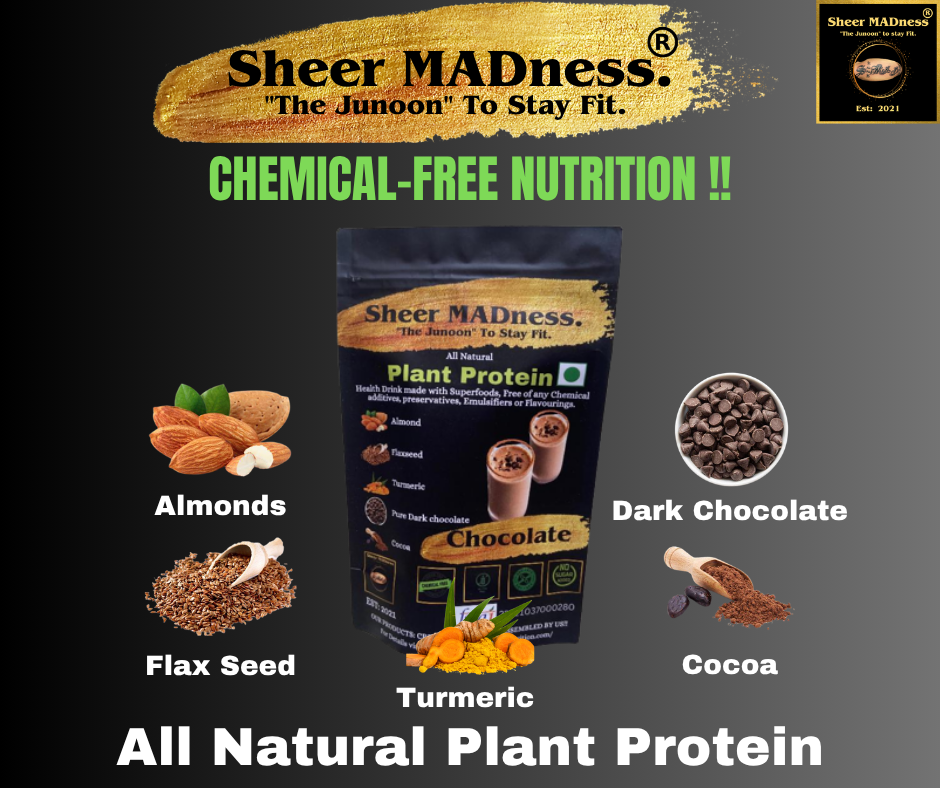
Plant Protein Chocolate contains roasted almond, roasted flaxseed, cocoa powder, dark chocolate and turmeric. The dark chocolate is made from cocoa solids with a small amount of jaggery. It contains no lecithin, no milk solids and no refined sugar. None of these ingredients contains gluten, and the recipe has no wheat, barley, rye, oats, malt, starch, filler or anti-caking agent.
Plant Protein Moringa contains moringa leaf, almond, flaxseed, turmeric and cardamom. Each one is a gluten-free plant ingredient. The recipe adds nothing else.
Ground almond and flaxseed release natural oil. The dry ingredients absorb that oil, so the mix stays a free-flowing powder without an anti-caking agent. We then sieve it and vacuum pack it with no preservative. This is part of our published patent application, No. 202331036733, which is under examination.
Every ingredient has appeared on the front of our pack since 2021, so you can verify this yourself. These are ingredient facts, not a laboratory certificate. If you have coeliac disease, discuss any new food with your doctor first.
Almonds are tree nuts, and tree nut allergy can be severe. Both Sheer MADness powders contain almonds, so they are not suitable for anyone with a nut allergy. Flaxseed and cocoa cause allergy less often, but they can trigger reactions in sensitive people.
Neither powder contains soy ingredients, milk ingredients or wheat. That matters for many families, yet it never replaces reading the allergen line yourself. Any food claim, including ours, deserves a check against your own allergy history.
A gluten-free label says nothing about protein quality, sugar load or additives. Many gluten-free packaged foods swap wheat for refined starch, sugar and gums. A gluten-free protein bar can still be a dessert in disguise.
Judge the whole ingredient list, not one claim. I read labels from the top: protein source first, sweetener second, additives last. My guide to the healthiest protein bar in India applies the same method to bars.
People with diagnosed coeliac disease need strictly gluten-free food for life. People with wheat allergy need wheat-free food and must check allergen statements. People with non-coeliac gluten sensitivity usually feel better on gluten-free products, though tolerance varies.
One point matters before you cut gluten. Coeliac blood tests and biopsies work only while you eat gluten. If you suspect coeliac disease, get tested first and change your diet afterwards. Stopping gluten early can hide the disease and delay a diagnosis.
Everyone else can choose gluten-free plant protein too, because the ingredients are simple whole foods. It is not a medical necessity for most people, and it does not need to be.
Most single-source plant protein powders are gluten free at the ingredient level. Blends and flavoured products need checking. Read the list for wheat, barley, rye, oats and malt, then check the allergen and facility statements.
Pea protein is naturally gluten free. Contamination can still occur during processing, so look for a gluten-free claim or a clear facility statement.
Soy is naturally gluten free. Textured soy products and flavoured mixes sometimes add wheat, so read the ingredients. Soy is also a common allergen.
Oats contain no wheat gluten, but farming and milling often contaminate them. Choose oats labelled gluten free. A small number of coeliac patients react even to pure oats.
Yes, and it is pure wheat gluten. Anyone avoiding gluten must avoid it.
Almonds are naturally gluten free. They are a tree nut, so they are unsuitable for people with a nut allergy.
It warns that wheat may reach the product through shared equipment or handling. It is a precaution, not a measurement. People with coeliac disease should treat it as a reason to avoid the product.
The recipes contain no gluten ingredient. Coeliac disease needs strict care, so discuss any new product with your doctor or dietitian before using it.

So, is plant protein gluten free? Usually yes at the ingredient level, but the answer depends on the specific product. Plant origin guarantees nothing. Wheat protein, barley, malt and contaminated oats are all plant ingredients that contain gluten, and hidden fillers or shared lines can carry it into otherwise safe powders.
The practical rule is simple. Read the ingredient list from top to bottom, check the allergen and facility lines, and prefer short lists of recognisable foods. Ask for test evidence if you have coeliac disease.
Sheer MADness powders follow that rule by design. They contain almond, flaxseed and turmeric, plus either cocoa with dark chocolate or moringa with cardamom, and nothing else.
a) Everyone is an individual, so what suits me may not suit the next person.
b) If a person has a medical condition, a doctor’s advice and prescribed medication will only help. Coeliac disease and wheat allergy are medical conditions that need professional diagnosis and management.
c) While buying any protein powder from the market, read the labels carefully. Watch out for INS codes, anti-caking agents, INS 551 (silicon dioxide), BHA (butylated hydroxyanisole), BHT (butylated hydroxytoluene), and for wheat, barley, malt and hydrolysed wheat protein if you avoid gluten.
If you are interested in buying chemical-free Natural Plant Protein, Health Drinks for Kids, or our Energy Bars, Protein Bars and Millet Bars, shop at Sheer MADness.
You can also find us on Flipkart, Jio Mart or ONDC in India.
d) Exercise is the key to fitness. Exercise and nutrition are two sides of the same coin and always go hand in hand.
e) Excess of anything is wrong, even the best whole-food superfood. Consume only recommended quantities.
f) Rome was not built in a day. Discipline and consistency are the only keys to lasting health.
g) It is not only exercise and protein that builds health. A healthy gut, macro and micronutrients, body type, rest and lifestyle all matter. Exercise and nutrition are within our control, so focus on these two first.
h) The most important part of fitness is that nothing is better than exercise and a balanced meal.
Article by Chef Ashutosh Awasthi
Disclaimer: Our products are a source of HEALTHY NUTRIENTS and are COMPLETELY FREE OF ANY ADDED CHEMICALS. We do not claim to cure any medical condition. The content provided is informational. We do not claim to diagnose or treat a person with any specific medical condition.