

Direct answer: Strength athletes usually need about 1.6 to 2.0 grams of protein per kilogram of body weight each day. Endurance athletes need somewhat less, around 1.2 to 1.6 grams, and they depend far more on carbohydrate. Both groups need more than sedentary adults, who need about 0.8 grams.
A whole-food plant protein powder can be a useful part of either plan. Use it as a snack or a top-up, and not as your only protein source.
I am Chef Ashutosh Awasthi, founder of Sheer MADness, professional chef, marathon runner and author of Great Health Comes from Exercise & Nutrition. Runners often ask me whether they need protein at all, and lifters ask whether they can build muscle on plants. This post answers both questions with research, and it also states plainly what our own powders can and cannot do. It is part of my complete guide, Plant Protein, Protein Everything you should be aware of.
Training places two different demands on your body. For example, strength training damages muscle fibres on purpose, and your body rebuilds them thicker. Endurance training repeats the same movement for hours, which stresses muscle, tendons and your energy systems.
Protein plays a role in both. In strength work it supplies the building blocks for new muscle. In endurance work it repairs damaged fibres and supports the growth of energy-producing structures in your cells.
Therefore, sports nutrition groups recommend more protein than the standard 0.8 grams per kilogram for both types of athlete. The size of the extra amount differs, and the way you use carbohydrate and fat differs as well. The next sections show how.
Many guides say that endurance relies on fat and strength relies on carbohydrate. That picture is too simple. Both types of exercise use a mix of fat and carbohydrate, and the mix depends on intensity and duration.
Easy, long efforts burn a higher share of fat. In contrast, hard efforts, such as sprints and heavy lifts, draw more on stored carbohydrate called glycogen. Protein supplies a small share of fuel during long sessions, especially when glycogen runs low.
However, muscle growth is not a fuel process. Your body builds new muscle protein from amino acids after training, and it needs enough total energy to do so. For this reason, an athlete who eats too little loses muscle whatever the protein intake.
The International Society of Sports Nutrition gives a broad range of about 1.4 to 2.0 grams per kilogram per day for exercising people. Joint guidance from sports medicine and dietetics bodies suggests 1.2 to 2.0 grams. Many endurance athletes do well at about 1.2 to 1.6 grams.
Research on marathon-type training shows that daily protein needs rise above the basic recommendation. For instance, a trained athlete weighing 65 kilograms might therefore aim for roughly 80 to 105 grams a day. Heavy training blocks and calorie restriction push needs toward the upper end.
Carbohydrate matters more than protein for endurance performance. Athletes who train one to three hours a day often need 6 to 10 grams of carbohydrate per kilogram. During long events, 30 to 60 grams of carbohydrate per hour supports performance, and ultra athletes may use more. Protein does not replace this fuel.
For muscle gain, a large meta-analysis found that benefits plateau at about 1.6 grams per kilogram per day. Some individuals benefit from slightly more, up to around 2.2 grams. Beyond that, extra protein adds little muscle.
A 75 kilogram lifter might aim for about 120 to 150 grams a day. People who cut calories to lose fat may need the higher end to protect muscle. Training programme, sleep and total calories matter just as much.
Also spread protein over the day. Studies suggest about 0.25 to 0.4 grams per kilogram at each meal, which is roughly 20 to 40 grams for most people. Three to five protein feedings a day work well.
| Group | Daily Protein (per kg) | What Matters Most |
|---|---|---|
| Sedentary adult | About 0.8 g | Meeting basic needs |
| Recreational exerciser | 1.0 to 1.4 g | Regular meals with protein |
| Endurance athlete | 1.2 to 1.6 g | Carbohydrate fuel first |
| Strength or muscle gain | 1.6 to 2.0 g (up to 2.2 g) | Training load, calories, sleep |
| Fat loss while training | 1.8 to 2.2 g | Protecting muscle in a calorie deficit |
| Older athlete (over 60) | 1.2 to 1.6 g | Strength work, vitamin D, regular meals |
These figures come from sports nutrition guidance and research. They are ranges and not prescriptions. Your doctor or a sports dietitian can adjust them for your health.
Total daily protein is the main driver. Timing adds a small extra benefit once you meet the total. A meal with protein within a few hours after training supports repair, and there is no need to rush within thirty minutes.
Endurance athletes who finish a long session should also eat carbohydrate. Carbohydrate refills glycogen, while protein alongside it helps repair. A banana with curd, or a shake with fruit, does both.
Strength athletes may add a protein snack before sleep. Small studies suggest this helps overnight muscle repair, but the effect is modest. Do not stress about it.
Plant protein can build muscle as well as animal protein when intake is high enough. A 2021 trial in trained adults found similar muscle and strength gains in vegans and omnivores eating about 1.6 grams per kilogram. Meta-analyses of soya compared with animal protein reach the same conclusion.
Plant proteins usually contain less leucine per gram, and leucine switches on muscle building. They can also be slightly less digestible. However, athletes who rely on plants can offset this by eating a little more protein, combining sources and spreading protein across meals.
Aim for about 2 to 3 grams of leucine at a main meal, which a 25 to 40 gram serving of mixed protein often reaches. Soya, pulses and some seeds are good sources. Variety closes most gaps.
Athletes who eat too little for their training risk a problem called relative energy deficiency in sport. It can reduce performance, bone density, immunity and hormone levels. Women may lose their periods.
Protein cannot fix this problem. Instead, if you train hard and feel tired, injured often or lose weight unintentionally, eat more overall. Speak to a doctor or sports dietitian.
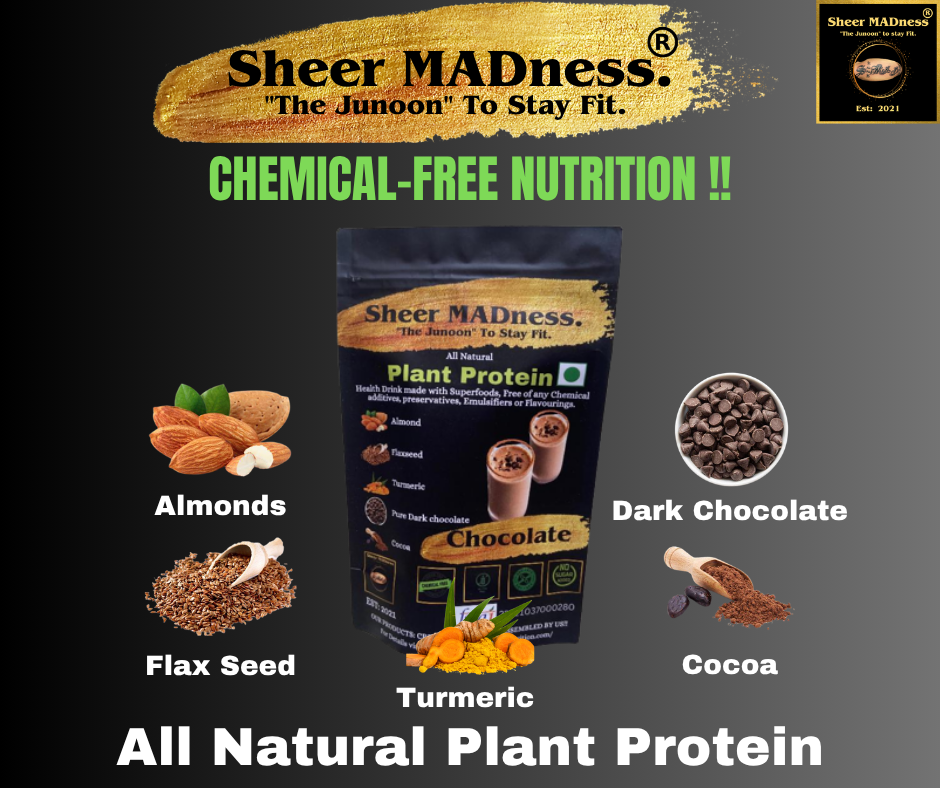
Our Chocolate powder contains roasted almond, roasted flaxseed, cocoa powder, dark chocolate and turmeric. Our Moringa powder contains moringa leaf, almond, flaxseed, turmeric and cardamom. Both are vegan, sieved and vacuum packed.
I want to be precise about what this means for athletes. The Moringa blend gives about 7.5 grams of protein per 25 gram serving. That is useful as part of a snack, but it is far less than an isolate-based shake gives. No powder of ours is meant to replace dal, curd, soya, eggs or paneer at your main meals.
For strength training, use the powder as an extra boost between meals. Blend it with milk, curd or soya milk to raise the protein. For endurance training, it works as an easy snack that adds protein, unsaturated fats, magnesium and fibre, ideally with a banana or dates for carbohydrate.
Because the powders contain fat and fibre, they digest slowly. Therefore, avoid taking them just before a hard run or during a race, as they could upset your stomach. Take them at least two hours before training, or afterwards.
I cannot claim that our powders improve performance, raise testosterone or build more muscle than any other protein. No trial has tested them in athletes, and I will not pretend otherwise. What I can say is that they are simple whole-food blends with every ingredient listed on the front of the pack.
Both powders contain almonds, so they are unsuitable for tree nut allergy. They contain no protein isolate and no anti-caking agent. The dark chocolate uses cocoa solids and a small amount of jaggery, with no refined sugar.
If you want performance, build the foundation first. So, train consistently, sleep, eat enough and spread protein across the day. A powder is a convenience and not a shortcut.
Food gives you most of your protein, and Indian kitchens offer a lot of choice. One katori of cooked dal gives roughly 7 to 9 grams. A cup of curd gives around 8 to 10 grams, and 100 grams of paneer gives about 18 grams.
Soya chunks are a powerhouse, with about 25 grams of protein per 50 grams of dry weight. An egg gives around 6 grams, and 50 grams of roasted chana gives about 10 grams. Tofu, sprouts, peanuts and milk also help.
Combine these with rice, roti, millets and vegetables. Then add a serving of powder when a meal falls short.
A long-run day for an endurance athlete might start with oats and banana, then a carbohydrate-rich meal two hours before the run. After the run, have curd rice with a banana, and later add dal, vegetables and roti. A snack with a serving of plant protein powder and fruit fits mid-afternoon.
A lifting day might begin with moong chilla or eggs and curd. Lunch can include dal, rice, vegetables and paneer or soya chunks. Have a plant protein shake with milk after training, and finish with a protein-rich dinner such as tofu or chicken, if you eat it.
Adjust portions to your body weight and appetite. Keep fluids steady through the day. Add salt and fluids on long, hot sessions.
Healthy kidneys handle high protein well, according to long-term reviews. People with kidney disease should not raise protein without medical advice. Anyone with a health condition, or who takes medicines, should ask a doctor.
Some sports supplements have been found to contain banned substances. Competitive athletes who face drug tests should choose products batch-tested by an independent sports certification scheme. Our powders are food products and do not carry such a certification.
Also watch for stomach upset in training, and test new foods on easy days. Start with half a serving of any new powder. Our posts on gas and loose motion explain the fixes, and Is plant protein safe? gives a full checklist.
One myth says that endurance athletes do not need protein. Most need more than sedentary people, and they need enough for repair and recovery. Another myth claims that strength athletes should eat huge amounts. Gains plateau at about 1.6 to 2.2 grams per kilogram.
Some people believe that plant protein cannot build muscle. Trials show equal gains when intake is high enough. Finally, many assume that a protein shake must follow a workout within thirty minutes. Total daily protein matters far more than minute-by-minute timing.
Most endurance athletes do well on about 1.2 to 1.6 grams per kilogram per day, with carbohydrate as the main fuel. Heavy training may push needs higher.
About 1.6 to 2.0 grams per kilogram per day supports muscle gain for most people. Some benefit from up to 2.2 grams.
Not necessarily. Food can meet the needs of most runners. A powder helps when meals fall short or when you want a convenient snack.
Yes. Trials show similar gains from plant and animal protein when total intake is high enough and training is consistent.
It can be part of a recovery snack, but it gives less protein per scoop than an isolate. Add curd, milk or soya milk, and eat a proper meal afterwards.
Spread protein across the day, with a serving within a few hours after training. Total daily intake matters more than exact timing.
For people with healthy kidneys, studies show no harm at the intakes athletes use. People with kidney disease need medical advice.
So, how does protein differ between endurance and strength training? Strength athletes need more, about 1.6 to 2.0 grams per kilogram. Endurance athletes do well on about 1.2 to 1.6 grams and a lot of carbohydrate. Both need more than a sedentary adult.
Honest advice means focusing on food, total calories, sleep and consistent training. Use a whole-food plant protein powder as a convenient top-up and not as a miracle product. See a doctor or sports dietitian if you have a health condition.
I built Sheer MADness powders from whole roasted almond and flaxseed, with turmeric and either cocoa with dark chocolate or moringa with cardamom. You can see every ingredient on the front of the pack before you buy. Try Plant Protein Chocolate or Plant Protein Moringa as part of your training day.
a) Everyone is an individual, so what suits me may or may not suit the next person.
b) If a person has a medical condition, a doctor’s advice and prescribed medication come first.
c) While buying any protein powder from the market, read the labels carefully. Watch out for codes and words such as anti-caking agent and INS 551, also known as silicon dioxide. These are laboratory-made additives, and although regulators approve them, it is fair to ask whether you want them in your daily scoop. Hence, read the ingredient list of every product before buying.
If you are interested in buying natural vegan protein powder, health drinks for kids, or our energy bars and protein bars, shop at Sheer MADness.
d) Exercise is the key to fitness. Exercise and nutrition are two sides of the same coin, and nutrition alone will not help you reach your goals without movement.
e) Excess of anything is wrong. Even the best nutrient-filled superfood should be consumed only in recommended quantities.
f) Regarding health, fitness and nutrition, remember that Rome was not built in a day. Your discipline and consistency are the key.
g) It’s not only exercise and protein that build muscles. A healthy gut, rest, your body type, genetics and your lifestyle all matter. Exercise and nutrition are within our control, so focus on these two first.
h) The most important part of fitness is that nothing is better than exercise and a balanced meal.
Disclaimer: Our products are a source of nutrients and are made from whole foods.
We do not claim to cure any medical condition.
The content provided is informational. We do not claim to diagnose or treat a person with any specific medical condition.