

Direct answer: For most girls, plant protein powder is not necessary, because a balanced Indian plate gives enough protein. Iron, calcium, vitamin D and enough total food matter more during the teen years. A simple, no-frills vegan powder can be an occasional convenience for an older girl, but only after a doctor or dietitian agrees. A powder should never be used to lose weight or change body shape.
This post speaks to girls and to the parents who worry about them.
It is different from our other guides. The children’s post helps a parent decide for a young child. The women’s posts explain hormones and adult life stages. This guide follows a girl from her first period to her college hostel, and it focuses on the choices she actually faces.
I am Chef Ashutosh Awasthi, founder of Sheer MADness, professional chef, marathon runner and author of Great Health Comes from Exercise & Nutrition. I am not a doctor, and I give no dose for any girl under 18. This article is part of my complete guide, Plant Protein, Protein Everything you should be aware of.
Girls see protein powders on social media, in gym reels and in friends’ bags. Many ads promise a toned body, glowing skin or a flat stomach. As a result, girls start to believe that a powder is a normal part of growing up.
It is not. However, most teenage girls in India do not lack protein. Instead, they lack iron, calcium, vitamin D, and sometimes enough calories overall. A powder cannot repair these gaps.
Therefore, the first question should not be “which powder?” Instead, ask what is missing from your plate. Then ask what your body needs right now.
Needs change quickly between ages 10 and 22. The table below gives a simple picture of what matters most at each stage. These are general guides, and a doctor can tailor them.
| Stage | What Matters Most | Food Examples |
|---|---|---|
| 10 to 12 years | Steady growth, iron, calcium | Milk, curd, dal, ragi, greens |
| 13 to 15 years | First periods, bone building, enough calories | Dal, chana, paneer, sesame in age-safe forms, fruit |
| 16 to 18 years | Peak bone growth, exam stress, sport | Mixed meals, curd, legumes, nuts, leafy vegetables |
| 18 to 22 years | Hostel food, independence, new habits | Eggs or paneer, sprouts, dal, fortified foods, fruit |
The US Dietary Reference Intakes give about 34 grams of protein a day for girls aged 9 to 13. For ages 14 to 18, the figure is about 46 grams. A glass of milk, a bowl of dal, two rotis and a bowl of curd already give about 25 grams.
Add a paneer or egg dish and a handful of roasted chana, and most girls reach their target. Please verify these figures with a doctor or dietitian.
Once periods start, girls lose iron every month. If the diet is low in iron, tiredness, pale skin, poor focus, hair fall and breathlessness can follow. Anaemia is common among Indian adolescent girls. The National Family Health Survey (NFHS-5) found that more than half of girls aged 15 to 19 were anaemic.
Protein powder does not fix this. Instead, iron-rich foods and a doctor’s advice do. For example, dal, rajma, chana, jaggery in small amounts, dates, leafy greens, sesame and fortified foods all help.
Plant iron absorbs better with vitamin C. Pair dal and greens with lemon, amla, guava or tomato. In contrast, tea and coffee with meals can reduce absorption, so keep them away from lunch and dinner.
If your daughter looks pale, feels tired often or has heavy periods, get a blood test. Our post on moringa and anaemia explains iron in more detail. Do not treat anaemia with a powder or a home remedy alone.
Bone is built fastest during the teen years. Many experts say that about 90 percent of peak bone mass is in place by the late teens. After that, there is little chance to catch up.
Girls need about 1,300 mg of calcium a day between ages 9 and 18, according to the US guidelines. Milk, curd, paneer, ragi, sesame, fortified plant milk and green leafy vegetables help. Sunlight and a doctor-advised vitamin D supplement matter too, since many Indian girls are low in vitamin D.
Weight-bearing exercise builds bone as well. For instance, skipping, dancing, running, cycling and sports all count. Our post on plant protein and bones explains how protein, calcium and activity work together.
Many girls first manage their own food in a hostel or a shared flat. Meals are often late, oily or skipped. Maggi, chai, biscuits and delivery food fill the gaps.
In that setting, a powder may seem like a solution. A better plan is to fix the basics first. So, keep roasted chana, peanuts, makhana, fruit, curd and boiled eggs or paneer on hand. Also, ask the mess for dal and vegetables at every meal.
If a powder helps you to eat a protein-rich breakfast, it can fit. Even then, it is a backup for busy days, and not a daily meal replacement. Sleep, water and regular meals matter just as much.
A good plate is simple. Fill half with vegetables and fruit, a quarter with protein and a quarter with whole grains. Add a small amount of healthy fat.
For breakfast, try besan chilla, poha with peanuts and curd, or idli with sambar. Lunch can be dal, sabzi, roti or millet, curd and salad. Snacks might be roasted chana, a banana with peanut butter, or sprout chaat.
Dinner can be khichdi with vegetables, paneer bhurji or tofu with roti. A glass of milk or fortified plant milk helps if it suits your body. As a result, many girls reach their protein target without any supplement.
Teenage years are a sensitive time for body image. Powders are often sold with ideas such as “lean”, “toned”, “slim” or “detox”. These words can push a girl towards restriction or over-exercise.
Watch for warning signs. They include skipping meals, counting every calorie, fear of certain foods, sudden weight loss, secret eating or exercise, and missed periods. If you see these, please talk to a doctor or a counsellor. They can be early signs of an eating disorder.
A protein powder is not a diet tool. Never use it to replace meals, and do not combine it with fat burners, “detox” teas or slimming products. In addition, a girl should not feel pressure to change her body to match online images.
Exams, tuition and screen time change how girls eat. Many skip breakfast, then snack on chips or sweets late at night. Sleep also suffers, and tired girls crave sugar.
Plan small, steady meals instead. A bowl of curd with fruit, a handful of roasted chana or a besan chilla keeps energy even. In addition, keep water nearby, and take short walking breaks between study hours.
Do not rely on caffeine or energy drinks to push through. They disturb sleep and raise anxiety in many teens. Hence, a powder is no answer to exam stress, and good sleep is a better study aid.
Many girls hope that a powder will give clear skin or thicker hair. Protein is one building block for skin and hair, but it is only one. Moreover, sleep, stress, iron, thyroid health, hormones, hair care and genetics all play a part.
I do not claim that any powder improves acne, skin glow, hair growth or nails. If you have severe acne, hair fall or irregular periods, see a doctor. They can check iron, thyroid and hormones.
Be careful with products that add high-dose biotin or herbal extracts. Biotin can disturb some blood tests. Our post on plant protein and hair loss explains this in more detail.
Girls who train hard have higher needs for calories, carbohydrate, iron and calcium. Unfortunately, many young female athletes under-eat without realising it. In fact, low energy intake can lead to missed periods and weak bones.
Therefore, the first step is enough real food, before and after training. A snack of banana and curd, or a glass of milk with roasted chana, works well. Fluids and sleep matter as well.
If a coach suggests a powder, ask a sports dietitian first. Check that the product is simple, with no banned or unlisted substances. Our guide on vegan protein for athletes covers the science for adults.
A powder may be considered for an older teenage girl or young woman with a clear need. Examples include a very busy schedule, a limited hostel diet, or recovery from illness. In each case, a doctor or dietitian should guide the decision.
Even then, the powder should be an add-on to a balanced diet. It should fit her allergies, her kidney health and her taste. In addition, it should come from a brand that shows its ingredients and test reports clearly.
For a girl under 18, I do not give a dose. A paediatrician or a dietitian can set one based on age, weight and diet. For adult women, see our women’s guide to vegan protein powder.
Many products target young women with attractive labels. Therefore, read the back of the pack, and not the front. Use the table below as a quick guide.
| What to Check | What You Want to See | Why It Matters |
|---|---|---|
| Intended age | Clear statement of who it is for | Adult products may not suit teens |
| Weight-loss words | None, such as “fat burn” or “detox” | Avoids pressure and risky products |
| Added sugar | None or very little | Protects teeth and energy levels |
| Stimulants | None, including caffeine or green tea extract | Safety, sleep and anxiety |
| High-dose biotin or herbs | Avoid unless a doctor advises | Can affect tests and health |
| Allergens | Clearly stated | Prevents reactions |
| Ingredient list | Short and readable | Easier to judge |
| Batch test report | Available on request | Contaminants matter in growing bodies |
If your daughter wants to try a powder, read the label together. This builds label-reading habits for life.
Nuts, soya, sesame and wheat are common allergens. As a result, many plant powders contain at least one. Ask an allergist if there is any family history, and watch for hives, swelling, vomiting or breathing trouble.
Chocolate-flavoured products can carry trace metals from cocoa. Our post on heavy metals in vegan protein powders explains why test reports matter. Our guide on side effects lists symptoms to watch.
Any girl with kidney disease, diabetes, thyroid problems or a long-term medicine should ask her doctor first. In the same way, anyone with irregular periods should find the cause, instead of guessing with supplements.
Make a short list before your visit. Ask whether your protein, iron, calcium and vitamin D are enough. Check if a blood test for haemoglobin, ferritin, vitamin D and thyroid is needed.
Ask whether a powder is necessary, and which type suits your age. Find out about allergy testing. Finally, ask how to build good eating habits, without extreme dieting.
Write the answers down. In addition, bring the product label, so the doctor can read the ingredients.
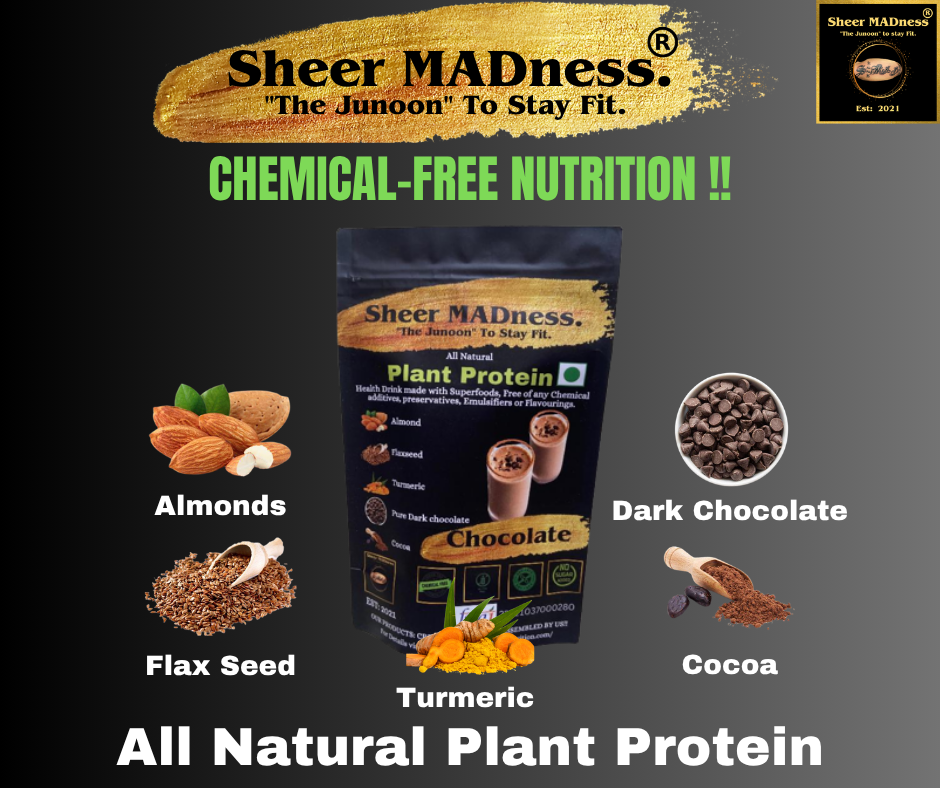
Our Chocolate powder contains roasted almond, roasted flaxseed, cocoa powder, dark chocolate and turmeric. Our Moringa powder contains moringa leaf, almond, flaxseed, turmeric and cardamom. Both are vegan, sieved and vacuum packed, with no protein isolate and no anti-caking agent.
I will not claim that either powder helps girls grow, change puberty timing, balance hormones, improve bone density, clear skin or lose weight. I have not tested them in teenagers, and I give no dose or age limit. Both powders contain almonds, so they are unsuitable for any girl with a tree nut allergy.
The Moringa blend gives about 7.5 grams of protein per 25 gram serving. I do not have protein, sugar, iron or calcium figures for the Chocolate blend to share. Please speak to your doctor before use, and treat any powder as food, not medicine. Our post on moringa for women’s health explains what moringa is, and what is not proven.
One myth says that protein powder makes girls bulky. Muscle gain needs heavy training and enough calories, so a scoop alone will not do it. Another myth says that protein delays or speeds up periods and puberty. There is no good evidence for that claim, so I do not make it.
A third myth says that girls need a powder for glowing skin. Skin depends on many factors, and food, sleep and a doctor’s care come first. A fourth myth says that plant protein is weaker than animal protein. A varied plant diet gives enough protein for most girls.
Any girl under 18 should ask a doctor before starting a powder. This is most important for those with allergies, anaemia, kidney problems, diabetes, thyroid problems, irregular periods or any eating concern. It also applies to girls on regular medicines.
For wider reading, see Is plant protein safe?. For hormones and cycles in adult women, read vegan protein and women’s health.
Most girls do not need it. An older girl may use a simple powder occasionally, if a doctor agrees and there is no allergy.
There is no single safe age for every product. Ask your doctor, and follow the age stated on the label.
No. Building large muscles needs heavy training and extra calories over a long time. A scoop alone will not do it.
I do not recommend it. Teen girls should not diet or use powders for weight loss, and a doctor should guide any weight concern.
There is no good evidence that a simple powder changes periods. Irregular or missed periods need a doctor’s check, so do not guess.
Neither is automatically better. The choice depends on allergies, diet, tolerance and your doctor’s advice.
Dal, chana, curd, paneer, eggs, tofu, sprouts, nuts in safe forms and milk or fortified plant milk. Add iron-rich foods and calcium sources every day.
So, is plant protein powder good for girls? It can be an occasional helper for an older girl with a clear need, but it is not a must. Iron, calcium, vitamin D, regular meals, sleep and activity matter far more.
Read every label, watch for allergies and ignore body-shaping claims. When in doubt, ask your doctor. A girl’s health is not built by a scoop, but by habits she can keep.
Start with the plate, not the scoop. If your doctor agrees that a powder suits you, choose a short, clear ingredient list. You can see every ingredient of Plant Protein Moringa and Plant Protein Chocolate before you buy, and you can share them with your doctor. For a food-led idea, see our desi protein shake recipe.
a) Everyone is an individual, so what suits me may or may not suit the next person.
b) If a person has a medical condition, a doctor’s advice and prescribed medication come first.
c) While buying any protein powder from the market, read the labels carefully. Watch out for codes and words such as anti-caking agent and INS 551, also known as silicon dioxide. These are laboratory-made additives, and although regulators approve them, it is fair to ask whether you want them in your daily scoop. Hence, read the ingredient list of every product before buying.
If you are interested in buying natural vegan protein powder, health drinks for kids, or our energy bars and protein bars, shop at Sheer MADness.
One can also buy our Products From Flipkart, Jio Mart or ONDC in India.
d) Exercise is the key to fitness. Exercise and nutrition are two sides of the same coin, and girls should enjoy active play and sport every day.
e) Excess of anything is wrong. Even the best nutrient-filled superfood should be consumed only in recommended quantities.
f) Regarding health, fitness and nutrition, remember that Rome was not built in a day. Your discipline and consistency are the key.
g) A girl’s health depends on age, growth, periods, iron levels, allergies, family habits and medical history. Exercise and nutrition are within our control, so build good habits early and seek a doctor’s advice.
h) The most important part of fitness is that nothing is better than exercise and a balanced meal.
Disclaimer: Our products are a source of nutrients and are made from whole foods.
We do not claim to cure any medical condition.
The content provided is informational. We do not claim to diagnose or treat a person with any specific medical condition.