
Direct answer: Yes, plant protein can be a useful part of a diabetes-aware diet, but it supports management and does not treat the disease. Protein slows the rate at which carbohydrate reaches the blood. It also prompts gut hormones that help the body release insulin at the right time. Whole-food plant protein brings fibre, magnesium and polyphenols that animal protein lacks. Large population studies link replacing red and processed meat with plant protein to a lower risk of type 2 diabetes, although those studies show association, not proof. The benefit depends on the whole product, its sugar content, your medicines and your kidney health.
I am Chef Ashutosh Awasthi, founder of Sheer MADness, professional chef, marathon runner and author of Great Health Comes from Exercise & Nutrition. Diabetes touches almost every Indian family, so this question deserves an honest, evidence-based answer. This post is part of my complete guide, Plant Protein, Protein Everything you should be aware of.
This page explains the science of protein and blood glucose. For advice on choosing a powder at the shop, read Can vegan protein powder help control diabetes? For the biology of cravings, read Does plant protein help in reducing sugar cravings?
The ICMR-INDIAB study, published in The Lancet Diabetes & Endocrinology in 2023, estimated about 101 million Indians living with diabetes. It also estimated about 136 million with prediabetes. These numbers make diabetes a national concern, not a niche one. Many cases involve a thin-fat body type, where insulin resistance appears at a lower body weight than in Western populations.
The typical Indian plate adds to the problem. Polished rice and refined wheat often supply well over half of daily energy, while dal portions stay small. Carbohydrate therefore arrives fast, and protein and fibre arrive late or not at all. Raising the protein and fibre share of a meal is one of the simplest ways to flatten that glucose curve.
This is where plant protein enters the discussion. It offers protein and fibre together, from foods that Indian kitchens already know.
Protein and fat slow gastric emptying, which is the rate at which the stomach passes food to the small intestine. Slower emptying means glucose reaches the blood more gradually. A meal with dal, curd or nuts therefore produces a lower, later glucose peak than the same rice eaten alone.
Amino acids in the small intestine prompt gut cells to release GLP-1 and GIP, known as incretin hormones. GLP-1 helps the pancreas release insulin only when glucose is high, and it lowers glucagon. It also slows stomach emptying further and increases fullness. Modern diabetes medicines such as semaglutide act on this same hormone pathway. Food protein triggers your own GLP-1 release at a much smaller scale.
Some amino acids, including leucine and arginine, nudge the pancreas to release a little insulin. This effect is modest, and it helps clear the glucose that arrives with the meal. People who inject insulin should know that a very large protein meal can raise glucose several hours later. They should plan such meals with their care team.
Large Harvard cohort studies followed hundreds of thousands of adults for decades. They link higher red and processed meat intake with higher type 2 diabetes risk. They also find that swapping those foods for nuts, legumes and whole grains goes with lower risk. These are observational studies, so they show association and not proof of cause.
Randomised trials add a smaller but useful signal. A 2019 meta-analysis by Viguiliouk and colleagues pooled trials in people with diabetes. It found that replacing animal protein with plant protein slightly improved HbA1c and fasting glucose. The change was small, roughly a tenth to a fifth of a percentage point in HbA1c, so it supports a diet pattern and not a miracle.
Researchers suggest several reasons. Plant foods bring fibre, magnesium and polyphenols. Red meat brings more heme iron and saturated fat, and animal protein carries more branched-chain amino acids, which circulate at higher levels in people with insulin resistance. Dairy and fish do not show the same harm in most studies. The message is therefore about replacing red and processed meat, not about avoiding every animal food.
Whole-food plant protein arrives with fibre. Soluble fibre forms a gel in the small intestine that slows glucose absorption and blunts the after-meal rise. Fermentable fibre also feeds gut bacteria that produce short-chain fatty acids. These acids are linked with better insulin sensitivity and with GLP-1 release.
Protein isolates lose their fibre during concentration. A powder made from isolate delivers amino acids but misses this second effect. Flaxseed is rich in both soluble and insoluble fibre, which makes it a useful ingredient in this setting. Fibre also needs water, so anyone raising their intake should drink enough fluids.
Randomised trials show lower after-meal glucose when almonds join a carbohydrate meal. Fat, fibre and magnesium probably explain this. Effects on long-term HbA1c are modest and not consistent across trials. Almonds are also energy-dense, so portions matter.
Whole flaxseed supplies viscous fibre, lignans and alpha-linolenic acid. Some trials in type 2 diabetes show modest improvements in glucose markers, while others show little change. I treat flaxseed as a helpful fibre source and not as a glucose-lowering agent.
Curcumin has improved fasting glucose and insulin resistance slightly in some trials. Those trials mostly used supplement doses far above a spice-sized amount. The turmeric in a protein powder adds flavour and a little polyphenol, not a therapeutic dose. At high doses, curcumin can interact with blood thinners and diabetes medicines.
High-flavanol cocoa has improved insulin sensitivity in short trials. The cocoa in one serving is modest, and it carries caffeine and theobromine. Evening use may therefore affect sleep in sensitive people.
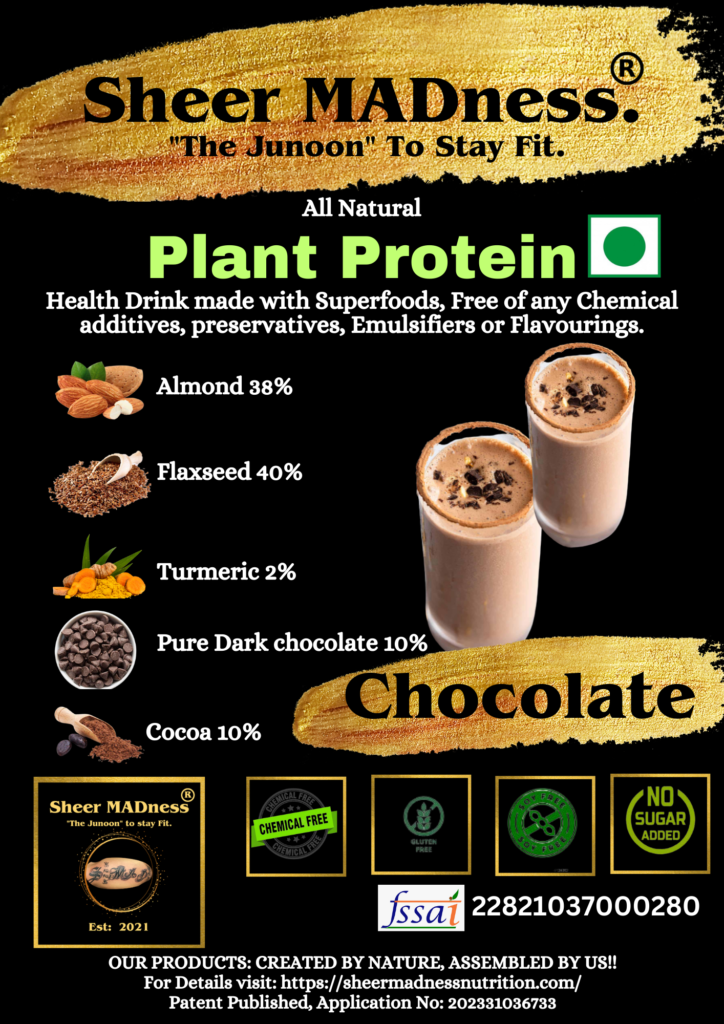
Readers with diabetes deserve a straight answer about sweetness. Sheer MADness Plant Protein Chocolate uses dark chocolate made with cocoa solids and a small amount of jaggery. It contains no refined sugar, no artificial sweetener and no maltodextrin. Jaggery is still sugar, mostly sucrose, so it raises blood glucose like other sugars. The amount per serving is small.
Check the nutrition panel for the sugar in one serving, and count it in your meal plan like any carbohydrate. Plant Protein Moringa contains no sweetener ingredient. If you monitor glucose, test your own response by comparing readings before a serving and one to two hours after. Individual responses vary widely.
People who take insulin or sulfonylureas should plan changes with their doctor. Replacing refined carbohydrate with protein and fibre can lower glucose enough that the same dose causes hypoglycaemia. Check readings more often when you change your meals, and keep your usual medicines unless your doctor changes them.
Kidney health needs separate attention. Diabetes is a leading cause of chronic kidney disease. Guidelines often suggest around 0.8 grams of protein per kilogram of body weight for people with diabetes and kidney disease who are not on dialysis. If your kidney function is reduced, ask your nephrologist before adding any protein supplement, plant based or not.
Allergy and interactions matter too. Both powders contain almonds, a tree nut allergen. Turmeric and moringa can add to the effect of blood thinners or glucose-lowering drugs at supplement doses, so mention your supplements at every review. My post on whether moringa protein powder can help control diabetes covers that side in detail.
Most adults with diabetes and healthy kidneys do well on roughly 0.8 to 1.2 grams of protein per kilogram of body weight, spread across meals. Food comes first. Dal, sprouts, curd, paneer, eggs, nuts, seeds and vegetables should carry most of the load.
A powder fills gaps and adds convenience when a meal is short on protein. Pairing it with vegetables, curd or millets keeps the meal slow and balanced. Mixing it into sweet drinks or white-rice dishes cancels the advantage. For timing, portions and label checks, read Can vegan protein powder help control diabetes?
No food cures diabetes, and plant protein is no exception. It will not replace medicines, insulin, exercise, sleep or regular checks. Food cannot promise a lower HbA1c. It cannot offset a diet built on sugary drinks and refined snacks.
Think of it as one supportive piece in a larger plan. The plan itself belongs to you and your doctor.
Our powders are made from roasted almond and flaxseed, ground and mixed with turmeric, and then either cocoa with dark chocolate or moringa with cardamom. The dry ingredients absorb the natural oil of the almond and flaxseed, so the mix stays a free-flowing powder without an anti-caking agent. We sieve it and vacuum pack it with no preservative. Both powders are vegan.
Every ingredient has appeared on the front of our pack since 2021. You can read the list yourself and compare it with any other powder. Plant Protein Chocolate and Plant Protein Moringa both follow this approach.
Sheer MADness holds a registered trademark under the Government of India. The natural plant protein composition is the subject of Patent Application No. 202331036733, which is published and under examination. The brand holds a valid FSSAI licence and GSTIN registration.
| Effect | How It Works | Strength of Evidence |
|---|---|---|
| Slower glucose arrival | Protein, fat and fibre slow gastric emptying | Strong, basic physiology |
| Incretin release | Amino acids trigger GLP-1 and GIP | Strong, basic physiology |
| Lower diabetes risk when replacing red meat | Cohort association | Moderate, observational |
| Small HbA1c gain over animal protein | Pooled randomised trials | Moderate, small effect |
| Fibre gel and short-chain fatty acids | Soluble and fermentable fibre | Strong for fibre in general |
| Lower after-meal glucose with almonds | Fat, fibre and magnesium | Moderate |
| Flaxseed glucose markers | Fibre and lignans | Mixed |
| Curcumin and fasting glucose | Anti-inflammatory action | Mixed, dose dependent |
| Cocoa flavanols and insulin sensitivity | Vascular and insulin signalling | Limited, short trials |
It can be a helpful part of a diabetes-aware diet. Protein slows glucose arrival and prompts incretin hormones, while whole-food sources add fibre. Studies link plant protein with lower diabetes risk, and the effect on HbA1c is small. It supports management and never replaces medicine.
Protein raises glucose much less than carbohydrate does. In people who use insulin, a very large protein meal can cause a delayed rise several hours later. Discuss meal planning with your care team.
Whey also has good evidence for lowering after-meal glucose when taken before a meal. Plant protein adds fibre and links with lower long-term risk in population studies. The better choice depends on your digestion, diet and doctor’s advice.
It contains a small amount of jaggery, which is sugar. Check the nutrition panel for the amount per serving, and count it in your meal. Individual responses differ, so checking your own readings is wise.
Tell your doctor first. Changing your meals can alter your glucose and your medicine needs. Turmeric and moringa can add to the effect of some drugs at supplement doses.
Plant protein is not automatically safe for reduced kidney function. Protein targets often change with kidney disease, so ask your nephrologist before adding any supplement.
A diet higher in fibre and protein suits many people with prediabetes. Weight, activity, sleep and regular testing matter more than any single food. A powder is a small helper.
So, is plant protein good for diabetes? It can be, as part of a diet that already respects carbohydrate, fibre, activity and medicine. The physiology is sound: protein and fibre slow glucose, and amino acids trigger the hormones that help insulin work. Population studies and small trials point the same way, although the measured effects are modest.
Honest advice also includes the limits. Watch the sugar in any powder, including jaggery. Plan medicine changes with your doctor, and protect your kidneys by asking before adding supplements. No powder replaces dal, vegetables, movement and sleep.
Sheer MADness powders aim to be a simple, transparent helper. They contain whole roasted almond and flaxseed, turmeric, and either cocoa with dark chocolate or moringa with cardamom, with every ingredient on the front of the pack.
a) Everyone is an individual, so what suits me may not suit the next person.
b) If a person has a medical condition, a doctor’s advice and prescribed medication will only help. Diabetes, prediabetes and kidney disease need regular medical care, and no supplement replaces it.
c) While buying any protein powder from the market, read the labels carefully. Watch out for INS codes, anti-caking agents, INS 551 (silicon dioxide), BHA (butylated hydroxyanisole), BHT (butylated hydroxytoluene), maltodextrin and sweeteners, and check the sugar per serving.
If you are interested in buying chemical-free Natural Plant Protein, Health Drinks for Kids, or our Energy Bars, Protein Bars and Millet Bars, shop at Sheer MADness.
You can also find us on Flipkart, Jio Mart or ONDC in India.
d) Exercise is the key to fitness. Exercise and nutrition are two sides of the same coin and always go hand in hand. Muscle is a major site of glucose uptake, so regular activity helps blood sugar control more than any powder.
e) Excess of anything is wrong, even the best whole-food superfood. Consume only recommended quantities.
f) Rome was not built in a day. Discipline and consistency are the only keys to lasting health.
g) It is not only exercise and protein that builds health. A healthy gut, macro and micronutrients, body type, rest and lifestyle all matter. Exercise and nutrition are within our control, so focus on these two first.
h) The most important part of fitness is that nothing is better than exercise and a balanced meal.
Article by Chef Ashutosh Awasthi
Disclaimer: Our products are a source of HEALTHY NUTRIENTS and are COMPLETELY FREE OF ANY ADDED CHEMICALS. We do not claim to cure any medical condition. The content provided is informational. We do not claim to diagnose or treat a person with any specific medical condition.