
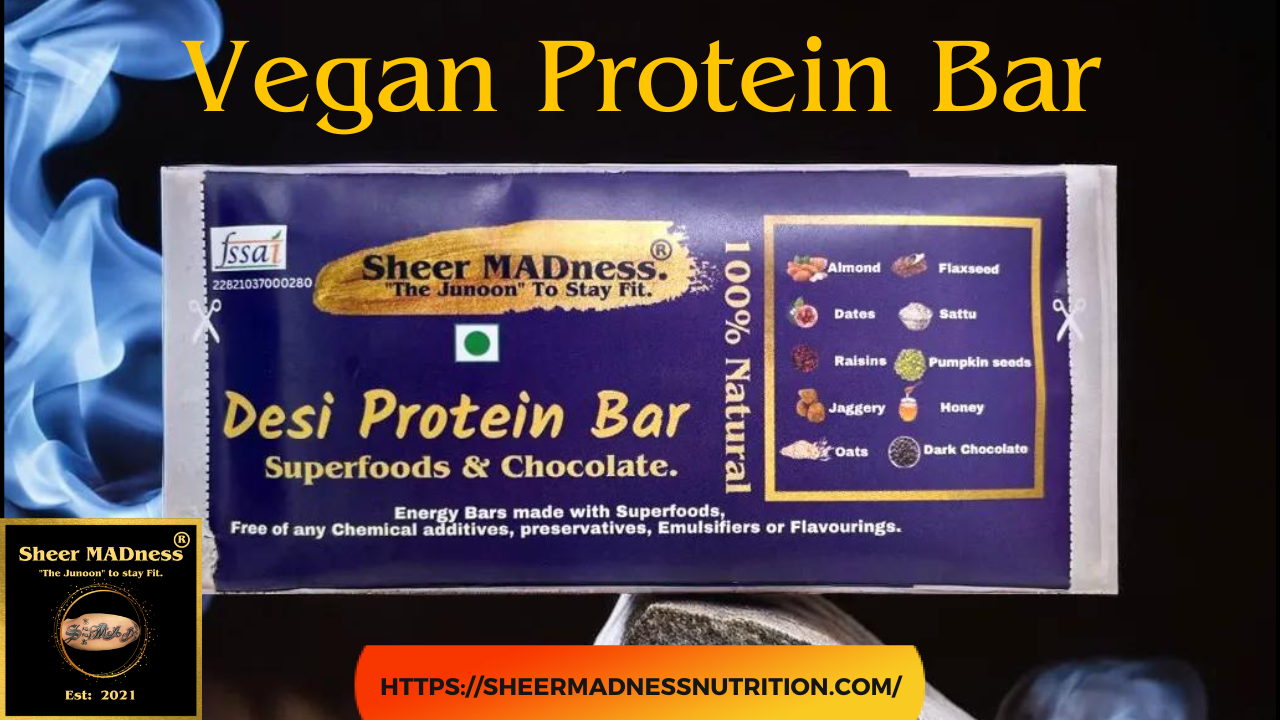
Direct answer: Vegan protein bars derive every gram of protein from plant sources — no whey, no casein, no egg, no collagen. The best vegan protein bars in India go further — they use whole-food plant proteins rather than chemically isolated plant protein concentrates, natural sweeteners rather than artificial alternatives, and whole-food ingredients that address the specific micronutrient needs of plant-based diets.
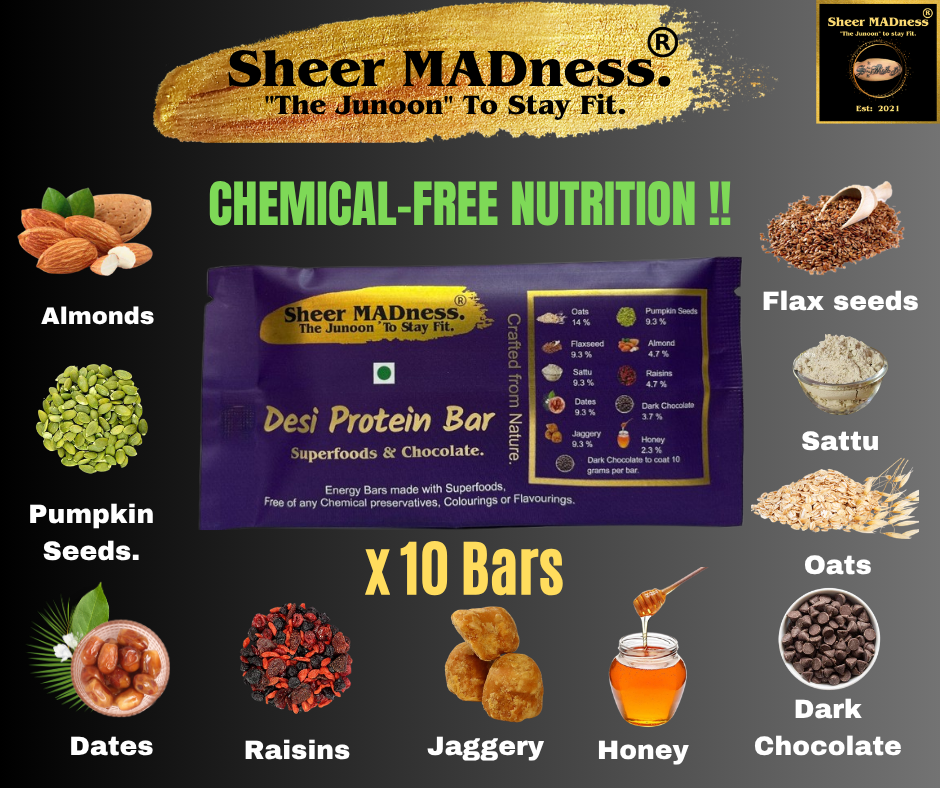
Sheer MADness bars are built entirely from plant-sourced ingredients — sattu, almonds, oats, flaxseed, pumpkin seeds, melon seeds, dates, raisins, jaggery, and dark chocolate. They do contain honey — which places them outside strict veganism but firmly within the plant-forward, dairy-free, and plant-based eating categories that describe the vast majority of India’s growing plant-conscious food community.
I’m Chef Ashutosh Awasthi, founder of Sheer MADness, professional chef, marathon runner, and author of Great Health Comes from Exercise & Nutrition. I built this brand on Indian plant food tradition — not on imported protein isolate formats. Let me explain the full science and story of plant-based nutrition in bar form.
India has always been the world’s most plant-based food culture. Approximately 38 to 40 percent of Indians identify as vegetarian. The majority of the remaining population eats meat rarely — primarily on special occasions. India’s traditional food culture is built around pulses, grains, vegetables, nuts, and seeds — the same categories that define plant-based eating globally.
The Good Food Institute India estimated in 2024 that the Indian plant-based food market was growing at approximately 20 percent annually — one of the fastest growth rates globally. However, this growth was not a trend import from Western vegan culture. It was a rediscovery of what Indian food culture always knew.
The irony of India’s supplement market is specific. A country with one of the most sophisticated plant-based food traditions in the world imported Western protein bars built on whey protein isolate — a dairy-derived product that the majority of Indian adults cannot efficiently digest. The opportunity for genuinely Indian plant-based protein bars was always there. Sheer MADness was built to fill it.
Furthermore, the ICMR-NIN 2024 Dietary Guidelines specifically recommend pulses and legumes as the cornerstone of Indian protein nutrition — endorsing exactly the pulse-based, plant-protein approach that Sheer MADness uses through sattu as its primary protein source.
Plant-based nutrition is frequently misunderstood — both overclaimed and underclaimed in the bar market.
Overclaiming happens when brands market pea protein isolate or rice protein concentrate bars as “plant-based” while using the same industrial extraction chemistry that makes whey protein isolate. Extracting protein from peas through alkaline processing and acid precipitation produces a chemically similar product to whey isolate — just from a plant source. It is technically plant-based. It is not nutritionally superior to plant protein in a whole-food form.
Underclaiming happens when the nutritional community dismisses plant protein as incomplete or inferior. This position is outdated. A 2024 review published in Nutrients on protein quality in plant-based diets confirmed that plant protein combinations — specifically legumes with grains and nuts — create complete amino acid profiles comparable to animal protein when consumed in appropriate combinations.
True plant-based nutrition means protein from whole plant foods — sattu, almonds, oats, seeds — that arrive with their natural fibre, fats, vitamins, and minerals intact. This is fundamentally different from isolated plant protein powder that strips away everything except the protein fraction.
Nine amino acids are essential — the body cannot synthesise them and must obtain them from food. Individual plant proteins are typically lower in one or more essential amino acids. This is the basis of the “incomplete plant protein” concern that has historically made people cautious about plant-based eating.
However, combining complementary plant proteins creates a complete essential amino acid profile. This principle underlies every traditional plant-based food culture — dal and roti in India, rice and beans in Latin America, tofu and rice in East Asia. Sheer MADness applies this same principle in bar form.
Sattu — roasted chickpea flour — is high in lysine but lower in methionine. Almonds provide methionine and arginine. Oats contribute methionine and tryptophan. Flaxseed adds methionine and cysteine. Together, these four whole plant protein sources cover all nine essential amino acids at meaningful levels — without any synthetic amino acid supplementation.
A 2024 Nutrients review on plant protein quality confirmed that complementary plant protein combinations consistently provide adequate essential amino acid profiles for muscle protein synthesis, body composition, and long-term health — comparable to animal protein when total daily intake is adequate.
The 2025 Scientific Reports study on protein digestibility across 1,641 bars found that entirely plant-based bars built on isolates showed the lowest protein digestibility — as low as 47 percent in some cases. This means bars with 20 grams of pea or rice protein isolate may deliver as little as 9 to 10 grams of usable protein.
Whole-food plant protein from sattu, almonds, and oats digests in the natural food matrix that the gut evolved to process. The protein arrives with fibre, fats, and cofactors that the digestive system handles efficiently. The practical digestibility of whole-food plant protein is meaningfully better than the label suggests for many isolate-based “vegan” bars.
Plant-based diets require specific attention to micronutrients commonly found in animal foods. The most important for Indian plant-based consumers are iron, zinc, omega-3, calcium, and B12.
Sheer MADness bars specifically address four of these five through whole-food sources.
Iron from jaggery at approximately 11 milligrams per 100 grams, from sattu at 8 to 9 milligrams per 100 grams, and from raisins — three iron sources in one bar alongside the natural vitamin C in raisins and dates that enhances non-haem iron absorption.
Zinc from pumpkin seeds at approximately 7.8 milligrams per 100 grams and from melon seeds — two whole-food zinc sources addressing the zinc gap that Indian vegetarian diets commonly show from phytate-rich grain-based eating.
Omega-3 from flaxseed — 1.1 to 1.8 grams of ALA per bar — the most practical plant omega-3 source available for Indian consumers who don’t eat fish.
Calcium from almonds at approximately 264 milligrams per 100 grams alongside magnesium that improves calcium absorption — addressing the bone density concern of dairy-free eating without dairy.
Vitamin B12 is the one nutrient Sheer MADness bars do not address — B12 is found almost exclusively in animal foods and requires specific supplementation for strict plant-based eaters. This is an honest gap that no whole-food plant bar can address without synthetic B12 fortification.
The most powerful argument for Indian plant-based protein bars is cultural — the same plant proteins that define Sheer MADness bars have sustained Indian bodies for centuries without any animal protein supplement.
Sattu is roasted Bengal gram flour. It provides 20 to 22 grams of protein per 100 grams at a glycaemic index of just 28 to 35. Indian wrestlers, farmers, soldiers, and athletes consumed sattu daily for strength, endurance, and sustained energy — centuries before whey protein was manufactured.
Bihar’s sattu sharbat. Bengal’s sattu laddoos. Rajasthani sattu parathas. These were not supplementary foods — they were staple foods that provided the daily protein sustaining populations engaged in heavy physical labour. Sattu is plant-based nutrition with a 2,000-year performance record that no protein isolate can match in terms of historical validation.
“Doodh Badam” — almond milk — has been India’s original plant-based energy drink for generations. Indian grandmothers gave almonds to children, athletes, and recovering family members for strength, brain function, and vitality. This intuitive application of whole-food plant nutrition preceded the modern evidence base by centuries.
Modern nutritional science confirms what Indian families always knew. Almonds provide Vitamin E, magnesium, healthy monounsaturated fats, plant protein, and prebiotic fibre in one whole-food package — a complete nutritional unit that no isolated almond protein powder can replicate.
Indian traditional cooking incorporated flaxseed in rotis, chutneys, and everyday preparations specifically for its beneficial oil content. Before fish oil supplements became a global industry, Indian cooks understood intuitively that flaxseed provided unique nutritional value. Modern research confirms this as plant omega-3 — ALA, the precursor to EPA and DHA.
Jaggery has sweetened Indian food for millennia while providing iron, potassium, and magnesium from unrefined cane juice. Unlike refined sugar that strips away all mineral content, jaggery retains the nutritional complexity of the original plant — making it a functional plant food rather than a simple sweetener.
Pumpkin seeds and melon seeds have been part of Indian food culture in chaat, kheer, and everyday cooking for generations. Their zinc, magnesium, and iron content makes them specifically valuable for plant-based diets that rely on plant foods for minerals typically found in meat and seafood.
Plant-based eating has a significantly lower environmental footprint than animal-based nutrition. This is the second major driver of plant-based food growth globally — alongside health motivation.
The FAO estimates that livestock production is responsible for approximately 14.5 percent of global greenhouse gas emissions. Dairy production — the source of whey protein that most commercial protein bars use — is a significant component of this figure alongside its land use, water use, and biodiversity impact.
Plant-based protein sources have dramatically lower environmental impact across all these metrics. Chickpeas and legumes used for sattu specifically fix atmospheric nitrogen — improving soil health rather than depleting it. Almonds require water but provide high nutritional density per gram. Flaxseed grows on low-input marginal land.
A bar built on Indian plant superfoods — sattu, almonds, flaxseed, seeds, dates, jaggery — has a significantly lower environmental footprint than a bar built on imported whey protein processed through industrial dairy infrastructure.
This is the distinction that separates genuinely plant-based nutrition from marketing that uses plant-based labelling on industrially processed products.
Commercial bars marketed as “vegan” or “plant-based” in India typically use pea protein isolate, rice protein concentrate, or soy protein isolate as their primary protein source. These are technically plant-derived. However, they undergo extensive industrial chemical processing — alkaline extraction, acid precipitation, spray drying — that strips away the fibre, antioxidants, and micronutrients the original plant food contained.
The result is a bar that is plant-based in the narrow technical sense — no animal was harmed in the production of the protein powder — while being industrially processed in the same way as whey protein isolate.
Sheer MADness takes a categorically different approach. We start with whole foods. Sattu is roasted chickpea flour — the chickpea is the food. Almonds are whole almonds — pressed and mixed, not chemically extracted. Oats are whole rolled oats — the grain structure is intact. Flaxseed is whole flaxseed — the oil, fibre, and lignans all present together.
This whole-food approach to plant-based nutrition is nutritionally superior, culturally authentic to Indian food tradition, and genuinely aligned with the values that drive plant-based eating — health, environmental sustainability, and food integrity.
Sheer MADness Protein Bars, Energy Bars, and Millet Bars represent the most nutritionally complete, most culturally authentic, and most chemically clean plant-based protein bars available in India.
Every protein source is plant-based. No whey, no casein, no lactose, no dairy-derived ingredient of any kind. For the 60 to 70 percent of Indian adults with some degree of lactose intolerance, dairy-free plant protein from sattu, almonds, and oats is not just ethically preferred — it is physiologically superior.
Zero pea protein isolate. No rice protein concentrate. Zero soy protein concentrate. Every gram of protein comes from whole plant foods in their natural form. This delivers protein with the food matrix that supports efficient digestion — rather than isolated protein that the 2025 Scientific Reports study found can deliver as little as 47 percent usable protein.
Zero BHA, zero BHT, zero artificial sweeteners, zero sugar alcohols, zero synthetic emulsifiers. The plant foods in Sheer MADness bars are preserved with oxygen absorbers — physical preservation that changes nothing about the food’s chemistry. Every compound in the bar is a natural plant food compound.
Dates, raisins, and jaggery sweeten every Sheer MADness bar alongside honey. For plant-forward eaters who accept honey — the large majority of India’s plant-conscious food community — this combination provides nutrition alongside sweetness in a way that maltitol and sucralose cannot.
Since 2021, Sheer MADness displays every ingredient with its own image on the front of every pack. The plant food sources of every nutrient are visible before the bar is opened. This front-of-pack transparency is the most honest representation of plant-based nutrition available from any Indian bar brand.
Sheer MADness bars contain honey. For strict vegans who exclude all animal-derived ingredients including honey, the bars are not technically vegan.
For strict vegans seeking Sheer MADness whole-food nutrition in a fully plant-based format, the Sheer MADness Plant Protein Moringa and Plant Protein Chocolate powders are the right choice. These contain moringa leaf, almonds, flaxseed, turmeric, and cardamom or cocoa — with zero honey, zero dairy, and zero animal-derived ingredient. Mix one to two scoops into oat milk, almond milk, or any plant-based milk for a complete plant protein drink that meets the strictest vegan standard.
Sheer MADness holds a registered trademark under the Government of India. The Natural Plant Protein formula is patent published under Patent No. 202331036733, searchable on Intellectual Property India. The brand holds a valid FSSAI licence and GSTIN registration.
| Feature | Sheer MADness | Pea Isolate Vegan Bar | Whey Commercial Bar |
|---|---|---|---|
| Protein source | Sattu, almonds, oats — whole plant food | Pea protein isolate — chemically extracted | Whey protein — dairy |
| Protein digestibility | High — whole-food matrix | Low to moderate — 47-86% per Scientific Reports | High — but dairy-derived |
| Dairy-free | Yes | Yes | No |
| Honey-free (strict vegan) | No — contains honey | Usually | Usually |
| Iron for plant diets | Yes — jaggery, sattu, raisins | Usually absent | Absent |
| Zinc for plant diets | Yes — pumpkin seeds, melon seeds | Usually absent | Absent |
| Omega-3 from plant source | Yes — flaxseed 1.1-1.8g ALA | Usually absent | Absent |
| Chemical preservatives | None | BHA, BHT common | BHA, BHT common |
| Artificial sweeteners | None | Sucralose, stevia common | Sucralose, maltitol |
| Environmental footprint | Low — whole Indian plant foods | Moderate — pea farming lower than dairy | High — dairy system |
| Front-label transparency | Every ingredient named and pictured | INS codes in small print | INS codes in small print |
| Price per bar | ₹60 | ₹100 to ₹200 | ₹80 to ₹150 |
| Made in India | Yes — Kolkata | Often imported | Often imported |
What are vegan protein bars?
Vegan protein bars use only plant-derived protein sources — no whey, casein, egg, or animal-derived protein. The best vegan protein bars use whole-food plant proteins from sattu, almonds, oats, and seeds rather than isolated plant protein concentrates. They address the specific micronutrient needs of plant-based diets — iron, zinc, omega-3, and calcium — from whole-food plant sources.
Are Sheer MADness bars vegan?
Sheer MADness bars contain honey — making them suitable for plant-forward, dairy-free, and plant-based eaters who accept honey, but not for strict vegans who exclude all animal-derived ingredients. For strict vegans, the Sheer MADness Plant Protein Moringa and Chocolate powders are fully vegan alternatives with no honey.
What is the best plant protein source for a protein bar in India?
Sattu — roasted Bengal gram flour — is the most appropriate Indian plant protein for protein bars. It provides 20 to 22 grams of protein per 100 grams with a glycaemic index of 28 to 35, alongside 7.6 grams of fibre and meaningful iron. It has been consumed by Indian bodies for centuries without digestive issues and is lactose-free, allergen-friendly, and culturally authentic to Indian plant-based food tradition.
Why is whole-food plant protein better than plant protein isolate?
Whole-food plant protein arrives with fibre, minerals, vitamins, and healthy fats that the original plant food naturally contained. Plant protein isolate is chemically extracted from the plant, stripping away these companion compounds. The 2025 Scientific Reports study found that plant protein isolate bars delivered as little as 47 percent usable protein — making the whole-food protein from whole plant foods specifically more efficient despite a potentially lower label protein number.
Iron from jaggery, sattu, and raisins for haemoglobin production. Zinc from pumpkin seeds and melon seeds for immunity and thyroid function. Omega-3 from flaxseed for cardiovascular and anti-inflammatory benefit. Calcium from almonds for bone density. Folate from sattu for DNA synthesis and homocysteine reduction. B12 is not available from plant foods and requires separate supplementation for strict plant-based eaters.
How does plant-based protein support the environment?
Plant-based protein sources have significantly lower greenhouse gas emissions, land use, and water use than dairy-based protein. The FAO estimates livestock produces approximately 14.5 percent of global greenhouse gas emissions. Choosing plant-protein bars over whey-based alternatives reduces individual dietary environmental impact meaningfully across daily consumption.
Are Indian plant foods better than imported plant protein sources?
For Indian consumers, yes. Indian plant proteins — sattu, almonds, flaxseed, lentils, seeds — are culturally compatible with Indian digestive physiology. Indian bodies have processed these foods efficiently for generations. Imported pea protein and rice protein concentrates are foreign protein fractions that require digestive adaptation that Indian traditional plant foods never needed.
What is the difference between plant-based and vegan protein bars?
Plant-based bars use primarily or exclusively plant-derived ingredients. Vegan bars specifically exclude all animal-derived ingredients including honey, dairy, eggs, and some food additives. All vegan bars are plant-based; not all plant-based bars are strictly vegan — bars containing honey are plant-based but not vegan. Sheer MADness bars are plant-based and appropriate for most plant-forward eaters, but not strictly vegan due to honey.
India has always known how to build nutrition from plants. Sattu, almonds, flaxseed, jaggery, dates, seeds — these are the plant foods that fed Indian bodies through centuries of physical labour, athletic performance, and cultural vitality before protein supplements existed as a concept.
Vegan protein bars built on these Indian plant superfoods represent the most nutritionally complete, most culturally authentic, and most environmentally responsible protein bar category available in India today. They deliver complete plant protein through complementary whole-food combining, address the specific micronutrient needs of plant-based diets through iron, zinc, omega-3, and calcium from whole-food sources, and support the gut microbiome and hormonal health that plant-based eating specifically benefits.
Sheer MADness bars are built on these principles — from eleven whole plant-food ingredients, preserved with oxygen absorbers, displayed transparently on the front of every pack since 2021, at ₹60 per bar.
For plant-forward, dairy-free, and plant-based eaters who include honey — these bars represent the most complete plant-based nutrition available in India. For strict vegans who exclude honey — the Sheer MADness Plant Protein Powders are the right choice.
The power of plant-based nutrition is not in exotic imported ingredients or industrial protein extraction. It is in the whole plant foods that Indian food culture always had — and that Sheer MADness puts back in bar form.
I would also request you to kindly read my previous post about “Healthiest Protein Bar in India“.
a) Everyone is an individual, so what suits me may not suit the next person.
b) If a person has a medical condition, a doctor’s advice and prescribed medication will only help.
c) While buying any protein bar from the market, read the labels carefully. Watch out for INS 320 (BHA), INS 321 (BHT), INS 551 (silicon dioxide), maltitol, sorbitol, sucralose, and other lab-made chemicals that quietly appear on most commercial labels — including many bars marketed as vegan or plant-based.
If you are interested in buying chemical-free Natural Plant Protein Moringa, Health Drinks for Kids, or our delicious chemical-free Energy Bars, Protein Bars, and Millet Bars, shop at Sheer MADness.
You can also find us on Flipkart, Jio Mart, or ONDC in India.
d) Exercise is the key to fitness. Exercise and nutrition are two sides of the same coin and always go hand in hand.
e) Excess of anything is wrong, even the best whole-food snack. Consume only recommended quantities.
f) Rome was not built in a day. Discipline and consistency are the only keys to lasting health.
g) It is not only exercise and protein that builds health. A healthy gut, macro and micronutrients, body type, rest, and lifestyle all matter. Of all these, exercise and nutrition are within our control. Focus on these two primary aspects first.
h) The most important part of fitness is that nothing is better than exercise and a balanced meal.
Article by Chef Ashutosh Awasthi
Disclaimer: Our products are a source of HEALTHY NUTRIENTS and are COMPLETELY FREE OF ANY ADDED CHEMICALS. We do not claim to cure any medical condition. The content provided is informational. We do not claim to diagnose or treat a person with any specific medical condition.