

Direct answer: To lose weight naturally, eat slightly fewer calories than you burn. Eat enough protein and fibre, move daily, lift weights twice a week and sleep well. A safe pace for most adults is about 0.25 to 0.5 kilogram a week, or 1 to 2 kilograms a month.
No pill, tea or powder replaces these habits. This guide explains each step in plain language, and it shows where a plant protein powder can help as one small tool.
I am Chef Ashutosh Awasthi, founder of Sheer MADness, professional chef, marathon runner and author of Great Health Comes from Exercise & Nutrition. I have trained for races, cooked for thousands of people and watched many diets fail. The ones that work are usually simple and boring. This post is part of my complete guide, Plant Protein, Protein Everything you should be aware of.
Losing weight naturally means using food, movement, sleep and habits, and not drugs, crash diets or gimmicks. It does not mean eating only “natural” foods or avoiding every packaged item. A natural approach is one you can sustain for years.
Slow loss protects muscle and bone. It also lowers the odds of rebound weight gain, which follows most crash diets. Therefore, treat speed as a risk and not as a goal.
I also want to be clear about what is outside this guide. Some people gain weight because of thyroid problems, polycystic ovary syndrome, certain medicines or other conditions. If that may apply to you, please see a doctor before starting.
Body mass index is a rough guide. For Asian Indians, many experts treat a BMI of 23 or higher as overweight. They treat 25 or higher as obese, because health risks rise at lower weights. Waist size is often more useful.
Common Indian cut-offs for abdominal obesity are a waist of 90 centimetres or more in men and 80 centimetres or more in women. Measure at the level of the navel, after breathing out. Write the number down, and check it monthly.
A doctor can also check blood sugar, cholesterol, blood pressure, thyroid and vitamin levels. These tests give you a baseline. They also help you spot problems that weight loss alone will not fix.
Weight falls when you eat fewer calories than you burn over time. A deficit of about 300 to 500 calories a day suits most adults. Bigger cuts often backfire through hunger, fatigue and lost muscle.
You do not need to count every calorie forever. Many people do better by first counting for two weeks, to learn portion sizes. After that, they use the plate method and simple habits.
Small changes add up. Replace sugary tea with plain tea, swap fried snacks for roasted chana, and cut the second helping of rice. These swaps can remove 300 calories without feeling like a diet.
Protein protects muscle while you lose fat, and it keeps you full. Reviews by Leidy and colleagues in 2015 found that higher protein meals reduce hunger in many people. Aim for at least 0.8 grams per kilogram of body weight, and many people do well at 1.0 to 1.6.
Indian meals often fall short on protein. Include dal, curd, paneer, eggs, tofu, soya chunks, chana or sprouts at every meal. Spread protein across the day, and not just at dinner.
A powder can help when food falls short, but food should come first. Our post on how much protein you need gives target ranges for different goals.
Fibre slows digestion and adds volume without many calories. It feeds good gut bacteria and keeps you regular. Most Indians eat less fibre than they should.
Use a simple plate. Fill half with vegetables and salad, a quarter with protein, and a quarter with whole grains such as roti, millets or brown rice. Add fruit as a snack instead of juice.
Pulses, oats, flaxseed, nuts and seeds add more fibre. Increase fibre slowly and drink water, or you may feel bloated. If gas is a problem, see our post on gas and plant protein.
Exercise helps in three ways. It burns some calories, it protects muscle during weight loss, and it improves mood and sleep. It also helps you keep the weight off later.
Start with walking. A study by Paluch and colleagues in 2022 in The Lancet Public Health linked higher daily step counts with lower risk of early death. The benefits levelled off around 6,000 to 8,000 steps for older adults, and 8,000 to 10,000 for younger adults.
Add strength training two or three times a week. Use weights, bands or body weight, such as squats, push-ups and rows. More muscle raises the energy you burn at rest a little, and it helps you look and feel stronger. Cardio such as cycling, swimming or brisk walking adds to the effect.
Find activity you enjoy, or you will stop. A walk with a friend beats a gym plan you dread.
Poor sleep makes weight loss harder. A 2010 study by Nedeltcheva and colleagues compared two groups on a calorie-restricted diet. Those who slept 5.5 hours lost less fat and more muscle than those who slept 8.5 hours. Tired people also tend to crave sugary and fatty foods.
Aim for seven to nine hours. Keep a regular bedtime, avoid screens for 30 minutes before bed and limit caffeine in the evening. A dark, cool room helps.
If you snore loudly or wake unrefreshed, ask a doctor about sleep apnoea. It is common in people with excess weight, and treating it can help.
Stress pushes many people toward food. Chips, biscuits and sweets feel comforting for a moment. Over weeks, this habit can undo a good plan.
Notice your triggers. Do you snack when you are bored, tired, anxious or at a particular time? Then plan a replacement, such as a walk, a call, a cup of tea or a handful of nuts.
If stress or low mood feels heavy, talk to a doctor or counsellor. Eating disorders are real, and no weight plan should replace care. Support from family and friends also helps.
Liquid calories add up fast. Sweetened tea, soft drinks, juices, lassi with sugar and alcohol rarely fill you up. Replace them with water, buttermilk, lemon water or unsweetened tea.
Drink enough water through the day. A common target is 2 to 3 litres, depending on climate and activity. Thirst can feel like hunger, so a glass of water before a meal is a sensible habit.
I will not claim that water burns fat. It supports digestion and helps you avoid mistaking thirst for hunger, and that is enough. Limit alcohol, since it adds calories and lowers your willpower.
Weigh yourself weekly, at the same time, in similar clothes. Daily weights swing with water and food. Combine the scale with waist size, photos and how your clothes fit.
Plateaus happen. Your body adapts, and your habits may drift. Review your portions, steps and sleep, and adjust one thing at a time.
Take a short break at maintenance calories if you are tired. Then resume. Patience beats perfection every time.
Many people want to lose belly fat first. You cannot choose where fat leaves your body, and sit-ups alone do not burn belly fat. Genetics and hormones decide the order.
Belly fat often goes last because it is deep, metabolically active fat around the organs. Overall fat loss, strength training, good sleep and lower stress are what shrink the waist. Be patient, and track your waist measurement.
| Myth | What the Evidence Suggests |
|---|---|
| Detox teas and fat burners melt fat | No tea or pill replaces a calorie deficit |
| You can spot-reduce belly fat | Fat loss happens across the whole body |
| Skipping meals speeds up loss | It often leads to overeating later |
| Carbs always make you fat | Total calories and food quality matter more |
| Protein powder alone causes weight loss | It helps only inside a calorie deficit |
| Faster is better | Crash loss costs muscle and often rebounds |
| Exercise alone is enough | Food intake drives most of the change |
Start with a vegetable besan chilla or oats with curd and nuts. Have a mid-morning fruit and water. Lunch could be dal, a small portion of rice or two rotis, a large salad and a vegetable.
In the evening, snack on roasted chana, sprouts or a protein shake. Dinner might be paneer or tofu with vegetables and one roti. Eat slowly, and stop when you feel about 80 percent full.
Adjust portions to your size, activity and doctor’s advice. If you take medicines or have a condition, check with your doctor before you diet.
Seek medical advice before you start if you have diabetes, heart disease, kidney or liver disease, thyroid disease, PCOS or a history of disordered eating. Do the same if you are pregnant or breastfeeding, or if you take regular medicines. A plan that suits a healthy person may be unsafe for you.
Also see a doctor if you gain weight quickly without a clear reason, or lose weight without trying. Persistent fatigue, swelling, hair loss or irregular periods deserve attention too. Weight is a symptom as well as a number.
A plant protein powder is not a weight-loss product. It is a convenient way to raise protein, and protein helps you feel full and protects muscle. Used instead of a sugary snack, it can fit a calorie deficit.
Used on top of a full diet, it can add calories. We explain the arithmetic in Will vegan protein powder make you fat? Our guide to side effects tells you what to watch for when you begin.
If you want to go deeper, read the rest of the series. Start with What is plant protein? and the best plant protein in India. Men and women have their own guides: vegan protein powder for men and vegan protein powder for women. For low-carb eaters, see the keto guide.
The full picture sits in my pillar guide, Plant Protein, Protein Everything you should be aware of. It covers protein from basics to safety, and it links to every topic above.
Our Chocolate powder contains roasted almond, roasted flaxseed, cocoa powder, dark chocolate and turmeric. Our Moringa powder contains moringa leaf, almond, flaxseed, turmeric and cardamom. Both are vegan, sieved and vacuum packed.
We use no protein isolate and no anti-caking agent. The dark chocolate uses cocoa solids and a small amount of jaggery, with no refined sugar. Every ingredient has appeared on the front of the pack since 2021.
I do not claim that our powders cause weight loss. They are whole-food blends with natural fats and fibre, so they carry calories, and you should count them as food. Our Moringa blend gives about 7.5 grams of protein per 25 gram serving, which is less than an isolate.
Both powders contain almonds, so they are unsuitable for tree nut allergy. Start with a half serving. Read the nutrition panel on the pack, and fit the serving into your daily plan.
If you like a structured guide, my book Great Health Comes from Exercise & Nutrition explains the same ideas in more detail. You can find it on the book page. It covers exercise, food choices and daily habits for lasting fitness.
There is no safe shortcut. A steady loss of about 0.25 to 0.5 kilogram a week is realistic for most adults. It comes from a modest calorie deficit and regular movement.
Most adults can safely lose about 1 to 2 kilograms a month. Faster loss often costs muscle and tends to rebound.
Diet drives most of the weight change, while exercise protects muscle, improves health and helps you keep the weight off. You need both.
Protein helps you feel full and protects muscle during weight loss. It works only inside a calorie deficit.
Overall fat loss reduces belly fat, but strength training and activity make the results healthier. You cannot spot-reduce one area.
It can be a useful swap for a sugary snack, but it adds calories if it comes on top of your usual food. Count it as food.
Not always. Dal, curd, paneer, eggs, soya chunks and sattu can meet most needs. A powder is a convenient top-up.
So, how do you lose weight naturally? Eat a little less, eat enough protein and fibre, move daily, lift weights, sleep well and manage stress. Do these things for months, and not for days.
Honest advice means avoiding gimmicks, measuring more than the scale and seeing a doctor if you have a health condition. A plant protein powder can support the plan, but it cannot do the work for you.
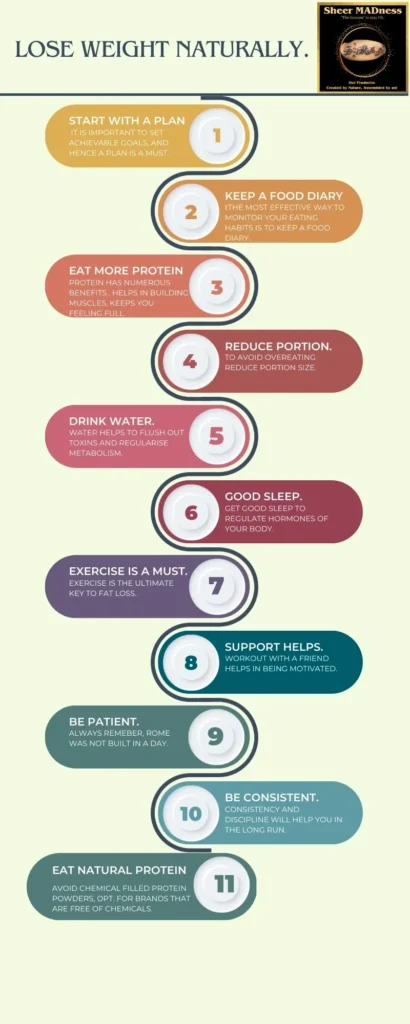
If you want a simple, whole-food snack within your plan, look at Plant Protein Chocolate or Plant Protein Moringa. You can see every ingredient on the front of the pack before you buy. Then read the nutrition panel, and decide how it fits your day.
a) Everyone is an individual, so what suits me may or may not suit the next person.
b) If a person has a medical condition, a doctor’s advice and prescribed medication come first.
c) While buying any protein powder from the market, read the labels carefully. Watch out for codes and words such as anti-caking agent and INS 551, also known as silicon dioxide. These are laboratory-made additives, and although regulators approve them, it is fair to ask whether you want them in your daily scoop. Hence, read the ingredient list of every product before buying.
If you are interested in buying natural vegan protein powder, health drinks for kids, or our energy bars and protein bars, shop at Sheer MADness.
One can also buy our Products From Flipkart, Jio Mart or ONDC in India.
d) Exercise is the key to fitness. Exercise and nutrition are two sides of the same coin, and nutrition alone will not help you reach your goals without movement.
e) Excess of anything is wrong. Even the best nutrient-filled superfood should be consumed only in recommended quantities.
f) Regarding health, fitness and nutrition, remember that Rome was not built in a day. Your discipline and consistency are the key.
g) Body weight depends on many factors, including your food, sleep, stress, gut health, genetics and lifestyle. Exercise and nutrition are within our control, so focus on these two first.
h) The most important part of fitness is that nothing is better than exercise and a balanced meal.
Disclaimer: Our products are a source of nutrients and are made from whole foods.
We do not claim to cure any medical condition.
The content provided is informational. We do not claim to diagnose or treat a person with any specific medical condition.