

Direct answer: Yes, plant protein powder can support heart health, but the benefit comes from what the powder replaces and what arrives with the protein. Whole-food plant protein brings fibre, unsaturated fats, magnesium and potassium. Large studies link swapping red and processed meat for plant protein with fewer heart events. A powder alone cannot protect your heart, and it never replaces medicine, movement or a healthy diet.
Check the label first, because sugar, sodium and additives can undo the good.
I am Chef Ashutosh Awasthi, founder of Sheer MADness, professional chef, marathon runner and author of Great Health Comes from Exercise & Nutrition. Heart disease is the leading cause of death in India, so this question deserves careful evidence. This post is part of my complete guide, Plant Protein, Protein Everything you should be aware of.
For the nitric oxide and cholesterol science of moringa itself, read Is moringa good for cardiovascular health? This page looks at plant protein powders in general.
Indians develop heart disease earlier than most populations. The INTERHEART study found that South Asians had their first heart attack roughly five to six years earlier than people in other regions. Indian risk profiles often show high triglycerides, low HDL cholesterol and high lipoprotein(a), even at modest body weight.
A vegetarian label does not guarantee a safe heart. Refined carbohydrate, deep-fried snacks, excess ghee and salty pickles can all damage arteries. Many vegetarian Indian diets are also low in protein and high in refined grains. Better protein sources can improve that picture, but only inside a wider heart-aware plan.
Heart disease builds slowly as cholesterol-carrying particles, called LDL, lodge in artery walls. High blood pressure, inflammation, high blood sugar and tobacco speed up the damage. Doctors often track a blood marker called apolipoprotein B, which counts these harmful particles.
Protein itself is neither villain nor hero. The heart effect comes from the package. Red meat arrives with saturated fat and often with salt, while nuts, seeds and legumes arrive with fibre, unsaturated fat and minerals. Swapping one package for the other changes your risk factors over the years.
Large Harvard cohort studies follow tens of thousands of people for decades. They link higher plant protein intake with lower heart disease risk, mainly when plant protein replaces red or processed meat. These are observational studies, so they show association and not proof.
Nuts show a consistent pattern. A 2016 meta-analysis by Aune and colleagues found that a daily handful of nuts goes with roughly a one-fifth lower risk of cardiovascular disease. The PREDIMED trial, a randomised study, found fewer major heart events in people who followed a Mediterranean diet with added nuts or olive oil.
Researchers also point to a compound called TMAO, which gut bacteria make from nutrients in red meat. Higher TMAO levels link with heart disease in several studies, although the science is still developing. Plant protein sources do not supply the same precursors.
Soluble fibre helps lower LDL. It binds bile acids in the gut, so the liver must pull more cholesterol from the blood to make new bile. Flaxseed and almonds supply soluble and insoluble fibre together.
Swapping saturated fat for unsaturated fat also lowers LDL. A 2017 American Heart Association advisory reviewed this evidence and supported the swap. Almonds and flaxseed supply mainly unsaturated fats.
Trials of almonds show small LDL drops, often a few points, when they replace snacks high in refined carbohydrate. Soya protein also lowers LDL slightly in meta-analyses, by roughly three to four percent. These effects are modest, and they add up only when your whole diet moves the same way.
Studies link LDL lowering with roughly seven to ten grams of soluble fibre a day. One serving of powder supplies only a small share of that. Think of the powder as a helper and not as the main source.
Blood pressure falls when the diet supplies potassium, magnesium and calcium and limits sodium. Almonds supply magnesium, while cocoa and flaxseed supply potassium. Amino acids such as arginine feed nitric oxide production, which relaxes artery walls.
Flaxseed has shown small blood pressure reductions in trials, especially whole seed taken for twelve weeks or more. A 2015 meta-analysis found a drop of a few mmHg overall. Cocoa flavanols lower blood pressure by about two to three mmHg in a Cochrane review. These changes are modest, but small drops across a population reduce events.
Salt does far more harm than these foods can undo. Check the sodium on any powder, and keep daily salt under five grams, which is about one teaspoon.
Flaxseed supplies alpha-linolenic acid, or ALA, a plant omega-3 fat. Meta-analyses link higher ALA intake with a slightly lower risk of cardiovascular disease. ALA also has mild anti-inflammatory effects.
The body converts only a small share of ALA into EPA and DHA, the long-chain omega-3 fats found in fish and algae. Conversion into EPA is roughly five to ten percent, and conversion into DHA is often below five percent. Flaxseed therefore helps, but it does not replace fish or algal omega-3 for people who need them.
Indian vegetarians often have low DHA status. People with heart disease should ask their doctor about algal DHA supplements.
Cocoa contains flavanols, plant compounds that improve blood vessel function in short trials. Large trials give mixed results. The COSMOS trial, published in 2022, tested a cocoa extract. It did not significantly reduce total cardiovascular events, although cardiovascular deaths were lower in the cocoa group.
The cocoa in one serving is modest. Dark chocolate adds calories and, in many brands, a lot of sugar. Sheer MADness dark chocolate is made with cocoa solids and a small amount of jaggery, and it contains no refined sugar. Even so, jaggery is sugar, so check the nutrition panel.
Cocoa also contains caffeine and theobromine, which can raise heart rate in sensitive people. If you have palpitations or an arrhythmia, ask your cardiologist before using a cocoa-based powder.
Some points matter if you take heart medicines. Blood thinners such as warfarin need steady vitamin K intake, and moringa leaf contains vitamin K. Keep your intake consistent and tell your doctor. Flaxseed omega-3 and high-dose curcumin may add mildly to blood-thinning effects, so mention them before any surgery.
Potassium deserves attention for people on ACE inhibitors, ARBs or potassium-sparing diuretics, and for anyone with kidney disease. Almonds, cocoa and moringa all supply potassium. Ask your doctor whether your levels allow it.
Both powders contain almonds, so they are unsuitable for tree nut allergy. Statins and most blood pressure medicines have no well-known clash with these whole foods. Even so, tell your care team about every supplement you take.
Let the powder replace something less helpful. Use it instead of a sugary tea snack, a biscuit or a fried evening bite. Stir it into curd, warm milk, millet porridge or a fruit bowl.
Keep the rest of the plate heart-friendly. Fill half with vegetables, choose dal and whole grains, and cook with small amounts of oil. Limit fried food, refined flour and packaged salty snacks.
Move daily. Aim for at least 150 minutes of brisk activity each week, and add strength training twice weekly. No powder matches the effect of exercise on blood pressure, cholesterol and insulin.
A powder cannot lower your cholesterol the way a statin does. It cannot treat high blood pressure, and it cannot reverse blocked arteries. Nor will it cancel the effect of smoking, a salty diet or a sedentary life.
Know your numbers. Ask your doctor for a lipid profile and a blood pressure check, and ask about lipoprotein(a) at least once. Targets and treatment belong to you and your cardiologist.
Cholesterol is only one part of the story. Many Indians carry high triglycerides, and these rise quickly with refined flour, sugary drinks and sweets. A powder that replaces a sugary snack can therefore help indirectly, because it brings fewer rapidly absorbed carbohydrates to the meal.
Blood sugar matters for the heart as well. Repeated sugar spikes damage the inner lining of arteries over the years.
Protein, fibre and healthy fat slow the rise in glucose after a meal. That is why a handful of nuts before a carbohydrate-rich meal can blunt the spike. If you want the glucose side in detail, read Is plant protein good for diabetes?
Chronic low-grade inflammation also drives plaque growth. Turmeric contains curcumin, which shows mild anti-inflammatory effects in laboratory and small human studies. Whole flaxseed adds ALA, and cocoa adds flavanols. None of these replaces medical treatment, yet together they fit the pattern of an anti-inflammatory Indian kitchen.
Start with the ingredient list, and read it from the top. Ingredients appear in order of weight, so whole nuts and seeds should lead. Be wary when sugar, maltodextrin or syrup sits near the top.
Next, look at sodium. Some flavoured powders carry hundreds of milligrams of sodium per serving, which adds up if you use two servings a day. Choose a powder with low sodium, and remember that your daily salt budget is already tight.
Then check the sweetener. Sugar alcohols and artificial sweeteners are not proven harmful to the heart at normal intakes, but research on them is still developing. Jaggery, honey and dates are less processed, although they still count as sugar. Keep the total small whichever source you choose.
Finally, check for additives. Codes such as INS 551, which is silicon dioxide, work as anti-caking agents and appear on many labels. They are approved by regulators, but a short ingredient list is easier to trust. Our powders need no anti-caking agent, because the dry ingredients absorb the natural oils of the almond and flaxseed.
A fair comparison looks at the whole package and not at the protein alone. Red and processed meat bring saturated fat, sodium, and in processed forms, preservatives. Fish, eggs and dairy sit in the middle, and their effect depends on how you cook them and how much you eat. Nuts, seeds, pulses and whole grains bring fibre and unsaturated fat.
This does not make animal protein dangerous for everyone. Fish and low-fat dairy fit well into many heart-healthy diets, including the Mediterranean pattern. The practical point is simple. Shift your balance toward plants, and keep processed meat rare.
Isolates and concentrates deserve a mention here. Pea or soya isolate gives a lot of protein per scoop, yet it leaves behind the fibre and fat of the whole seed. You can read more about this in What is vegan protein isolate? Whole-food powders give less protein per scoop, but more of the heart-friendly package.
Breakfast offers the easiest swap. Stir one serving into plain curd with chopped fruit, or into ragi or oats porridge made with water or low-fat milk. The protein and fibre keep you full, so you reach for fewer fried snacks before lunch.
The evening snack is the second easy swap. Replace the biscuit or namkeen with a small glass of warm milk or buttermilk mixed with the powder. For recipe ideas, browse the Desi Protein Shake recipe.
Keep portions modest. One serving a day is enough for most adults, and more does not mean better. Pair the powder with vegetables, dal, millets and a daily walk for the full effect.
People with a history of heart attack, stroke, heart failure or arrhythmia should speak to their cardiologist before any new supplement. Likewise, those with kidney disease need advice about potassium and protein quantity. Pregnant and breastfeeding women should also check with their doctor.
Children and teenagers should not take supplements for heart reasons. Their hearts benefit most from varied meals, play and sleep. Adults over sixty should watch for interactions, because they more often take several medicines at once.
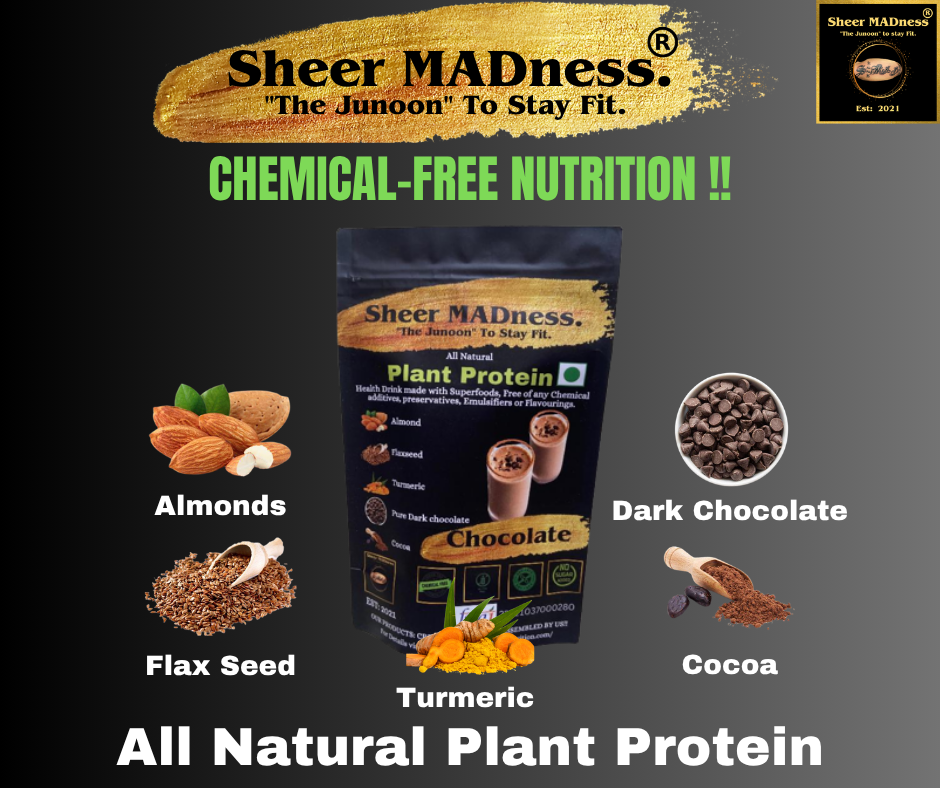
Our powders start with whole roasted almond and flaxseed, ground into powder. We mix them with turmeric and either cocoa with dark chocolate or moringa with cardamom, then sieve and vacuum pack them. They contain no protein isolate and no anti-caking agent. Both powders are vegan.
Every ingredient has appeared on the front of our pack since 2021, so you can check the list before you buy. Plant Protein Chocolate and Plant Protein Moringa both follow this approach. Protein per serving is lower than in an isolate, because whole foods carry fibre and fat along with protein.
Sheer MADness holds a registered trademark under the Government of India. The natural plant protein composition is the subject of Patent Application No. 202331036733, which is published and under examination. The brand holds a valid FSSAI licence and GSTIN registration.
| Heart Factor | What the Evidence Shows | Strength |
|---|---|---|
| Replacing red meat with plant protein | Lower heart disease risk in cohort studies | Moderate, observational |
| Nuts and heart events | About one-fifth lower risk, supported by PREDIMED | Moderate to strong |
| LDL cholesterol | Fibre, unsaturated fat and soya lower LDL modestly | Moderate |
| Blood pressure | Flaxseed and cocoa lower it by a few mmHg | Modest |
| ALA omega-3 | Slightly lower risk, low conversion to EPA and DHA | Moderate |
| Cocoa flavanols | Mixed results in large trials | Limited |
| TMAO | Plant sources lack red-meat precursors | Emerging |
It can support heart health when it replaces less helpful foods and comes without added sugar, salt or additives. The benefit is modest and works best inside a heart-smart diet. It never replaces medicine.
Fibre, unsaturated fat and soya protein lower LDL cholesterol slightly. A single serving of powder contributes only a small part, so the whole diet matters most.
Soya protein lowers LDL a little in meta-analyses. It is also a common allergen, and some people prefer to avoid it. Whole soya foods such as tofu and edamame work well for many people.
The clearest difference appears when plant protein replaces red and processed meat. Whey shows no clear harm to the heart in most studies. The better choice depends on digestion, additives, sweeteners and your doctor’s advice.
Many can, but heart patients should ask their cardiologist first. Blood thinners, potassium-affecting medicines and kidney disease all change the advice.
Trials show small drops of a few mmHg, mostly with whole flaxseed taken for twelve weeks or more. It supports blood pressure control and never replaces medicine.
Cocoa flavanols help blood vessel function in short trials, but large trials give mixed results. Choose dark chocolate with little sugar and enjoy it in small amounts.

So, is plant protein powder good for the heart? It can help, mostly through what it replaces and what comes with it. Fibre, unsaturated fat, magnesium and potassium all support healthy cholesterol and blood pressure. Cohort studies and trials point the same way, although each effect is modest.
Honest advice includes the limits. Watch sugar, sodium and additives in any powder. Tell your doctor about supplements if you take heart medicines. Remember that salt, tobacco, inactivity and untreated blood pressure harm the heart far more than a powder can repair.
Sheer MADness powders aim to be a simple, transparent helper. They contain whole roasted almond and flaxseed, turmeric, and either cocoa with dark chocolate or moringa with cardamom.
a) Everyone is an individual, so what suits me may or may not suit the next person.
b) If a person has a medical condition, a doctor’s advice and prescribed medication come first.
c) While buying any protein powder from the market, read the labels carefully. Watch out for codes and words such as anti-caking agent and INS 551, also known as silicon dioxide. These are laboratory-made additives, and although regulators approve them, it is fair to ask whether you want them in your daily scoop. Hence, read the ingredient list of every product before buying.
If you are interested in buying natural vegan protein powder, health drinks for kids, or our energy bars and protein bars, shop at Sheer MADness.
One can also buy our Products From Flipkart, Jio Mart or ONDC in India.
d) Exercise is the key to fitness. Exercise and nutrition are two sides of the same coin, and nutrition alone will not help you reach your goals without movement.
e) Excess of anything is wrong. Even the best nutrient-filled superfood should be consumed only in recommended quantities.
f) Regarding health, fitness and nutrition, remember that Rome was not built in a day. Your discipline and consistency are the key.
g) Heart health depends on many factors, including blood pressure, blood sugar, sleep, stress, genetics and your gut. Exercise and nutrition are within our control, so focus on these two first.
h) The most important part of fitness is that nothing is better than exercise and a balanced meal.
Disclaimer: Our products are a source of nutrients and are made from whole foods.
We do not claim to cure any medical condition.
The content provided is informational. We do not claim to diagnose or treat a person with any specific medical condition.