
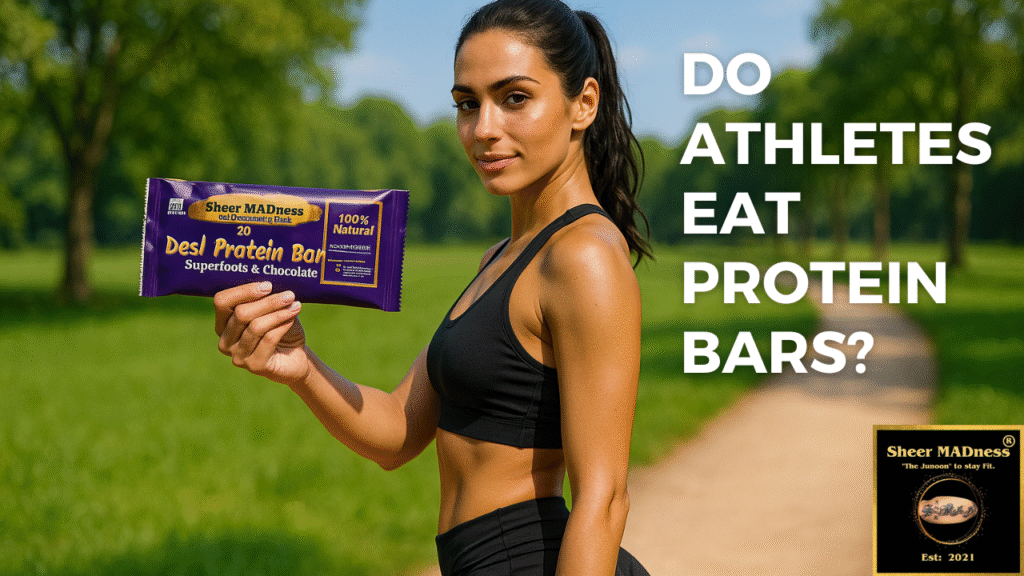
Direct answer: Yes — athletes eat protein bars, and for good reasons. A well-formulated protein bar provides portable pre-workout carbohydrates and protein, convenient post-workout muscle repair nutrition, and on-the-go fuel during training camps, tournaments, and travel days when proper meal access is impossible. However, athletes have zero tolerance for the gut distress that commercial bars with maltitol and sugar alcohols cause — because digestive disruption during training or competition directly impairs performance.
The right bar for an athlete delivers sustained energy from whole-food carbohydrates, muscle-repair protein from complementary plant sources, electrolytes for sweat mineral replacement, and zero gut-fermentation risk from sugar alcohols. The wrong bar can end a training session early, cause cramping during competition, and create daily chemical load on a body that is already under significant physiological stress.
I’m Chef Ashutosh Awasthi, founder of Sheer MADness, professional chef, marathon runner, and author of Great Health Comes from Exercise & Nutrition. I run marathons and train consistently. I eat protein bars as part of my own athletic nutrition practice. This guide is written from direct athletic experience — not from a marketing brief.
Athletes don’t eat protein bars to “get protein.” They eat them to solve specific practical problems that their training and competition schedules create.
Training camps in remote locations. Tournament venues with poor food options. Early morning training sessions before markets open. Airport layovers between competition legs. These are the daily realities of athletic life that make protein bars a practical necessity — not a preference.
A 2021 Foods journal study on elite sports nutrition confirmed that meal replacement bars are used by professional athletes specifically to address the logistical gaps in athletic schedules where proper meal preparation is impossible. The study’s finding that athletes use bars as nutrition insurance — filling the gap between training demands and food access — reflects the practical daily reality.
Protein bars for athletes are therefore primarily a logistics solution that also provides meaningful nutrition. The nutrition quality of the bar determines whether it helps or hurts — because an athlete consuming a bar with gut-disrupting ingredients has solved the access problem while creating a performance problem.
Optimal sports nutrition requires specific nutrient delivery at specific times. Pre-workout: carbohydrates 30 to 60 minutes before training. Post-workout: protein and carbohydrates within 30 minutes of finishing. During extended sessions: accessible fuel every 45 to 60 minutes without causing digestive disruption.
A bar satisfies all three timing windows more conveniently than whole meals — provided the ingredients are appropriate for each window. The bar must be digestible quickly enough for pre-workout consumption, nutrient-dense enough for post-workout recovery, and gut-friendly enough to eat during activity without causing distress.
Athletes need to eat right consistently — across travel days, early mornings, long training camps, and post-competition evenings when energy is depleted and appetite is suppressed. A reliable, portable, nutritious bar in the training bag solves the consistency problem that food access variability creates.
This is why athletes eat protein bars. The question is which bar is appropriate for athletic use — and why ingredient quality matters more for athletes than for sedentary consumers.
Registered dietitian Brooke Snyder, writing for a major nutrition publication, specifically flagged this: sugar alcohols “can draw water into the gut and cause bloating, cramping or gas — especially if eaten right before exercise. For athletes, this can disrupt performance significantly.”
This is the most important practical distinction between bars for everyday snacking and bars for athletic use. An office worker experiencing maltitol-induced bloating after a bar is uncomfortable. An athlete experiencing the same bloating 45 minutes before a race, during a training run, or mid-competition is functionally impaired.
The gut under exercise stress is significantly more reactive than the gut at rest. Physical activity redirects blood flow away from the gut toward working muscles — reducing gut perfusion and increasing gut permeability. Food consumed during this state must be gentle on the gut. Sugar alcohols and chemical additives that are merely uncomfortable at rest become performance-impairing under exercise conditions.
Research consistently confirms this. A Sports Medicine review on gastrointestinal issues in endurance athletes found that gut symptoms are among the most common performance-limiting complaints during competition — affecting 30 to 90 percent of endurance athletes during racing. The food choices made in the 2 to 4 hours before competition directly determine gut symptom severity during it.
A bar with zero sugar alcohols, zero chemical emulsifiers, and zero artificial sweeteners is therefore specifically more appropriate for athletes than any bar with these ingredients — regardless of protein content.
Sheer MADness bars contain no maltitol, no sorbitol, no erythritol, no sucralose, no carrageenan, and no synthetic emulsifier. This zero-fermentation-risk profile is specifically the athlete-appropriate formulation.
Different sports create different nutritional demands. The right bar characteristics vary accordingly.
Endurance athletes burn primarily carbohydrates during sustained aerobic effort and shift increasingly to fat oxidation as effort continues beyond 90 minutes. Their primary nutritional bar requirement is sustained carbohydrate energy without gut disruption.
As a marathon runner, I understand this specifically. The pre-run bar I eat 60 minutes before a long training run must provide accessible carbohydrate energy from oats and dates — without maltitol that would ferment during the run’s 3 to 4 hours of continuous gut activity. The post-run bar I eat within 20 minutes must provide natural sugars for glycogen replenishment and whole-food protein from sattu and almonds for muscle repair.
Endurance athletes also need meaningful iron — because endurance training increases red blood cell turnover and haemolysis (destruction of red blood cells from foot impact during running). Iron from jaggery, sattu, and raisins in Sheer MADness bars directly supports haemoglobin maintenance relevant to endurance oxygen delivery.
Furthermore, endurance athletes need anti-inflammatory omega-3 daily. Flaxseed in Sheer MADness bars provides 1.1 to 1.8 grams of ALA omega-3 per bar — cumulative daily anti-inflammatory support that reduces the joint and muscle inflammation that makes weekly mileage sustainable over training seasons.
Strength athletes need higher protein per bar than endurance athletes — specifically to support the muscle protein synthesis that strength training demands. They also need the post-workout carbohydrates that replenish glycogen consumed during explosive training sessions.
The ISSN (International Society of Sports Nutrition) position paper on protein and exercise recommends 1.4 to 2.0 grams of protein per kilogram of body weight daily for strength athletes. For a 75-kilogram wrestler or cricketer, this means 105 to 150 grams daily. Two Sheer MADness bars contribute 16 to 20 grams toward this target from whole-food sources.
The zinc from pumpkin seeds and melon seeds in Sheer MADness bars specifically supports testosterone production — the primary anabolic hormone for strength athletes. Magnesium from almonds supports the ATP synthesis that powers explosive muscular contractions. These micronutrients are as important as protein for strength athlete performance, and whole-food bars deliver them while isolate bars do not.
Team sport athletes face the most variable nutritional challenges — intermittent high-intensity effort separated by lower-intensity periods, tournament schedules spanning multiple days, and irregular meal timing around training and match schedules.
For team sport athletes, the accessibility and portability of protein bars is most important. A bar that can be eaten on the team bus between training sessions, during the wait before a match, or immediately post-match when team meals are delayed addresses the specific timing and access challenges of team sport schedules.
The natural sugars from dates and raisins in Sheer MADness bars provide the accessible energy that supports the intermittent high-intensity demands of team sports. The protein from sattu and almonds supports muscle repair during the short recovery windows between training sessions in tournament play.
India’s school and college sports culture is growing — state and national championships in cricket, athletics, badminton, kabaddi, football, and dozens of other sports mobilise hundreds of thousands of young athletes annually.
Student athletes face specific nutritional challenges. Their training happens before or after school. The diet quality depends on canteen food or home-packed tiffins that may not be timed optimally around training. Their budget limits what supplementary nutrition they can purchase.
At ₹60 per bar, Sheer MADness bars are accessible to student athletes on limited budgets. One bar post-training provides whole-food protein for muscle repair, iron for haemoglobin maintenance during high-training-volume periods, and sustained energy from oats and dates — without the chemical additives that developing athlete bodies are specifically more vulnerable to.
Indian athletics has a specific nutritional context that bars designed for Western sports markets completely miss.
Most Indian athletes are vegetarian — or at minimum dairy-dependent for protein. Whey protein is technically accessible but causes lactose digestibility issues in the 60 to 70 percent of Indian adults with some degree of lactose intolerance. The experienced Indian athlete who has tried whey bars and experienced post-training digestive disruption is not choosing badly — their gut physiology is simply incompatible with concentrated dairy protein.
Sattu — roasted chickpea flour — is the protein source that Indian athletes’ guts recognise and handle efficiently. It has been consumed by Indian wrestlers, farmers, and physical labourers for centuries specifically because its protein is accessible without dairy, without chemical extraction, and without the digestive disruption that foreign protein concentrates cause.
The traditional Indian sporting diet — sattu laddoos for energy before training, almond and jaggery preparations for recovery, flaxseed in everyday cooking — was applied sports nutrition that Indian athletic tradition developed intuitively long before sports dietetics existed as a discipline. Sheer MADness packages this tradition in a bar format convenient for modern Indian athletic schedules.
One Sheer MADness Energy Bar provides balanced carbohydrate energy from oats and dates, moderate protein from sattu and almonds to begin amino acid loading, and healthy fats from almonds for sustained background energy. The 60 to 90-minute timing allows partial digestion before exercise begins — preventing the stitch and nausea of exercising on a full stomach while ensuring nutrients reach the bloodstream by the time training starts.
The absence of sugar alcohols is specifically important at this timing window. Eating a maltitol-sweetened bar 60 minutes before training means the maltitol is fermenting in the large intestine precisely when the training session is at its most intense — the worst possible timing.
This is the most important nutritional window for athletes. One Sheer MADness Protein Bar provides:
Whole-food protein from sattu and almonds for muscle protein synthesis. Natural sugars from dates and raisins for glycogen restoration. Omega-3 from flaxseed for reducing post-training inflammation. Magnesium from almonds and dark chocolate for muscle relaxation and recovery. Iron from jaggery and sattu for haemoglobin maintenance. Zinc from pumpkin seeds for immune function support during the post-training immune suppression window.
This is the complete post-workout recovery nutritional package from one bar — delivered through whole-food sources without any synthetic chemical that the recovering body must additionally process.
For training sessions lasting more than 90 minutes — long runs, extended swim sessions, multi-hour cricket practice, or endurance cycling — eating half a bar at the 60 to 75-minute mark provides accessible carbohydrate fuel to sustain the final portion of the session.
The zero-sugar-alcohol formulation of Sheer MADness bars is specifically critical for during-training consumption. The fermentation risk of maltitol under exercise conditions — when gut blood flow is reduced and gut motility is accelerated — makes sugar-alcohol-sweetened bars specifically dangerous for during-training consumption.
Tournament play creates irregular meal timing, limited food access at venues, and the stress of competition that suppresses appetite. One bar accessible in a sports bag provides reliable pre-competition fuel or post-match recovery nutrition regardless of what the venue or canteen provides.
During off-season or reduced training loads, one bar daily as a mid-morning or mid-afternoon snack maintains the protein distribution that preserves lean muscle mass during lower training volumes. The micronutrient density from whole-food ingredients — iron, zinc, magnesium, Vitamin E — supports the recovery and maintenance that off-season nutrition is designed to achieve.
Sheer MADness Protein Bars and Energy Bars meet every athlete-specific requirement through ingredient choice and formulation philosophy.
Oat beta-glucan slows glucose absorption and provides sustained energy over 90 to 120 minutes. Natural sugars from dates and raisins provide accessible quick fuel for immediate energy needs. This combination supports both the initial energy demand of training start and the sustained demand across longer sessions — without the blood sugar spike and crash that refined sugar provides.
Sattu, almonds, oats, flaxseed, pumpkin seeds, and melon seeds combine to provide a complete essential amino acid profile from plant sources. For Indian vegetarian athletes — the majority of India’s athletic population — this whole-food plant protein combination is both culturally appropriate and nutritionally complete.
Iron for haemoglobin and oxygen delivery. Zinc for immune function and testosterone. Magnesium for ATP synthesis and muscle function. Potassium for electrolyte balance. Omega-3 for anti-inflammatory recovery. These are the micronutrients athletic performance depends on daily — and they are absent from every whey isolate bar that delivers protein and essentially nothing else.
No maltitol, sorbitol, sucralose, or carrageenan. No synthetic emulsifier. The natural sweeteners from dates, jaggery, and raisins absorb normally through the small intestine. No fermentation occurs in the large intestine. Athletes eating Sheer MADness bars before, during, or after training experience zero sugar-alcohol-related gut distress.
This is the single most practically important differentiator for athlete use. An athlete can optimise every other aspect of their performance preparation. However, a bar that disrupts gut function during competition immediately negates all of it.
Sheer MADness uses oxygen absorbers rather than BHA, BHT, or any chemical preservative. Athletes already handle significant physiological stress through training — the body processes inflammatory markers, nitrogen waste from protein metabolism, and oxidative stress from intense exercise. Adding daily chemical preservative residues from a bar consumed for recovery is unnecessary. Oxygen absorbers eliminate this chemical load entirely.
At ₹60 per bar, Sheer MADness is accessible to student athletes, amateur athletes, and professional athletes alike. A box of 10 bars at ₹600 provides complete recovery nutrition for a full training week. The performance return from clean, whole-food athlete nutrition at this price is unmatched by any alternative in India.
I want to close this section with directness — because personal athletic practice is the most honest endorsement available.
I eat Sheer MADness bars before long training runs and after them, and carry one in my race kit on marathon day, eat one post-race as my first recovery nutrition before the medal ceremony finishes.
The reason is simple. I know exactly what is in them — I formulated them and know the oats provide sustained glucose for my pace to be consistent over 42 kilometres. The flaxseed reduces the inflammation that makes the day after a long run painful. I know the jaggery and sattu iron supports the haemoglobin that carries oxygen to my working muscles across three to four hours of sustained effort.
I also know what is not in them. No maltitol that would cause me to cramp on kilometre 28. Nor BHT that my liver processes as a foreign chemical residue on the day it most needs to focus on metabolic recovery from extreme physical exertion. No sucralose disrupting my gut microbiome on the very day that gut nutrition matters most.
This is the standard an athlete should hold every bar to. Not because I say so — but because the physiology demands it.
Since 2021, Sheer MADness displays every ingredient with its own image on the front of every pack. Athletes who read labels carefully — because they know that ingredients directly affect performance and recovery — can see oats, almonds, sattu, flaxseed, pumpkin seeds, melon seeds, dates, raisins, jaggery, honey, and dark chocolate on the front of the pack before opening it.
No INS code requires decoding. No synthetic sweetener hides in a “natural flavour” or “nature identical” listing. Nor any protein concentrate that sits in a “protein blend” and obscures its origin. Every ingredient is a recognisable whole food that earns its place through its specific athletic performance contribution.
Sheer MADness holds a registered trademark under the Government of India. The Natural Plant Protein formula is patent published under Patent No. 202331036733, searchable on Intellectual Property India. The brand holds a valid FSSAI licence and GSTIN registration.
| Feature | Sheer MADness | Typical Commercial Sports Bar |
|---|---|---|
| Pre-workout gut safety | High — zero sugar alcohols | Risk — maltitol fermentation during exercise |
| Post-workout protein | 8 to 10g whole-food protein | 15 to 25g typically isolate-based |
| During-workout safety | High — no fermentation risk | Variable to high risk |
| Iron for endurance | Yes — jaggery, sattu, raisins | Usually absent |
| Zinc for strength | Yes — pumpkin seeds, melon seeds | Usually absent or synthetic |
| Electrolytes | Yes — magnesium, potassium from whole foods | Often synthetic electrolyte addition |
| Omega-3 for recovery | Yes — flaxseed daily | Absent in almost all sports bars |
| Chemical preservatives | None — oxygen absorbers | BHA, BHT common |
| Lactose-friendly | Yes — 100% dairy-free | Often no — whey protein |
| Indian vegetarian friendly | Yes — plant protein from sattu | Often no — whey-based |
| Gut disruption risk | Zero | Moderate to high |
| Price per bar | ₹60 | ₹100 to ₹250 |
| Made in India | Yes — Kolkata | Often imported or contract manufactured |
Do athletes eat protein bars?
Yes — athletes across all sports use protein bars to solve specific practical problems: food access gaps during training and tournament schedules, pre-workout carbohydrate loading, post-workout protein delivery, and on-the-go fuelling when proper meals are unavailable. The bar’s ingredient quality determines whether it helps or hinders athletic performance.
Which protein bar is best for athletes?
The best bar for athletes delivers whole-food carbohydrates for sustained energy, complementary plant protein for muscle repair, electrolytes for sweat mineral replacement, omega-3 for anti-inflammatory recovery, and zero sugar alcohols that cause gut disruption during training and competition. Sheer MADness bars meet all these criteria at ₹60 per bar.
Why do sugar alcohols in bars cause problems for athletes?
Sugar alcohols like maltitol ferment in the large intestine, producing gas and drawing water into the colon. Under exercise conditions — when gut blood flow is reduced — this fermentation is more intense and causes cramping and bloating that directly impairs training and competition performance. Registered dietitians specifically warn athletes against bars with sugar alcohols for pre-workout consumption.
When should athletes eat protein bars?
60 to 90 minutes before training for pre-workout carbohydrate loading. Within 30 minutes after training for post-workout muscle repair. During extended sessions over 90 minutes as mid-session fuel. On tournament travel days when meal access is unreliable. One bar provides performance-relevant nutrition at each of these windows.
Not ideally. Approximately 60 to 70 percent of Indian adults have some degree of lactose intolerance — whey protein concentrate contains residual lactose. Post-training consumption of a lactose-intolerant athlete’s incompatible protein source causes the digestive disruption that specifically impairs recovery. Whole-food plant protein from sattu and almonds suits Indian athletic physiology significantly better.
Can vegetarian athletes use Sheer MADness bars?
Yes — specifically. Sheer MADness bars are 100 percent dairy-free with all protein from plant sources. Sattu, almonds, oats, flaxseed, pumpkin seeds, and melon seeds provide complementary plant protein with a complete essential amino acid profile. For India’s large vegetarian athletic population, this whole-food plant protein combination is both appropriate and nutritionally complete.
Do protein bars help with muscle recovery for athletes?
Yes — when consumed within 30 minutes post-training, whole-food protein from sattu and almonds in Sheer MADness bars supports muscle protein synthesis. Natural sugars from dates and raisins restore glycogen. Flaxseed omega-3 reduces post-training inflammation. Magnesium supports muscle relaxation. Iron supports haemoglobin maintenance. These five simultaneous post-workout benefits from one bar make it a genuinely effective recovery nutrition tool.
Are protein bars good for Indian cricketers, kabaddi players, and wrestlers?
Yes — specifically because these sports involve intense training phases, irregular tournament schedules, and high physical demands on vegetarian athlete bodies. The iron from jaggery and sattu addresses the high iron demands of intense physical training. The zinc from pumpkin seeds supports testosterone for strength athletes. The omega-3 reduces the inflammation from high-volume contact sport training. At ₹60 per bar, this is accessible to athletes at every level of Indian sports.
Athletes eat protein bars — and they should. The logistics of athletic life, the precise timing requirements of optimal sports nutrition, and the access gaps in training and tournament schedules all make protein bars a practical and nutritionally valuable tool.
However, athletes specifically need bars that contain zero gut-disrupting ingredients — because digestive distress during training and competition directly impairs performance in a way that everyday consumers don’t experience to the same degree.
Sheer MADness bars deliver whole-food carbohydrates for sustained performance energy, complete plant protein from Indian superfoods for muscle repair, electrolytes for sweat mineral replacement, omega-3 for anti-inflammatory recovery, and absolute zero gut-fermentation risk from sugar alcohols. At ₹60 per bar — preserved with oxygen absorbers, every ingredient on the front label since 2021 — they represent the most appropriate and most affordable athletic performance bar available to Indian athletes at every level.
I eat them. I train and race on them. That is the most direct recommendation I can offer.
I would also request you to kindly read my previous post about “Healthiest Protein Bar in India“.
a) Everyone is an individual, so what suits me may not suit the next person.
b) If a person has a medical condition, a doctor’s advice and prescribed medication will only help.
c) While buying any protein bar from the market, read the labels carefully. Watch out for maltitol, sorbitol, erythritol, sucralose, INS 320 (BHA), INS 321 (BHT), INS 551 (silicon dioxide), whey protein concentrate, and other ingredients that specifically impair athletic performance through gut disruption or chemical processing load.
If you are interested in buying chemical-free Natural Plant Protein Moringa, Health Drinks for Kids, or our delicious chemical-free Energy Bars, Protein Bars, and Millet Bars, shop at Sheer MADness.
You can also find us on Flipkart, Jio Mart, or ONDC in India.
d) Exercise is the key to fitness. Exercise and nutrition are two sides of the same coin and always go hand in hand.
e) Excess of anything is wrong, even the best whole-food snack. Consume only recommended quantities.
f) Rome was not built in a day. Discipline and consistency are the only keys to lasting health.
g) It is not only exercise and protein that builds health. A healthy gut, macro and micronutrients, body type, rest, and lifestyle all matter. Of all these, exercise and nutrition are within our control. Focus on these two primary aspects first.
h) The most important part of fitness is that nothing is better than exercise and a balanced meal.
Article by Chef Ashutosh Awasthi
Disclaimer: Our products are a source of HEALTHY NUTRIENTS and are COMPLETELY FREE OF ANY ADDED CHEMICALS. We do not claim to cure any medical condition. The content provided is informational. We do not claim to diagnose or treat a person with any specific medical condition.