
Direct answer: Yes — protein bars can support hormone balance, but only when built from whole foods that deliver the specific nutrients the endocrine system needs. Bars containing healthy fats, omega-3 fatty acids, zinc, magnesium, dietary fibre, and natural plant compounds actively support hormonal health. Bars containing artificial sweeteners, BHA, BHT, and chemical emulsifiers actively disrupt it.
The protein bar you choose every day is not a neutral health decision. It adds to or subtracts from your body’s hormonal environment with every serving.
I’m Chef Ashutosh Awasthi, founder of Sheer MADness, professional chef, marathon runner, and author of Great Health Comes from Exercise & Nutrition. I transformed my own health in my forties. I understand what daily nutrition does to the hormonal environment from personal experience and from research. Let me explain this properly.
“Hormone balance” is not a single thing. It describes the complex coordination of multiple hormonal systems working together.
The main hormones affected by daily nutrition include insulin, which regulates blood sugar and fat storage; cortisol, the stress hormone that affects energy, sleep, and immunity; estrogen and progesterone, which regulate reproductive health in women; testosterone, which supports muscle, libido, and energy in both men and women; thyroid hormones T3 and T4, which regulate metabolism; and leptin and ghrelin, which control hunger and satiety.
Each of these responds differently to food. No single ingredient balances all hormones simultaneously. However, certain nutritional patterns consistently support the broader hormonal environment — and certain dietary chemicals consistently disrupt it.
This is the real story behind whether protein bars support hormone balance.
A 2025 systematic review published in Nutrients by researchers at the Chinese University of Hong Kong synthesised a decade of research on omega-3 fatty acids and metabolic diseases. The review confirmed that omega-3 PUFAs exhibit therapeutic potential for insulin resistance, obesity-related hormonal disruption, and metabolic dysfunction through multiple molecular mechanisms.
A 2025 review published in MDPI Molecules specifically examined flaxseed composition and health benefits. The review confirmed that flaxseed’s lignans, omega-3 fatty acids, fibre, and protein components are strongly associated with cardiovascular health, hormonal balance, and metabolic regulation. Furthermore, flaxseed lignans specifically modulate estrogen levels through their selective estrogen receptor modulator activity.
Research published in Frontiers in Endocrinology in 2023 confirmed the role of nutritional antioxidants in countering oxidative stress linked to adrenal hormone imbalance. Antioxidants from whole foods — including those present in almonds, dark chocolate, and flaxseed — protect hormone-producing glands from oxidative damage.
A 2022 review in the Journal of the American College of Nutrition confirmed that omega-3 fatty acids reduce inflammation in autoimmune diseases — directly relevant to hormonal autoimmune conditions including Hashimoto’s thyroiditis and PCOS-related inflammation.
The pattern across this research is consistent. Whole foods rich in omega-3 fatty acids, dietary fibre, antioxidants, zinc, and magnesium support hormonal health. Ultra-processed foods containing synthetic additives, artificial sweeteners, and chemical preservatives disrupt it.
This is the section most commercial protein bar brands actively avoid discussing.
BHA (butylated hydroxyanisole, INS 320) and BHT (butylated hydroxytoluene, INS 321) are synthetic antioxidant preservatives present in most commercial protein bars.
The US National Toxicology Program classifies BHA as “reasonably anticipated to be a human carcinogen.” More specifically relevant to hormonal health, both BHA and BHT carry classifications as potential endocrine disruptors in research literature. They interfere with hormonal signalling pathways by mimicking or blocking the activity of natural hormones at receptor sites.
A person eating a BHA-preserved protein bar daily for a year consumes 365 daily doses of a documented potential endocrine disruptor. This cumulative exposure is not highlighted anywhere on the product label.
Sucralose, aspartame, and acesulfame-K are standard sweeteners in “zero sugar” or “low sugar” commercial bars.
A 2023 landmark study published in Cell by researchers at the Weizmann Institute found that these artificial sweeteners alter gut microbiome composition in ways that directly affect glucose tolerance and insulin response. The sweeteners are designed to have zero caloric impact — but they disrupt the gut-hormone signalling that governs blood sugar regulation in ways that glucose itself does not.
Furthermore, research published in Obesity in 2017 confirmed that artificial sweetener consumption dysregulates appetite-related hormones including leptin and ghrelin — the hormones that tell your body when it is full and when it is hungry. Consuming artificial sweeteners daily may worsen the appetite regulation they are marketed to support.
Maltitol, sorbitol, and erythritol ferment in the large intestine. This gut fermentation disrupts the gut microbiome’s composition — reducing beneficial Lactobacillus and Bifidobacterium species.
The gut-hormone axis is now well-established in research. The gut microbiome directly influences estrogen metabolism through the estrobolome — the collection of gut bacteria that metabolise estrogens. A disrupted gut microbiome means disrupted estrogen clearance. This can contribute to estrogen dominance — a hormonal imbalance increasingly common in both women and men.
Daily maltitol consumption from a commercial protein bar therefore creates a direct daily gut-hormone disruption pathway that operates invisibly and cumulatively.
Many commercial bars use soy protein isolate as their protein source. Soy contains isoflavones — phytoestrogens that interact with estrogen receptors.
At whole-food levels, traditional fermented soy products like tempeh and miso carry a long history of safe daily consumption. However, concentrated soy protein isolate delivers isoflavones at significantly higher doses than traditional dietary soy. Research — including the 2026 Springer Nature review on thyroid function — specifically identifies soy isoflavones at isolate-level doses as requiring caution for individuals with thyroid or hormonal sensitivity.
Sheer MADness contains zero soy protein isolate. This is a deliberate and important formulation choice.
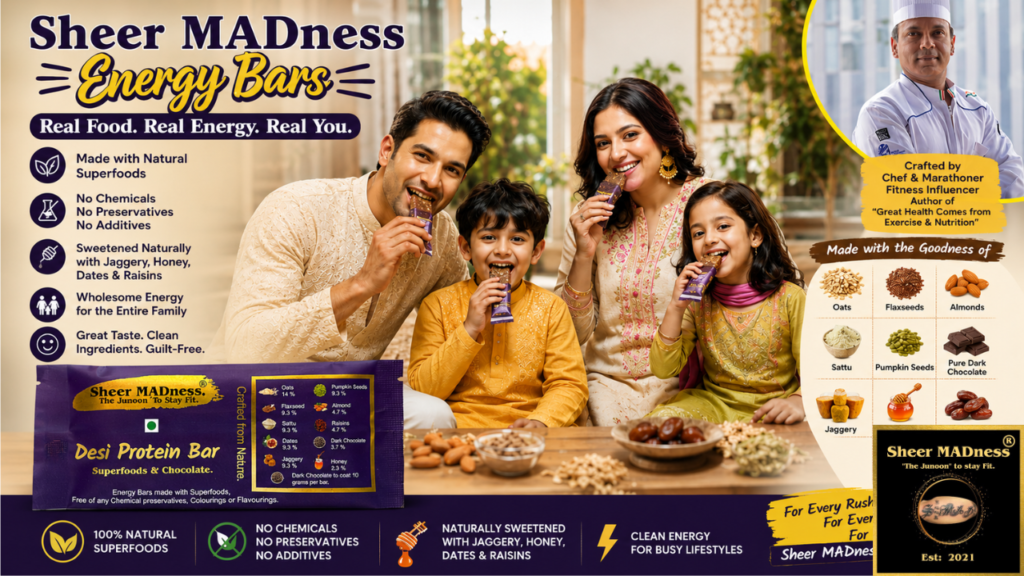
Sheer MADness Protein Bars and Energy Bars are built from oats, sattu, almonds, flaxseed, pumpkin seeds, melon seeds, dates, raisins, jaggery, honey, and pure dark chocolate. Every one of these ingredients actively supports the hormonal environment in specific, researched ways.
Flaxseed is the most hormonal-health-relevant ingredient in the bar. It addresses multiple hormonal systems simultaneously.
Flaxseed contains lignans — the richest dietary source of these plant compounds available. Lignans act as selective estrogen receptor modulators. They bind to estrogen receptors with weak estrogenic or anti-estrogenic activity depending on the existing hormonal environment. Research confirmed by the 2025 MDPI Molecules review shows flaxseed lignans support estrogen balance — modulating rather than simply raising or lowering estrogen levels.
Furthermore, flaxseed lignans support the estrobolome — the gut microbiome’s capacity to metabolise excess estrogens efficiently. A well-functioning estrobolome prevents estrogen recirculation that drives estrogen dominance.
Flaxseed’s omega-3 fatty acids reduce the inflammatory cytokines — specifically TNF-α and IL-6 — that drive hormonal disruption in PCOS, Hashimoto’s thyroiditis, and insulin resistance. The 2025 Chinese University of Hong Kong review confirmed omega-3 PUFAs reduce these inflammatory markers through multiple molecular pathways.
Almonds provide magnesium at 270 milligrams per 100 grams — one of the richest whole-food magnesium sources available.
Magnesium supports hormonal health through multiple pathways. It regulates the hypothalamic-pituitary-adrenal axis — the hormonal chain that controls cortisol response to stress. Low magnesium is consistently associated with elevated cortisol. High cortisol suppresses reproductive hormones, thyroid hormone activity, and insulin sensitivity.
Furthermore, magnesium supports testosterone production in males by reducing sex hormone-binding globulin — the protein that binds testosterone and renders it biologically inactive. More free magnesium means more free, bioavailable testosterone.
Vitamin E from almonds protects Leydig cells — the testicular cells that produce testosterone — from oxidative damage. It also supports progesterone synthesis in women by protecting the corpus luteum from oxidative stress during the luteal phase.
Pumpkin seeds provide zinc at approximately 7.8 milligrams per 100 grams.
Zinc supports testosterone production through its role in gonadotropin signalling. Low zinc consistently correlates with lower testosterone in men. Furthermore, zinc supports thyroid hormone synthesis — specifically the conversion of T4 to active T3. Low zinc is one of the most common nutritional contributors to subclinical hypothyroidism.
Research published in multiple endocrinology journals confirms that zinc supplementation in zinc-deficient men improves testosterone levels significantly. Whole-food zinc from pumpkin seeds and melon seeds provides this support daily alongside the cofactors that enhance its absorption and utilisation.
Oat beta-glucan slows glucose absorption and stabilises blood sugar. Stable blood sugar means stable insulin levels. Stable insulin is the foundation of broader hormonal balance.
Chronic insulin elevation — from repeated refined carbohydrate spikes — increases aromatase activity, the enzyme that converts testosterone to estrogen in fat tissue. This drives both reduced testosterone in men and estrogen dominance patterns in women. Furthermore, insulin resistance directly suppresses ovarian function and contributes to PCOS — the most common hormonal disorder in Indian women of reproductive age.
Daily oat consumption specifically reduces fasting insulin and improves insulin sensitivity — directly relevant to hormonal balance. The beta-glucan research behind this is among the most consistently replicated findings in nutritional science.
Sattu provides 20 to 22 grams of protein per 100 grams with a glycaemic index of just 28 to 35. Low-GI protein delivery means stable blood sugar. Stable blood sugar means stable insulin. Stable insulin supports the entire hormonal cascade that depends on insulin sensitivity.
Furthermore, sattu provides folate — a B vitamin essential for methylation. Methylation is the metabolic process through which the body inactivates excess hormones and processes them for elimination. Adequate folate supports efficient hormonal clearance — particularly important for estrogen metabolism.
Iron deficiency causes hypothyroxinemia — reduced thyroid hormone production. The thyroid requires iron-dependent enzymes for hormone synthesis. Both dates and jaggery provide meaningful iron from natural whole-food sources.
Jaggery specifically provides iron at approximately 11 milligrams per 100 grams alongside potassium at 1050 milligrams per 100 grams. Potassium supports aldosterone regulation — the adrenal hormone that controls sodium and fluid balance. Low potassium is associated with elevated aldosterone, which contributes to hypertension and can disrupt the adrenal hormone balance relevant to cortisol management.
Dark chocolate provides epicatechin — an antioxidant flavonoid that reduces oxidative stress in hormone-producing glands. The adrenal glands, which produce cortisol, are particularly sensitive to oxidative damage under stress conditions.
Furthermore, dark chocolate provides additional magnesium alongside almonds and oats — compounding the anti-cortisol, SHBG-reducing effect from three whole-food sources simultaneously.
Research from Frontiers in Endocrinology 2023 confirms the role of nutritional antioxidants in protecting adrenal hormone balance from oxidative stress. Dark chocolate’s flavonoids directly serve this protective function.
This is one of the most important and least-discussed aspects of hormonal health through nutrition.
The gut microbiome regulates hormone levels in ways that go far beyond digestion. The estrobolome — the collection of gut bacteria responsible for estrogen metabolism — determines how efficiently excess estrogens are excreted versus recirculated. A disrupted estrobolome means estrogens recirculate rather than exit — contributing to estrogen dominance symptoms including weight gain, mood changes, heavy periods, and low libido.
Research published in Microorganisms in 2022 confirmed that dietary fibre intake is the primary determinant of gut microbiome diversity and health. High fibre intake supports diverse, resilient gut microbiome populations — including the specific bacteria responsible for efficient estrogen clearance.
Sheer MADness bars deliver 3 to 5 grams of dietary fibre per bar from whole-food sources — oats, flaxseed, almonds, sattu, dates. Every bar supports the estrobolome through its fibre contribution alongside the direct hormonal benefits of each individual ingredient.
Hormonal balance means different things for men and women. The right nutrition approach differs accordingly.
The most common hormonal concerns in Indian women include PCOS, premenstrual syndrome, perimenopause, and postpartum hormonal recovery.
Flaxseed lignans specifically support estrogen balance — reducing estrogen dominance in premenopausal women and providing mild phytoestrogenic support in postmenopausal women. Omega-3 from flaxseed reduces the chronic inflammation that drives PCOS. Magnesium from almonds reduces cortisol — one of the primary drivers of PMS severity. Iron from jaggery and sattu supports the haemoglobin recovery after menstruation.
The most common hormonal concerns in Indian men include declining testosterone with age, high cortisol from work stress, and insulin resistance from sedentary lifestyles.
Zinc from pumpkin seeds and melon seeds supports testosterone production directly. Magnesium from almonds, oats, and dark chocolate reduces SHBG and increases free testosterone bioavailability. Omega-3 from flaxseed reduces the inflammatory cytokines that suppress gonadotropin secretion. Oat beta-glucan stabilises insulin and reduces aromatase activity — protecting against testosterone-to-estrogen conversion in adipose tissue.
Both profiles get genuine, specific, ingredient-level support from the same Sheer MADness bar formulation.

I built Sheer MADness after transforming my own health in my forties. During that transformation, hormonal health was central — energy, recovery, testosterone maintenance, cortisol management, insulin sensitivity. All of these changed dramatically when I moved from processed food to whole-food nutrition.
As a professional chef, I understand ingredient function differently from a food scientist. A food scientist asks: what is the protein percentage? What is the shelf life? What is the manufacturing cost? I ask: what does each ingredient do inside the human body at the hormonal level?
The answer to that question pointed clearly to almonds, flaxseed, oats, sattu, dates, jaggery, pumpkin seeds, and dark chocolate. These are the ingredients that Indian food culture always used for strength, vitality, and reproductive health — long before endocrinology existed as a science. Indian grandmothers gave flaxseed to new mothers for hormonal recovery. They gave almonds to men for vitality. They used jaggery specifically for iron and energy. These were intuitive applications of nutritional wisdom later confirmed by research.
Sheer MADness packages this wisdom in a bar format that fits modern life — without the chemical additives that undermine the hormonal benefits of the whole foods themselves.
This is as important as every positive ingredient benefit above.
Sheer MADness bars contain zero BHA, zero BHT, zero sucralose, zero aspartame, zero maltitol, zero soy protein isolate in quantity, zero carrageenan, and zero INS-coded chemical additive of any type.
This matters specifically for hormonal health because endocrine disruptors work cumulatively. Any single exposure to BHA or artificial sweeteners is negligible in isolation. Daily exposure across 365 servings per year is not negligible — particularly in combination with the dozens of other endocrine-disrupting chemicals present in modern urban environments, personal care products, and packaged foods.
A daily bar that adds zero endocrine-disrupting chemicals to this cumulative load is categorically better for long-term hormonal health than a daily bar that adds BHA, BHT, and artificial sweeteners — regardless of what either bar’s protein number shows on the front label.
Sheer MADness uses oxygen absorbers rather than chemical preservatives. We change the physical environment around the food. We never add any chemical to it.
Furthermore, since 2021, Sheer MADness displays every ingredient with its own image on the front of every pack. Every ingredient is visible, identifiable, and explainable in plain language — because none of them require INS codes to hide their identity.
Timing protein bar consumption for hormonal benefit follows the same principles as general timing — with a few specific additions.
Eating mid-morning prevents the blood sugar and cortisol interaction that drives mid-morning stress eating. Cortisol naturally peaks in the early morning and declines by mid-morning. Stabilising blood sugar at this point reduces the cortisol-insulin feedback loop that drives hormonal disruption in stressful modern lifestyles.
Eating within 30 minutes post-exercise reduces cortisol’s post-exercise elevation. Exercise raises cortisol acutely. Whole-food protein and carbohydrates consumed post-exercise bring cortisol back toward baseline more efficiently than a delayed meal.
Eating one bar 60 to 90 minutes before bed — specifically for its magnesium content from almonds and dark chocolate — supports sleep quality through GABA receptor activation. Magnesium specifically supports the parasympathetic nervous system activity that produces restful sleep. Better sleep directly reduces overnight cortisol, supports growth hormone secretion, and improves next-day insulin sensitivity.
A protein bar is one part of a complete hormonal health strategy. These factors work alongside daily nutrition.
Adequate sleep of seven to nine hours is the single most impactful non-nutritional intervention for hormonal balance. Growth hormone secretion, testosterone production, cortisol regulation, and insulin sensitivity all depend fundamentally on sleep quality and duration.
Regular physical activity — particularly resistance training — supports testosterone, growth hormone, and insulin sensitivity simultaneously. Exercise and nutrition are genuinely two sides of the same coin for hormonal health.
Stress management through consistent exercise, adequate rest, and reducing chronic psychological stress reduces the cortisol burden that suppresses reproductive hormones and thyroid function.
Reducing endocrine disruptors in daily life — from personal care products, plastics, and packaged food — reduces the cumulative chemical hormonal burden that whole-food nutrition helps offset.
Sheer MADness holds a registered trademark under the Government of India. The Natural Plant Protein formula is patent published under Patent No. 202331036733, searchable on Intellectual Property India. The brand holds a valid FSSAI licence and GSTIN registration.
Can protein bars support hormone balance?
Yes — when built from whole foods containing omega-3 fatty acids, zinc, magnesium, dietary fibre, and natural phytoestrogen modulators. Bars built on BHA-preserved isolate protein sweetened with artificial sweeteners actively disrupt the hormonal environment rather than supporting it.
What ingredients in a protein bar support hormones?
Flaxseed for estrogen modulation through lignans and omega-3. Almonds for magnesium and Vitamin E supporting testosterone and cortisol regulation. Pumpkin seeds for zinc supporting testosterone and thyroid hormone conversion. Oats for beta-glucan supporting insulin stability and reducing aromatase activity. Dark chocolate for magnesium and antioxidants protecting hormone-producing glands.
Does flaxseed in protein bars affect hormones?
Yes, positively. Flaxseed lignans act as selective estrogen receptor modulators — supporting estrogen balance rather than simply raising or lowering it. Flaxseed’s omega-3 fatty acids reduce the inflammation that disrupts hormonal signalling. A 2025 MDPI Molecules review confirmed flaxseed’s associations with hormonal balance, cardiovascular health, and metabolic regulation.
Yes. A 2023 Cell study found that sucralose, aspartame, and other artificial sweeteners alter gut microbiome composition in ways that directly impair glucose tolerance and insulin response. They also disrupt appetite hormones leptin and ghrelin with regular daily consumption.
Are Sheer MADness bars suitable for women with PCOS?
Sheer MADness bars contain flaxseed lignans for estrogen modulation, omega-3 for anti-inflammatory support, magnesium for cortisol reduction, and oat beta-glucan for insulin stability — all directly relevant to PCOS management. However, PCOS is a medical condition requiring management under a doctor’s supervision. Please consult your gynaecologist or endocrinologist before making dietary changes.
Are Sheer MADness bars good for testosterone support in men?
The combination of zinc from pumpkin seeds, magnesium from almonds and dark chocolate, and omega-3 from flaxseed provides specific nutritional support for testosterone production and bioavailability. No bar directly boosts testosterone — but Sheer MADness provides the micronutrient environment that supports healthy testosterone levels for men who may be zinc or magnesium deficient, which is genuinely common in Indian vegetarian diets.
Do chemical preservatives in protein bars affect hormones?
BHA (INS 320) and BHT (INS 321) are classified as potential endocrine disruptors in research literature. Daily consumption from protein bars adds to cumulative endocrine disruptor exposure. Sheer MADness contains zero BHA, zero BHT, and zero chemical preservative of any type — preserving freshness through oxygen absorbers instead.
How does gut health connect to hormone balance?
The estrobolome — gut bacteria responsible for estrogen metabolism — determines whether excess estrogens are excreted or recirculated. A disrupted estrobolome causes estrogen recirculation and estrogen dominance. High dietary fibre from whole foods supports the estrobolome through prebiotic feeding of beneficial bacteria. Sheer MADness bars deliver 3 to 5 grams of whole-food fibre per bar specifically supporting estrobolome function.
Protein bars can support hormone balance — but only when built from ingredients that genuinely serve the endocrine system, and only when completely free of the chemicals that disrupt it.
The best protein bar for hormonal health delivers flaxseed lignans for estrogen modulation, omega-3 fatty acids for anti-inflammatory hormonal support, magnesium from almonds for cortisol regulation and testosterone bioavailability, zinc from pumpkin seeds for testosterone and thyroid enzyme support, oat beta-glucan for insulin stabilisation, and dietary fibre for estrobolome support — without BHA, BHT, artificial sweeteners, soy isolate in quantity, or any synthetic additive that adds to the cumulative endocrine disruptor burden of modern life.
Sheer MADness bars deliver all of these from whole-food sources. They deliver none of the disruptors.
Since 2021, every ingredient appears by name and image on the front of every pack. What you see is exactly what the endocrine system receives — whole food, honestly presented, with nothing chemical hidden behind an INS code.
I would also request you to kindly read my previous post about “Healthiest Protein Bar in India“.
a) Everyone is an individual, so what suits me may not suit the next person.
b) If a person has a medical condition, a doctor’s advice and prescribed medication will only help. Hormonal conditions specifically require medical management. Please do not replace prescribed medication or specialist guidance with dietary changes alone.
c) While buying any protein bar from the market, read the labels carefully. Watch out for INS 320 (BHA), INS 321 (BHT), INS 551 (silicon dioxide), maltitol, sorbitol, sucralose, aspartame, and other lab-made chemicals that quietly appear on most commercial labels.
If you are interested in buying chemical-free Natural Plant Protein Moringa, Health Drinks for Kids, or our delicious chemical-free Energy Bars, Protein Bars, and Millet Bars, shop at Sheer MADness.
You can also find us on Flipkart, Jio Mart, or ONDC in India.
d) Exercise is the key to fitness. Exercise and nutrition are two sides of the same coin and always go hand in hand.
e) Excess of anything is wrong, even the best whole-food snack. Consume only recommended quantities.
f) Rome was not built in a day. Discipline and consistency are the only keys to lasting health.
g) It is not only exercise and protein that builds health. A healthy gut, macro and micronutrients, body type, rest, and lifestyle all matter. Of all these, exercise and nutrition are within our control. Focus on these two primary aspects first.
h) The most important part of fitness is that nothing is better than exercise and a balanced meal.
Article by Chef Ashutosh Awasthi
Disclaimer: Our products are a source of HEALTHY NUTRIENTS and are COMPLETELY FREE OF ANY ADDED CHEMICALS. We do not claim to cure any medical condition. The content provided is informational. We do not claim to diagnose or treat a person with any specific medical condition.