
Direct answer: Yes — pregnant women can consume protein bars, provided the bar is made entirely from whole foods with no chemical preservatives, no artificial sweeteners, no protein isolates, and no synthetic additives. Every compound a pregnant woman consumes passes to some degree into the foetal environment. This makes ingredient quality during pregnancy more important than at virtually any other point in a woman’s life.
Sheer MADness Protein Bars and Energy Bars are built from oats, sattu, almonds, flaxseed, pumpkin seeds, melon seeds, dates, raisins, jaggery, honey, and pure dark chocolate — no chemical additive of any kind in any ingredient. They are appropriate for most healthy pregnant women as a daily nutritional snack when consumed as part of a balanced diet and with obstetrician knowledge.
However, this is a YMYL — Your Money or Your Life — health topic about a vulnerable population. The honest guide for pregnant women choosing protein bars requires more than a simple yes. It requires trimester-specific guidance, specific ingredient safety assessment, and a clear statement of what questions to discuss with your obstetrician. That is what this post provides.
I’m Chef Ashutosh Awasthi, founder of Sheer MADness, professional chef, marathon runner, and author of Great Health Comes from Exercise & Nutrition. I formulate every product for my family first. Let me give you the complete, honest, research-backed guide.
Pregnancy increases protein requirements significantly — but the specific amount varies by trimester and is often understated in general health content.
A 2021 review published in Nutrients on protein requirements during pregnancy confirmed that current recommendations likely underestimate actual pregnancy protein needs. The WHO recommends an additional 1 to 9 grams of protein per day above baseline in the first trimester, rising to approximately 22 to 28 additional grams per day in the second and third trimesters as foetal growth accelerates.
The ICMR-NIN 2024 Dietary Guidelines for India specifically recommend that pregnant Indian women consume approximately 75 to 80 grams of protein daily — significantly above the 55-gram baseline recommendation for non-pregnant women. Most Indian vegetarian pregnant women fall short of this target, particularly if they experience morning sickness, food aversions, or appetite reduction common in the first trimester.
Protein during pregnancy serves multiple simultaneous functions. It forms the structural framework of foetal tissue — every cell in the developing baby is built from amino acids. The same supports placental development and growth, and enables maternal tissue expansion as the uterus, breasts, and blood volume all increase. It provides the amino acid substrate for foetal brain development — specifically the neurotransmitter precursors that determine cognitive development in the critical first and second trimesters.
When protein intake is inadequate during pregnancy, foetal growth restriction, low birth weight, and impaired cognitive development are documented outcomes in research. This is why protein quality and quantity during pregnancy is one of the most impactful nutritional decisions an expectant mother makes.
Pregnancy creates very different nutritional challenges across its three trimesters. Treating pregnancy as one undifferentiated period misses the practical guidance that trimester-specific needs require.
The first trimester is characterised by morning sickness — affecting up to 80 percent of pregnant women to varying degrees. Nausea and food aversions often make full meals impossible. Protein intake suffers most during this period because many protein-rich foods — eggs, meat, and dairy — are among the most common aversion triggers.
A whole-food protein bar is specifically valuable in this context. A Sheer MADness bar can be eaten in small amounts, slowly, at whatever time of day is most tolerable. The natural oat carbohydrates help settle the stomach — oats are among the foods most consistently tolerated during first-trimester nausea. The dates and raisins provide accessible natural energy during periods when full meals are not possible.
Furthermore, the bar requires no preparation, no cooking smells that trigger nausea, and can be eaten at 3am when hunger wakes a pregnant woman who cannot tolerate a full meal. This practical accessibility is the most underappreciated benefit of protein bars during the first trimester.
Folate from sattu is specifically critical during the first trimester — the neural tube closes within the first 28 days of pregnancy, often before a woman knows she is pregnant. Folate supports this process. The ICMR-NIN 2024 guidelines specifically recommend 500 micrograms of dietary folate equivalents daily from the earliest weeks of pregnancy.
The second trimester is when foetal growth accelerates most dramatically. The developing baby’s brain, bones, and organ systems are growing at maximum rate. Protein, calcium, magnesium, iron, and omega-3 requirements all increase simultaneously.
A Sheer MADness bar in the second trimester provides meaningful contributions to all five of these increasing requirements simultaneously. Protein from sattu, almonds, and oats for foetal tissue building. Calcium from almonds for foetal bone mineralisation. Magnesium from almonds, oats, and dark chocolate for enzymatic support. Iron from jaggery, sattu, and raisins for haemoglobin production as blood volume expands. Omega-3 from flaxseed for foetal brain development specifically.
The omega-3 contribution from flaxseed deserves specific emphasis. DHA — the omega-3 most critical for foetal brain and retinal development — is primarily found in fatty fish. For Indian vegetarian pregnant women who don’t eat fish, flaxseed ALA provides the plant omega-3 that the body partially converts to DHA. A 2019 review in the Journal of Perinatal Medicine confirmed that maternal ALA intake supports foetal DHA availability in vegetarian populations.
The third trimester requires increased caloric intake — approximately 300 additional kilocalories per day — alongside continued high protein and iron needs as the baby stores nutrients for the first months of independent life.
A bar at mid-morning and one at mid-afternoon in the third trimester provides consistent protein distribution across the day, preventing the energy crashes that the physical burden of late pregnancy creates. The iron from jaggery and sattu supports the significant iron demands as both maternal and foetal haemoglobin production peak in the final trimester.
Furthermore, the magnesium from almonds and dark chocolate specifically supports the muscle relaxation that reduces third-trimester leg cramps — one of the most common and most disruptive late-pregnancy complaints. Research confirms magnesium deficiency as a primary driver of pregnancy-related leg cramps, and dietary magnesium from whole-food sources specifically addresses this.
This is the most important section for understanding why ingredient quality matters more during pregnancy than at any other life stage.
The placenta is a remarkable organ. It selectively transfers nutrients from maternal to foetal circulation while blocking many harmful substances. However, it is not impermeable. Many compounds cross the placental barrier — including pharmaceutical drugs, alcohol, nicotine, and various food chemical additives.
Research on endocrine-disrupting compounds during pregnancy is among the most concerning in the field of environmental health. BHA (INS 320) and BHT (INS 321) — the synthetic preservatives present in most commercial protein bars — are classified as potential endocrine disruptors. The developing foetal endocrine system is exquisitely sensitive to hormonal signalling compounds during the critical windows of organogenesis.
Research published in Environmental Health Perspectives has documented associations between maternal endocrine disruptor exposure and altered foetal hormone programming — with potential consequences for the baby’s own hormonal health in later life. The timing of exposure during foetal development is specifically more consequential than the same exposure in adulthood.
Artificial sweeteners including sucralose and aspartame cross the placental barrier. A 2023 study in the International Journal of Environmental Research and Public Health found sucralose present in umbilical cord blood — confirming placental transfer. The long-term effects on foetal microbiome development and metabolic programming are subjects of ongoing research, with current guidance from most perinatal nutritionists recommending precautionary avoidance.
Maltitol and sorbitol cause gut fermentation and loose stools — a specific problem during pregnancy when gastrointestinal symptoms are already elevated. Many pregnant women already struggle with constipation, haemorrhoids, and digestive discomfort. Sugar alcohols compound these existing digestive challenges.
Sheer MADness bars contain zero BHA, zero BHT, zero sucralose, zero aspartame, zero maltitol, and zero synthetic additive of any kind. The developing baby’s chemical environment from a Sheer MADness bar is the natural food chemistry of oats, almonds, sattu, dates, jaggery, and dark chocolate — compounds that Indian families have consumed safely across thousands of years of pregnancy and breastfeeding.
This is the most commonly searched individual ingredient question for this topic — and requires a direct, accurate answer.
Raw honey should be avoided during pregnancy due to risk of Clostridium botulinum spores. Infants under 12 months cannot safely consume honey because their immature digestive systems cannot prevent botulinum toxin production from these spores. However, botulinum toxin does not cross the placental barrier — the risk in pregnancy is not to the foetus but to the mother.
Most commercially produced honey — including the honey in Sheer MADness bars — undergoes processing that significantly reduces botulinum spore counts. The risk from processed commercial honey for healthy adult pregnant women is extremely low. The UK National Health Service and the American College of Obstetricians and Gynecologists both state that honey is safe for pregnant women — with the botulinum concern applying specifically to infants after birth, not to pregnant women or foetuses.
However, pregnant women who are immunocompromised, have specific gastrointestinal conditions, or have been advised by their obstetrician to avoid particular foods should follow their doctor’s individual guidance over any general guidance in this post.
For pregnant women who prefer complete certainty about honey and want to avoid it during pregnancy: the Sheer MADness Plant Protein Powders — Moringa and Chocolate variants — contain no honey and provide a fully honey-free whole-food protein option.
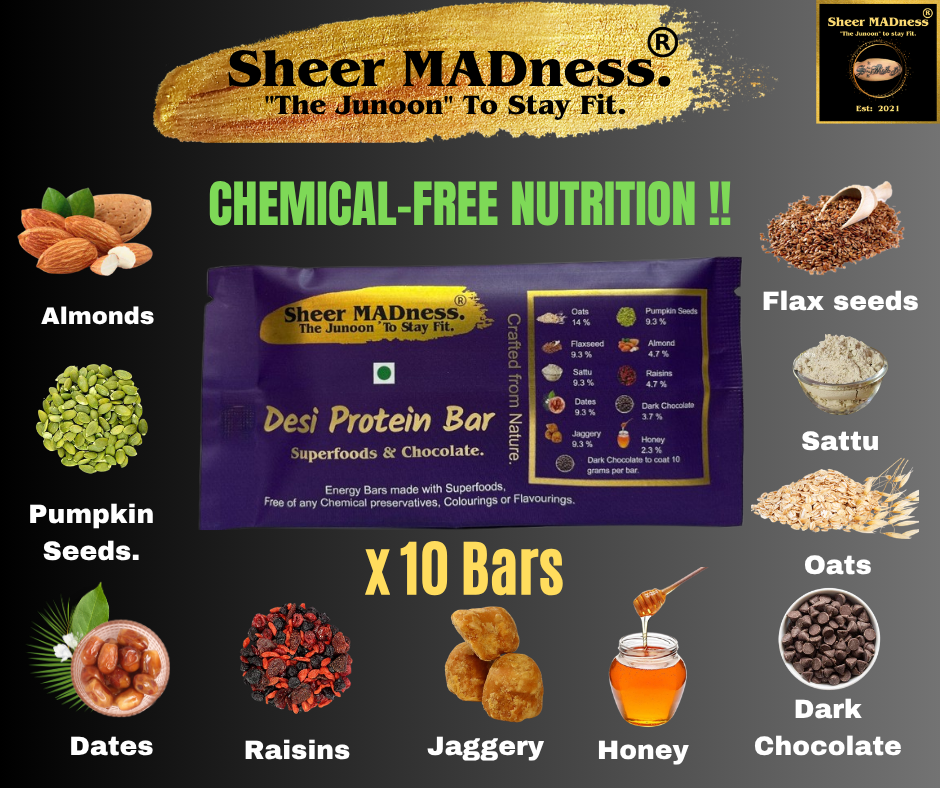
Let me assess each ingredient specifically for pregnancy suitability — because pregnancy consumers deserve this specificity.
Oats — safe and specifically beneficial during pregnancy. Complex carbohydrates for sustained energy. Beta-glucan for blood sugar stability particularly important during gestational diabetes risk. Iron from oats. Folate from oats. B vitamins supporting energy metabolism.
Sattu — safe and specifically beneficial. High plant protein for foetal tissue growth. Iron at 8 to 9 milligrams per 100 grams for expanding maternal blood volume. Folate for neural tube support. Low glycaemic index for blood sugar management during pregnancy.
Almonds — safe and specifically beneficial. Calcium for foetal bone mineralisation — approximately 264 milligrams per 100 grams. Magnesium for enzymatic functions and leg cramp prevention. Vitamin E for placental health. Healthy monounsaturated fats for foetal brain development.
Flaxseed — safe in food-level amounts. The most important consideration is dosage. Food-level flaxseed in a bar — approximately 5 to 8 grams — is safe and beneficial for most pregnant women, providing ALA omega-3 for foetal brain development. High-dose flaxseed supplements above this level are not recommended during pregnancy due to theoretical phytoestrogenic effects at megadose concentrations. The amount in a bar is a food-level dose, not a supplement dose.
Pumpkin seeds — safe and specifically beneficial. Zinc for immune function and foetal growth. Magnesium for pregnancy-related cramp prevention. Iron for haemoglobin production.
Melon seeds — safe. Nutritionally similar to pumpkin seeds. Zinc, magnesium, and phosphorus.
Dates — safe and specifically beneficial. Research published in the Journal of Obstetrics and Gynaecology found that date consumption in late pregnancy was associated with more favourable cervical dilation, reduced need for labour augmentation, and shorter first-stage labour duration. Iron, potassium, and natural fibre. Natural sugars packaged with fibre — minimal blood glucose impact.
Raisins — safe. Iron, potassium, and antioxidant polyphenols alongside natural sweetness.
Jaggery — safe and specifically beneficial. Iron at approximately 11 milligrams per 100 grams — directly addressing the high iron demands of pregnancy. Traditional Indian medicine has given jaggery to pregnant women for iron and energy for centuries. Potassium and magnesium alongside iron.
Honey — safe for healthy pregnant women in processed commercial form. See honey section above. Women with specific medical conditions or immunocompromise should consult their obstetrician.
Dark chocolate — safe in food-level amounts. Antioxidant flavonoids. Magnesium. The caffeine in dark chocolate is low — approximately 12 milligrams per 40-gram bar — well within the 200-milligram daily caffeine limit recommended during pregnancy by the NHS and ACOG. The theobromine in dark chocolate is also present at food-level amounts that are not a pregnancy concern at bar-serving sizes.
This is the practical safety checklist for pregnant women evaluating any protein bar.
Whey protein concentrate contains residual lactose — problematic for the majority of Indian adults with lactose intolerance, and particularly challenging during pregnancy when the digestive system is already under hormonal stress. Furthermore, concentrated protein isolates place higher nitrogen loads on kidneys that are already under increased filtration demands during pregnancy.
Sucralose, aspartame, and acesulfame-K cross the placental barrier. While research on long-term foetal effects is ongoing and not definitive, most perinatal nutritionists recommend the precautionary principle during pregnancy — avoiding synthetic chemicals whose foetal safety profile is incompletely understood.
Maltitol and sorbitol cause gut fermentation and loose stools. Pregnant women already managing constipation, haemorrhoids, and variable digestive function do not need the additional digestive disruption of sugar alcohol fermentation.
As detailed above, BHA and BHT are potential endocrine disruptors. Given that foetal endocrine system development occurs during pregnancy and is highly sensitive to external hormonal signals, avoiding potential endocrine disruptors during this window is consistent with precautionary perinatal nutrition principles.
Bars with 20 to 25 grams of protein per bar from concentrated isolates — designed for adult athletes — deliver higher nitrogen loads than pregnancy protein guidelines specifically recommend. Moderate whole-food protein from 8 to 10 grams per bar is appropriate for supplementing pregnancy meals without pushing total daily protein to excessive levels that strain kidneys already managing increased filtration.
Bars with significant added caffeine or very high dark chocolate content may approach the 200-milligram daily caffeine limit recommended during pregnancy. Sheer MADness bars contain approximately 12 milligrams of caffeine from dark chocolate — well within safety limits.
Eat small amounts of a bar slowly at the time of day when nausea is least severe. Many women find mid-morning or mid-afternoon easier than early morning. Pair with water — hydration specifically helps manage nausea. The natural ginger-like properties of some spices are not in Sheer MADness bars, but the oat carbohydrates provide the bland, stomach-settling food that most women tolerate best during first-trimester nausea.
One bar mid-morning and one mid-afternoon provides consistent protein distribution across a day when growing energy and protein demands require more frequent eating occasions. The second trimester is typically when appetite returns and food aversions resolve — making this the most nutritionally productive period for regular bar consumption.
The physical burden of late pregnancy makes food preparation increasingly challenging. A bar requires zero preparation, can be eaten in any position, and provides the carbohydrate energy and protein that the heavily pregnant body needs consistently across the day. One bar in the morning and one in the afternoon provides the energy distribution that prevents the fatigue crashes common in late pregnancy.
Prenatal appointments, hospital visits, and pregnancy-related travel create disrupted meal schedules. A Sheer MADness bar in the pregnancy bag provides clean, whole-food nutrition regardless of what the environment offers — specifically important during a phase when nutrition quality should not be sacrificed to convenience.
Sheer MADness Protein Bars and Energy Bars address the specific nutritional needs of pregnancy through ingredient choice — not through synthetic fortification added to a chemical base.
The philosophy is simple and directly relevant to pregnancy. Every compound a pregnant woman consumes potentially reaches the developing baby. Each ingredient should therefore be a whole food with a centuries-long history of safe consumption during pregnancy in Indian food culture. Every additive and chemical should be absent.
This is precisely the Indian traditional approach to pregnancy nutrition. Indian families gave pregnant women almond milk for calcium and brain support. They gave jaggery for iron and energy, and sattu for protein and sustained energy. They incorporated dates and raisins for iron and natural energy, and used flaxseed in cooking for its beneficial oils.
Sheer MADness packages this traditional pregnancy nutrition wisdom in a portable bar format — delivered through oxygen absorbers rather than chemistry, displayed on the front of every pack since 2021, at ₹60 per bar.
The developing baby receives the natural food chemistry of almonds, oats, sattu, flaxseed, dates, and jaggery — the same whole foods that Indian families have trusted through pregnancy for generations.
These caveats are not standard disclaimers. They are medically important and practically specific.
Always consult your obstetrician before adding any regular food to your pregnancy diet. Individual pregnancy conditions — gestational diabetes, hypertension, kidney conditions, multiple pregnancies, high-risk pregnancy classifications — may require specific dietary management that modifies general guidance.
Tree nut allergy. Sheer MADness bars contain almonds. Pregnant women with tree nut allergies should not consume these bars.
Gestational diabetes. Pregnant women with gestational diabetes have specific blood sugar management requirements. While the low-GI sattu and oat beta-glucan in Sheer MADness bars are more diabetes-appropriate than most commercial bars, individual blood glucose monitoring and dietary management under medical supervision determines what is appropriate for each woman specifically.
Flaxseed dose. Food-level flaxseed in one bar is appropriate for most pregnant women. Do not additionally supplement with flaxseed oil capsules alongside daily bar consumption — the combined dose would exceed food-level intake.
Pre-eclampsia risk. Dark chocolate flavonoids have been studied for potential pre-eclampsia risk reduction — but this is a medical condition requiring specific obstetric management. Do not treat a protein bar as a medical intervention for any pregnancy condition.
Since 2021, Sheer MADness displays every ingredient with its own image on the front of every pack. A pregnant woman can look at the front of a Sheer MADness bar and see oats, almonds, sattu, flaxseed, pumpkin seeds, melon seeds, dates, raisins, jaggery, honey, and dark chocolate — before opening the bar.
No INS code requires that requires decoding; no chemical name hides in small print. Nor is any synthetic additive present in any ingredient. The complete ingredient list is visible, identifiable, and explainable to an obstetrician in plain language.
This is the transparency standard that every protein bar marketed to pregnant women should meet.
Sheer MADness holds a registered trademark under the Government of India. The Natural Plant Protein formula is patent published under Patent No. 202331036733, searchable on Intellectual Property India. The brand holds a valid FSSAI licence and GSTIN registration.
| Feature | Sheer MADness | Typical Commercial Bar |
|---|---|---|
| Chemical preservatives | None — oxygen absorbers | BHA, BHT — potential endocrine disruptors |
| Artificial sweeteners | None | Sucralose — crosses placental barrier |
| Sugar alcohols | None | Maltitol — compounds pregnancy digestive issues |
| Protein source | Sattu, almonds, oats — whole food | Whey isolate — concentrated nitrogen, residual lactose |
| Iron for pregnancy | Yes — jaggery, sattu, raisins | Usually absent |
| Folate for pregnancy | Yes — sattu, oats | Usually absent |
| Omega-3 for foetal brain | Yes — flaxseed ALA | Usually absent |
| Calcium for foetal bones | Yes — almonds naturally | Often absent or synthetic |
| Magnesium for cramp prevention | Yes — almonds, dark chocolate, oats | Often absent |
| Gestational diabetes safety | Higher — low-GI sattu and oat beta-glucan | Variable — often high-GI sweeteners |
| Nausea tolerance | Better — bland oat base, no artificial flavours | Variable — artificial flavours may worsen nausea |
| Front-label transparency | Every ingredient visible | INS codes in small print |
| Price per bar | ₹60 | ₹80 to ₹200 |
Can pregnant women eat protein bars?
Yes — when made from whole-food ingredients with no chemical preservatives, no artificial sweeteners, and no synthetic additives. Sheer MADness bars are appropriate for most healthy pregnant women as a daily snack supplement to a balanced diet. Always consult your obstetrician before adding any regular food during pregnancy.
Is honey safe during pregnancy?
Processed commercial honey — including the honey in Sheer MADness bars — is safe for healthy pregnant women. The botulinum concern with honey applies specifically to infants under 12 months. The NHS and ACOG both confirm honey is safe for pregnant women. Women who are immunocompromised or have specific medical conditions should consult their obstetrician for individual guidance.
Which trimester is protein most important during pregnancy?
Protein is critical in all three trimesters but for different reasons. First trimester: neural tube development and organ formation. Second trimester: accelerating foetal growth and brain development. Third trimester: foetal nutrient storage and maternal preparation for delivery. Protein requirement increases progressively from the first to the third trimester.
Food-level flaxseed — the amount in one protein bar, approximately 5 to 8 grams — is safe for most pregnant women and provides ALA omega-3 important for foetal brain development. High-dose flaxseed supplements are not recommended during pregnancy. If you consume a Sheer MADness bar daily, do not additionally take flaxseed oil supplements during pregnancy.
Can gestational diabetes affect protein bar choice?
Yes. Women with gestational diabetes have specific blood sugar management requirements. Sheer MADness bars’ low-GI profile from sattu (GI 28-35) and oat beta-glucan makes them more diabetes-appropriate than most commercial bars. Individual blood glucose monitoring and dietary guidance from your obstetrician determines what is appropriate specifically for you.
How many protein bars can pregnant women eat per day?
One bar per day as a nutritional snack supplement is appropriate for most healthy pregnant women. Two bars may be appropriate in the second and third trimesters when nutritional demands increase — discuss with your obstetrician. Never replace meals with bars during pregnancy.
Are artificial sweeteners in protein bars safe during pregnancy?
Most perinatal nutritionists recommend avoiding artificial sweeteners during pregnancy due to the precautionary principle — sucralose has been found in umbilical cord blood research, and long-term foetal effects are incompletely understood. Sheer MADness bars contain no artificial sweeteners — only natural whole-food sweeteners from dates, raisins, jaggery, and honey.
Can protein bars help with first-trimester nausea?
The oat-based whole-food profile of Sheer MADness bars makes them one of the more tolerable nutrition options during first-trimester nausea. Oats are among the most universally tolerated foods during morning sickness. The bars require no preparation, have no cooking smells, and can be eaten in small amounts at any time of day — specifically practical advantages during the first trimester.
Pregnant women can and should consume protein bars — when the bar is built from whole foods that serve the specific and elevated nutritional demands of pregnancy.
The right bar for pregnancy delivers whole-food protein for foetal tissue building, iron from jaggery and sattu for expanding blood volume and haemoglobin production, folate from sattu for neural tube support, calcium and magnesium from almonds for foetal bone development and pregnancy leg cramp prevention, omega-3 from flaxseed for foetal brain development, and dietary fibre from oats and flaxseed for the digestive regularity that pregnancy hormones routinely disrupt.
The wrong bar — containing BHA, BHT, sucralose, or maltitol — delivers chemical compounds to a developing foetal environment that the placenta cannot fully protect against, compounds digestive challenges that pregnancy already creates, and provides no nutritional value beyond the protein fraction itself.
Sheer MADness bars were built on Indian whole-food tradition — the same foods that Indian families have given pregnant women for generations for iron, strength, and sustained energy. They are preserved with oxygen absorbers. They are displayed transparently on the front of every pack since 2021. And they cost ₹60 per bar.
Always consult your obstetrician before making any dietary change during pregnancy. This post provides nutritional information — it does not replace personalised medical care.
I would also request you to kindly read my previous post about “Healthiest Protein Bar in India“.
a) Everyone is an individual, so what suits me may not suit the next person.
b) If a person has a medical condition, a doctor’s advice and prescribed medication will only help. Pregnancy specifically requires individual medical guidance. Please consult your obstetrician before adding any new regular food during pregnancy.
c) While buying any protein bar from the market, read the labels carefully. Watch out for INS 320 (BHA), INS 321 (BHT), INS 551 (silicon dioxide), sucralose, aspartame, maltitol, sorbitol, and other lab-made chemicals — particularly important during pregnancy when every compound you consume reaches the developing baby.
If you are interested in buying chemical-free Natural Plant Protein Moringa, Health Drinks for Kids, or our delicious chemical-free Energy Bars, Protein Bars, and Millet Bars, shop at Sheer MADness.
You can also find us on Flipkart, Jio Mart, or ONDC in India.
d) Exercise is the key to fitness. Exercise and nutrition are two sides of the same coin and always go hand in hand.
e) Excess of anything is wrong, even the best whole-food snack. Consume only recommended quantities.
f) Rome was not built in a day. Discipline and consistency are the only keys to lasting health.
g) It is not only exercise and protein that builds health. A healthy gut, macro and micronutrients, body type, rest, and lifestyle all matter. Of all these, exercise and nutrition are within our control. Focus on these two primary aspects first.
h) The most important part of fitness is that nothing is better than exercise and a balanced meal.
Article by Chef Ashutosh Awasthi
Disclaimer: Our products are a source of HEALTHY NUTRIENTS and are COMPLETELY FREE OF ANY ADDED CHEMICALS. We do not claim to cure any medical condition. The content provided is informational. We do not claim to diagnose or treat a person with any specific medical condition.