
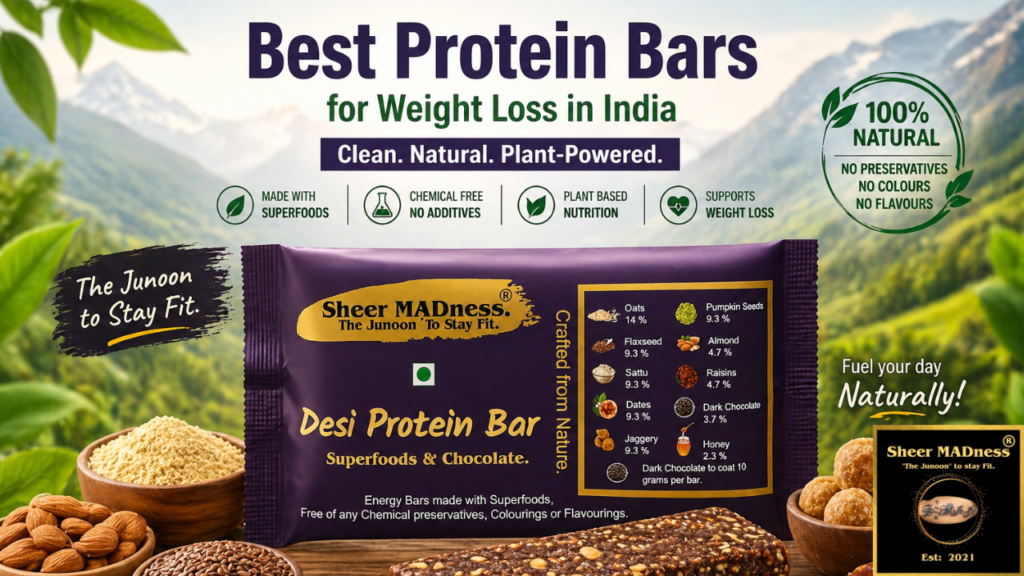
Direct answer: The best protein bars for weight loss in India are built from whole foods — oats, sattu, almonds, flaxseed, dates, and jaggery — that deliver protein and fibre together, cause no blood sugar spike, support the gut microbiome, and create genuine satiety for two to three hours. Bars built on maltitol, whey isolate, and chemical preservatives actively undermine fat loss through gut disruption, artificial appetite signal interference, and daily chemical load that adds to metabolic stress.
The difference is not marketing. It is metabolic science.
I’m Chef Ashutosh Awasthi, founder of Sheer MADness, professional chef, marathon runner, and author of Great Health Comes from Exercise & Nutrition. I lost significant weight in my forties and transformed my body through disciplined nutrition and regular exercise. Thus, I am not writing about weight loss as a theoretical topic. I am writing about it as someone who lived it — and who built a nutrition brand around what that transformation taught me.
Most weight loss content says “protein helps you feel full.” That is true but incomplete. Let me explain the specific mechanisms.
The thermic effect of food refers to the calories your body burns just to digest and process what you eat. Protein has a thermic effect of approximately 20 to 35 percent — meaning your body burns 20 to 35 calories for every 100 calories of protein consumed just through the process of digesting it.
Carbohydrates have a thermic effect of 5 to 10 percent. Fats have approximately 0 to 3 percent.
This means a bar with 10 grams of whole-food protein contributes approximately 40 calories of net energy to the body after the digestion cost — even though the bar’s label shows a higher calorie number. High-protein foods create a genuine caloric deficit advantage that simply doesn’t exist with refined carbohydrate snacks.
A 2024 review published in Nutrients confirmed that higher protein intake consistently reduces ad libitum caloric intake — meaning people eating more protein naturally eat fewer total calories without deliberately restricting food.
Protein specifically stimulates the release of satiety hormones — PYY (peptide YY), CCK (cholecystokinin), and GLP-1 (glucagon-like peptide-1). These hormones signal the brain to reduce hunger and increase the feeling of fullness.
Simultaneously, protein suppresses ghrelin — the primary hunger hormone. Ghrelin levels normally rise before meals and fall after eating. High-protein meals suppress ghrelin more effectively and for longer than high-carbohydrate or high-fat meals.
This hormonal combination — elevated satiety hormones and suppressed ghrelin — is the reason a protein-rich snack genuinely reduces how much you eat at the next meal. A 2022 meta-analysis published in Obesity Reviews confirmed that protein-rich snacks significantly reduced total daily energy intake compared to matched carbohydrate snacks.
Most people trying to lose weight focus exclusively on the scale. The scale doesn’t tell you what you’re losing. Caloric restriction without adequate protein causes muscle loss alongside fat loss — a combination that slows your metabolism and makes regaining weight more likely.
Adequate protein during a caloric deficit specifically preserves lean muscle mass. Preserved muscle mass maintains metabolic rate. A higher metabolic rate burns more calories at rest — directly supporting ongoing fat loss.
The ICMR-NIN 2024 Dietary Guidelines recommend 0.8 to 1.0 grams of protein per kilogram per day for healthy Indian adults — rising to 1.2 to 1.8 grams for active individuals. Most Indians consuming calorie-restricted diets fall significantly short of this target. A whole-food protein bar provides 8 to 10 grams of additional protein daily — specifically addressing this gap.
This section explains why not all protein bars support weight loss equally — and why some actively undermine it.
Refined sugar, glucose syrup, and maltitol in commercial bars cause rapid blood glucose spikes. Each spike triggers an insulin surge. Insulin is the primary fat-storage hormone — it signals cells to absorb glucose and store excess energy as fat.
Repeated daily blood sugar spikes from commercial bars create a hormonal environment that favours fat storage. This is why commercial bars marketed for weight loss can paradoxically worsen body composition with daily consumption.
Furthermore, the blood sugar crash that follows a spike creates the classic “energy dip and rebound craving” cycle. You eat a bar. You feel a brief energy lift. Your blood sugar crashes 45 minutes later. Your brain triggers carbohydrate cravings. You reach for another high-GI snack. Total daily calorie intake increases — the opposite of what weight loss requires.
Oat beta-glucan slows glucose absorption. Sattu has a glycaemic index of just 28 to 35. Almonds and flaxseed provide healthy fats that further slow gastric emptying. Dates and jaggery provide natural sugars packaged with fibre that blunts their glycaemic impact.
Together, these ingredients produce a moderate, sustained blood glucose rise. Insulin response is moderate and measured. Energy releases gradually. Hunger stays suppressed for two to three hours.
This is the metabolic profile that supports fat loss — stable blood sugar, moderate insulin, sustained energy, and no cravings spike. A Sheer MADness bar specifically delivers this profile. A maltitol-sweetened commercial bar specifically does not.
This is the most important and most ignored aspect of protein bar selection for weight loss.
Most commercial bars marketed as “low sugar” or “diet” use artificial sweeteners — sucralose, aspartame, or acesulfame-K. The logic is straightforward: zero calories, sweet taste, no blood sugar spike.
The reality is more complicated and more damaging.
A 2023 landmark study published in Cell found that artificial sweeteners including sucralose and aspartame alter gut microbiome composition in ways that impair glucose tolerance — the body’s ability to manage blood sugar. This means regular artificial sweetener consumption worsens the insulin sensitivity that is fundamental to fat loss.
Furthermore, research published in Physiology & Behavior found that artificial sweeteners disrupt the cephalic phase insulin response — the anticipatory insulin release that the brain triggers when it tastes sweetness. This disruption impairs appetite regulation over time, increasing caloric intake rather than reducing it.
A systematic review published in PLOS Medicine found no consistent evidence that artificial sweeteners support weight loss. The review found potential adverse effects on cardiometabolic health markers with long-term consumption.
The “zero calorie sweetener” strategy for weight loss is not supported by the current evidence — and may actively work against fat loss goals in people who consume them daily.
Natural sweeteners from dates and jaggery — in the moderate quantities present in Sheer MADness bars alongside 3 to 5 grams of fibre — produce a different metabolic response. The fibre blunts glucose absorption. The natural minerals provide nutritional value. No gut microbiome disruption occurs.
The gut-weight loss connection is one of the most important recent developments in metabolic research.
A 2024 review published in Cell Metabolism confirmed that gut microbiome composition directly influences body weight regulation. Individuals with diverse, beneficial gut microbiomes show better metabolic efficiency, better appetite regulation, and better fat-loss outcomes than those with disrupted microbiomes.
Dietary fibre is the primary driver of gut microbiome diversity. High fibre intake specifically feeds Lactobacillus and Bifidobacterium species — the beneficial bacteria most associated with healthy body weight, efficient metabolism, and reduced systemic inflammation.
Sheer MADness bars deliver 3 to 5 grams of dietary fibre per bar from oats, flaxseed, almonds, and sattu — specifically supporting the gut microbiome diversity that research links to better weight management.
Commercial bars with maltitol, sorbitol, and artificial sweeteners do the opposite. They disrupt gut microbiome composition through fermentation disruption and sweetener-driven bacterial changes — undermining the gut-weight loss pathway at its foundation.

I want to share something personal here, because this post is specifically about weight loss.
I was overweight in my early forties, carrying excess body fat accumulated over years of professional chef work — long kitchen hours, irregular eating, poor sleep, and the inevitable consequence of preparing food all day without adequate attention to my own nutrition.
The only way I transformed my body was through disciplined exercise and real-food nutrition. The process taught me things about weight loss that no textbook provides. The most important lesson was this: sustainable fat loss never comes from eating less food. It comes from eating the right food at the right time in the right amounts.
The right food is food that keeps you genuinely satisfied for three to four hours. Food that doesn’t trigger cravings 45 minutes after you eat it, that gives your body the protein it needs to preserve muscle while burning fat. Food that supports the gut microbiome rather than disrupting it.
That is whole food. Not chemistry.
Sheer MADness bars reflect everything my own transformation taught me about daily nutrition. I eat them. My family eats them. And they are built around the same nutritional principles that actually produced my results.
Sheer MADness Protein Bars, Energy Bars, and Millet Bars support weight loss through five specific mechanisms. Each is ingredient-level, not marketing-level.
Sattu’s glycaemic index of 28 to 35 is among the lowest of any protein food available in India. This means consuming sattu-based protein triggers a minimal insulin response. Low insulin means fat storage signals are not activated. The metabolic environment remains fat-burning rather than fat-storing.
Beta-glucan forms a gel in the gut that physically slows gastric emptying. Food stays in the stomach longer. Satiety hormone signals stay elevated longer. Hunger returns later. Total daily food intake decreases.
A 2024 meta-analysis in Nutrition Research confirmed that oat beta-glucan consumption significantly reduced appetite scores and total daily energy intake compared to control groups.
Chronic low-grade inflammation is a consistent driver of insulin resistance — the metabolic state that makes fat loss difficult and fat gain easy. Omega-3 fatty acids from flaxseed reduce the inflammatory cytokines TNF-α and IL-6 that drive this insulin resistance.
Regular daily flaxseed intake creates a progressively less inflammatory metabolic environment. This improves insulin sensitivity — directly supporting the metabolic conditions that favour fat loss over fat storage.
Healthy fats slow gastric emptying and trigger CCK release — one of the primary satiety hormones. A bar with meaningful healthy fat content from almonds genuinely satisfies in a way that a fat-free, processed alternative cannot.
Furthermore, research published in the European Journal of Nutrition found that regular almond consumption was associated with reduced waist circumference and body fat percentage — despite almonds being a calorie-dense food. The satiety effect of almonds outweighs their caloric contribution to total daily intake.
BHA, BHT, and artificial sweeteners are potential endocrine disruptors — compounds that interfere with hormonal signalling including insulin, cortisol, and leptin function. Disrupted leptin signalling specifically causes leptin resistance — a condition where the brain stops responding to satiety signals, driving persistent overeating.
Daily exposure from a bar consumed for weight loss purposes represents a daily metabolic disruption from the very product intended to support the goal. Sheer MADness eliminates this problem completely by containing zero synthetic chemical additives.
This section is important because it prevents a common misconception.
A Sheer MADness bar provides approximately 180 to 200 kilocalories per 40-gram bar. This is not a “low calorie” bar — and no genuinely nutritious bar should be.
Weight loss occurs through a caloric deficit — consuming fewer calories than the body expends. A protein bar for weight loss is not magic. It works by replacing higher-calorie, lower-satiety snacks with a lower-calorie, higher-satiety alternative.
A ₹30 packet of cream biscuits provides approximately 250 to 300 calories with negligible protein, negligible fibre, and no satiety extension. Within 30 minutes, hunger returns.
A Sheer MADness bar at 180 to 200 calories provides 8 to 10 grams of protein, 3 to 5 grams of fibre, and healthy fats that together suppress hunger for two to three hours.
The net calorie intake from mid-morning to lunch drops meaningfully — not because the bar has fewer calories, but because it eliminates the second and third snack that a biscuit’s 30-minute satiety window triggers.
This calorie reduction through satiety extension — not through calorie restriction from the bar itself — is the mechanism through which protein bars genuinely support weight loss.
Mid-morning (10am to 12pm) is the highest-leverage weight loss timing for a bar. Blood glucose from breakfast is declining. Hunger is building. Poor food choices are most likely at this point. One bar at mid-morning extends satiety to lunch — and reduces the quantity eaten at lunch.
Mid-afternoon (3pm to 5pm) is the second-highest-leverage timing. The circadian energy dip creates appetite pressure. Poor snacking choices at this point add 200 to 400 unnecessary calories to most people’s daily intake. One bar prevents this caloric addition through genuine satiety.
Protein bars for weight loss work as snack replacements — not additions to existing meals. They replace:
Biscuits and namkeen at mid-morning and mid-afternoon. Canteen or street food during breaks. Sugary chai accompaniments. Vending machine and packaged snack choices during commutes.
They do not replace meals. Adding a bar on top of three full meals adds 180 to 200 calories daily — counterproductive for a caloric deficit.
Always eat a protein bar with a full glass of water when using it for weight loss. Fibre needs water to form its satiety-extending gel. Eating a fibre-rich bar without water reduces its satiety effect significantly. Furthermore, drinking 400ml of water alongside a bar activates stretch receptors in the stomach — adding physical fullness on top of the hormonal satiety from protein and fibre.
I built a brand around the phrase “Great Health Comes from Exercise & Nutrition.” The “and” is not optional.
No protein bar — however well formulated — replaces exercise for weight loss. Exercise creates the caloric deficit. It preserves the muscle mass that metabolic rate depends on. Exercise improves insulin sensitivity — making the body more responsive to the metabolic benefits of good nutrition.
One Sheer MADness bar daily alongside 30 to 45 minutes of moderate exercise five days per week is a sustainable, evidence-based weight loss strategy. One Sheer MADness bar daily without exercise is just a good snack.
A protein bar reduces snacking calories. It doesn’t create a caloric surplus allowance for larger meals. Overall daily caloric balance determines fat loss. The bar helps achieve that balance — it doesn’t override it.
Many bars marketed specifically for weight loss contain the densest chemical ingredient lists in the industry. “Low calorie” is achieved by removing whole-food ingredients and replacing them with protein isolates, maltitol, and synthetic fibres. The result is a bar with fewer calories and more chemicals — worse for gut health, worse for metabolic function, and worse for long-term weight management.
A protein bar after a complete dinner adds 180 to 200 calories without replacing anything. It is only useful for weight loss when it replaces a higher-calorie, lower-nutrition alternative.
A protein bar cannot compensate for daily meals of refined carbohydrates, fried food, and excess refined sugar. It supports a good dietary pattern — it doesn’t override a poor one.
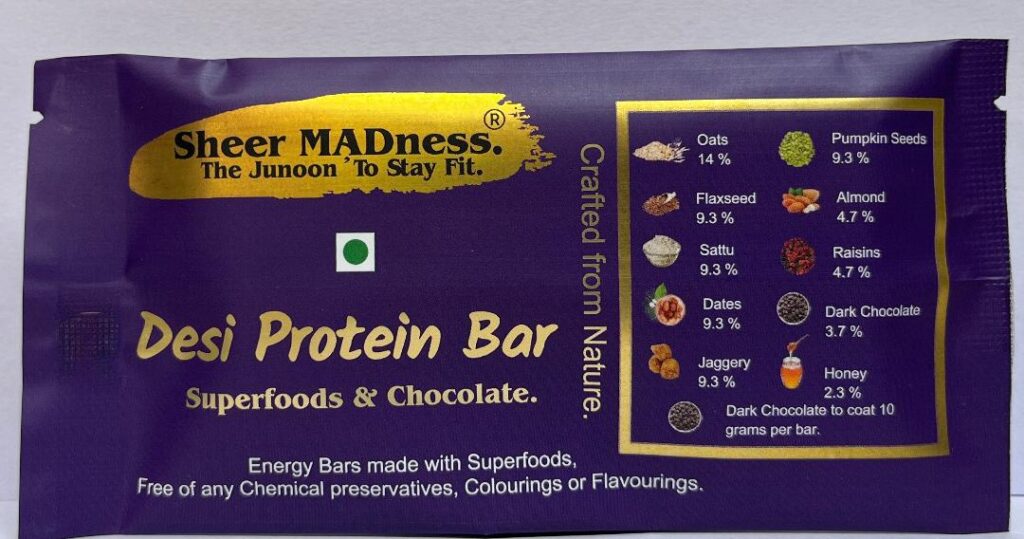
Since 2021, Sheer MADness displays every ingredient with its own image on the front of every pack. For people managing weight — who must pay close attention to what they eat daily — this transparency is specifically valuable.
You see oats, almonds, sattu, flaxseed, pumpkin seeds, melon seeds, dates, raisins, jaggery, honey, and dark chocolate on the front of the pack before opening it. No INS code requires decoding. No synthetic compound hides in small print. Every calorie in this bar is accounted for by a real food ingredient you can identify and understand.
This is the standard every protein bar for weight loss should meet.
Sheer MADness holds a registered trademark under the Government of India. The Natural Plant Protein formula is patent published under Patent No. 202331036733, searchable on Intellectual Property India. The brand holds a valid FSSAI licence and GSTIN registration.
| Feature | Sheer MADness | Typical “Diet” or “Low Sugar” Bar |
|---|---|---|
| Protein source | Sattu, almonds, oats — whole foods | Whey isolate, soy concentrate |
| Glycaemic index | Low — sattu GI 28-35, oat buffered | Variable — often high from syrups |
| Satiety duration | 2 to 3 hours — beta-glucan + protein + fat | 30 to 60 minutes — no fibre, no fat |
| Sweetener | Dates, jaggery, honey, raisins | Maltitol, sucralose, aspartame |
| Gut microbiome effect | Positive — prebiotic fibre | Negative — sweetener disruption |
| Insulin spike risk | Low — natural sugars with fibre | High — syrups or sweetener confusion |
| Chemical preservatives | None — oxygen absorbers | BHA, BHT common |
| Leptin disruption risk | Zero — no endocrine disruptors | Present — BHA, BHT, artificial sweeteners |
| Calorie per bar | 180 to 200 kcal | 150 to 250 kcal |
| Nutrition per calorie | High — protein, fibre, omega-3, minerals | Low — protein and chemicals |
| Front-label transparency | Every ingredient named and pictured | INS codes in small print on back |
| Price per bar | ₹60 | ₹80 to ₹150 |
Are protein bars good for weight loss?
Yes — when built from whole foods with low-GI protein and fibre that extend satiety to two to three hours. The right bar replaces higher-calorie, lower-satiety snacks — reducing total daily caloric intake through genuine fullness rather than caloric restriction.
Which protein bar is best for weight loss in India?
Sheer MADness Protein Bars at ₹60 per bar are the best protein bars for weight loss in India. They deliver low-GI sattu protein, oat beta-glucan satiety extension, flaxseed omega-3 for insulin sensitivity, and natural sweeteners with no artificial sweetener gut disruption — the complete nutritional package that supports fat loss through multiple mechanisms simultaneously.
Do protein bars cause weight gain?
Not when used correctly. One bar replacing a higher-calorie snack reduces total daily calories. A bar added on top of existing meals adds calories. The bar’s effect depends on what it replaces, not on the bar itself.
One to two bars daily as snack replacements. Mid-morning and mid-afternoon are the most effective weight loss timing windows. Do not exceed two bars daily.
Are low-calorie protein bars better for weight loss?
Not necessarily. Low-calorie bars often achieve lower calorie counts by using chemical sweeteners and removing whole-food fat and fibre. These bars have shorter satiety windows and may disrupt gut health and appetite hormones. A 200-calorie whole-food bar that suppresses hunger for three hours is better for weight loss than a 150-calorie chemical bar that suppresses hunger for 30 minutes.
Can I eat Sheer MADness bars while on a calorie-controlled diet?
Yes. At 180 to 200 calories per bar, one or two bars fit within most calorie-controlled eating plans. The high satiety from protein, fibre, and healthy fats supports adherence to caloric targets by reducing between-meal hunger.
Do artificial sweeteners in protein bars help weight loss?
No — and they may worsen it. Research consistently shows no weight loss benefit from artificial sweetener consumption. The 2023 Cell study found sucralose disrupts glucose tolerance. The PLOS Medicine systematic review found no evidence artificial sweeteners support weight loss and found potential adverse cardiometabolic effects.
Is exercise necessary when using protein bars for weight loss?
Yes — absolutely. A protein bar supports a good dietary pattern but cannot create the caloric deficit that exercise produces. Exercise and nutrition are two sides of the same coin. One side alone never produces the result that both sides together achieve.
I lost weight in my forties. I rebuilt my body through real-food nutrition and consistent exercise. Sheer MADness is what that transformation looks like in bar form.
The best protein bar for weight loss in India is not the one with the lowest calorie count or the highest protein number. It is the one that keeps you genuinely satisfied for three hours, supports a healthy gut microbiome, provides low-GI protein and fibre that stabilise blood sugar, contains no chemical additives that disrupt metabolic function, and costs enough to be real food — not so cheap that corners have been cut on every ingredient.
Sheer MADness bars meet every one of these criteria at ₹60 per bar. They are built from ten whole-food ingredients that Indian food culture always used for sustained energy and satiety — preserved with oxygen absorbers, displayed transparently on the front label since 2021, and formulated by a chef who transformed his own body with the same nutritional principles they embody.
Great health — including a healthy body weight — comes from exercise and nutrition. Both. Together. Consistently. That is the only weight loss formula that actually works.
I would also request you to kindly read my previous post about “Healthiest Protein Bar in India“.
a) Everyone is an individual, so what suits me may not suit the next person.
b) If a person has a medical condition, a doctor’s advice and prescribed medication will only help.
c) While buying any protein bar from the market, read the labels carefully. Watch out for INS 320 (BHA), INS 321 (BHT), INS 551 (silicon dioxide), maltitol, sorbitol, sucralose, and other lab-made chemicals that quietly appear on most commercial labels.
If you are interested in buying chemical-free Natural Plant Protein Moringa, Health Drinks for Kids, or our delicious chemical-free Energy Bars, Protein Bars, and Millet Bars, shop at Sheer MADness.
You can also find us on Flipkart, Jio Mart, or ONDC in India.
d) Exercise is the key to fitness. Exercise and nutrition are two sides of the same coin and always go hand in hand.
e) Excess of anything is wrong, even the best whole-food snack. Consume only recommended quantities.
f) Rome was not built in a day. Discipline and consistency are the only keys to lasting health.
g) It is not only exercise and protein that builds health. A healthy gut, macro and micronutrients, body type, rest, and lifestyle all matter. Of all these, exercise and nutrition are within our control. Focus on these two primary aspects first.
h) The most important part of fitness is that nothing is better than exercise and a balanced meal.
Article by Chef Ashutosh Awasthi
Disclaimer: Our products are a source of HEALTHY NUTRIENTS and are COMPLETELY FREE OF ANY ADDED CHEMICALS. We do not claim to cure any medical condition. The content provided is informational. We do not claim to diagnose or treat a person with any specific medical condition.