
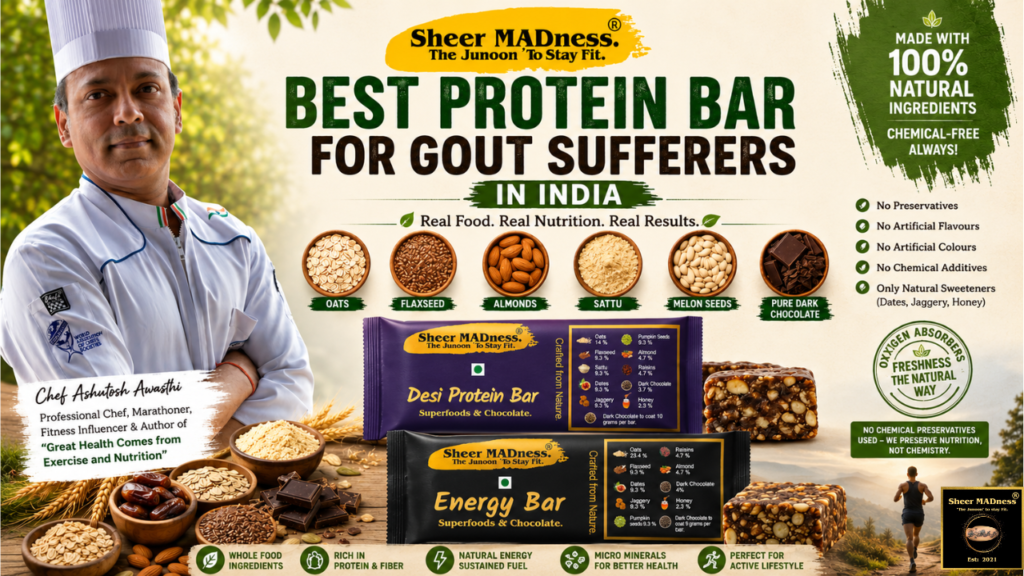
Direct answer: The best protein bar for gout sufferers in India is one made entirely from whole foods that are naturally low in purines — oats, sattu, almonds, flaxseed, dates, and jaggery — with zero protein isolates, zero artificial sweeteners, zero fructose syrups, and zero chemical additives.
Choosing the wrong protein bar as a gout sufferer can trigger a flare-up just as effectively as eating red meat or drinking beer. However, choosing the right one — a bar built on low-purine whole foods with no chemical additives — can provide safe daily protein without touching your uric acid levels at all.
Most commercially available protein bars in India are built around whey protein, soy protein isolate, or casein concentrate. Furthermore, they are sweetened with high-fructose corn syrup, maltitol, or sucralose. All of these ingredients either raise uric acid directly or stress the kidneys that excrete it. Consequently, for a gout sufferer, most commercial protein bars are the wrong choice regardless of the protein number on the front.
Sheer MADness bars take a completely different approach. I’m Chef Ashutosh Awasthi, founder of Sheer MADness, professional chef, marathon runner, and author of Great Health Comes from Exercise & Nutrition. Let me explain exactly what gout sufferers should look for in a protein bar, what they must avoid, and why Sheer MADness is specifically well-suited to their needs.

Gout is a form of inflammatory arthritis caused by elevated uric acid levels in the blood. When uric acid accumulates beyond what the kidneys can excrete, it forms sharp, needle-like monosodium urate crystals in joints — most commonly the big toe, ankles, and knees.
Uric acid is a waste product formed when the body breaks down purines. Purines are chemical compounds found in food that are known to cause gout. Elevated uric acid levels lead to gout — a form of arthritis characterised by painful joint inflammation. nih
Free purines and purine-containing foods from the diet are digested, absorbed, and decomposed to uric acid in the liver. The vast majority of evidence supports the view that intake of purine-rich foods causes hyperuricemia and gout. Therefore, reducing ingested purines is the most important dietary means of preventing hyperuricemia and gout. nih
Research published from 2023 to 2025 found that 68.3 percent of hypertensive individuals studied also had hyperuricemia — uric acid levels at or above 7.0 mg/dL — confirming that high uric acid is increasingly prevalent in India and is closely linked to other metabolic conditions including obesity and cardiovascular disease. MedShun
The dietary management of gout therefore requires careful attention to protein sources. Not all proteins are equal in their purine content or their effect on uric acid levels.
This is the information most gout sufferers need before choosing any protein supplement.
Animal-based protein powders such as whey protein, casein protein, and collagen protein are high in purines. For gout sufferers, it is important to note that some high-protein foods — particularly those rich in purines — can trigger gout attacks. nih
Red meat, organ meats, shellfish, and certain fish like sardines and mackerel are the highest-purine foods for gout sufferers. Furthermore, concentrated protein isolates from these sources — whey, casein, and collagen — carry significant purine loads that the liver must process and convert to uric acid.
Some forms of whey protein may raise uric acid levels in sensitive individuals. Additionally, added sugars, high-fructose corn syrup, and processed foods in most protein shake ingredients can worsen gout symptoms significantly.
This is the single most overlooked trigger in commercial protein bars for gout sufferers. Most commercial bars use glucose-fructose syrup, high-fructose corn syrup, or maltitol — a sugar alcohol that partially converts to fructose during digestion.
High-protein diets consuming too much protein from purine-rich sources may increase the risk of gout flare-ups. Choosing the right protein sources is therefore essential for gout sufferers to prevent flare-ups and maintain overall health.
Fructose is particularly damaging for gout management. It stimulates purine synthesis in the body through a metabolic pathway that increases uric acid production independent of dietary purine intake. Consequently, a bar sweetened with fructose syrup or maltitol actively raises uric acid levels through a completely separate mechanism from purines — making it doubly problematic for gout sufferers.
Some studies suggest that plant-based protein powders and dairy proteins may help lower uric acid levels due to their lower purine content. Low-purine protein supplements are the safest choice for gout sufferers.
Whole-food plant proteins from oats, sattu, almonds, and flaxseed are naturally low in purines. Moreover, these foods come packaged with anti-inflammatory compounds, dietary fibre, and antioxidants that support the management of gout-related inflammation — benefits that no protein isolate can replicate.
A safe protein bar for gout sufferers must pass five specific tests.
The protein must come from whole-food plant sources that are naturally low in purines. Oats, almonds, sattu, pumpkin seeds, and flaxseed are all low-purine protein sources. Whey, casein, and soy isolate are comparatively higher in purines and harder on kidney filtration.
No high-fructose corn syrup, no glucose-fructose syrup, and no maltitol. These stimulate uric acid production through fructose metabolism. Furthermore, no refined sugar in large quantities — excess sugar consumption is associated with increased uric acid production through insulin resistance mechanisms.
Sucralose and aspartame are metabolised differently from food sugars. Both pass through the kidneys as foreign compounds daily. For gout sufferers whose kidneys are already working harder to excrete excess uric acid, this is an unnecessary additional chemical load.
BHA, BHT, and anti-caking agents like INS 551 pass through the body as chemical residues. For gout sufferers managing kidney function alongside uric acid levels, minimising the daily chemical load on the kidneys matters more than for the general population.
Beyond simply being low in purines, the best protein bar for gout sufferers should actively support the management of inflammation. Ingredients like flaxseed (omega-3 fatty acids), turmeric (curcumin), and dark chocolate (antioxidant flavonoids) reduce the inflammatory response that turns a uric acid elevation into a full gout flare.
Sheer MADness Protein Bars and Energy Bars pass every one of these five tests. Here is exactly how.
Every gram of protein in Sheer MADness bars comes from oats, sattu, almonds, flaxseed, pumpkin seeds, and melon seeds. Not one of these is a high-purine food. Moreover, they deliver their protein slowly — packaged with fibre and fat — which places a gentler, more gradual filtration load on the kidneys than fast-digesting protein isolates do.
Sattu specifically deserves attention here. Roasted chickpea flour has been consumed across India for centuries for protein and energy. It is low in purines, highly digestible, and completely compatible with gout-conscious diets. Indian grandmothers gave sattu to family members with joint pain specifically — because experience-based nutritional wisdom understood, before research confirmed it, that plant-based whole-food protein was gentler on the joints and kidneys than animal protein.
Sheer MADness bars are sweetened with dates, raisins, jaggery, and honey. None of these contain added fructose syrup or manufactured sugar alcohols.
Dates and raisins contain natural fructose, but in whole-food form — packaged with fibre and water. The fibre significantly slows fructose absorption, reducing the metabolic impact compared to free fructose from syrups. Furthermore, jaggery provides natural sweetness with iron and trace minerals, not empty calories or uric acid-stimulating fructose surges.
No sucralose, no aspartame, no acesulfame-K, no maltitol, no sorbitol. Every source of sweetness in a Sheer MADness bar is a whole food with a name, an image, and a nutritional purpose.
Sheer MADness bars use oxygen absorbers rather than BHA, BHT, or any synthetic preservative. We remove oxygen from inside the packaging, preventing oxidation and microbial growth without adding a single chemical compound to the food itself.
Consequently, a gout sufferer eating a Sheer MADness bar daily is not adding any synthetic chemical residue to the kidney load that already comes with managing elevated uric acid. This matters specifically and significantly for this audience.
Flaxseed contributes omega-3 fatty acids that reduce the inflammatory response at the joint level — directly relevant to managing the swelling and pain of gout flare-ups. Dark chocolate contributes flavonoids that reduce oxidative stress in inflamed tissue. Almonds provide magnesium, which supports kidney function and uric acid excretion. Furthermore, oat beta-glucan supports gut health and systemic inflammation reduction through its prebiotic effect on beneficial gut bacteria.
These are not incidental benefits. They are the natural, whole-food properties of real ingredients doing what food was always designed to do.
Let me go through each Sheer MADness bar ingredient specifically from a gout management perspective.
Oats are low in purines and high in beta-glucan soluble fibre. Beta-glucan slows glucose absorption, prevents blood sugar spikes, and supports healthy kidney function by reducing systemic inflammation. Additionally, oats are one of the most effective foods for lowering cholesterol — relevant because high uric acid frequently co-occurs with metabolic syndrome and cardiovascular risk.
Sattu is roasted chickpea flour. It is a low-purine plant protein that delivers sustained energy and easy digestion. For gout sufferers looking for safe daily protein, sattu is arguably the most appropriate Indian protein source available — low-purine, anti-inflammatory, and deeply compatible with Indian digestive physiology.
Almonds are low in purines and rich in magnesium. Magnesium plays a specific role in uric acid management — it helps regulate the enzyme systems involved in purine metabolism and supports kidney tubular function that determines how efficiently uric acid is excreted. Furthermore, Vitamin E from almonds reduces oxidative stress in joint tissue inflamed by uric acid crystals.
Flaxseed provides alpha-linolenic acid, the plant omega-3 most associated with reducing the inflammatory cytokines involved in gout flare-ups — specifically TNF-α and IL-1β, the same inflammatory markers elevated during acute gout attacks. Furthermore, flaxseed is among the lowest-purine seeds available, making it ideal for gout-conscious diets.
Both seeds are low in purines and provide zinc and iron. Zinc specifically has been studied for its role in reducing uric acid levels through its influence on xanthine oxidase — the enzyme that converts purines to uric acid. Lower xanthine oxidase activity means less uric acid produced from dietary purines. This is the same mechanism that pharmaceutical urate-lowering drugs like allopurinol target, though food-level zinc works more gently and sustainably.
All four are whole-food sweeteners that replace the fructose syrups, maltitol, and sucralose found in commercial bars. Each provides natural sweetness alongside nutritional value — potassium from dates, antioxidants from raisins, iron from jaggery, and antimicrobial compounds from honey. None of them contain manufactured fructose that stimulates uric acid production through hepatic purine synthesis.
Dark chocolate is low in purines and rich in flavonoid antioxidants — specifically epicatechin, which has been studied for its ability to reduce inflammatory markers including CRP (C-reactive protein). Elevated CRP is consistently present during gout flare-ups. Furthermore, the magnesium in dark chocolate supports the same kidney tubular function that almonds support, creating a compounded mineral benefit from two separate ingredients in the same bar.
This checklist is the most important section of this article for practical daily decision-making.
These are dairy-derived protein isolates with moderate purine content. Furthermore, consuming concentrated protein isolates places a heavier filtration load on the kidneys than whole-food protein does — particularly problematic for gout sufferers whose kidneys are already managing elevated uric acid.
High-fructose corn syrup, glucose-fructose syrup, and maltitol all stimulate hepatic purine synthesis, raising uric acid levels independently of dietary purine intake. This is one of the most common triggers in commercial protein bars that gout sufferers don’t notice because fructose isn’t listed as a “purine-containing” ingredient.
Consuming very high protein amounts in a single bar — 20 to 25 grams per serving — creates a large nitrogen load that strains kidney filtration. For gout sufferers, spreading protein intake across the day in moderate whole-food amounts is significantly better than consuming one large protein hit from an isolate-based bar.
BHA, BHT, and INS 551 are chemical compounds that pass through the kidneys daily as synthetic residues. For gout sufferers managing kidney health alongside uric acid, this is an unnecessary daily chemical burden that whole-food bars eliminate entirely.
A protein bar choice is one part of a broader dietary approach to gout management.
Cherries and cherry juice have the strongest evidence base of any food for reducing gout frequency — the anthocyanins directly inhibit uric acid production. Low-fat dairy, leafy vegetables, oats, whole grains, and adequate water intake all support lower uric acid levels. Additionally, vitamin C-rich foods like amla, lemon, and guava support uric acid excretion through the kidneys.
Red meat, organ meats, shellfish, sardines, mackerel, and beer are the highest-purine foods. Furthermore, fructose-sweetened beverages, commercial fruit juices, and refined sugar in large amounts all stimulate uric acid production independently of purines.
Water is the most effective single intervention for uric acid management — it is the medium through which kidneys excrete uric acid in urine. As a marathon runner, I understand hydration at a physical level. Aim for three litres of water daily if managing elevated uric acid. This is the intervention most consistently supported by every gout management protocol globally.
| Feature | Sheer MADness Bar | Typical Commercial Bar |
|---|---|---|
| Protein source | Oats, sattu, almonds, flaxseed, pumpkin seeds — low-purine whole foods | Whey isolate, casein, soy concentrate — moderate purines |
| Sweetener | Dates, jaggery, raisins, honey — natural whole-food sugars | Maltitol, high-fructose syrup, sucralose — fructose metabolism risk |
| Preservatives | None — oxygen absorbers | BHA, BHT — kidney load |
| Additives | Zero INS codes | INS 551, INS 322, emulsifiers |
| Fructose risk | Minimal — natural fructose with fibre | High — manufactured fructose or maltitol |
| Anti-inflammatory compounds | Omega-3 from flaxseed, flavonoids from dark chocolate, curcumin | Generally absent |
| Kidney load | Minimal — slow-digesting whole-food protein | Higher — fast-digesting isolate nitrogen load |
| Daily gout risk | Low — low-purine, no synthetic fructose | Moderate to high — depends on sweetener and isolate content |
Yes, but ingredient selection is critical. Protein bars made from whole foods with low-purine protein sources and no fructose syrups, no maltitol, and no artificial sweeteners are safe for daily consumption. Bars built on whey isolate, casein, and high-fructose sweeteners carry meaningful risk for gout sufferers.
Plant-based whole-food proteins from oats, almonds, sattu, and flaxseed are the safest choice. They are naturally low in purines, deliver protein slowly alongside fibre and healthy fats, and place a gentler filtration load on the kidneys than protein isolates do.
Whey protein has relatively low purine content compared to red meat. However, concentrated whey isolate places a higher nitrogen filtration load on the kidneys than whole-food protein does. Furthermore, many commercial whey bars are sweetened with maltitol or fructose syrup, which independently stimulate uric acid production. Therefore, whey protein bars carry more risk for gout sufferers than whole-food plant protein bars.
Yes — significantly. Fructose stimulates hepatic purine synthesis, raising uric acid levels independently of dietary purine intake. Manufactured fructose syrups and maltitol (which partially converts to fructose) in commercial bars actively trigger uric acid elevation. This is one of the most important and most overlooked factors in choosing a protein bar for gout sufferers.
No. Every ingredient in Sheer MADness bars is naturally low in purines. The sweeteners are whole-food sources — dates, raisins, jaggery, and honey — that do not contain manufactured fructose. There are no chemical preservatives, no isolates, and no synthetic additives that stress the kidneys.
Yes. One bar daily is safe for most people managing gout, provided their overall diet is also low in high-purine foods and they are maintaining adequate hydration. Whole-food bars built on low-purine plant proteins are compatible with long-term daily consumption for gout-conscious individuals.
Cherries or cherry juice, vitamin C-rich foods (amla, lemon, guava), low-fat dairy, whole grains, and three litres of water daily are the most evidence-based dietary additions for gout management. Combine these with a low-purine, whole-food protein bar and you have a daily nutrition approach that actively supports uric acid management.
Yes. Sattu is roasted chickpea flour — a low-purine plant protein that has been safely consumed by Indian people for centuries. It is one of the most appropriate everyday protein foods for gout sufferers in India because of its low purine content, easy digestibility, and sustained energy release.
The best protein bar for gout sufferers in India is not the one with the highest protein number. It is the one that delivers safe, low-purine protein without the fructose syrups, chemical sweeteners, and protein isolates that commercial bars rely on to hit their macronutrient targets.
Sheer MADness bars deliver whole-food protein from oats, sattu, almonds, flaxseed, and pumpkin seeds — all naturally low in purines. They are sweetened with whole-food natural sugars that don’t trigger fructose-driven uric acid production. They contain zero chemical preservatives and zero synthetic additives that add to the kidney’s daily processing load.
Furthermore, the anti-inflammatory compounds in flaxseed, dark chocolate, and almonds actively support the management of gout-related joint inflammation — something no protein isolate bar can provide.
Since 2021, every ingredient in every Sheer MADness product has been displayed by name and image on the front of the pack. For gout sufferers who must read every ingredient before eating, this transparency matters more than for almost any other consumer group.
Real food. No chemistry. Low purines. No fructose syrups. That is the standard a protein bar for gout sufferers should meet — and in India today, Sheer MADness is the only bar that meets it completely.
I would also request you to kindly read my previous post about “Healthiest Protein Bar in India“.
a) Everyone is an individual, so what suits me may not suit the next person.
b) If a person has a medical condition, a doctor’s advice and prescribed medication will only help. Gout specifically requires medical management alongside dietary modification — please do not replace your prescribed medication with dietary changes alone.
c) While buying any protein bar from the market, read the labels carefully. Watch out for maltitol, sorbitol, high-fructose corn syrup, whey protein isolate, INS 551 (Silicon dioxide), BHA, and BHT — all of which appear commonly in commercial bars and none of which are appropriate for gout sufferers.
If you are interested in buying chemical-free Natural Plant Protein Moringa, Health Drinks for Kids, or our delicious chemical-free Energy Bars, Protein Bars, and Millet Bars, shop at Sheer MADness.
You can also find us on Flipkart, Jio Mart, or ONDC in India.
d) Exercise is the key to fitness. Exercise and nutrition are two sides of the same coin and always go hand in hand.
e) Excess of anything is wrong, even the best whole-food snack. Consume only recommended quantities.
f) Rome was not built in a day. Discipline and consistency are the only keys to lasting health.
g) It is not only exercise and protein that builds health. A healthy gut, macro and micronutrients, body type, rest, and lifestyle all matter. Of all these, exercise and nutrition are within our control. Focus on these two primary aspects first.
Article by Chef Ashutosh Awasthi
Disclaimer: Our products are a source of HEALTHY NUTRIENTS and are COMPLETELY FREE OF ANY ADDED CHEMICALS. We do not claim to cure any medical condition. The content provided is informational. We do not claim to diagnose or treat a person with any specific medical condition.