
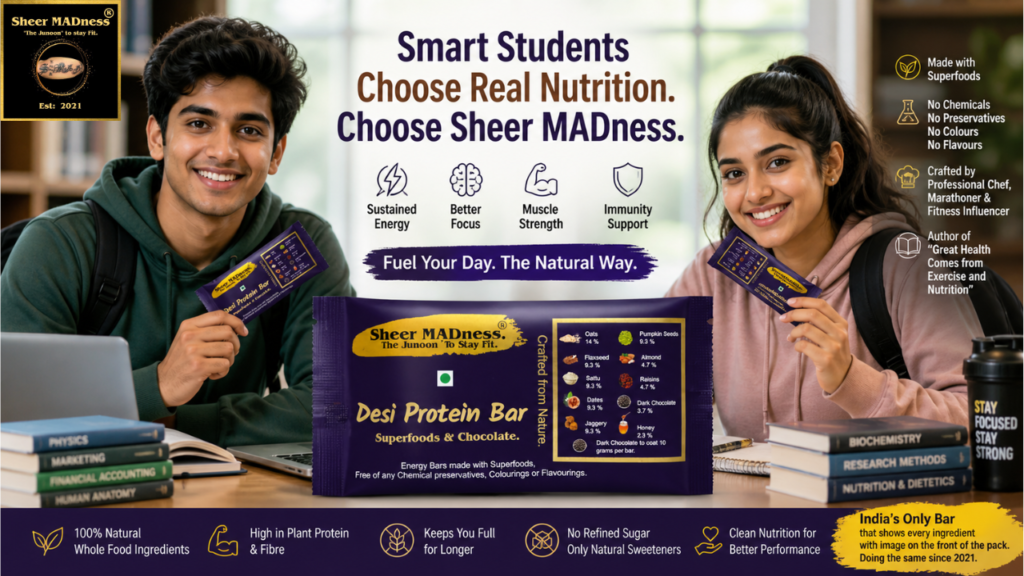
Direct answer: Yes — protein bars are good for students, but only when made from whole foods with no protein isolates, no artificial sweeteners, no chemical preservatives, and no INS-coded additives. The right bar supports sustained study focus, prevents the energy crashes that derail exam sessions, and provides genuinely portable nutrition for students who skip meals during coaching hours and long commutes.
The wrong bar — built on maltitol, whey isolate, and BHT — causes the gut discomfort, blood sugar instability, and daily chemical accumulation that actively undermines the focus and health that students need most.
I’m Chef Ashutosh Awasthi, founder of Sheer MADness, professional chef, marathon runner, and author of Great Health Comes from Exercise & Nutrition. I transformed my own health in my forties. I understand what nutrition does to energy, focus, and performance from lived experience. Let me explain exactly what students need from a protein bar — and what to watch out for.
Indian students face a specific nutritional environment that most adults underestimate.
Competitive exam pressure — JEE, NEET, UPSC, CAT, CUET, and board examinations — drives students to study 8 to 14 hours daily. Coaching institutes run back-to-back sessions. Commuting consumes 2 to 4 hours in Indian cities. Sleep shortens. Meal timing becomes irregular. Home cooking gives way to hostel food, canteen eating, and packaged snacks.
A 2023 survey published in the Indian Journal of Community Health found that over 60 percent of Indian college students skip at least one meal daily. Breakfast is the most commonly skipped meal — precisely the meal that most directly affects morning cognitive performance.
Research published in the Journal of Nutritional Science confirmed that skipping breakfast impairs attention, memory, and executive function in adolescents and young adults — the cognitive domains most critical for exam performance. Furthermore, the research showed that a breakfast containing protein and complex carbohydrates produced significantly better sustained cognitive performance than either a carbohydrate-only meal or no breakfast at all.
This research directly explains why protein bars for students are not just convenient — they are specifically useful for the cognitive demands of Indian student life. A protein bar at 8am before class beats no breakfast. Two bars across a long day at a coaching institute beats biscuits and tea.
However, the bar must deliver the right nutrition. Maltitol fermentation, blood sugar spikes from refined sugar, and the artificial sweetener-driven gut disruption discussed in research are not compatible with sustained study focus.

This section is the most important for students specifically — and the most absent from most protein bar content.
The brain consumes approximately 20 percent of the body’s total energy despite representing only 2 percent of its weight. It runs primarily on glucose. However, the key word is sustained glucose — not spiked glucose.
A blood sugar spike from refined sugar or maltitol produces temporary alertness followed by a crash. The crash — the mid-morning or mid-afternoon energy dip that every student knows — corresponds directly to the rapid decline in blood glucose that follows a high-GI food source. During this crash, attention, working memory, and reaction time all decline measurably.
A research review published in Nutrients confirmed that stable blood glucose — maintained through low-GI foods with fibre and protein — produces better sustained cognitive performance than high-GI foods even when total calorie intake is the same. The composition of the food, not just its calorie content, determines how long the brain can sustain focus.
Oat beta-glucan in Sheer MADness bars specifically slows glucose absorption. Blood sugar rises gradually and stays elevated for two to three hours. The brain receives sustained glucose supply — not a spike followed by a crash. This is the nutritional mechanism behind why a whole-food bar beats biscuits, chips, and sugary chai for a student trying to concentrate through a three-hour coaching class.
Furthermore, protein specifically supports neurotransmitter synthesis. The neurotransmitters most relevant to focus and mood — dopamine, serotonin, and acetylcholine — are synthesised from amino acids. A diet consistently low in protein reduces the substrate available for neurotransmitter production. For Indian students relying heavily on carbohydrate-dominant diets — rice, roti, and tea — protein gaps directly translate to neurochemistry gaps.
Protein bars for students serve different purposes at different points in a student’s day.
Indian students frequently skip breakfast due to early school start times, rushed morning routines, or hostel schedules. A Sheer MADness bar in 60 seconds — torn open and eaten on the way to school — provides more nutrition than no breakfast and dramatically better nutrition than a cream biscuit packet.
One bar delivers 8 to 10 grams of whole-food protein for neurotransmitter substrate. It provides oat beta-glucan for sustained blood glucose over two to three hours. This also provides iron from jaggery and sattu for haemoglobin production and cognitive oxygen supply. It provides magnesium from almonds for nerve function and muscle relaxation.
This combination specifically supports the morning study and class period. It doesn’t replace a full breakfast. However, it is dramatically better than the alternative for students who realistically skip breakfast daily.
The 10am to 12pm window is when blood glucose from whatever the student ate for breakfast starts declining. This is when distraction peaks, hunger builds, and concentration falters.
One bar mid-morning extends the glucose window for another two to three hours. For a student in a morning coaching session, this is the difference between listening actively through to lunch and mentally checking out by 11am.
For school students with tiffin boxes, one Sheer MADness bar alongside a regular meal provides supplementary protein and nutrition that Indian school tiffins frequently lack. Parents can pack one bar per day alongside regular food without worrying about chemical ingredients — because every ingredient is a whole food that parents recognise.
For hostel students, Sheer MADness bars solve a specific problem. Hostel food is nutritionally inconsistent. Students frequently supplement hostel meals with chips, noodles, and biscuits — the most nutritionally empty options available. A box of 10 Sheer MADness bars provides a reliable, clean nutrition alternative for the week.
Exam mornings create specific anxiety-driven appetite suppression. Many students eat poorly or nothing before major exams because of nerves. However, a depleted glucose supply during an exam directly impairs working memory — exactly when it is most needed.
One bar 60 minutes before an exam provides balanced carbohydrate energy from oats and dates without the blood sugar spike and crash that a sugary breakfast produces. The magnesium from almonds specifically supports the parasympathetic nervous system activity that reduces anxiety-driven physiological arousal — helping students enter the exam room calmer and more focused.
Students active in sports — cricket, football, basketball, athletics, swimming — need protein for muscle repair after training. Most school and college sports practice sessions in India happen in the evening. Students return home depleted, eat dinner late, and sleep without adequate recovery nutrition in the critical post-exercise window.
One Sheer MADness bar within 30 minutes of finishing sports practice provides 8 to 10 grams of whole-food protein for muscle repair, natural sugars from dates and raisins for glycogen restoration, zinc from pumpkin seeds for immune function support, and magnesium from almonds for muscle relaxation before sleep.
Sheer MADness Protein Bars and Energy Bars are built from ten whole-food ingredients that every Indian student and parent can recognise and understand — oats, sattu, almonds, flaxseed, pumpkin seeds, melon seeds, dates, raisins, jaggery, honey, and dark chocolate.
Every one of these ingredients earns its place for students specifically.
Oat beta-glucan is the single most important ingredient for student focus. It slows glucose absorption, prevents the blood sugar crash that disrupts concentration, and feeds beneficial gut bacteria that support the gut-brain axis relevant to mood and cognitive function.
A student eating a bar containing oats at 9am maintains better focus through a two-hour class than a student eating a refined carbohydrate snack at the same time. This is not marketing. It is the consistently replicated finding of the glycaemic response research.
“Doodh Badam” was given to students before exams in Indian households for generations. The reason was intuitive: almonds improve cognitive function. Modern nutritional science explains why.
Almonds provide Vitamin E — a fat-soluble antioxidant that protects brain cell membranes from oxidative damage. They provide magnesium that supports nerve transmission. They provide healthy monounsaturated fats that are structural components of brain cell membranes.
The Indian tradition of giving almonds to students before exams was applied neuroscience — without the academic vocabulary.
Bihar and Bengal’s student populations consumed sattu for energy and focus before exams and long study sessions for centuries. Its low glycaemic index of 28 to 35 makes it one of the best slow-energy foods available. Its protein provides the amino acid substrate for neurotransmitter synthesis that sustained study demands.
The brain is approximately 60 percent fat by dry weight. Omega-3 fatty acids — specifically DHA, derived from alpha-linolenic acid in flaxseed — form structural components of brain cell membranes and support the synaptic plasticity underlying learning and memory.
A 2024 review published in Nutrients confirmed that omega-3 deficiency impairs cognitive function in children and adolescents. Indian student diets are frequently low in omega-3 because they depend heavily on omega-6-rich vegetable oils. Flaxseed in a daily Sheer MADness bar provides the plant omega-3 that the developing student brain specifically needs.
Students under exam stress have suppressed immune function — stress hormones specifically reduce immune activity. Zinc from pumpkin seeds supports immune function directly. Furthermore, zinc participates in over 300 enzymatic reactions including those involved in nerve signal transmission and cognitive processing.
Indian student diets frequently show zinc deficiency — particularly vegetarian students whose diets rely heavily on phytate-rich grains that reduce zinc absorption.
The natural glucose and fructose in dates and raisins provide accessible brain fuel. Unlike refined sugar that spikes and crashes, the fibre in dates slows glucose absorption. The brain receives energy gradually. Concentration sustains.
Potassium from dates supports electrolyte balance and nerve function. Iron from raisins supports haemoglobin production — directly relevant to the oxygen supply that the working brain requires.
Iron deficiency is one of the most common nutritional problems in Indian school children and adolescents. Iron deficiency anaemia directly impairs cognitive function by reducing haemoglobin’s capacity to carry oxygen to the brain.
Jaggery provides iron at approximately 11 milligrams per 100 grams — alongside potassium and magnesium. The vitamin C naturally present in raisins and dates in the same bar enhances non-haem iron absorption. This combination makes Sheer MADness bars a meaningful daily iron contributor — directly supporting the cognitive oxygen supply that iron deficiency impairs.
Dark chocolate provides antioxidant flavonoids that reduce oxidative stress in brain tissue. It contributes magnesium that supports nerve function and sleep quality. And it makes the bar genuinely delicious — which matters for student compliance. A bar students actually enjoy eating is a bar they will actually eat rather than replacing with chips.
This is the section parents specifically need to read.
Maltitol and sorbitol in commercial bars ferment in the large intestine. This causes gas, bloating, and loose stools — a significant distraction during exam sessions or coaching classes. A student experiencing gut discomfort during a three-hour exam is a student performing below their potential.
For students who eat a bar before class or before an exam, gut-friendly ingredients are not a preference. They are a functional requirement.
Research published in the American Journal of Clinical Nutrition found that artificial sweeteners disrupt the appetite-regulating hormones leptin and ghrelin. For students, this means artificial sweetener consumption increases hunger rather than reducing it — causing more snacking on poor food choices throughout the day.
Growing students’ developing livers, endocrine systems, and gut microbiomes handle synthetic chemical compounds less efficiently than adult systems. Daily BHA and BHT exposure from a bar consumed consistently throughout school and college years represents a cumulative chemical load that clean nutrition specifically avoids.
Sheer MADness bars contain zero BHA, zero BHT, zero artificial sweeteners, and zero chemical preservatives. Parents do not need to read research on any of these compounds to understand the value of that zero. The absence of chemistry from a child’s daily food is the clearest possible expression of clean nutrition.
Indian students and their families make food choices within tight budgets. This is an honest reality worth addressing directly.
At ₹60 per bar, Sheer MADness is priced competitively against the alternatives that students actually purchase — a cutting chai costs ₹10 to ₹15, a cream biscuit packet costs ₹20 to ₹40, a canteen samosa costs ₹15 to ₹30. Two of these items together frequently exceed ₹60 while delivering a fraction of the nutritional value of one Sheer MADness bar.
Furthermore, a box of 10 bars at ₹600 provides 10 days of daily bar nutrition — approximately ₹60 per day. For a hostel student, this is genuinely competitive with the canteen alternatives they would otherwise choose.
The per-day cost of clean nutrition from Sheer MADness is comparable to the per-day cost of nutritionally empty snacking alternatives. The health and cognitive performance difference is not comparable.
Since 2021, Sheer MADness displays every ingredient with its own image on the front of every pack. For parents choosing a bar for their child or a student choosing their own snack, this transparency eliminates the need to decode INS codes or research unfamiliar chemical names.
You see oats, almonds, sattu, flaxseed, pumpkin seeds, melon seeds, dates, raisins, jaggery, honey, and dark chocolate on the front. That is the complete ingredient list. Nothing else is inside.
This is the standard every protein bar marketed to students should meet.
Sheer MADness holds a registered trademark under the Government of India. The Natural Plant Protein formula is patent published under Patent No. 202331036733, searchable on Intellectual Property India. The brand holds a valid FSSAI licence and GSTIN registration.
| Feature | Sheer MADness | Typical Commercial Bar |
|---|---|---|
| Protein source | Sattu, almonds, oats — whole foods | Whey isolate or soy concentrate |
| Study focus support | High — oat beta-glucan for sustained glucose | Low — refined sugar spike and crash |
| Blood sugar stability | High — low GI whole foods | Variable — often high GI sweeteners |
| Gut disruption risk | Zero — no sugar alcohols | High — maltitol fermentation |
| Iron for cognitive function | Yes — jaggery, sattu, raisins | Usually absent |
| Omega-3 for brain health | Yes — flaxseed daily | Usually absent |
| Chemical preservatives | None — oxygen absorbers | BHA, BHT daily |
| Artificial sweeteners | None | Sucralose, maltitol common |
| Safe for children above 6 | Yes — all whole food | Use with caution |
| Front-label transparency | Every ingredient named and pictured | INS codes in small print |
| Price per bar | ₹60 | ₹80 to ₹150 |
| Suitable for exam days | Yes — no gut risk, sustained energy | Variable — gut disruption risk |
Are protein bars good for students?
Yes — when made from whole foods with no chemical preservatives, no artificial sweeteners, and no protein isolates. The right bar supports sustained study focus through stable blood glucose, provides iron and omega-3 for brain function, and delivers portable nutrition when meals are skipped or delayed.
What age can students start eating protein bars?
Whole-food bars like Sheer MADness are safe for students above 6 years. One bar per day is appropriate for ages 6 to 12. For teenagers above 12, one to two bars daily suits active students well.
Do protein bars help students concentrate better?
Bars built on oat beta-glucan and natural low-GI sweeteners from dates and jaggery support sustained blood glucose — directly relevant to sustained concentration. Research confirms that stable blood glucose produces better cognitive performance than the spike-and-crash from high-GI snacks.
Can students eat protein bars before exams?
Yes — one whole-food bar 60 minutes before an exam provides sustained glucose for brain function without the anxiety-worsening blood sugar spike that refined sugar causes. The magnesium from almonds also supports parasympathetic nervous system activity that reduces exam anxiety.
Are Sheer MADness bars safe for school-going children?
Yes — for children above 6 years. Every ingredient is a recognisable whole food. There are no protein isolates, no chemical preservatives, no artificial sweeteners, and no INS-coded additives.
Can protein bars replace meals for students?
No. Bars supplement meals — they don’t replace them. A full vegetarian meal provides dietary diversity that no bar can replicate. Bars work best as breakfast supplements, mid-morning snacks, post-sports recovery nutrition, or tiffin additions.
Are commercial protein bars safe for student daily consumption?
Commercial bars containing BHA, BHT, maltitol, or artificial sweeteners raise specific concerns for developing children and adolescents when consumed daily over months and years. Whole-food bars with zero chemical additives are specifically more appropriate for daily long-term consumption by students.
How do I choose the right protein bar for my child?
Check the ingredient list for INS codes — any numbered code means a synthetic additive. Look for ingredients like maltitol, sorbitol, and sucralose cause gut fermentation. Check the preservation method — a genuine preservative-free bar states oxygen absorbers or vacuum packing. Check the front label — if every ingredient is visible and recognisable, the brand has nothing to hide.
Protein bars are genuinely good for students — when they are built from real food rather than chemistry.
The right bar delivers sustained blood glucose from oat beta-glucan for study focus, iron from jaggery and sattu for cognitive oxygen supply, omega-3 from flaxseed for brain cell membrane health, protein from sattu and almonds for neurotransmitter substrate, and magnesium from almonds for nerve function and pre-exam calm.
The wrong bar delivers a chemical cocktail of maltitol fermentation, BHT residues, and artificial sweetener disruption — daily, cumulatively, invisibly — to a developing body that deserves better.
Sheer MADness bars are built from ten whole foods that Indian households have always trusted for nourishment. They are preserved with oxygen absorbers rather than chemistry. They display every ingredient on the front label since 2021. And at ₹60 per bar, they cost less than most of the alternatives students actually choose.
For parents seeking better snack choices and students seeking genuine nutrition — this is the bar that actually works.
Because great performance in exams, on the sports field, and in life does not come from chemistry. It comes from real food, consistent effort, and the discipline to make genuinely good choices every day.
I would also request you to kindly read my previous post about “Healthiest Protein Bar in India“.
a) Everyone is an individual, so what suits me may not suit the next person.
b) If a person has a medical condition, a doctor’s advice and prescribed medication will only help.
c) While buying any protein bar from the market, read the labels carefully. Watch out for INS 320 (BHA), INS 321 (BHT), INS 551 (silicon dioxide), maltitol, sorbitol, sucralose, and other lab-made chemicals that quietly appear on most commercial labels.
If you are interested in buying chemical-free Natural Plant Protein Moringa, Health Drinks for Kids, or our delicious chemical-free Energy Bars, Protein Bars, and Millet Bars, shop at Sheer MADness.
You can also find us on Flipkart, Jio Mart, or ONDC in India.
d) Exercise is the key to fitness. Exercise and nutrition are two sides of the same coin and always go hand in hand.
e) Excess of anything is wrong, even the best whole-food snack. Consume only recommended quantities.
f) Rome was not built in a day. Discipline and consistency are the only keys to lasting health.
g) It is not only exercise and protein that builds health. A healthy gut, macro and micronutrients, body type, rest, and lifestyle all matter. Of all these, exercise and nutrition are within our control. Focus on these two primary aspects first.
h) The most important part of fitness is that nothing is better than exercise and a balanced meal.
Article by Chef Ashutosh Awasthi
Disclaimer: Our products are a source of HEALTHY NUTRIENTS and are COMPLETELY FREE OF ANY ADDED CHEMICALS. We do not claim to cure any medical condition. The content provided is informational. We do not claim to diagnose or treat a person with any specific medical condition.