

Direct answer: Yes — moringa plant protein supports weight loss through four specific cellular mechanisms. First, it inhibits adipogenesis by blocking PPARγ and C/EBPα — the transcription factors that programme preadipocytes into new fat cells. Second, moringa’s quercetin reduces SOCS3 protein — the primary molecular cause of leptin resistance — restoring the hypothalamus’s ability to read adipose fullness signals. Third, quercetin activates UCP1 in brown adipose tissue — generating heat from stored fat rather than ATP — producing a genuine metabolic rate increase. Fourth, moringa raises adiponectin and reduces resistin — rebalancing the adipokine hormones that determine whether the body’s biochemical environment favours fat storage or fat burning. Furthermore, these mechanisms operate at the cellular level. Consequently, they work independently of how much you eat — making moringa’s contribution to weight loss distinct from simple caloric reduction.
I am Chef Ashutosh Awasthi, founder of Sheer MADness, professional chef, marathon runner, and author of Great Health Comes from Exercise & Nutrition. This post explains what moringa does inside your cells to support weight loss. The companion post on this site covers when and how to consume moringa for maximum fat loss benefit. Therefore, these two posts address different questions entirely.
The consumption protocol post on this site covers the practical how-to: when to take moringa, what to replace, and the four-step daily protocol. It explains GLP-1 satiety hormones, TEF, the insulin-visceral fat pathway, and the pre-meal timing strategy.
This post instead answers a deeper question. Specifically, it explains what moringa does at the cellular and molecular level to change the body’s fat-storage biochemical environment. Furthermore, it introduces four mechanisms that appear nowhere else in the moringa content on this site. Consequently, if you have already read the consumption protocol post, this post gives you genuinely new science — not repetition.
Before explaining moringa’s mechanisms, understanding India’s specific obesity challenge is essential. It changes how we interpret moringa’s role.
India’s urban obesity is not primarily caused by extreme caloric excess. Instead, it results from a specific combination of factors creating a pro-adipogenic biochemical environment. This environment makes fat cells grow, multiply, and resist mobilisation — even when caloric intake is only modestly elevated. Refined carbohydrate dominance generates chronic hyperinsulinaemia. Furthermore, gut dysbiosis elevates systemic LPS, which activates NF-κB-driven inflammatory signalling in adipose tissue. Additionally, chronic stress elevates cortisol — which specifically promotes visceral adipocyte differentiation. Consequently, Indian urban adults can accumulate pathological visceral fat at caloric intake levels that would not produce obesity in populations without this biochemical environment.
Fat cells do not appear from nowhere. Preadipocytes — stem cells resident in adipose tissue — must differentiate into mature fat cells through a programmed sequence. Two transcription factors drive this differentiation: PPARγ (peroxisome proliferator-activated receptor gamma) and C/EBPα (CCAAT/enhancer-binding protein alpha). When PPARγ and C/EBPα are activated in preadipocytes, they switch on the fat storage gene programme. Consequently, preadipocytes accumulate triglycerides and mature into functioning adipocytes.
Moringa specifically inhibits both PPARγ and C/EBPα — preventing preadipocyte differentiation at the transcription factor level. Therefore, fewer new fat cells form. This is not a cosmetic reduction in existing fat cells — it is a fundamental interruption of adipose tissue expansion at its developmental source.
Adipogenesis — the process of forming new fat cells — is the cellular foundation of obesity progression. Research in the Journal of Nutritional Biochemistry confirmed that moringa leaf extract reduced PPARγ and C/EBPα gene expression in differentiating preadipocytes. Specifically, the study demonstrated significantly fewer lipid droplets forming in treated cells compared to controls — indicating direct adipogenesis inhibition.
The mechanism operates through two simultaneous pathways. First, moringa’s isothiocyanates activate Nrf2. Nrf2 then suppresses PPARγ gene transcription — reducing the preadipocyte’s ability to initiate the fat storage gene programme. Second, moringa’s chlorogenic acid activates AMPK. Active AMPK phosphorylates and inhibits SREBP-1c — the lipogenic transcription factor that promotes C/EBPα-driven fat cell differentiation and triglyceride synthesis. Consequently, AMPK inhibits adipogenesis from two directions simultaneously.
This mechanism matters for long-term weight management specifically. Reducing existing fat cells releases stored triglycerides through lipolysis — a process addressed by other AMPK mechanisms. However, inhibiting new fat cell formation prevents the expansion of adipose tissue capacity itself.
When adipose tissue capacity is limited, the body faces a physiological pressure to use calories for energy rather than store them. Furthermore, fewer new fat cells mean lower total leptin production capacity — reducing the leptin resistance cycle that perpetuates obesity. Therefore, adipogenesis inhibition addresses obesity at its developmental root rather than merely at the surface of energy expenditure.
Leptin resistance is the most important and least understood obesity mechanism in mainstream nutritional discussion. Understanding it changes the entire framing of why moringa helps with weight loss.
Leptin is a hormone produced by adipocytes. It signals adipose tissue fullness to the hypothalamus — specifically to the arcuate nucleus neurons that control appetite and energy expenditure. In lean individuals, high leptin signals the hypothalamus to reduce appetite and increase metabolic rate. This creates a natural homeostatic weight regulation system.
However, obese individuals paradoxically have very high leptin levels — far higher than lean individuals. Despite this, their hypothalamus does not respond to the signal. Consequently, appetite stays elevated and metabolic rate stays suppressed — even though the satiety hormone is present in abundance. This is leptin resistance — the molecular equivalent of insulin resistance, but for the appetite-regulating system.
SOCS3 (Suppressor of Cytokine Signalling 3) is the primary molecular mediator of leptin resistance. When the hypothalamus chronically receives elevated leptin signals — as occurs in obesity — it upregulates SOCS3. SOCS3 then inhibits the JAK2-STAT3 signalling pathway that leptin uses to communicate satiety. Consequently, the leptin signal cannot reach the appetite-controlling neurons. The hypothalamus therefore reads low satiety — even though adipose tissue is sending maximum fullness signals.
Research published in the British Journal of Nutrition confirmed that quercetin supplementation reduced hypothalamic SOCS3 expression and improved leptin signalling in leptin-resistant animal models. Specifically, quercetin inhibits the inflammatory NF-κB pathway in hypothalamic microglia that drives SOCS3 upregulation. Furthermore, quercetin’s SIRT1 activation specifically deacetylates STAT3 — the transcription factor that leptin activates when SOCS3 is not blocking it — enhancing the leptin signal’s nuclear effect even when SOCS3 is partially elevated.
Consequently, consistent daily moringa consumption reduces SOCS3, partially restores leptin receptor sensitivity, and allows the hypothalamus to more accurately read adipose fullness signals. The result is naturally reduced appetite — not from willpower, but from restored hormonal communication. This mechanism operates entirely at the cellular level and is completely absent from the consumption protocol post.
This is the most original mechanism in the entire moringa-weight loss discussion. It explains the “metabolism boost” claim that supplement marketing uses loosely — but rarely with the specific molecular mechanism behind it.
White adipose tissue (WAT) stores energy as triglycerides. It constitutes the majority of adipose tissue in adults. Brown adipose tissue (BAT), in contrast, burns energy to generate heat. BAT contains high densities of mitochondria — giving it its brown colour — and expresses a unique protein called UCP1 (uncoupling protein 1).
UCP1 uncouples the mitochondrial proton gradient from ATP synthesis. Normally, the proton gradient that the electron transport chain establishes drives ATP synthase to produce ATP. UCP1 instead allows protons to flow back across the inner mitochondrial membrane as heat — consuming the energy of the gradient without producing ATP. Consequently, brown fat burns calories to generate body warmth rather than to power cellular work.
Quercetin activates BAT thermogenesis through the PGC-1α pathway. Specifically, quercetin’s SIRT1 activation deacetylates and activates PGC-1α (peroxisome proliferator-activated receptor gamma coactivator 1-alpha) in brown adipocytes. PGC-1α then co-activates PPARα and PPARγ in BAT — inducing UCP1 gene expression and increasing mitochondrial biogenesis. Consequently, BAT cells increase their thermogenic capacity.
Research published in the International Journal of Obesity confirmed that quercetin supplementation increased UCP1 expression and energy expenditure in brown adipose tissue. Specifically, the study measured increased oxygen consumption — the direct indicator of thermogenic metabolism. Furthermore, quercetin promoted the “browning” of white adipocytes — a process called beiging, where WAT cells acquire BAT-like characteristics including UCP1 expression. Consequently, the body gains additional thermogenic capacity beyond existing BAT depots.
BAT thermogenesis represents the body burning stored fat to generate heat — without exercise, without willpower, and without caloric restriction. Furthermore, the BAT activation persists over time with consistent quercetin exposure. Therefore, daily moringa consumption gradually increases the body’s resting energy expenditure through this UCP1-mediated thermogenic mechanism. This is a genuine metabolic rate increase — not a caffeine-driven stimulant spike that crashes after hours.
Adipose tissue is not merely a passive energy store. It is an active endocrine organ — secreting adipokines that regulate the body’s entire metabolic environment. Specifically, two adipokines are most critical for weight management.
Adiponectin is the most abundant adipose-derived hormone. It improves insulin sensitivity in muscle and liver, promotes fatty acid oxidation in muscle through AMPK activation, suppresses hepatic gluconeogenesis, and produces anti-inflammatory effects throughout the body. Importantly, adiponectin levels fall in obesity — creating a metabolic environment that actively resists fat loss. High adiponectin promotes fat burning; low adiponectin promotes fat storage.
Research in Phytotherapy Research confirmed that moringa leaf extract increased adiponectin expression in adipocytes. Specifically, moringa’s chlorogenic acid and quercetin activate PPARα — the nuclear receptor that drives adiponectin gene transcription in adipocytes. Consequently, moringa consumption increases adiponectin production. This improves insulin sensitivity, promotes muscle fat oxidation, and creates a more favourable biochemical environment for weight loss.
Resistin is an adipokine that promotes insulin resistance in liver and muscle. It also activates NF-κB in adipose tissue — promoting inflammatory fat storage signalling. Additionally, resistin promotes preadipocyte differentiation — further expanding adipose tissue. Consequently, high resistin creates a biochemical environment specifically favouring fat accumulation.
In obesity, resistin levels rise — reinforcing the pro-adipogenic environment and accelerating fat storage further. Moringa’s NF-κB inhibition through isothiocyanates specifically reduces resistin gene expression in adipocytes. Furthermore, moringa’s AMPK activation inhibits resistin’s downstream inflammatory adipose signalling. Consequently, consistent moringa consumption reduces resistin — shifting the adipokine balance from pro-storage toward pro-oxidation.
Raising adiponectin while simultaneously reducing resistin creates a biochemical environment specifically opposing fat accumulation. Adiponectin activates AMPK in muscle — increasing fat oxidation. It simultaneously inhibits hepatic fat synthesis. Furthermore, reduced resistin decreases NF-κB-driven adipose inflammation that programmes adipocytes toward triglyceride accumulation. Therefore, moringa rebalances the adipokine environment — making the body’s own hormonal chemistry work toward fat loss rather than against it.
These four mechanisms — adipogenesis inhibition, leptin resistance correction, BAT UCP1 thermogenesis, and adipokine rebalancing — are driven by specific bioactive compounds that moringa provides in unusually high concentrations.
Quercetin at 50 to 60 milligrams per 100 grams delivers the SOCS3-reducing, UCP1-activating, and adiponectin-promoting effects. Chlorogenic acid provides the LKB1-AMPK activation that simultaneously inhibits PPARγ-driven adipogenesis and SREBP-1c-driven C/EBPα differentiation. Isothiocyanates provide the NF-κB inhibition that reduces resistin and the Keap1-Nrf2 activation that suppresses PPARγ transcription. Furthermore, flaxseed ALA in the Sheer MADness blend specifically supports adiponectin by providing the omega-3 substrate that PPARα preferentially activates in response to.
Consequently, the specific bioactive compound profile of Sheer MADness Plant Protein Moringa delivers all four mechanisms simultaneously from one daily whole-food preparation. Additionally, zero synthetic additive ensures that no sucralose-driven gut dysbiosis reduces the Akkermansia muciniphila whose SCFAs support leptin sensitivity through the gut-brain axis. No BHA or BHT produces hepatic oxidative metabolites that would activate NF-κB — contradicting the isothiocyanate NF-κB inhibition that the preparation provides.
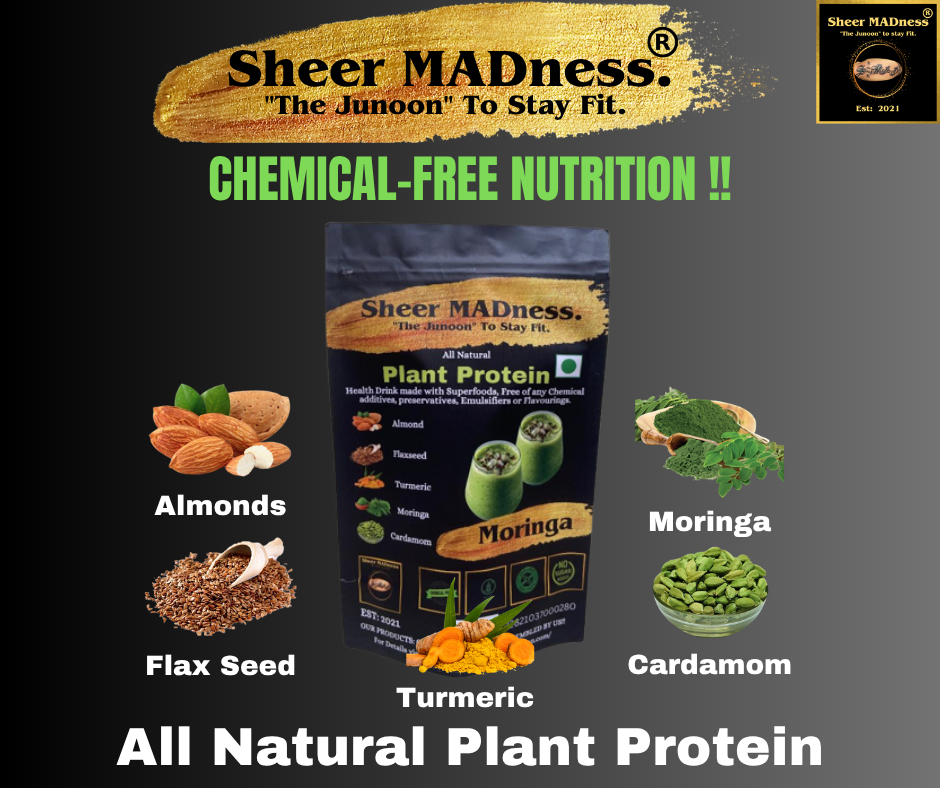
Sheer MADness Plant Protein Moringa provides the four cellular weight loss mechanisms from five whole-food ingredients. Moringa isothiocyanates provide PPARγ-Nrf2 adipogenesis inhibition and NF-κB-resistin reduction. Its quercetin provides SOCS3 leptin resistance correction, BAT UCP1 thermogenesis activation, and adiponectin-PPARα upregulation. Moringa chlorogenic acid provides AMPK-SREBP-1c adipogenesis inhibition and adiponectin support. Flaxseed ALA provides additional PPARα activation for adiponectin. Almond monounsaturated fats reduce the pro-inflammatory lipid environment that worsens leptin resistance and adipokine imbalance.
Furthermore, zero synthetic chemical additive ensures no sucralose reduces gut bacteria producing leptin-sensitivity-supporting SCFAs. No maltodextrin (GI 85-95) spikes insulin between servings — avoiding the insulin-fat-storage signal that would counteract the adipogenesis inhibition mechanisms the preparation provides. Since 2021, every ingredient appears on the front of every pack — giving consumers verifiable transparency over the bioactive compound sources driving these weight loss mechanisms.
Sheer MADness holds a registered trademark under the Government of India. The Natural Plant Protein formula is patent published under Patent No. 202331036733, searchable on Intellectual Property India. The brand holds a valid FSSAI licence and GSTIN registration.
| Mechanism | Cellular Target | Compound | Evidence Level |
|---|---|---|---|
| Adipogenesis inhibition | PPARγ suppression via Nrf2 | Isothiocyanates → Nrf2 | Moderate — J Nutr Biochem cell study |
| Adipogenesis inhibition | C/EBPα inhibition via SREBP-1c blockade | Chlorogenic acid → AMPK | Moderate — AMPK-SREBP-1c mechanism confirmed |
| Leptin resistance correction | SOCS3 reduction via NF-κB inhibition | Quercetin → NF-κB → SOCS3 | Moderate — Br J Nutrition animal model |
| Leptin signal amplification | SIRT1-STAT3 deacetylation | Quercetin → SIRT1 | Moderate — mechanism confirmed |
| BAT thermogenesis (UCP1) | PGC-1α-UCP1 expression via SIRT1 | Quercetin → SIRT1 → PGC-1α | Moderate — Int J Obesity |
| WAT beiging | Beige adipocyte UCP1 expression | Quercetin → PPARα/γ in WAT | Growing — quercetin beiging studies |
| Adiponectin upregulation | PPARα adiponectin gene transcription | Chlorogenic acid + ALA → PPARα | Moderate — Phytotherapy Research |
| Resistin reduction | NF-κB-driven resistin gene inhibition | Isothiocyanates → NF-κB | Moderate — mechanism confirmed |
| Improved insulin sensitivity | Adiponectin-AMPK muscle fat oxidation | Raised adiponectin | Moderate — adiponectin-AMPK confirmed |
| Reduced pro-adipogenic environment | Gut LPS endotoxemia reduction | Moringa + flaxseed prebiotic | Growing — LPS-adipogenesis connection |
Does moringa help in weight loss?
Yes — moringa supports weight loss through four cellular mechanisms. It inhibits adipogenesis by blocking PPARγ and C/EBPα transcription. Moringa reduces SOCS3 to correct leptin resistance and restore hypothalamic appetite regulation. It activates UCP1 in brown adipose tissue to increase thermogenic energy expenditure. Furthermore, it raises adiponectin and reduces resistin — rebalancing adipokine hormones toward fat burning. These mechanisms operate at the cellular level. Consequently, they complement but do not replace caloric management and exercise.
What is leptin resistance and why does moringa help with it?
Leptin is the satiety hormone produced by fat cells. It signals the hypothalamus to reduce appetite when adipose stores are full. However, in obesity, SOCS3 protein blocks the leptin signal from reaching appetite-controlling neurons — creating leptin resistance. The hypothalamus therefore reads low satiety despite abundant leptin and high adipose fullness. Moringa’s quercetin reduces SOCS3 by inhibiting the NF-κB inflammatory pathway that drives its upregulation. Consequently, leptin receptor sensitivity improves and the hypothalamus more accurately reads adipose fullness signals.
Brown adipose tissue (BAT) contains UCP1 — uncoupling protein 1 — which burns calories as heat rather than ATP. Consequently, BAT thermogenesis increases energy expenditure without exercise. Moringa’s quercetin activates SIRT1, which activates PGC-1α, which in turn induces UCP1 expression in brown adipocytes. Research in the International Journal of Obesity confirmed quercetin’s measured increase in UCP1 expression and oxygen consumption. Furthermore, quercetin promotes “beiging” — converting white fat cells to BAT-like beige cells with thermogenic capacity. Consequently, moringa increases the body’s total heat-generating tissue volume.
What are adipokines and why do adiponectin and resistin matter for weight loss?
Adipokines are hormones produced by fat cells that regulate metabolism. Adiponectin activates AMPK in muscle and liver — promoting fat oxidation and improving insulin sensitivity. Resistin promotes insulin resistance and preadipocyte differentiation. In obesity, adiponectin falls while resistin rises — creating a biochemical environment that favours fat storage. Moringa raises adiponectin through PPARα activation and reduces resistin through NF-κB inhibition. Consequently, the adipokine balance shifts toward fat burning — creating an internal biochemical environment that supports weight loss rather than opposing it.
Can moringa alone cause weight loss without diet changes?
No. Moringa’s cellular mechanisms reduce fat storage and improve the biochemical environment for fat burning. However, energy balance remains the fundamental requirement — caloric intake must not chronically exceed expenditure. Moringa’s contribution is making the cellular environment more responsive to the caloric deficit that dietary change and exercise create. Additionally, moringa’s leptin resistance correction and BAT thermogenesis reduce the metabolic adaptation that makes caloric restriction hard to sustain. Consequently, moringa makes fat loss easier — it does not produce fat loss independently of lifestyle.
FSSAI regulations prohibit specific timeframe outcome claims for food products in India. A claim that moringa produces visible results in 4 to 6 weeks implies a predictable therapeutic outcome — which is not permitted for a nutritional food. Individual results depend on starting body composition, dietary context, exercise, sleep, stress, and genetics. Cellular mechanism activation begins within days of consistent consumption. However, meaningful body composition changes take months of consistent practice — with individual variation too great to specify a timeframe.
How do moringa’s mechanisms relate to India’s specific obesity pattern?
India’s urban obesity arises from a pro-adipogenic biochemical environment. Specifically, chronic hyperinsulinaemia from refined carbohydrates activates PPARγ and C/EBPα — increasing adipogenesis. LPS-driven NF-κB inflammation from gut dysbiosis suppresses adiponectin and raises resistin. Furthermore, cortisol from chronic stress specifically promotes visceral adipocyte differentiation. Leptin resistance from NF-κB hypothalamic inflammation then prevents the normal satiety response. Moringa addresses each of these biochemical drivers — making it particularly relevant to India’s specific obesity mechanism rather than generic caloric excess.
What makes Sheer MADness Plant Protein Moringa specifically effective for weight loss support?
Sheer MADness Plant Protein Moringa delivers all four cellular weight loss mechanisms simultaneously. Moringa isothiocyanates inhibit PPARγ and reduce resistin. Moringa quercetin corrects leptin resistance, activates BAT UCP1 thermogenesis, and raises adiponectin. Chlorogenic acid inhibits SREBP-1c-driven adipogenesis and supports adiponectin. Furthermore, flaxseed ALA provides PPARα activation for adiponectin upregulation. Almond monounsaturated fats reduce the pro-inflammatory lipid environment that worsens leptin resistance. Additionally, zero sucralose ensures no gut microbiome damage undermines the Akkermansia-SCFA-leptin sensitivity pathway.

Weight loss in India is not primarily a willpower problem. It is a biochemical environment problem. The combination of refined carbohydrate dietary patterns, gut microbiome disruption, chronic inflammation, and visceral adiposity creates a cellular environment that specifically programmes fat accumulation — independent of conscious dietary choices.
Moringa addresses this biochemical environment at four cellular levels. Its isothiocyanates and quercetin inhibit PPARγ and C/EBPα — preventing the preadipocyte differentiation that expands adipose tissue. Quercetin reduces SOCS3 — restoring the leptin sensitivity that allows the hypothalamus to accurately regulate appetite through hormonal signals rather than willpower. Its quercetin-SIRT1-PGC-1α activation induces UCP1 in brown adipose tissue — increasing resting thermogenic energy expenditure by burning stored fat as heat. Furthermore, its bioactives raise adiponectin and reduce resistin — rebalancing the entire adipokine system toward fat burning at the hormonal level.
Consequently, Sheer MADness Plant Protein Moringa supports weight loss not by replacing dietary discipline or exercise — but by creating the internal cellular environment in which discipline and exercise produce results. Zero synthetic additive. Every ingredient on the front of every pack since 2021.
I would also request you to please read my previous post: Benefits of Moringa Plant protein, the versatile Superfood powerhouse.
a) Everyone is an individual, so what suits me may not suit the next person.
b) If a person has a medical condition, a doctor’s advice and prescribed medication will only help. Obesity is a complex condition with multiple drivers. Specific medical conditions — hypothyroidism, PCOS, Cushing’s syndrome — require physician management before dietary interventions can produce meaningful results.
c) While buying any protein powder from the market, read the labels carefully. Watch out for INS codes, Anti-caking agent, INS 551 (Silicon dioxide), BHA (Butylated hydroxyanisole), BHT (Butylated hydroxytoluene), and sucralose. For weight loss specifically, sucralose disrupts gut microbiome beneficial bacteria — worsening the gut dysbiosis that drives the LPS-NF-κB adipogenic environment moringa works to correct.
If you are interested in buying chemical-free Natural Plant Protein Moringa, Health Drinks for Kids, or our delicious chemical-free Energy Bars, Protein Bars, and Millet Bars, shop at Sheer MADness.
You can also find us on Flipkart, Jio Mart, or ONDC in India.
d) Exercise is the key to fitness. Exercise and nutrition are two sides of the same coin and always go hand in hand. For weight loss specifically, both aerobic exercise — which activates BAT thermogenesis independently — and resistance training — which builds the skeletal muscle glucose disposal tissue — amplify every mechanism moringa supports.
e) Excess of anything is wrong, even the best whole-food superfood. Consume only recommended quantities.
f) Rome was not built in a day. Discipline and consistency are the only keys to lasting health.
g) It is not only exercise and protein that builds health. A healthy gut, macro and micronutrients, body type, rest, and lifestyle all matter. Of all these, exercise and nutrition are within our control. Focus on these two primary aspects first.
h) The most important part of fitness is that nothing is better than exercise and a balanced meal.
Article by Chef Ashutosh Awasthi
Disclaimer: Our products are a source of HEALTHY NUTRIENTS and are COMPLETELY FREE OF ANY ADDED CHEMICALS. We do not claim to cure any medical condition. The content provided is informational. We do not claim to diagnose or treat a person with any specific medical condition.