

Direct answer: It can, but it usually does not have to. Gas appears when gut bacteria ferment fibre and certain sugars that reach the large intestine undigested. Some plant protein powders add extra fibre, sugar alcohols or gums, and these are the most common triggers. A short, simple ingredient list, a small starting dose and enough water prevent gas for most people.
Persistent pain, weight loss or blood in the stool need a doctor, not a new powder.
I am Chef Ashutosh Awasthi, founder of Sheer MADness, professional chef, marathon runner and author of Great Health Comes from Exercise & Nutrition. Over the years, many customers have asked me why a new powder made their stomach feel full and noisy. This post is part of my complete guide, Plant Protein, Protein Everything you should be aware of.
This page covers gas only. For other digestive questions, read Do plant proteins cause loose motion? and Does plant protein cause constipation?
Yes, gas is a normal sign of a working gut. Healthy adults pass wind roughly ten to twenty times a day, and most of it goes unnoticed. Intestinal gas comes from swallowed air and from bacterial fermentation in the colon.
Trouble starts when the amount rises sharply or when it brings pain, bloating or embarrassment. A new food or supplement is a common reason for that rise. Your gut needs time to adapt to a change in fibre.
Your small intestine digests protein, fat and most starch. Whatever it cannot absorb moves on to the colon, where trillions of bacteria feed on it. These bacteria produce hydrogen, carbon dioxide and, in some people, methane.
Most of this gas leaves quietly through the breath or the bowel. A smaller share builds up and stretches the gut wall. That stretch is what you feel as bloating or cramps.
Fermentation is not harmful in itself. The same process produces short-chain fatty acids, which nourish the cells lining the colon. The aim is therefore to adjust the amount and not to avoid fibre altogether.
Plant foods carry compounds that humans cannot fully digest. Pulses such as peas, lentils and chickpeas contain raffinose and stachyose. These are oligosaccharides, and our body lacks the enzyme to break them down. Bacteria ferment them eagerly, which explains the gassy reputation of beans.
Fibre is the second reason. A person who eats little fibre and suddenly adds a fibre-rich powder may notice wind within days. Seeds such as flaxseed also contain mucilage, a gel-forming fibre that bacteria ferment slowly.
Nuts add a third factor. Almonds contain small amounts of galacto-oligosaccharides, so a very large serving can trouble sensitive people. A handful or less is generally well tolerated.
The protein source often gets blamed unfairly. In many powders, the additives cause more trouble than the protein does. Check the label for these.
Sugar alcohols such as sorbitol, xylitol, maltitol and erythritol reach the colon unabsorbed. Bacteria ferment them, and they also draw water into the gut. Large amounts commonly cause wind and loose stools.
Added fibres come next. Inulin and chicory root fibre are popular in “high fibre” powders, yet they are strongly fermentable. Gums such as guar or xanthan thicken the shake, and some people react to them.
Artificial sweeteners and sweetener blends can also upset sensitive guts. Meanwhile, milk-based powders add lactose, which causes gas in the many Indians who are lactose intolerant. Plant powders avoid lactose, but they may add other fermentable ingredients instead.
Each plant protein behaves a little differently. Pea protein isolate has most of its oligosaccharides removed, so many people tolerate it well. Even so, the sweeteners and gums added to pea powders can still cause trouble.
Soya protein isolate is also low in the fermentable sugars of whole soybeans. Whole soya foods such as soya chunks contain more of them. Rice protein is gentle on most stomachs, although it is lower in the amino acid lysine.
Whole-food blends such as ours work differently. They keep the fibre of the nuts and seeds, so they bring more fermentable material than an isolate does. In return, they avoid added sweeteners, gums and isolates. For most people, this trade is acceptable once the gut adapts.
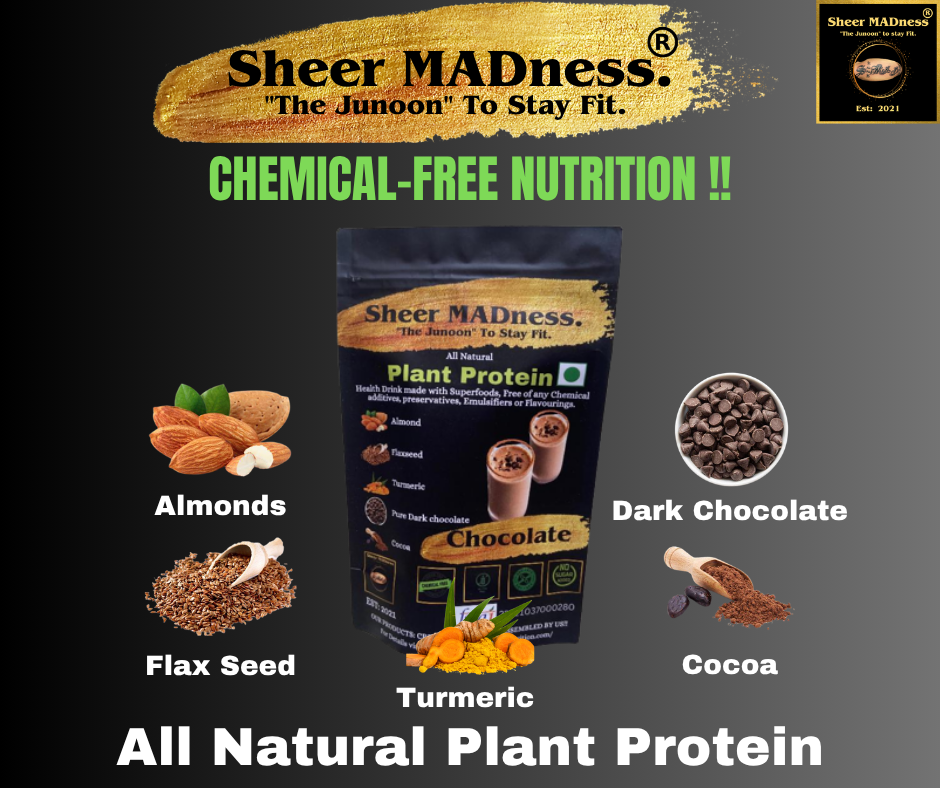
Our Chocolate powder contains roasted almond, roasted flaxseed, cocoa powder, dark chocolate and turmeric. Our Moringa powder contains moringa leaf, almond, flaxseed, turmeric and cardamom. Both are vegan, sieved and vacuum packed.
Neither powder contains sugar alcohols, inulin, gums or artificial sweeteners. The dark chocolate in the Chocolate blend uses a small amount of jaggery as the sweetener. Because the ingredients are whole foods, however, each serving still carries natural fibre.
Here is my honest advice. Most people digest these powders comfortably. Someone who is new to fibre, or who has a sensitive gut, may notice mild wind in the first week. That is a sign of adjustment and usually settles with a gradual start.
Roasting may help too. Heat treatment changes the texture and taste of nuts and seeds, and many people find roasted nuts easier to eat than raw. I cannot claim that roasting removes the compounds behind gas, so treat this as experience and not as proof.
Adults need around twenty-five to thirty-five grams of fibre a day, and many Indians eat much less. Your gut bacteria adapt to what you feed them. When fibre rises suddenly, the bacterial population needs a few days to weeks to catch up.
This is why a gradual start matters more than any special trick. Increase fibre in steps of a few grams over one or two weeks. Drink enough water at the same time, because fibre without fluid can slow the gut and worsen bloating.
Some health conditions make gas more likely, and a powder is rarely the true cause. Irritable bowel syndrome makes the gut more sensitive to normal amounts of gas. People with IBS often react to FODMAPs, a group of fermentable carbohydrates found in many foods.
Lactose intolerance, small intestinal bacterial overgrowth and coeliac disease can all bring gas. Constipation traps gas as well, because slow stool means longer fermentation. Gas that began at the same time as the powder may still have another cause.
If you suspect one of these conditions, speak to your doctor before changing your diet in a big way. Cutting out foods without guidance may hide the real problem. A doctor can test for coeliac disease or lactose intolerance and advise accordingly.
Start with half a serving. Take it for three to five days, then move to a full serving if you feel comfortable. This gives your gut time to adapt.
Spread your fibre through the day. A powder taken with a big, fibre-heavy meal adds to the load. Try it with a lighter snack or breakfast instead.
Drink water with it. Aim for a glass with the shake, and keep sipping through the day. Water helps fibre move along smoothly.
Mix it well. Lumps can cause you to swallow air while drinking, and a thin, smooth shake goes down easily. Use a shaker or a whisk, and avoid gulping.
Drink slowly. Swallowed air is a surprisingly large source of gas. Sip the shake over several minutes and avoid drinking through a straw if you notice bloating.
Choose a warm liquid. Some people find warm milk or warm water easier on the stomach than ice-cold drinks. Cold drinks can trigger cramps in sensitive guts.
Move after meals. A ten to fifteen minute walk helps gas pass through the gut. It also supports blood sugar and digestion.
Keep a simple diary. Note what you ate, how much powder you used and when symptoms appeared. A pattern often shows up within a week.
Check the rest of your plate. Beans, cabbage, cauliflower, onions, fizzy drinks and chewing gum all add gas. The powder may be innocent.
Pause if needed. If symptoms are strong, stop for a few days and then restart at a smaller amount. A repeat of the same symptoms suggests your gut simply needs a different food.
Beginners to protein often notice gas most. They usually raise protein and fibre together, and their gut has not yet adapted. A slow build over two weeks lowers the risk.
Athletes face a different problem. Hard training diverts blood from the gut, and a rushed shake before a workout can sit heavily. Take the powder at least an hour before exercise, or after it, and keep the first serving small.
Seniors often have slower digestion and take more medicines. They may therefore feel wind more easily and should add fibre carefully. Children’s guts are still developing, so I do not suggest powders for young children without a paediatrician’s advice. A varied home diet serves them better.
Traditional Indian kitchens already know many gas-friendly tricks. Ajwain, jeera, saunf and hing are classic carminatives, which means they are used to ease wind. Roasted saunf after meals and jeera water are common examples.
Ginger and mint teas also soothe many people, though evidence is modest. Buttermilk with roasted cumin supports digestion and provides probiotics. Likewise, soaking and sprouting pulses reduces some fermentable sugars.
None of these cures a medical condition. They are simple habits that fit comfortably around a nutritious diet. Try one at a time so you can see what works for you.
Most gas is harmless, yet some patterns need medical attention. See a doctor if you have severe or persistent abdominal pain, unexplained weight loss, blood in the stool, black stools or persistent vomiting. Also seek help if gas comes with fever or a swollen, hard abdomen.
New digestive symptoms after the age of fifty also deserve a check-up. Similarly, symptoms that continue for weeks despite diet changes need evaluation. A powder cannot diagnose or fix a medical cause.
If you are allergic to tree nuts, avoid our powders, because both contain almonds. An allergic reaction can include hives, swelling or breathing difficulty and is an emergency. Do not confuse it with simple gas.
Whey protein concentrate contains lactose. Many Indian adults produce less lactase as they grow older, so whey concentrate can cause gas, bloating and loose stools. Whey isolate contains very little lactose, and many people with mild intolerance handle it well.
Plant protein avoids lactose but may bring fibre and added sweeteners. Neither type is gas-free for everyone. The best choice depends on your own gut, your sensitivity to specific ingredients and the quality of the product.
| Trigger | Where It Comes From | What Helps |
|---|---|---|
| Oligosaccharides | Whole pulses such as peas, lentils and chickpeas | Choose isolates or soaked, cooked forms; start small |
| Sudden fibre increase | Seeds, nuts and added fibre | Increase gradually; drink water |
| Sugar alcohols | Sorbitol, xylitol, maltitol, erythritol | Pick powders without them |
| Inulin and gums | “High fibre” powders and thickeners | Read the label |
| Lactose | Milk-based powders and added milk | Choose plant-based, lactose-free powders |
| Swallowed air | Fast drinking and lumpy shakes | Mix well and sip slowly |
It can, mostly because of fibre, oligosaccharides, sugar alcohols or gums. Many people notice no change, and others adjust within a week or two. A gradual start reduces the chance.
Common reasons include a large first serving, added sweeteners, added fibre, lactose in a milk base and swallowed air. Change one thing at a time to find your trigger.
Isolates of pea, soya or rice usually cause less gas from the protein itself. Even so, additives matter more than the base protein, so read the full label.
Flaxseed contains fibre and mucilage, and these can cause mild wind when you add them suddenly. Start with small amounts and drink water.
Many people continue with a smaller serving, and the gas often settles over one to two weeks. If it stays troublesome, stop and speak to your doctor.
No. Gas is a sign of fermentation and does not say much about quality. Check the ingredient list, how the powder is made and your own tolerance.
A short walk, warm water, jeera or saunf, and avoiding fizzy drinks help many people. Persistent or painful gas needs a medical check.

So, does plant protein cause gas? Sometimes, and for understandable reasons. Fibre, oligosaccharides, sugar alcohols and swallowed air do most of the damage, and the protein itself is rarely the culprit.
Honest advice matters here. Choose a short ingredient list, begin with a half serving, drink water and give your gut a week or two. If something still feels wrong, listen to your body and speak to your doctor.
I built Sheer MADness powders from whole roasted almond and flaxseed, with turmeric and either cocoa with dark chocolate or moringa with cardamom. You can see every ingredient on the front of the pack, and you can see it before you buy. Try Plant Protein Chocolate or Plant Protein Moringa and start slowly.
a) Everyone is an individual, so what suits me may or may not suit the next person.
b) If a person has a medical condition, a doctor’s advice and prescribed medication come first.
c) While buying any protein powder from the market, read the labels carefully. Watch out for codes and words such as anti-caking agent and INS 551, also known as silicon dioxide. These are laboratory-made additives, and although regulators approve them, it is fair to ask whether you want them in your daily scoop. Hence, read the ingredient list of every product before buying.
If you are interested in buying natural vegan protein powder, health drinks for kids, or our energy bars and protein bars, shop at Sheer MADness.
One can also buy our Products From Flipkart, Jio Mart or ONDC in India.
d) Exercise is the key to fitness. Exercise and nutrition are two sides of the same coin, and nutrition alone will not help you reach your goals without movement.
e) Excess of anything is wrong. Even the best nutrient-filled superfood should be consumed only in recommended quantities.
f) Regarding health, fitness and nutrition, remember that Rome was not built in a day. Your discipline and consistency are the key.
g) Digestion depends on many factors, including fibre, water, sleep, stress, medicines and the bacteria in your gut. Exercise and nutrition are within our control, so focus on these two first.
h) The most important part of fitness is that nothing is better than exercise and a balanced meal.
Disclaimer: Our products are a source of nutrients and are made from whole foods.
We do not claim to cure any medical condition.
The content provided is informational. We do not claim to diagnose or treat a person with any specific medical condition.