

Will protein bars make you constipated? Yes — but only certain types of protein bars will.
However, not every bar causes this problem. Whether a bar blocks your gut depends entirely on what it contains. Bars made with whey protein isolate, casein, and sugar alcohols commonly cause constipation. In contrast, bars made from whole foods — oats, almonds, flaxseed, sattu, dates, and jaggery — actively support healthy digestion.
Sheer MADness bars fall firmly in the second category. Not because of marketing claims, but because of what goes into them and how we make them.
I’m Chef Ashutosh Awasthi, founder of Sheer MADness, professional chef, marathon runner, and author of Great Health Comes from Exercise & Nutrition. I rebuilt my own health in my forties. I understand what real food does inside the body. Let me explain the difference clearly.
Constipation means fewer than three bowel movements per week. It also means passing hard, dry, or painful stools.
Moreover, constipation is not just uncomfortable. Chronic constipation directly links to poor gut microbiome health, increased gut permeability, and systemic inflammation.
Your digestive system houses trillions of bacteria. These bacteria directly affect your immunity, mood, and metabolism. Therefore, when something disrupts that system daily — like a protein bar full of isolates and additives — the effects go well beyond bloating.
The answer is not a simple yes or no. Instead, it depends on what the bar contains.
There are four main ingredients in commercial protein bars that cause constipation. Understanding these helps you make a better choice next time you shop.
Whey protein isolate, casein isolate, and soy protein isolate all go through industrial processing. Manufacturers strip out fat, carbohydrate, and moisture to create a high-protein powder. However, that same process also strips out all fibre entirely.
Fibre keeps your gut moving. It adds bulk to stool, retains water in the digestive tract, and stimulates the contractions that push food through your intestine. Therefore, when you eat a high-protein bar with no fibre, your gut slows down. The result is harder stools and constipation.
A 2024 study in Molecular Nutrition & Food Research found that protein isolates disrupt gut microbiota and cause toxic byproduct formation in the colon. Research confirms that isolates lack the natural enzymes, fibre, and digestive aids found in whole foods. Consequently, your gut cannot process them the same way it handles real food.
Most commercial protein bars use sugar alcohols to reduce calories. Common ones include sorbitol, xylitol, maltitol, and erythritol. You will find these on ingredient labels — sometimes by name, sometimes listed as “polyols.”
Sugar alcohols pass through the small intestine largely undigested. Consequently, when they reach the large intestine, gut bacteria ferment them rapidly. The result is gas, bloating, and — very often — constipation or loose stools depending on your gut type.
This is one of the most common reasons protein bars make you constipated. However, most people never connect the symptoms to this ingredient because they do not know what to look for on the label.
Open any commercial protein bar label and look for INS 551. That is silicon dioxide — the same compound found in sand — used to keep powdered ingredients from clumping.
Additionally, look for BHA, BHT, carrageenan, and various emulsifiers. These texture agents and shelf-life extenders keep a bar soft for eighteen months without refrigeration.
Your gut lining never evolved to process these compounds daily. As a result, they irritate the gut lining over time, disrupt the mucosal barrier, and contribute to the sluggish digestion that shows up as constipation.
Whey protein concentrate still contains lactose — the milk sugar that a large percentage of Indian adults cannot fully digest. Research estimates that 60 to 70 percent of Indian adults have some degree of lactose intolerance.
Therefore, consuming whey concentrate regularly causes chronic low-grade digestive disruption. Bloating, gas, and constipation alternating with loose stools are common symptoms. Furthermore, many people never realise their daily protein bar is the root cause.
The reason is straightforward. Whole foods come packaged with everything your gut needs — fibre, enzymes, water, and the micronutrients that support digestive muscle function.
Furthermore, when you eat a bar made from oats, almonds, flaxseed, sattu, and dates, you consume food in the form your gut evolved to handle. Not a refined extract. Not a chemically stabilised powder. Actual food.
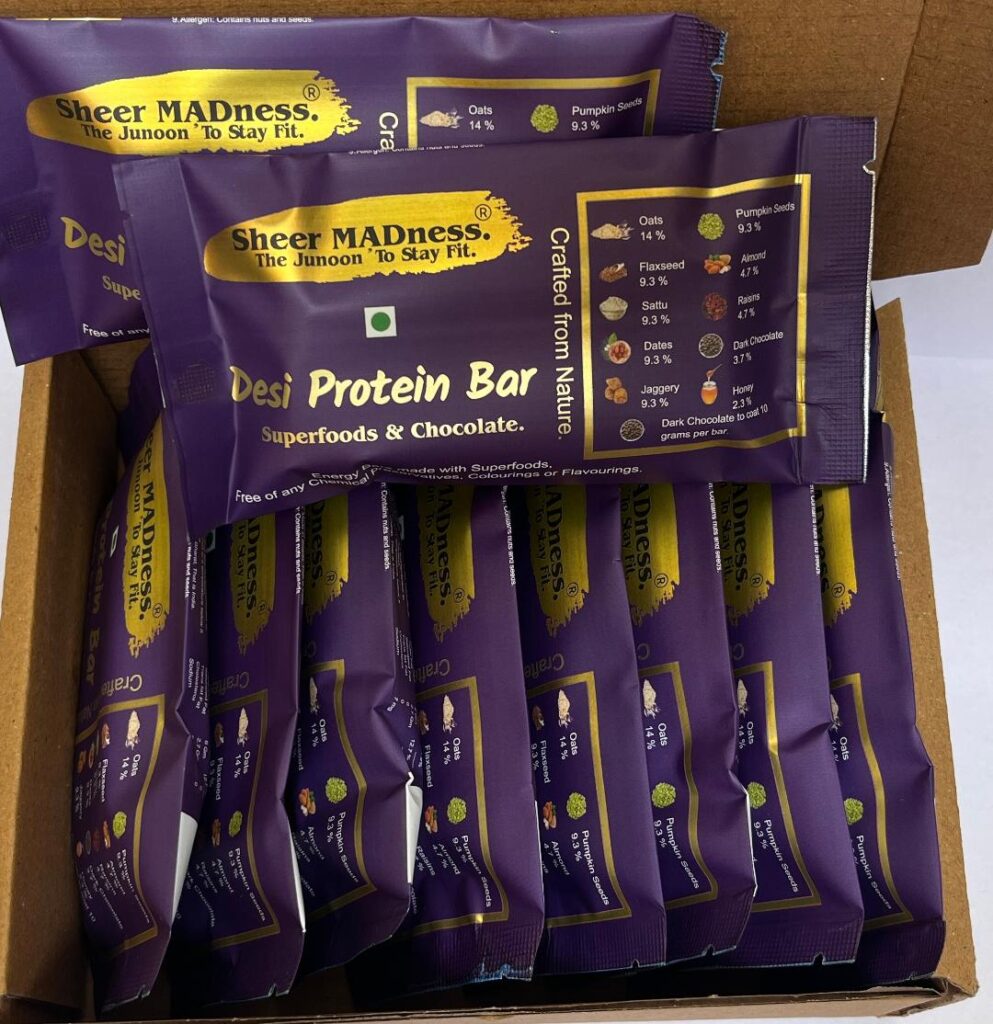
Sheer MADness Protein Bars and Energy Bars are built entirely on this principle. Here is exactly what goes in, and what each ingredient does for your digestive system.
Oats are one of the most gut-friendly foods available. They are rich in beta-glucan, a soluble fibre that forms a gel in the gut and beneficially slows digestion.
Moreover, beta-glucan feeds Lactobacillus and Bifidobacterium — the bacteria most associated with healthy bowel regularity. It also softens stool by retaining water in the intestinal tract. Therefore, oats appear as a base ingredient in every Sheer MADness bar.
Flaxseed contains both soluble and insoluble fibre. Together, these two types address constipation from both angles.
Soluble fibre absorbs water and lubricates the gut lining. Insoluble fibre adds bulk to stool and speeds intestinal transit time. Additionally, flaxseed contains mucilage — a gel-like compound that soothes the gut lining. This is why Ayurvedic medicine has traditionally recommended flaxseed specifically for constipation relief.
Almonds act as a prebiotic food. Their fibre selectively feeds beneficial gut bacteria, particularly Lactobacillus species, and supports a balanced microbiome.
Furthermore, almonds are one of the richest dietary sources of magnesium. Magnesium relaxes the smooth muscle in the intestinal wall and draws water into the colon. As a result, low magnesium is one of the most overlooked — and most common — causes of constipation in Indian adults.
Sattu is roasted chickpea flour. It has been a dietary staple in Bihar, Bengal, and Uttar Pradesh for centuries as a cooling and easily digestible protein source.
It is high in both soluble and insoluble fibre and digests more easily than raw legume flour. Moreover, it has a mild prebiotic effect that feeds healthy gut bacteria. Therefore, sattu brings protein and fibre together in a form that Indian guts have handled comfortably for generations — long before the supplement industry existed.
These natural sweeteners replace refined sugar and synthetic sugar alcohols in Sheer MADness bars.
Dates contain natural sorbitol, but in whole-food form — packaged with fibre, water, and minerals. This prevents the gut fermentation that synthetic sorbitol causes. Similarly, jaggery carries a mild digestive quality that Indian households have traditionally used after meals specifically to support regular bowel movement.
Neither ingredient causes the fermentation and gas linked to synthetic sweeteners in commercial bars.
Pumpkin seeds are rich in fibre, magnesium, and zinc. Magnesium supports intestinal muscle relaxation and stool softening. Zinc supports the integrity of the gut lining itself.
Together, these nutrients make pumpkin seeds a gut-supportive ingredient that earns its place in a bar designed specifically not to make you constipated.
Most commercial protein bars use chemical preservatives to stay shelf-stable for 12 to 18 months. Preservatives like BHA and BHT chemically alter the food to resist oxidation and microbial growth.
Consequently, every time you eat one of these bars, those compounds pass through your digestive system. Your gut lining, liver, and kidneys all work to process and excrete them. For a daily snack, that is a significant and unnecessary chemical load on your body.
Sheer MADness bars use oxygen absorbers instead of chemical preservatives. We remove oxygen from inside the packaging entirely.
Therefore, we change the physical environment of the bar — not its chemistry. Every ingredient stays exactly as it left the kitchen. Nothing is chemically treated. Nothing is added to extend shelf life at the cost of your gut health.
I want to be direct about something important.
I am not a chemist, infact I am a chef. The people who formulate most commercial bars have food science or chemical engineering backgrounds. Their core question is: how do we maximise the protein percentage at the lowest cost? That question leads directly to isolates, sugar alcohols, and chemical stabilisers.
My question is different. What would Indian households feed someone who needed sustained energy and clean protein before the supplement industry existed?
The answer was sattu laddoos, almond and date energy balls, oat and jaggery chikkis, and flaxseed in everyday rotis. These were the original protein bars of Indian food culture. Furthermore, nobody associated them with constipation. They built strength and supported digestion at the same time.
Sheer MADness bars bring that food culture back in a modern format. Real food, made by a chef who eats it himself every day.
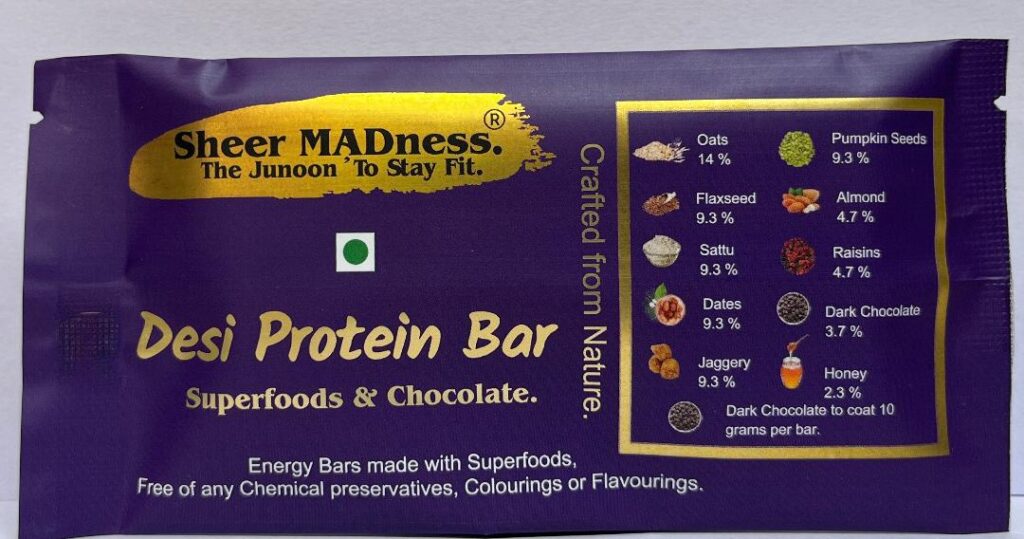
Since 2021, Sheer MADness has displayed every ingredient with its own image on the front of the pack. No INS codes, chemical names in small print. No hidden additives.
To the best of my knowledge, we remain the only brand in India doing this consistently across our entire product range. Therefore, you know exactly what is inside a Sheer MADness bar before you even open it.
If you cannot explain every ingredient in your protein bar to a ten-year-old, something is wrong with how that product sells itself to you.
Even with a whole-food bar, a few habits make a meaningful difference.
First, stay hydrated. Fibre needs water to do its job. Without adequate water, even good dietary fibre can worsen constipation. Aim for 2.5 to 3 litres of water daily. As a marathon runner, hydration is non-negotiable for me personally.
Second, do not replace meals with bars. A protein bar supplements a meal — it does not replace one. Constipation worsens when bars replace fibre-rich meals with vegetables, pulses, and whole grains.
Third, read the label before you buy. Look for sorbitol, maltitol, xylitol, and erythritol, INS 551, INS 471, and INS 322. Look for “protein concentrate” or “protein isolate” as the main protein source. If you find these, the bar very likely contributes to your digestive problems.
Finally, move your body. Regular physical activity stimulates gut motility — the muscular contractions that push food through your intestine. Exercise and nutrition are two sides of the same coin. No supplement, however well-made, replaces consistent movement.
Will protein bars make you constipated?
Some will, and many popular commercial bars do. Bars made with whey protein isolate, casein, sugar alcohols, and anti-caking agents commonly cause constipation. However, whole-food bars made from oats, almonds, flaxseed, sattu, and natural sweeteners actively support digestion and do not cause this problem.
Why do protein bars cause constipation?
The main reasons are protein isolates stripped of all fibre, sugar alcohols that ferment in the large intestine, anti-caking agents like INS 551 that irritate the gut lining, and lactose in whey concentrate that most Indian adults cannot digest. Together, these ingredients slow gut transit and cause constipation.
What ingredients in protein bars cause constipation?
The main culprits are whey and casein protein isolates, sugar alcohols (sorbitol, maltitol, xylitol, erythritol), anti-caking agents like INS 551 (silicon dioxide), and chemical preservatives like BHA and BHT. All of these are common in commercial protein bars and all link to digestive disruption.
Do Sheer MADness Protein Bars make you constipated?
No. Sheer MADness bars contain only whole foods — oats, almonds, flaxseed, sattu, pumpkin seeds, dates, and jaggery. Every ingredient contributes fibre and minerals that support healthy digestion. There are no isolates, no sugar alcohols, and no chemical preservatives in any Sheer MADness bar.
How do I know if my protein bar causes my constipation?
Stop the bar for five to seven days and track your bowel movements. If regularity improves, the bar was the contributing factor. Additionally, check the label for sugar alcohols, protein isolates, and INS codes before reintroducing any bar into your diet.
Are natural sweeteners better for digestion than sugar alcohols?
Yes, significantly. Dates, jaggery, and honey provide natural sugars packaged with fibre and minerals. As a result, they prevent the rapid gut fermentation that synthetic sugar alcohols cause in the large intestine.
How much fibre should a protein bar have?
A bar that genuinely supports digestion should provide at least 3 to 5 grams of dietary fibre per serving, ideally from whole food sources. Avoid isolated fibres like inulin, which can cause gas and bloating in sensitive individuals.
Can I eat a Sheer MADness bar daily without constipation?
Yes. One bar a day, as part of a balanced diet with adequate hydration, suits the vast majority of people well. The whole-food ingredients are gut-friendly, the natural sweeteners do not cause fermentation, and the absence of chemical additives means your gut lining faces no daily chemical irritants.
Will protein bars make you constipated? The answer depends entirely on what the bar contains.
Bars built on refined protein isolates, sugar alcohols, and chemical additives cause digestive problems for many people. Moreover, the research clearly supports this. The ingredients responsible are exactly the ones the commercial supplement industry has normalised as standard practice.
In contrast, bars built on whole foods — the way Sheer MADness has built them since 2021 — actively support digestion. They bring fibre, minerals, prebiotics, and gut-friendly natural sweeteners into one convenient snack. Therefore, if your current protein bar leaves you constipated, the problem is not protein. The problem is the bar you chose. Choose differently.
I would also request you to kindly read my previous post about “Healthiest Protein Bar in India“.
a) Everyone is an individual, so what suits me may not suit the next person.
b) If a person has a medical condition, a doctor’s advice and prescribed medication will only help.
c) While buying any protein bar or protein powder from the market, read the labels carefully. Watch out for codes and words like Anti-caking agent, INS 551 (Silicon dioxide), BHA (Butylated hydroxyanisole), BHT (Butylated hydroxytoluene), sorbitol, maltitol, xylitol, and other lab-made chemicals that quietly appear on most commercial labels.
If you are interested in buying chemical-free Natural Plant Protein Moringa, Health Drinks for Kids, or our delicious chemical-free Energy Bars, Protein Bars, and Millet Bars, shop at Sheer MADness.
You can also find us on Flipkart, Jio Mart, or ONDC in India.
d) Exercise is the key to fitness. Exercise and nutrition are two sides of the same coin and always go hand in hand.
e) Excess of anything is wrong, even the best whole-food snack. Consume only recommended quantities.
f) Rome was not built in a day. Discipline and consistency are the only keys to lasting health.
Article by Chef Ashutosh Awasthi
Disclaimer: Our products are a source of HEALTHY NUTRIENTS and are COMPLETELY FREE OF ANY ADDED CHEMICALS. We do not claim to cure any medical condition. The content provided is informational. We do not claim to diagnose or treat a person with any specific medical condition.