

Direct answer: Protein bars support muscle building — but they do not build muscle by themselves. Exercise builds muscle. Protein provides the amino acid materials the body uses to repair and grow muscle tissue after exercise. A protein bar consumed strategically around training provides those amino acids at the moments when the muscle is most ready to use them. The bar’s contribution is real and meaningful — within the context of consistent exercise.
Without exercise, even the best protein bar produces no meaningful muscle building. With consistent resistance or endurance training and adequate daily protein, a well-formulated whole-food protein bar specifically supports muscle protein synthesis at the cellular level through mechanisms that are well-understood and well-researched.
I’m Chef Ashutosh Awasthi, founder of Sheer MADness, professional chef, marathon runner, and author of Great Health Comes from Exercise & Nutrition. I train for marathons. I eat my own bars. Let me explain the muscle-building science clearly — and honestly.
Understanding how muscle grows explains exactly what role protein bars play — and don’t play.
When you exercise — particularly through resistance training, but also through endurance training — muscle fibres experience mechanical stress and micro-damage. The body responds by activating satellite cells — dormant muscle stem cells that fuse with damaged muscle fibres and contribute new nuclei. These new nuclei support the production of contractile proteins — specifically actin and myosin — that make the muscle fibres larger and stronger.
This entire process is called muscle protein synthesis (MPS). MPS is the biological mechanism through which muscle grows. It is driven by three simultaneous inputs: the mechanical stimulus of exercise, adequate amino acid availability from dietary protein, and sufficient rest for the repair process to complete.
Remove the exercise stimulus and protein alone produces no meaningful MPS. The mechanical damage that triggers satellite cell activation simply does not occur through dietary protein consumption without exercise. This is the most important single fact about protein bars and muscle building — and the one most protein bar marketing specifically obscures.
However, when the exercise stimulus is present, dietary protein becomes genuinely critical. The body cannot build muscle from nothing. Every gram of new muscle protein requires amino acids from food. A person exercising consistently but undereating protein builds less muscle than their training warrants — because the building materials are insufficient for the construction the body is trying to do.
This is the molecular mechanism that explains why protein timing and amino acid profile matter for muscle building.
The mTOR (mechanistic target of rapamycin) pathway is the primary cellular signalling cascade that activates muscle protein synthesis. When amino acids — particularly leucine — enter the muscle cell in sufficient concentration, they directly activate mTORC1 — the protein complex that triggers the transcription and translation of new muscle proteins.
Leucine is the specific amino acid most responsible for mTOR activation. Research published in the Journal of the International Society of Sports Nutrition confirmed that leucine acts as a “leucine trigger” — only when intracellular leucine concentration reaches approximately 2 to 3 grams per meal does mTOR activation reach its full potential for MPS stimulation.
This leucine threshold concept is important for evaluating protein bars. A bar with 8 to 10 grams of total protein from sattu, almonds, and oats typically contains approximately 0.5 to 0.8 grams of leucine. This is below the full MPS trigger threshold when consumed alone — but meaningfully contributes to the leucine pool when consumed as part of a day’s total protein intake from multiple sources.
The correct framing is therefore: protein bars from whole foods contribute to the daily amino acid pool, including leucine, that muscle protein synthesis requires. They are not a single-serving muscle-building intervention in isolation. They are a meaningful daily protein contribution within a complete daily diet.
The protein requirement for muscle building is higher than for general health — but not as high as supplement marketing typically suggests.
The ICMR-NIN 2024 Dietary Guidelines recommend 0.8 to 1.0 grams of protein per kilogram of body weight per day for healthy sedentary adults. For active adults engaged in regular resistance training, the recommendation rises to 1.2 to 1.8 grams per kilogram. For serious strength athletes and bodybuilders, 1.8 to 2.2 grams per kilogram represents the upper evidence-based range.
The International Society of Sports Nutrition’s 2017 position paper on protein and exercise — still the most comprehensive scientific review on the topic — confirmed that protein intakes of 1.4 to 2.0 grams per kilogram per day maximise muscle building for most athletes. Protein above 2.2 grams per kilogram provides no additional muscle-building benefit and simply increases nitrogen excretion.
For a 70-kilogram gym-going Indian adult training 4 to 5 days per week, this means approximately 98 to 140 grams of protein daily. One Sheer MADness bar contributes 8 to 10 grams toward this target — approximately 6 to 10 percent of the daily requirement from one convenient whole-food snack.
This contextualises what a protein bar does and does not do. One bar provides a meaningful daily protein contribution. It does not provide the full daily protein required for muscle building. It fills the gap between protein from meals and the higher daily requirement that muscle building creates.
Protein timing — consuming protein within specific windows around exercise — was once considered critical for maximising muscle building. The research has evolved significantly since the early 2000s.
A major 2013 meta-analysis by Brad Schoenfeld and colleagues, published in the Journal of the International Society of Sports Nutrition, found that total daily protein intake is the primary determinant of muscle protein synthesis outcomes. Timing is a secondary factor — meaningful but less critical than total daily protein adequacy.
However, a practical timing advantage does exist for post-exercise protein consumption. Research consistently shows that consuming protein within 60 to 120 minutes after resistance training produces better acute MPS outcomes than delayed consumption — not because a mythical “anabolic window” closes, but because post-exercise insulin sensitivity and muscle protein synthetic rates are both elevated during this period.
One Sheer MADness Protein Bar within 30 minutes of finishing a gym session provides 8 to 10 grams of whole-food protein that contributes to the elevated post-exercise MPS environment. Combined with the natural carbohydrates from dates and oats that restore glycogen simultaneously, this is a complete and practical post-workout nutritional package from a single whole-food bar.
Furthermore, the 2024 British Journal of Nutrition research on protein distribution confirmed that spreading protein across four to five daily eating occasions produces better muscle maintenance than concentrating the same daily protein in two or three meals. A protein bar at mid-morning or mid-afternoon specifically adds a protein-rich eating occasion that most Indian meal patterns lack — directly supporting the protein distribution that muscle maintenance research endorses.
Not all protein bars support muscle building equally. Four specific characteristics differentiate a muscle-building-appropriate bar from an inadequate one.
The 2025 Scientific Reports protein digestibility study found that protein digestibility varies from 47 to 86 percent across commercial bars. An isolate bar claiming 20 grams of protein at 47 percent digestibility delivers approximately 9.4 grams of usable amino acids. A whole-food bar with 8 to 10 grams of protein from sattu, almonds, and oats at higher digestibility delivers comparable or better usable amino acids despite a lower label number.
For muscle building specifically, usable amino acid delivery — not label protein numbers — determines the bar’s contribution to MPS.
MPS requires all nine essential amino acids simultaneously. A bar that is high in one amino acid but low in another cannot fully support muscle protein synthesis regardless of total protein quantity.
Sheer MADness bars combine sattu (legume protein, high in lysine), almonds (nut protein, higher in methionine), oats (grain protein, contributing methionine and tryptophan), and flaxseed (seed protein, adding cysteine and methionine). Together, these four sources create a complete essential amino acid profile from complementary plant proteins — the same principle underlying traditional Indian food combinations like dal and roti.
Muscle protein synthesis is an energy-intensive process. The body specifically prioritises glycogen restoration before MPS when both are simultaneously needed post-exercise. A bar with no carbohydrates post-workout forces the body to use some of its protein for energy restoration rather than for MPS.
Sheer MADness bars provide natural carbohydrates from oats, dates, and raisins alongside protein. The glycogen restoration happens simultaneously with protein delivery — allowing the bar’s protein to be directed toward MPS rather than toward energy provision.
Magnesium from almonds and dark chocolate supports ATP synthesis — the cellular energy that powers the MPS process itself. Zinc from pumpkin seeds supports testosterone production — the primary anabolic hormone for muscle protein synthesis in men and an important contributor for women. Iron from jaggery, sattu, and raisins supports haemoglobin and the oxygen delivery that aerobic training capacity depends on. Omega-3 from flaxseed reduces the post-exercise inflammation that impairs MPS when excessive.
No commercial bar built on protein isolate and maltitol delivers all four of these MPS-supportive micronutrients from whole-food sources simultaneously. Sheer MADness delivers all four as a natural consequence of its whole-food ingredient list.
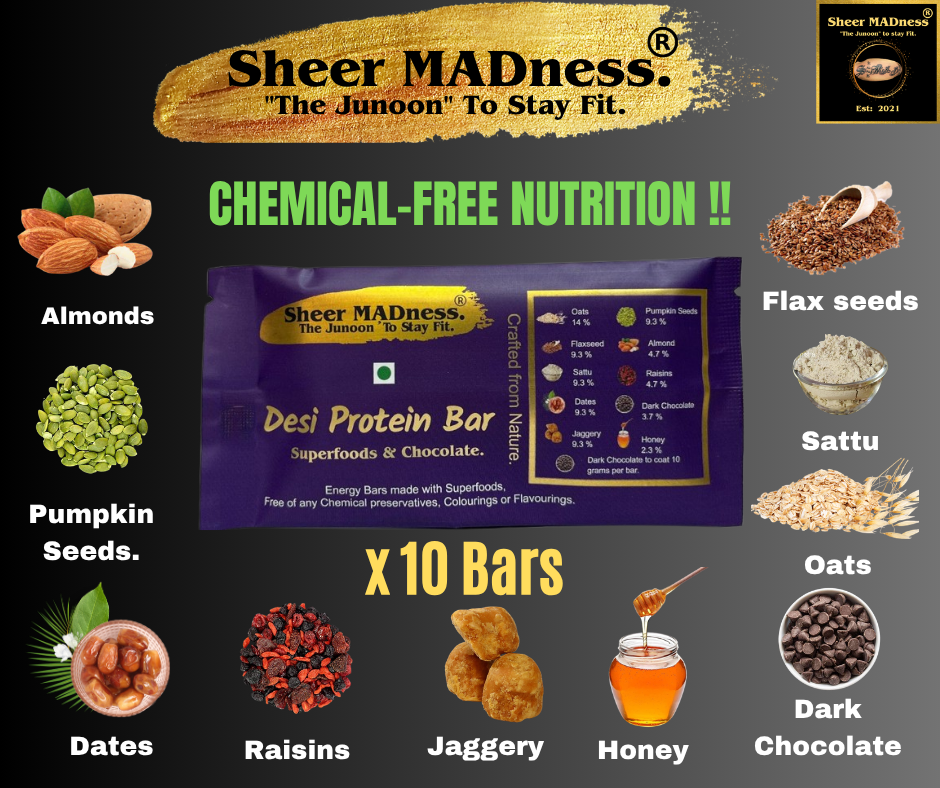
This section addresses the most important distinction between Sheer MADness bars and commercial isolate-based bars for muscle building purposes.
The mTOR pathway that drives MPS responds to amino acid availability in the context of the food matrix. Research published in the American Journal of Clinical Nutrition has demonstrated that protein consumed within a whole-food matrix — arriving with fats, fibre, and companion micronutrients — produces a different hormonal and anabolic response than the same protein consumed as an isolate.
Specifically, whole-food protein produces a more sustained amino acid release into the bloodstream — providing the muscle with a longer window of elevated leucine availability. This extended amino acid availability period specifically benefits MPS by maintaining the mTOR activation signal for longer than a rapidly absorbed protein isolate, which peaks and clears more quickly.
Furthermore, the insulin response to whole-food protein is more moderate and sustained than to isolate protein — reducing the counter-regulatory hormone response that can limit MPS duration. The food matrix of oats, almonds, and sattu specifically moderates the insulin response through fibre content — creating the hormonal environment that research consistently associates with better MPS outcomes.
I want to be direct about this because I built this brand on honest nutrition advice.
A protein bar does not build muscle. Exercise builds muscle. A protein bar provides some of the amino acids the body uses during that muscle-building process. The difference between a person who achieves their fitness goals and one who doesn’t is never which protein bar they chose. It is how consistently they exercise, how adequately they rest, and how well their overall daily diet supports their training.
A Sheer MADness bar is the best protein bar I know of for supporting the muscle-building process. The whole-food protein is more digestible than isolates. The complete amino acid profile covers all nine essential amino acids through complementary plant combining. The micronutrient support from zinc, magnesium, iron, and omega-3 is specific and meaningful. The absence of chemical additives means no synthetic compound competes with the anabolic process for the body’s metabolic attention.
However, it is still a contribution to a process, not the process itself. Eat the bar. But more importantly — train. Train consistently. Sleep adequately. Eat a varied, protein-adequate diet. The bar is one piece of one system.
Indian gym culture and strength training culture is growing rapidly. However, most protein bars available to Indian gym-goers are designed for Western markets — built on whey protein that most Indian adults cannot fully digest, sweetened with maltitol that causes gut disruption during training, and preserved with BHT that adds synthetic chemical load to a body already under training stress.
Sheer MADness bars are specifically appropriate for Indian gym-goers for three reasons.
First — completely dairy-free plant protein avoids the lactose digestibility issue affecting 60 to 70 percent of Indian adults who eat whey bars post-workout and experience gut disruption rather than recovery.
Second — zero sugar alcohols means zero gut fermentation risk during the post-workout window when the gut is most reactive to fermentation-causing compounds.
Third — sattu and almonds are culturally familiar Indian foods that Indian digestive systems process efficiently — providing better practical protein absorption than foreign protein concentrates that Indian guts have no evolutionary history with.
Since 2021, Sheer MADness displays every ingredient with its own image on the front of every pack. For gym-goers and athletes who read labels carefully — because what enters the body during training and recovery directly determines results — this transparency is the most important trust signal available.
You see oats, almonds, sattu, flaxseed, pumpkin seeds, melon seeds, dates, raisins, jaggery, honey, and dark chocolate on the front before opening the bar. Every ingredient that supports muscle building is visible. No chemical compound hides behind an INS code.
Sheer MADness holds a registered trademark under the Government of India. The Natural Plant Protein formula is patent published under Patent No. 202331036733, searchable on Intellectual Property India. The brand holds a valid FSSAI licence and GSTIN registration.
| Feature | Sheer MADness | Typical Isolate Bar |
|---|---|---|
| Protein digestibility | High — whole-food matrix | Variable — 47 to 86% per Scientific Reports 2025 |
| Amino acid completeness | Yes — complementary plant combining | Depends on isolate source |
| Leucine contribution | Moderate — 0.5 to 0.8g per bar | Higher per bar — but digestibility dependent |
| Glycogen restoration | Yes — natural carbs from oats, dates | Variable — often refined sweeteners |
| Zinc for testosterone | Yes — pumpkin seeds | Usually absent |
| Magnesium for ATP synthesis | Yes — almonds, dark chocolate, oats | Usually absent |
| Iron for oxygen delivery | Yes — jaggery, sattu, raisins | Usually absent |
| Omega-3 for inflammation | Yes — flaxseed | Absent in most |
| Lactose-free | Yes — 100% dairy-free | No — whey bars |
| Gut disruption risk | Zero — no sugar alcohols | Moderate to high |
| Chemical additives | None — oxygen absorbers | BHA, BHT common |
| Indian digestive compatibility | High — culturally familiar whole foods | Variable — foreign protein concentrates |
| Price per bar | ₹60 | ₹80 to ₹200 |
Do protein bars help build muscle?
Protein bars support muscle building by providing amino acids for muscle protein synthesis — when combined with consistent exercise. Without exercise, protein bars produce no meaningful muscle growth. With consistent training and adequate daily protein intake, a well-formulated whole-food protein bar provides meaningful post-workout and daily protein distribution support.
How much protein do I need daily to build muscle?
The ICMR-NIN 2024 guidelines recommend 1.2 to 1.8 grams of protein per kilogram of body weight for active adults. The ISSN position paper confirms 1.4 to 2.0 grams per kilogram as the evidence-based range for maximising muscle building. For a 70-kilogram adult training consistently, this means approximately 98 to 140 grams of protein daily.
When should I eat a protein bar for muscle building?
Within 30 to 60 minutes after exercise is the most effective single timing for muscle building purposes. Research consistently confirms elevated post-exercise MPS rates and insulin sensitivity during this window. Mid-morning or mid-afternoon bars additionally support the protein distribution across the day that research links to better muscle maintenance.
What is the mTOR pathway and why does it matter for muscle building?
The mTOR pathway is the primary cellular signalling cascade that activates muscle protein synthesis. Leucine specifically triggers mTOR activation when it reaches sufficient intracellular concentration. This is why the amino acid profile and total leucine content of a protein bar determines its MPS-triggering effectiveness — not just its total protein number.
Is plant protein as effective as whey for muscle building?
Yes — when plant proteins are combined to create a complete essential amino acid profile. Research published in Sports Medicine and the American Journal of Clinical Nutrition confirms that complementary plant protein combinations produce MPS outcomes equivalent to whey when total protein and leucine are adequate. Sattu, almonds, oats, and flaxseed together provide a complete amino acid profile that supports muscle building for Indian vegetarians.
Can I build muscle eating vegetarian with protein bars?
Yes. Muscle protein synthesis requires adequate total protein with a complete amino acid profile — not animal protein specifically. Sheer MADness bars combine sattu, almonds, oats, flaxseed, and seeds to provide complete plant protein from complementary sources. Combined with a protein-adequate vegetarian diet including dal, paneer, curd, or eggs, daily protein targets for muscle building are achievable for Indian vegetarians.
Why do commercial protein bars with more protein not necessarily build more muscle?
Because protein digestibility and amino acid bioavailability determine actual usable protein — not the label number. A 20-gram isolate bar at 47 percent digestibility delivers approximately 9.4 grams of usable amino acids. A 10-gram whole-food bar at high digestibility delivers comparable usable amino acids while also providing the micronutrients, carbohydrates, and food-matrix context that support muscle protein synthesis beyond just protein delivery.
Is exercise or protein more important for muscle building?
Exercise is the non-negotiable foundation. Without the mechanical stimulus of exercise, protein consumption produces no meaningful muscle protein synthesis above maintenance levels. With consistent exercise, adequate protein becomes critical — the building materials cannot be absent while the construction is actively underway. Both are required. Neither is sufficient alone.
Protein bars help build muscle — as one meaningful component of a complete system that begins with consistent exercise and includes adequate daily protein, sufficient sleep, and dietary variety.
The science is clear. Exercise creates the mechanical stimulus that activates satellite cells and triggers muscle protein synthesis. Leucine and essential amino acids from dietary protein activate the mTOR pathway that executes MPS at the cellular level. Micronutrients — zinc, magnesium, iron, omega-3 — support the enzymatic, hormonal, and oxygen-delivery systems that MPS depends on.
Sheer MADness bars address all three protein contribution layers simultaneously. Whole-food protein from complementary plant sources for amino acid delivery. Natural carbohydrates for glycogen restoration that allows protein to focus on MPS. Micronutrients from pumpkin seeds, almonds, jaggery, and flaxseed that support the complete muscle-building system.
At ₹60 per bar — dairy-free, zero sugar alcohols, zero chemical additives, every ingredient on the front of the pack since 2021 — they provide the cleanest, most culturally compatible, and most nutritionally complete muscle-building support available in the Indian protein bar market.
Train consistently. Eat adequately. Rest properly. Choose the right bar. The muscle building follows.
I would also request you to kindly read my previous post about “Healthiest Protein Bar in India“.
a) Everyone is an individual, so what suits me may not suit the next person.
b) If a person has a medical condition, a doctor’s advice and prescribed medication will only help.
c) While buying any protein bar from the market, read the labels carefully. Watch out for INS 320 (BHA), INS 321 (BHT), INS 551 (silicon dioxide), maltitol, sorbitol, sucralose, and other lab-made chemicals that quietly appear on most commercial labels.
If you are interested in buying chemical-free Natural Plant Protein Moringa, Health Drinks for Kids, or our delicious chemical-free Energy Bars, Protein Bars, and Millet Bars, shop at Sheer MADness.
You can also find us on Flipkart, Jio Mart, or ONDC in India.
d) Exercise is the key to fitness. Exercise and nutrition are two sides of the same coin and always go hand in hand.
e) Excess of anything is wrong, even the best whole-food snack. Consume only recommended quantities.
f) Rome was not built in a day. Discipline and consistency are the only keys to lasting health.
g) It is not only exercise and protein that builds health. A healthy gut, macro and micronutrients, body type, rest, and lifestyle all matter. Of all these, exercise and nutrition are within our control. Focus on these two primary aspects first.
h) The most important part of fitness is that nothing is better than exercise and a balanced meal.
Article by Chef Ashutosh Awasthi
Disclaimer: Our products are a source of HEALTHY NUTRIENTS and are COMPLETELY FREE OF ANY ADDED CHEMICALS. We do not claim to cure any medical condition. The content provided is informational. We do not claim to diagnose or treat a person with any specific medical condition.