

Direct answer: Yes — protein bars can help you gain weight, but the type of weight gained and the quality of the bar determine whether that weight gain is healthy or unhealthy. A caloric surplus is the only mechanism through which body mass increases — protein bars contribute to this surplus by adding convenient, dense calories between meals. However, the specific quality of weight gained — muscle mass versus fat mass — depends critically on the protein quality, the presence of resistance training, and whether the bar’s calorie composition supports muscle protein synthesis or merely fat storage. Sheer MADness Protein Bars and Energy Bars provide 180 to 200 kilocalories and 8 to 10 grams of complete whole-food protein per bar — contributing meaningfully to both caloric surplus and the protein distribution that supports lean mass gain alongside resistance training, for individuals specifically seeking healthy weight and muscle gain.
I’m Chef Ashutosh Awasthi, founder of Sheer MADness, professional chef, marathon runner, and author of Great Health Comes from Exercise & Nutrition. Let me explain the complete, honest science of how protein bars contribute to healthy weight gain — including a correction to a common misleading bar-selection criterion, and the India-specific context that makes this topic specifically important here.
Before explaining how protein bars help with weight gain, the most important question is: who specifically needs to gain weight, and what kind of weight are we talking about?
India carries a significant double nutritional burden — simultaneously managing rising obesity alongside persistent high undernutrition rates. The Global Nutrition Report consistently identifies India as having one of the world’s highest simultaneous prevalences of underweight, stunting, and obesity.
The populations for whom protein bar-assisted weight gain is specifically relevant include:
The “hard gainer” phenotype — typically in the 18 to 30 age bracket, with lean body frames, high metabolic rates, and high physical activity levels who struggle to consume adequate calories from three standard meals. For this population, the challenge is purely caloric volume — protein bars solve the “how do I add 200 to 400 high-quality calories without cooking another meal” problem specifically.
Underweight Indian women — where BMI below 18.5 is estimated to affect a significant proportion of Indian women of reproductive age, particularly in rural populations. For underweight women, adding nutritious calories from whole-food protein bars addresses caloric insufficiency without the nutritional penalty of adding empty-calorie junk food.
Post-illness recovery patients — illness-related anorexia, prolonged fever, surgical recovery, and chemotherapy all cause significant muscle and weight loss. During recovery, rebuilding nutritional status requires dense, easily consumed calories alongside protein for tissue repair. Protein bars are specifically appropriate here — easy to consume even with reduced appetite, nutrient-dense, and requiring no meal preparation.
As detailed in the seniors post, progressive muscle loss with ageing requires both higher protein intake and caloric adequacy to support lean mass retention. For elderly Indians whose appetite has declined, protein bars provide nutritionally dense calories in a format that is easy to consume even when appetite for large meals has diminished.
Vegetarian Indian athletes in bulking phases — as detailed in the bodybuilder post, Indian vegetarian athletes seeking to add lean muscle mass during bulking cycles need to consume calories above maintenance alongside adequate protein. Protein bars specifically solve the logistical problem of meeting elevated caloric and protein targets across multiple eating occasions per day.
The existing version of this post stated that “a good protein bar for weight gain should have at least 15-20 grams of protein per serving.” This statement is worth correcting honestly.
Sheer MADness Protein Bars and Energy Bars provide 8 to 10 grams of protein per bar — below the 15 to 20-gram threshold the old post’s criteria stated. This apparent inconsistency deserves direct explanation.
The 15 to 20-gram criterion applies to bars marketed as standalone post-workout recovery products — where the bar is the primary protein source immediately after training. For these use cases, higher isolated protein concentrations are appropriate.
However, Sheer MADness bars are not standalone post-workout protein concentrate products. They are whole-food supplementary nutrition providing protein alongside oat carbohydrates, almond fats, flaxseed omega-3, natural sweeteners, and micronutrients. Consumed alongside meals, with milk, or between eating occasions in a balanced weight-gain diet, 8 to 10 grams of whole-food protein per bar is a meaningful contribution — not a deficiency.
Furthermore, the quality of 8 to 10 grams of complete whole-food protein from sattu, almonds, oats, and flaxseed is nutritionally superior to 20 grams of protein from low-digestibility whey isolate at 47 percent digestibility (from the 2025 Scientific Reports study on 1,641 bars). Eight grams of highly digestible whole-food protein may deliver more usable amino acids than 20 grams of poorly digestible isolated protein.
The more important criterion for protein bars supporting weight gain is not protein quantity in isolation — it is the complete macronutrient package providing caloric surplus AND protein quality for lean mass support. Sheer MADness bars meet this more important criterion.
Healthy weight gain — gaining lean muscle mass rather than predominantly fat — requires three simultaneous conditions:
Caloric surplus — consuming more than TDEE (Total Daily Energy Expenditure). Research from metabolic ward studies confirms that approximately 350 to 500 kilocalories per day above maintenance produces lean mass gain when combined with resistance training — enough surplus to support anabolic processes without excessive fat storage.
Adequate protein distribution — spreading 1.6 to 2.2 grams of protein per kilogram of bodyweight across 5 to 6 daily protein eating occasions, each providing sufficient leucine to activate mTOR. The bodybuilder post detailed this mechanism fully.
Progressive resistance training — the mechanical stimulus that directs the caloric surplus toward muscle protein synthesis rather than fat storage. Without resistance training, a caloric surplus produces predominantly fat mass regardless of protein quantity.
Protein bars address conditions 1 and 2 directly. They contribute meaningfully to the caloric surplus (180 to 200 kilocalories per bar) and to the protein distribution requirement (8 to 10 grams per bar across additional daily eating occasions). Condition 3 — resistance training — is the non-negotiable requirement that nutrition alone cannot substitute.
This section addresses the most important distinction for anyone trying to gain weight: there are fundamentally different types of weight gain, and the quality of what you eat determines which type you get.
Consuming a caloric surplus from high-glycaemic, low-protein foods — refined carbohydrates, sugar, processed snacks — produces predominantly fat mass gain, with specific accumulation in visceral adipose tissue. This is the type of weight gain that worsens metabolic health — increasing insulin resistance, triglycerides, inflammatory markers, and long-term disease risk. It is the weight gain that comes from eating biscuits, sweets, and fried snacks to increase calories.
Commercial protein bars with maltodextrin, glucose syrup, and high sugar content alongside minimal protein produce this type of weight gain — they deliver caloric surplus but without the protein, fibre, and micronutrient infrastructure that directs calories toward lean mass.
Consuming a caloric surplus from whole-food proteins, healthy fats, and complex carbohydrates — alongside resistance training — produces predominantly lean muscle mass gain. This is the weight gain that improves strength, metabolic health, and body composition. It is the weight gain that comes from adding almonds, sattu, oats, dates, and flaxseed to the diet.
Sheer MADness bars provide this type of caloric contribution. Their protein supports mTOR activation and muscle protein synthesis. The oat carbohydrates replenish muscle glycogen for training performance. Their almond fats provide the sustained caloric density that caloric surplus requires without the insulin-spike pattern that drives visceral fat accumulation. The natural sweeteners (dates, jaggery, honey) provide carbohydrates with lower glycaemic impact than refined alternatives.
Sattu’s GI of 28 to 35 makes it specifically appropriate for weight gain diets — it contributes calories without the insulin spike that drives preferential fat storage. Its complete amino acid profile provides all nine essential amino acids including leucine for mTOR activation. Its high protein density (approximately 20 to 22 grams per 100 grams) makes it the most protein-dense ingredient in the bar on a gram-for-gram basis.
For the hard-gainer archetype — who needs more calories without digestive disruption — sattu provides the most easily digestible legume protein available. The roasting process specifically reduces the antinutrients (phytates, tannins) that make raw legume proteins harder to digest, making sattu more appropriate for high-volume daily protein consumption than whole chickpeas or dal.
For weight gain from muscle, glycogen replenishment after training sessions is critical. Depleted glycogen triggers muscle catabolism — the body breaks down muscle protein for gluconeogenesis when glycogen is insufficient. Oats’ complex carbohydrates replenish glycogen steadily without the blood glucose crash that follows refined carbohydrate-based post-training nutrition.
The EFSA-approved benefit of oat beta-glucan — reduction of postprandial blood glucose response — means oat carbohydrates contribute to post-training glycogen replenishment without the excessive insulin response that would preferentially direct non-glycogen carbohydrate toward fat storage.
Almonds at approximately 575 kilocalories per 100 grams are among the most calorie-dense whole foods available. Their predominantly monounsaturated fat profile means they contribute high-calorie density without the inflammatory omega-6 excess of refined seed oils. Their Vitamin E protects the oxidative integrity of the surplus calories’ lipid components during metabolism.
For hard gainers who cannot eat large volumes of food, almond-dense bars provide caloric density in compact form — specifically solving the “high calories per bite” requirement of weight gain nutrition without the bloating that high-carbohydrate weight gain diets typically produce.
As detailed in the bodybuilder and weight training posts, zinc and magnesium specifically support the testosterone and growth hormone environment that makes caloric surplus translate to lean mass rather than fat mass. For young Indian men with high training volumes trying to gain muscle, the zinc from pumpkin seeds addresses the mineral deficiency most commonly limiting their anabolic hormonal response.
Unlike refined sugar in commercial bars, Sheer MADness bars’ natural sweeteners contribute calories alongside fibre (dates: 6-8g per 100g), iron (jaggery: 11mg per 100g), potassium, polyphenols (raisins), and prebiotic compounds (honey’s oligosaccharides). For individuals trying to gain weight, every calorie ideally carries nutritional value alongside its energy contribution.
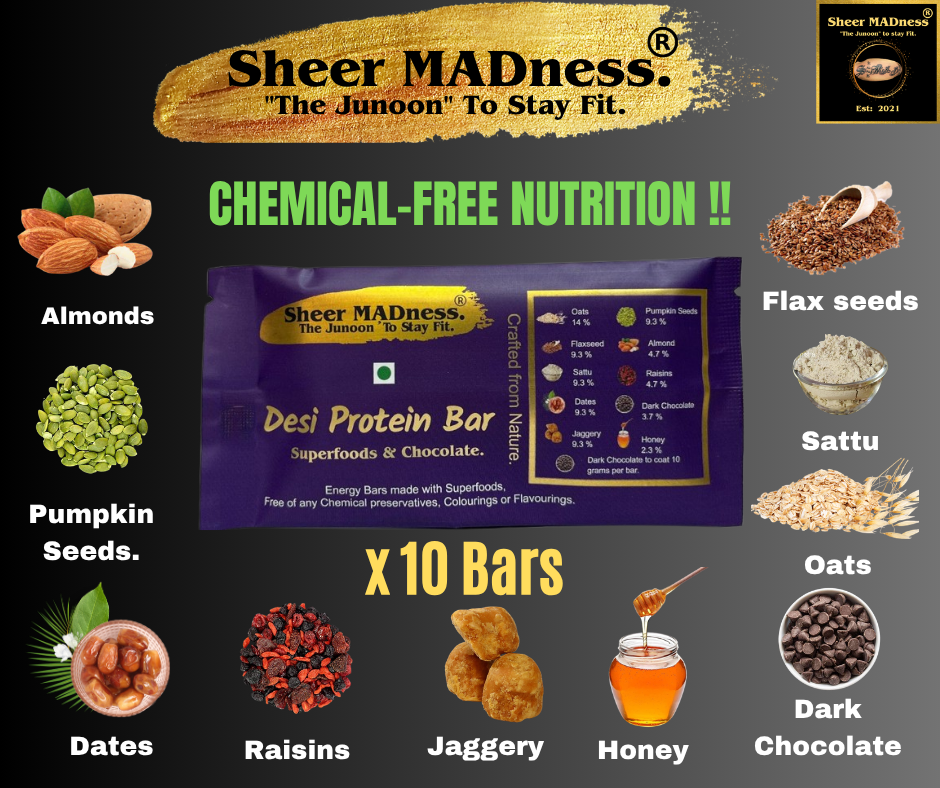
Sheer MADness Protein Bars and Energy Bars address the specific caloric and protein supplementation needs of Indian individuals seeking healthy weight gain through a whole-food formulation that commercial alternatives consistently miss.
Hard gainers trying to eat above TDEE across five to six daily eating occasions cannot afford gut disruption from lactose intolerance. Whey protein-based weight gainers — standard commercial recommendations — cause significant digestive disruption in 60 to 70 percent of Indian adults with lactose intolerance. This disruption specifically reduces the effective caloric absorption from the supplement that was supposed to aid weight gain.
Sheer MADness bars are completely dairy-free. Every calorie is absorbed without gut disruption. For Indian hard gainers whose entire challenge is consuming enough calories per day, this digestive efficiency is a specific and meaningful advantage.
Commercial weight gainer products frequently contain chemical additives that increase product palatability but add daily xenobiotic burden. For young people in bulking phases consuming these products daily for months, cumulative chemical additive exposure is a real consideration. Sheer MADness bars provide 180 to 200 kilocalories per bar from eleven whole-food ingredients with zero synthetic chemical additive — a clean caloric surplus that compounds into lean mass without chemical co-exposure.
Between meals as a caloric bridge: The primary use case for weight gain. Between breakfast and lunch, or between lunch and dinner — a Sheer MADness bar adds 180 to 200 kilocalories and 8 to 10 grams of protein to the daily total without requiring an additional cooked meal. Two bars daily as between-meal snacks contribute 360 to 400 kilocalories and 16 to 20 grams of protein to the caloric surplus target.
Post-training within 30 minutes: For muscle protein synthesis activation in the acute post-training window — when mTOR is maximally activated and muscle cells are most receptive to amino acid uptake. One bar immediately post-training contributes protein for mTOR activation, oat carbohydrates for glycogen replenishment, and almond fat for the sustained caloric density of the recovery window.
Pre-training 45 to 60 minutes before: For pre-loading glucose availability and branch-chain amino acids before training sessions — ensuring blood glucose is stable during training and muscle protein is available for anabolic signalling during the session.
Evening snack (not immediately before sleep): For individuals needing additional evening calories, a bar one to two hours before sleep — rather than immediately before bed — provides protein for overnight muscle protein synthesis without the digestive activity of food processing during sleep. Consuming a protein-and-carbohydrate bar immediately at bedtime creates digestive activity during sleep onset that is better avoided. One to two hours before sleep is the appropriate evening timing.
| Weight Gain Need | Sheer MADness Contribution | Specific Mechanism |
|---|---|---|
| Caloric surplus building | 180-200 kcal per bar | Adds to TDEE without requiring additional cooked meal |
| Protein distribution across 5-6 meals | 8-10g complete protein per bar | Provides protein eating occasion without cooking |
| Glycogen replenishment post-training | Oat complex carbohydrates | Beta-glucan moderated glycogen loading |
| Lean mass hormonal support | Zinc (pumpkin seeds) + Magnesium (almonds) | Testosterone and ATP synthesis support |
| mTOR activation leucine contribution | Complete EAA including leucine | Complementary sattu-almond-oat combining |
| Hard gainer calorie density | Almond fat (~575 kcal/100g) | Compact calorie density without excessive volume |
| Gut-friendly daily consumption | Zero lactose, zero maltitol | No digestive disruption reducing absorption |
| Post-illness recovery calories | Natural sugars (dates, raisins, jaggery) | Immediately absorbed energy with micronutrient value |
| Elderly sarcopenia caloric support | 180-200 kcal + complete protein | Dense nutrition in easy-to-consume format |
Sheer MADness holds a registered trademark under the Government of India. The Natural Plant Protein formula is patent published under Patent No. 202331036733, searchable on Intellectual Property India. The brand holds a valid FSSAI licence and GSTIN registration.
Can protein bars help you gain weight?
Yes — protein bars contribute to the caloric surplus that is the only mechanism for weight gain, while also providing protein that supports lean muscle mass gain alongside resistance training. Sheer MADness bars provide 180 to 200 kilocalories and 8 to 10 grams of complete whole-food protein per bar — a meaningful contribution to both caloric surplus and protein distribution for lean mass gain.
Who specifically benefits from using protein bars for weight gain?
Hard gainers with fast metabolisms who cannot consume sufficient calories from meals alone; underweight individuals needing to increase caloric intake; post-illness recovery patients rebuilding muscle and body weight; elderly adults managing sarcopenia who have reduced appetite for large meals; and vegetarian Indian athletes in bulking phases needing to meet elevated caloric and protein targets.
Fat mass gain results from caloric surplus from high-glycaemic, low-protein foods — it increases visceral adiposity and worsens metabolic health. Lean mass gain results from caloric surplus from whole-food protein, complex carbohydrates, and healthy fats alongside progressive resistance training — it increases muscle mass and improves metabolic health. Sheer MADness bars support lean mass gain through their whole-food protein, oat carbohydrates, and almond fat composition.
Why do Sheer MADness bars have less protein than the “15-20 grams” criterion stated in other sources?
The 15 to 20-gram criterion applies to standalone post-workout protein concentrate products. Sheer MADness bars are whole-food supplementary nutrition providing complete macronutrients alongside micronutrients — not isolated protein concentrates. Eight to ten grams of highly digestible whole-food protein from sattu, almonds, and oats may deliver more usable amino acids than 20 grams of poorly digestible isolated whey at 47 percent digestibility (2025 Scientific Reports study). Quality and digestibility matter alongside quantity.
How many Sheer MADness bars should I eat daily for weight gain?
Two bars daily as between-meal snacks is the most practical approach — one mid-morning and one mid-afternoon. This adds 360 to 400 kilocalories and 16 to 20 grams of protein to the daily total. For individuals in active bulking phases needing larger surpluses, one additional bar post-training creates 540 to 600 kilocalories and 24 to 30 grams of additional protein daily from bar consumption alone. Always contextualise within total daily caloric and protein targets.
A protein bar one to two hours before sleep — not immediately at bedtime — provides protein for overnight muscle protein synthesis (which occurs during sleep’s growth hormone pulse) without digestive activity during sleep onset. Immediately before sleep is not the ideal timing because it creates digestive activity during sleep onset. The pre-sleep protein concept is valid; the timing matters.
Protein bars should supplement meals rather than replace them. Whole-food meals provide the dietary diversity, micronutrient breadth, and satiety that protein bars cannot fully replicate. Bars are most effective as between-meal additions that fill the caloric and protein gap between main meals — not as meal replacements.
Why is sattu specifically appropriate for weight gain in India?
Sattu’s GI of 28 to 35 — among the lowest of any protein food — contributes calories without the insulin spike that drives preferential fat storage. Its complete amino acid profile provides leucine for mTOR activation. The roasting process reduces antinutrients, making it more digestible than raw legumes. Its traditional use as a pre-work energy food by Indian labourers and athletes reflects centuries of empirical evidence for its sustaining energy profile — exactly what hard gainers need from their caloric surplus foods.

Protein bars can help you gain weight — specifically the right kind of weight. The caloric surplus they contribute alongside whole-food protein, complex carbohydrates, and healthy fats specifically supports lean mass gain rather than fat accumulation when combined with resistance training.
The unique value of Sheer MADness bars for Indian individuals seeking healthy weight gain is: dairy-free whole-food protein without lactose disruption, zinc and magnesium for the hormonal environment that converts caloric surplus to lean mass, sattu’s extraordinarily low GI contributing calories without insulin-driven fat storage signals, and zero synthetic chemical additive for the clean caloric surplus that daily bar consumption over months of bulking requires.
Two bars between meals daily adds 360 to 400 kilocalories and 16 to 20 grams of whole-food protein. Over a week that is 2,520 to 2,800 additional kilocalories above current intake — a meaningful contribution to the sustained caloric surplus that healthy weight gain requires.
The weight comes from the surplus. The quality comes from the ingredients. Since 2021, every ingredient is on the front of every pack.
I would also request you to kindly read my previous post about “Healthiest Protein Bar in India“.
a) Everyone is an individual, so what suits me may not suit the next person.
b) If a person has a medical condition, a doctor’s advice and prescribed medication will only help. Underweight individuals with unexplained weight loss should consult a physician to rule out underlying conditions before focusing on caloric supplementation.
c) While buying any protein bar from the market, read the labels carefully. Watch out for maltodextrin (GI 85-95), glucose syrup, refined sugar, INS 320 (BHA), INS 321 (BHT), and whey protein concentrate — ingredients that contribute calories but drive fat mass gain through high insulin responses rather than lean mass gain through protein distribution.
If you are interested in buying chemical-free Natural Plant Protein Moringa, Health Drinks for Kids, or our delicious chemical-free Energy Bars, Protein Bars, and Millet Bars, shop at Sheer MADness.
You can also find us on Flipkart, Jio Mart, or ONDC in India.
d) Exercise is the key to fitness. Exercise and nutrition are two sides of the same coin and always go hand in hand. For weight gain specifically, resistance training is the non-negotiable complement to increased caloric and protein intake.
e) Excess of anything is wrong, even the best whole-food snack. Consume only recommended quantities.
f) Rome was not built in a day. Discipline and consistency are the only keys to lasting health.
g) It is not only exercise and protein that builds health. A healthy gut, macro and micronutrients, body type, rest, and lifestyle all matter. Of all these, exercise and nutrition are within our control. Focus on these two primary aspects first.
h) The most important part of fitness is that nothing is better than exercise and a balanced meal.
Disclaimer: Our products are a source of HEALTHY NUTRIENTS and are COMPLETELY FREE OF ANY ADDED CHEMICALS. We do not claim to cure any medical condition. The content provided is informational. We do not claim to diagnose or treat a person with any specific medical condition.