

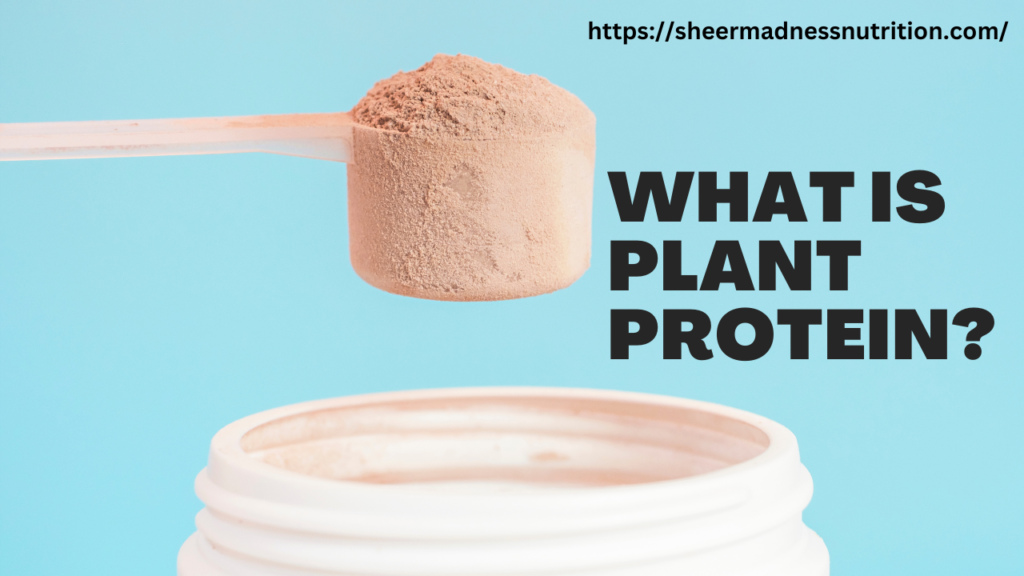
Direct answer: Plant protein is protein that comes from plants, including legumes, nuts, seeds, grains and leaves. You can eat it in whole foods such as dal, almonds and millets, or as a powder made from them. It is built from the same amino acids as animal protein. Most plant proteins contain all nine essential amino acids, but many run lower in one of them, which a varied diet easily fixes. Quality differs by source and by processing, and the powders on the market range from heavily extracted isolates to simple whole-food blends.
I am Chef Ashutosh Awasthi, founder of Sheer MADness, professional chef, marathon runner and author of Great Health Comes from Exercise & Nutrition. I started this brand because I wanted people to see exactly what sits inside their protein. This post is the definition page of my complete guide, Plant Protein, Protein Everything you should be aware of.
If you want the basics of protein itself first, start with What is protein? Then come back here for the plant side.
Protein is a large molecule made of amino acids joined in chains. The body folds these chains into structures that do most of its work. Proteins build muscle, skin and hair, form enzymes and many hormones, carry oxygen, and power immune defence.
Nature uses hundreds of amino acids, but human proteins are built from 20 standard ones. The body can make eleven of them itself. The other nine are called essential amino acids, because food must supply them. They are histidine, isoleucine, leucine, lysine, methionine, phenylalanine, threonine, tryptophan and valine.
Every protein food therefore contains a mix of amino acids in a particular pattern. The pattern decides how well a food covers your needs. This is why one food can be rich in protein and still be lower in one essential amino acid.
Plant protein is simply protein found in plants. Indian kitchens have used it for thousands of years. Dal, rajma, chana, sprouts, soya, peanuts, almonds, seeds, millets and even leaves such as moringa all supply it.
The table below shows approximate protein in common dry foods, with the amino acid each tends to run lower in.
| Food (dry, per 100 g) | Approximate Protein | Typically Lower In |
|---|---|---|
| Soya chunks | 52 g | Methionine |
| Pumpkin seeds | 30 g | Lysine |
| Moringa leaf powder | 25 to 30 g | Methionine |
| Peanuts | 25 g | Methionine |
| Moong dal | 24 g | Methionine |
| Rajma | 22 g | Methionine |
| Chana dal | 20 to 22 g | Methionine |
| Almonds | 21 g | Lysine |
| Flaxseed | 18 g | Lysine |
| Oats | 13 g | Lysine |
| Wheat flour | 12 g | Lysine |
| Rice | 7 g | Lysine |
Values vary by variety and source. Treat them as a guide and not a lab report.
Many articles say plant proteins are incomplete. That is not quite right. Almost every plant protein contains all nine essential amino acids. The real point is proportion. Cereals run lower in lysine, and legumes run lower in methionine.
A small number of plant foods score as complete or close to it. Soya, quinoa, buckwheat, amaranth, hemp seed and spirulina are examples. The older claim that only soya and quinoa qualify is outdated.
You also do not need to combine proteins at every meal. Professional dietetic bodies agree that eating a variety of plant foods across the day covers the full range. Dal with rice and roti with dal are classic Indian examples, because lysine-rich legumes make up for cereals and methionine-rich cereals make up for legumes.
Be careful with nut and seed blends. Almonds and flaxseed both run lower in lysine, so combining them does not close that gap. A powder of the two works best alongside dal, curd or milk, or with a lysine-rich ingredient such as moringa.
Protein quantity tells you how much protein a food has. It’s quality tells you how much your body can actually use. Two things drive quality: the amino acid pattern and how well you digest the protein.
The FAO recommended a measure called DIAAS in 2013, which stands for Digestible Indispensable Amino Acid Score. It measures how much of each essential amino acid is absorbed by the end of the small intestine. A score near or above 1.0 means the protein meets needs well. Milk and egg score high. Soya scores well among plants, pea and rice score lower, and cereal proteins such as wheat score lower still.
Plant foods also contain compounds such as phytates and trypsin inhibitors, which reduce absorption. Indian methods reduce them effectively. Soaking, sprouting, fermenting and cooking all help. Idli, dosa, dhokla and sprouted moong are good examples of tradition improving protein quality.
Not all plant protein products are alike. The processing level changes the protein share, the fibre, and the other nutrients that arrive with it.
| Form | Protein Share | Fibre and Fat | Processing |
|---|---|---|---|
| Whole foods (dal, nuts, seeds) | 7 to 30 percent | Retained | Cooking, roasting, grinding |
| Natural plant protein blends | Moderate | Retained | Roasting, grinding, mixing, sieving |
| Plant protein concentrate | About 60 to 80 percent | Partly retained | Extraction and drying |
| Plant protein isolate | About 90 percent or more | Mostly removed | Extraction, precipitation, filtration, drying |
Isolates extract the protein from a source such as soya or pea, then remove most of the fibre, starch and fat. Makers use water, pH changes, filtration and drying, and some processes use solvents. Isolates are legal and widely used. They also trade away fibre and micronutrients for a high protein number. My post What is vegan protein isolate? explains this in detail.
Concentrates sit in the middle. They keep more of the original food but still involve extraction.
Natural plant protein means protein from whole plant foods, with no extraction step. Our powders start with whole roasted almond and flaxseed, ground into powder. We mix them with turmeric and either cocoa with dark chocolate or moringa with cardamom. We then sieve the mix and vacuum pack it.
There is no isolate, no concentrate and no added chemical. The dry ingredients absorb the natural oil that the almond and flaxseed release, so the powder stays free-flowing without an anti-caking agent.
The trade-off is protein density. A 25-gram serving of Plant Protein Moringa provides about 7.5 grams of protein, which is far less than an isolate delivers. Plant Protein Chocolate works the same way. I see these powders as nutrient-rich helpers that sit alongside dal, curd and sprouts, and not as replacements for them.
Neither is simply better. Each has strengths.
Animal proteins carry a higher protein share per gram, high digestibility scores and nutrients such as vitamin B12 and heme iron. Plant proteins bring fibre, unsaturated fats, magnesium and polyphenols. Studies also link replacing red and processed meat with plant sources to better heart health and lower diabetes risk, although those studies show association and not proof.
Vitamin B12 deserves a plain mention. Plant foods do not supply it reliably, so strict vegans need a B12 source. Plant eaters may also need slightly larger servings to reach the same leucine dose for muscle building, particularly after the age of 60.
Environment matters too. A 2018 analysis in Science by Poore and Nemecek found that plant protein generally uses less land and produces fewer greenhouse gases per gram than most animal protein.
A diet rich in plant protein usually brings more fibre, which supports digestion and fullness. Research links plant-heavy patterns with healthier cholesterol and blood pressure. My post Is plant protein good for diabetes? explains the blood glucose side in depth.
Muscle building works too. A 2021 randomised trial in Sports Medicine compared vegan and omnivorous diets matched for protein. Both groups gained similar muscle with resistance training. Total protein, training and sleep matter more than the source.
Two safety topics have their own posts. Read Is plant protein gluten free? and Do plant proteins cause allergies? before you choose a powder.
Indian guidance for healthy adults is close to 0.8 grams per kilogram of body weight per day. A 60-kilogram adult therefore needs about 50 grams. People who train hard, older adults, and pregnant or breastfeeding women need more. Sports nutrition guidance for strength training often sits around 1.4 to 2.0 grams per kilogram.
Most Indian vegetarian diets fall short because dal portions are small and cereals dominate the plate. Raising dal, curd, sprouts, nuts and seeds closes much of the gap. A powder helps when meals fall short. People with kidney disease should ask their doctor before raising protein.
The first myth says plant protein means a powder. In truth, plant protein is mostly the food on your plate, and powders are one optional form.
The second myth says plant protein cannot build muscle. Trials show it can, when total protein and training are adequate.
The third myth says isolates damage healthy kidneys. Evidence does not show harm at usual intakes in people with healthy kidneys. People with kidney disease still need medical guidance.
The fourth myth says more protein is always better. Excess protein turns to energy, and extra spending adds nothing.
Start with the ingredient list. A short list of recognisable foods is easier to trust than a long list of codes. Check the protein source and the sweetener, then look for fillers such as maltodextrin and for flavours. Check the allergen line and the protein per serving.
Ask about testing. Independent tests have found lead and cadmium in some plant protein powders, because plants absorb metals from soil. Ask any brand for heavy metal test reports. Finally, judge the protein-to-price ratio honestly, because a high protein number is not the same as high quality.
Sheer MADness holds a registered trademark under the Government of India. The natural plant protein composition is the subject of Patent Application No. 202331036733, which is published and under examination. The brand holds a valid FSSAI licence and GSTIN registration. Every ingredient has appeared on the front of our pack since 2021.
Plant protein is protein that comes from plant foods such as legumes, nuts, seeds, grains and leaves. It is made of the same amino acids as animal protein. You can eat it in whole foods or in powders made from them.
Most plant proteins contain all nine essential amino acids but are lower in one. Soya, quinoa, buckwheat and hemp score as complete or close to it. Eating a variety across the day covers your needs.
Both can meet your needs. Animal protein is denser and more digestible, while plant protein brings fibre and other nutrients. Quality depends on the source, the processing and your overall diet.
Soya, moong dal, rajma, chana, peanuts, almonds, pumpkin seeds, sprouts and moringa leaf are good sources. Pairing dal with rice or roti improves the amino acid balance.
Whole-food plant protein is safe for most people. Allergy to soya, peanut, tree nuts and sesame is the main concern, and people with kidney disease need medical advice.
An isolate extracts and concentrates the protein to about 90 percent or more and removes most fibre. Natural plant protein grinds and blends whole roasted foods and keeps their fibre and fats, so the protein share is lower.
Healthy adults need about 0.8 grams per kilogram of body weight. Athletes and older adults often need more. Ask your doctor if you have kidney disease.
Plant protein is not a powder, a trend or a lesser option. It is the protein in the foods that have fed India for centuries, and it can meet your needs when you eat a varied diet. Quality depends on the source, the digestibility and the processing.
Whole foods give you protein with fibre and micronutrients. Isolates give you protein density at the cost of the rest. Both have a place, and the honest choice depends on your needs and your label reading.
Sheer MADness powders sit at the whole-food end. They contain roasted almond and flaxseed, turmeric, and either cocoa with dark chocolate or moringa with cardamom, and nothing else.
a) Everyone is an individual, so what suits me may not suit the next person.
b) If a person has a medical condition, a doctor’s advice and prescribed medication will only help. People with kidney disease, allergies or diabetes should ask their doctor before changing protein intake.
c) While buying any protein powder from the market, read the labels carefully. Watch out for INS codes, anti-caking agents, INS 551 (silicon dioxide), BHA (butylated hydroxyanisole), BHT (butylated hydroxytoluene), sweeteners and fillers, and ask for heavy metal test reports.
If you are interested in buying chemical-free Natural Plant Protein, Health Drinks for Kids, or our Energy Bars, Protein Bars and Millet Bars, shop at Sheer MADness.
You can also find us on Flipkart, Jio Mart or ONDC in India.
d) Exercise is the key to fitness. Exercise and nutrition are two sides of the same coin and always go hand in hand. Protein alone does not build muscle without training.
e) Excess of anything is wrong, even the best whole-food superfood. Consume only recommended quantities.
f) Rome was not built in a day. Discipline and consistency are the only keys to lasting health.
g) It is not only exercise and protein that builds health. A healthy gut, macro and micronutrients, body type, rest and lifestyle all matter. Exercise and nutrition are within our control, so focus on these two first.
h) The most important part of fitness is that nothing is better than exercise and a balanced meal.
Article by Chef Ashutosh Awasthi
Disclaimer: Our products are a source of HEALTHY NUTRIENTS and are COMPLETELY FREE OF ANY ADDED CHEMICALS. We do not claim to cure any medical condition. The content provided is informational. We do not claim to diagnose or treat a person with any specific medical condition.